Huawei aims to develop 1.4nm chips by 2031, leveraging innovative methods to close the technological gap with TSMC despite lacking access to cutting-edge manufacturing equipment.

Huawei Technologies Co expects its premium chips to achieve transistor density equivalent to 1.4-nanometer processes by 2031 under a new semiconductor development framework, the…

The Chinese tech giant said its “Tau Scaling Law” can boost chip efficiency through vertically stacked circuit design


The Chinese tech giant’s new breakthrough is a major milestone in its mission to create a self-reliant semiconductor ecosystem.

Empresa espera projetar chips de ponta até 2031 com densidade de transistores equivalente a processos de 1,4 nanômetro, o que significa uma tecnologia avançada em relação ao que se

Huawei aims for advanced chip design by 2031. The company is developing a new 'Tau Scaling Law' to improve chip performance. This innovation could bypass US sanctions restricting…

Huawei aims to develop 1.4nm chips by 2031, leveraging innovative methods to close the gap with TSMC despite lacking access to cutting-edge semiconductor manufacturing equipment.

Chinese tech giant Huawei said on Monday it had developed a new way of making semiconductors that could get around its US-enforced lack of access to the most advanced chipmaking…

Chinese telecom giant Huawei announced Monday a new way of designing chips that improves their capabilities, despite U.S. restrictions on the company.

Huawei aims to develop 1.4nm chips by 2031, leveraging innovative methods to close the technological gap with TSMC despite lacking access to cutting-edge manufacturing equipment.

Huawei said it had developed a new way of making semiconductors that could get around its U.S.-enforced lack of access

Huawei unveils chip design strategy to boost performanceStrategy focuses on scaling, rather than making transistors smallerHuawei expects to design chips by 2031 with density...

Huawei did not provide independent performance data, but the target is significant because 1.4 nanometers is expected to be close to the global frontier for advanced chipmaking…

Huawei Technologies announced on Monday that it expects to produce industry-leading semiconductors within five years using new technology, highlighting...

Huawei has proposed a new guiding principle for the semiconductor industry that could allow it to close gap with TSMC.

Huawei claims the new advanced chips that it has planned to make are based on the Tau Scaling Law that could achieve transistor density levels equivalent to 1.4 nm.

The Chinese tech juggernaut says it can match cutting-edge Intel semiconductors by 2031. | Business News

Meta é significativa porque espera-se que processos 1,4 nanômetros esteja próximo da fronteira global para a fabricação avançada de chips por volta do final da década

Die USA tun alles, um Chinas Techindustrie auf Abstand zu halten, doch Huawei gibt sich optimistisch: Auf einer Konferenz in Shanghai kündigte das Unternehmen einen Durchbruch in…

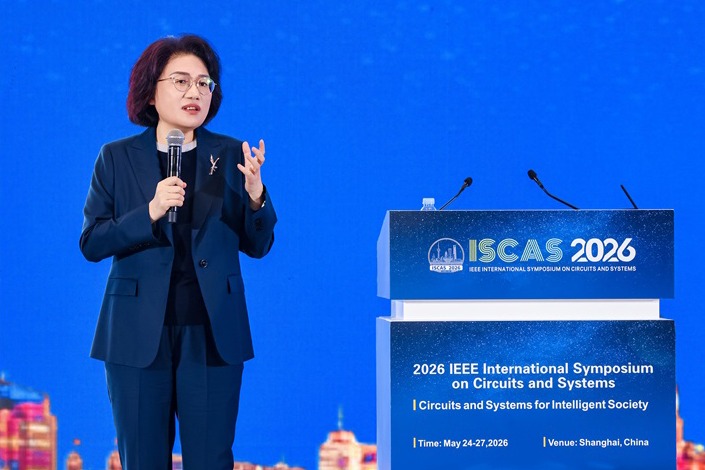
Huawei will start making 1.4-nanometer chips by 2031 with its own “LogicFolding” technology, Huawei’s semiconductor chief He Tingbo said Monday.

The approach, still in development, aims to produce processors that reach transistor densities comparable to a 1.4-nanometer process by 2031. That level of density is widely…