00:00/00:00
您的浏览器不支持 audio 标签。
Listen to this article
1x
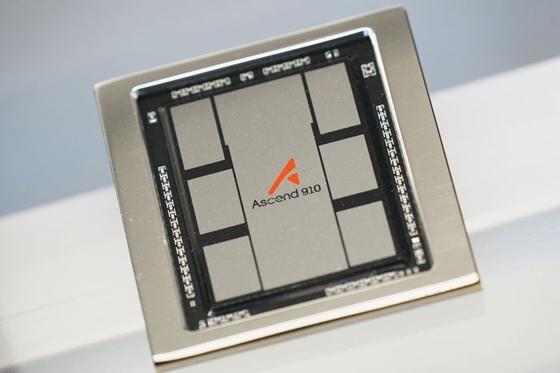
Huawei's Ascend 910 series AI chips in Hangzhou on May 10, 2026. Photo: VCG
The Chinese tech giant said its “Tau Scaling Law” can boost chip efficiency through vertically stacked circuit design
Huawei targets 1.4nm chip performance by 2031 via Tau Scaling Law: vertical stacking to cut signal latency, no transistor shrinkage required. A credible U.S.-curbs bypass that puts Ascend on the AI accelerator shortlist for enterprises with China exposure.
00:00/00:00
您的浏览器不支持 audio 标签。
Listen to this article
1x
Huawei's Ascend 910 series AI chips in Hangzhou on May 10, 2026. Photo: VCG

Unitree fast-tracks Shanghai IPO with target valuation of $6.2 billion, DeepSeek cuts flagship AI model prices by 75% as funding…
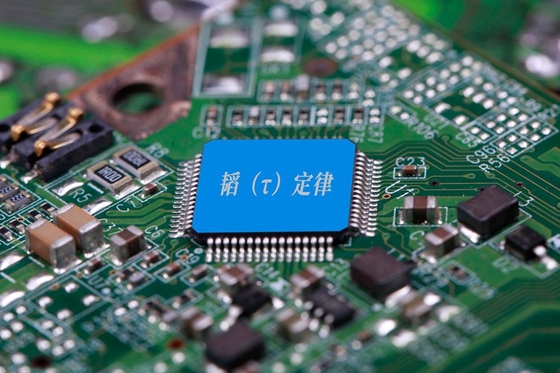
Tau Law aims to reduce latency and raise energy efficiency through LogicFolding and optical interconnects. The question is…

Huawei unveils chip design strategy to boost performanceStrategy focuses on scaling, rather than making transistors smallerHuawei…
The Chinese tech giant says its new stacked-chip architecture can deliver transistor density equivalent to 1.4nm processes by…

Huawei aims to develop 1.4nm chips by 2031, leveraging innovative methods to close the technological gap with TSMC despite…
Flagship Huawei Mate 90 series will be the first commercial processors to feature the LogicFolding architecture