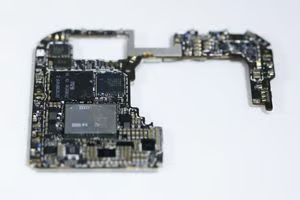
Huawei Technologies Co. said it has come up with a new pathway to shorten its gap with industry leader Taiwan Semiconductor Manufacturing Co., potentially achieving a breakthrough in making advanced semiconductors without cutting-edge equipment.
Right now there is about a five-year gap between what TSMC is capable of and what Huawei together with its manufacturing partner Semiconductor Manufacturing International Corp. can produce. Huawei will start making 1.4-nanometer chips by 2031 with its own “LogicFolding” technology, Huawei’s semiconductor chief He Tingbo said in a rare public appearance during a chip conference on Monday, while TSMC has said that it will begin mass production of the same product in 2028.
The executive said that her team has found a way for “sustainable evolution.” She told reporters after her speech on Monday that Huawei can advance its chipmaking prowess significantly without the use of Dutch supplier ASML Holding NV’s extreme ultraviolet lithography machines, widely considered as essential for production of cutting-edge semiconductors that China doesn’t have access to.
He added that the Kirin mobile chips to be launched this fall will be the first to adopt the LogicFolding architecture, which helps boost performance of a chip by increasing the number of transistors it carries and optimizing data transmission speed.