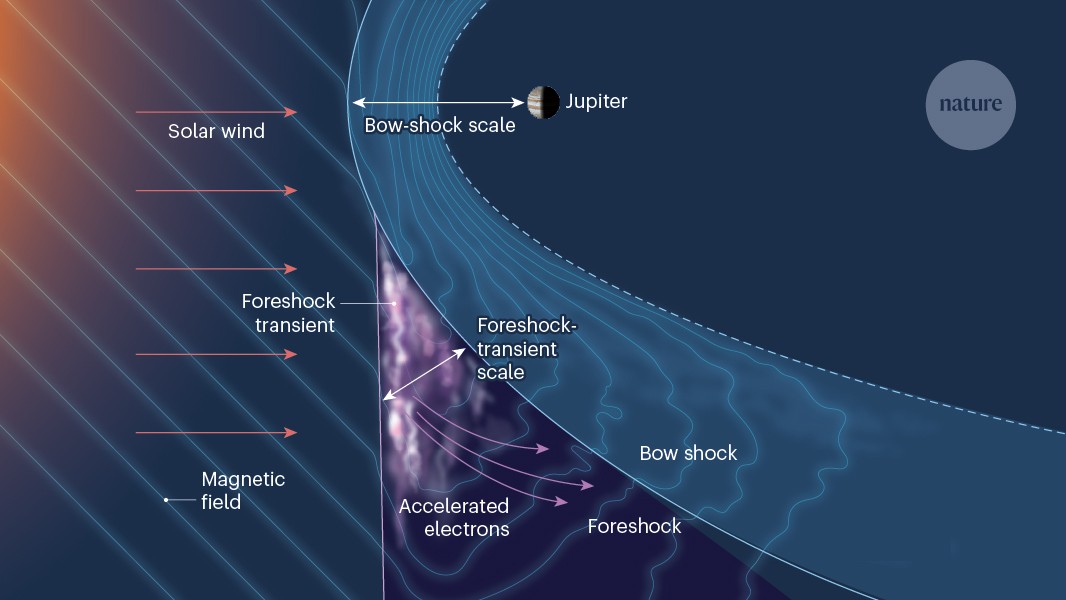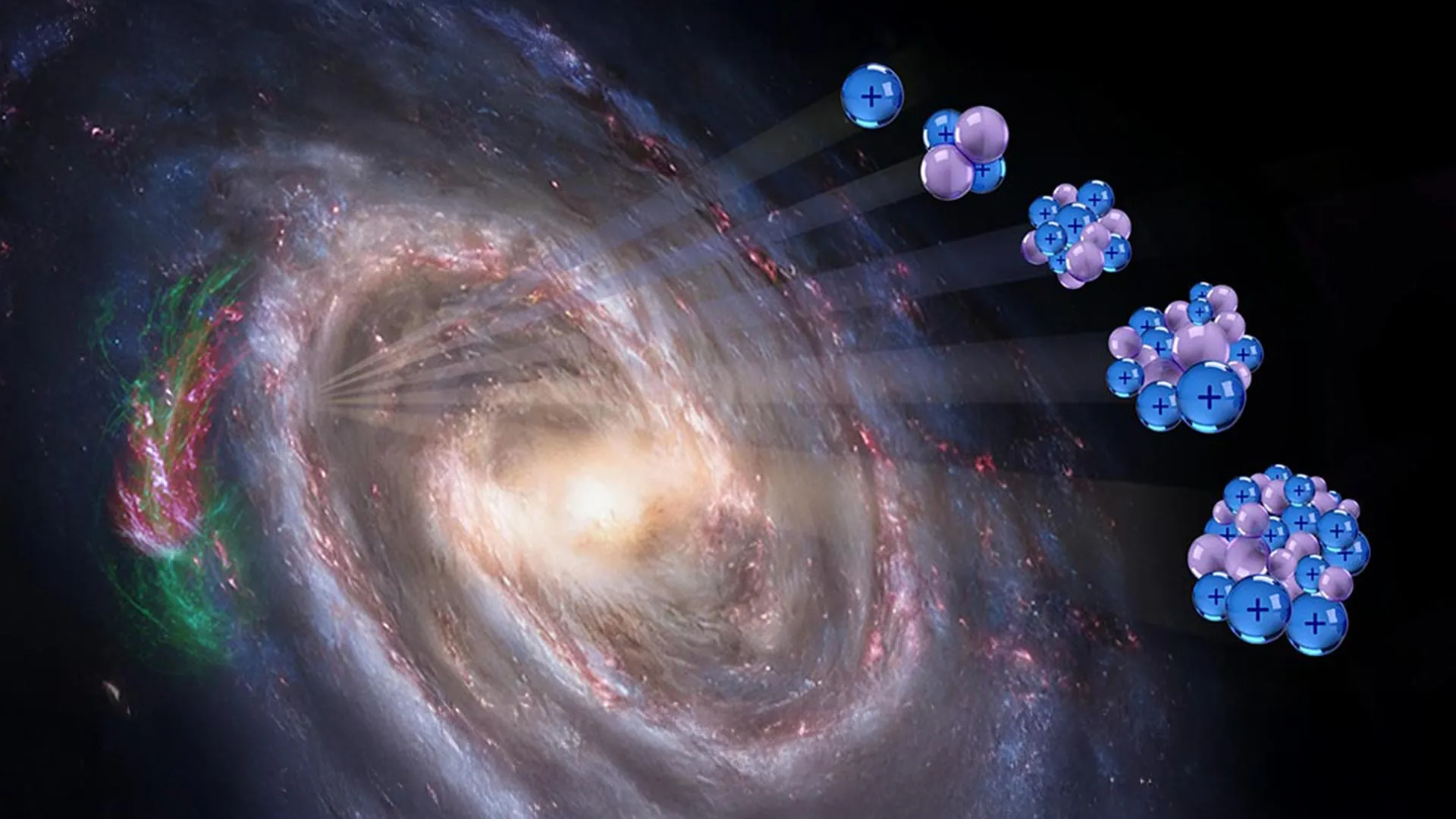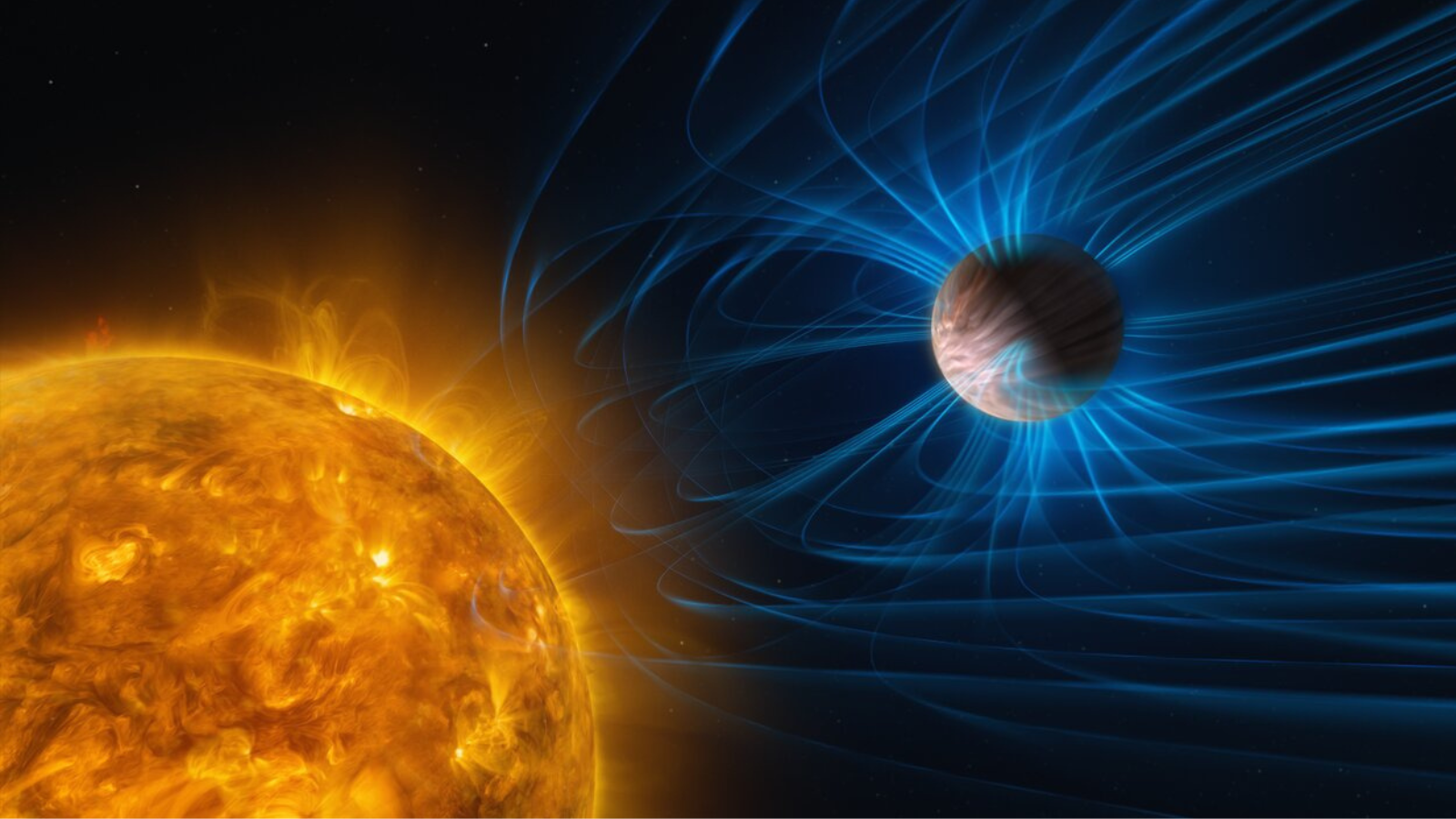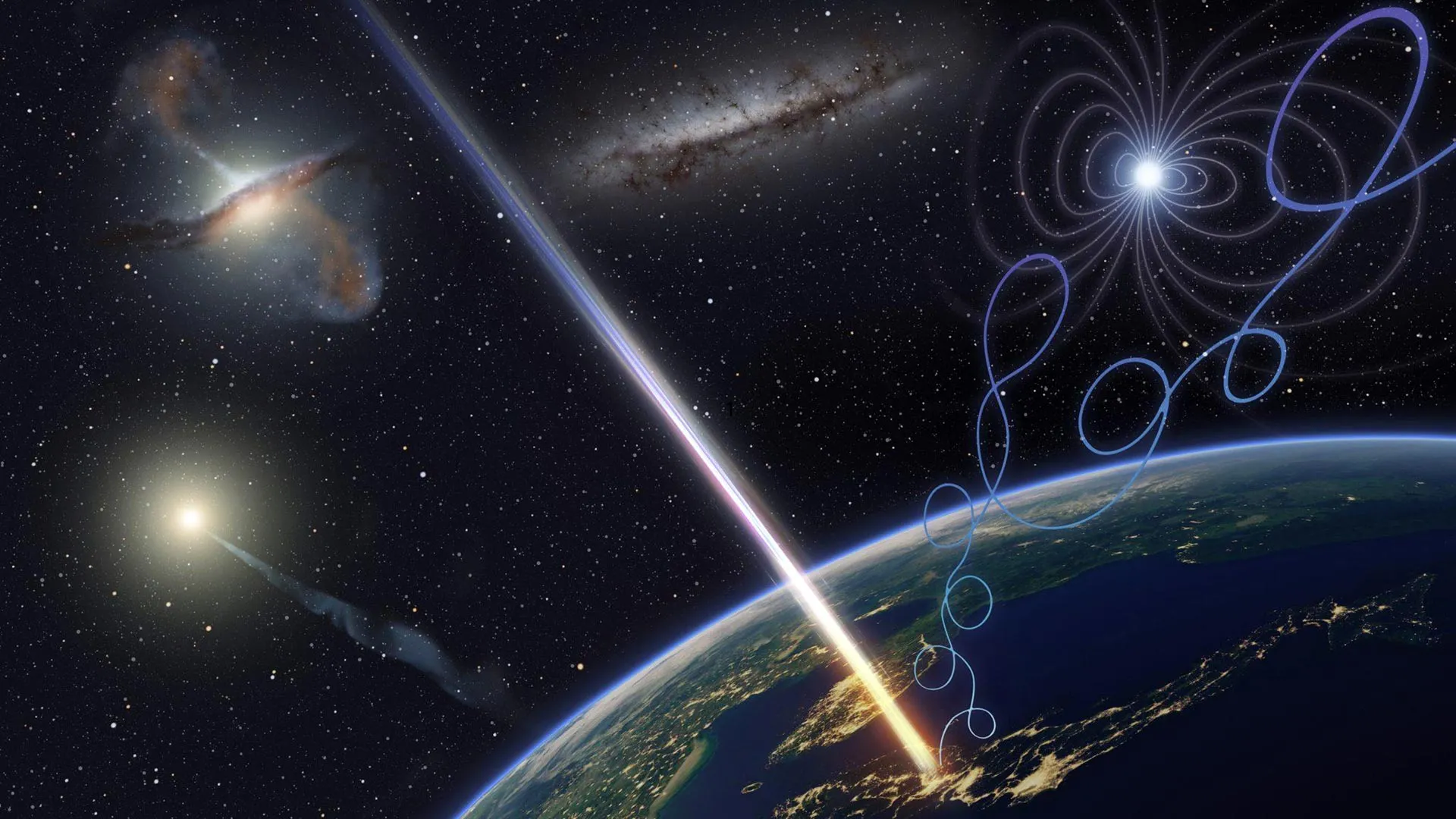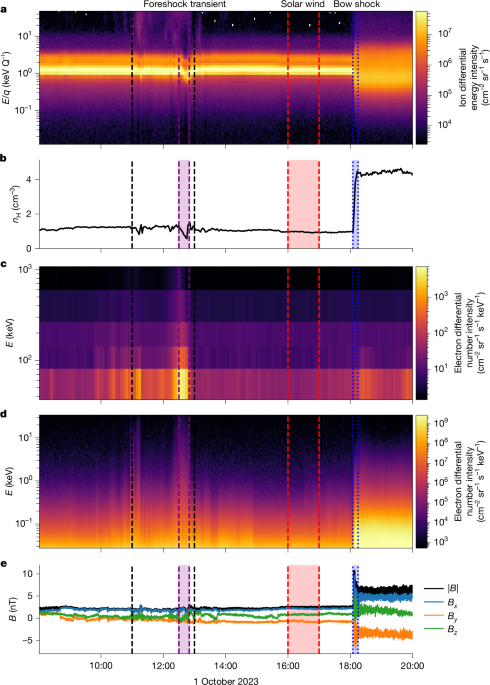
MainCollisionless shocks are ubiquitous structures in the Universe, widely believed to be the primary sites at which particles are accelerated to relativistic energies, contributing to the cosmic ray population1,2,3,11. The dominant mechanism, diffusive shock acceleration (DSA), describes how particles gain energy by repeatedly crossing a shock front. However, a long-standing challenge, known as the ‘injection problem’, is that DSA is only efficient for particles that are energetic enough to outrun the shock, a process that depends on the shock inclination and strength, which is not fully understood in all regimes12,13,14.A promising solution lies in the dynamic environment of the foreshock (‘precursor’ in the astrophysics community)15,16, which forms upstream of shocks under an oblique or quasi-parallel geometry, where the angle between the shock normal and the ambient magnetic field, θBn ≲ 45°. Within this region, large-scale structures known as foreshock transients can efficiently accelerate low-energy suprathermal particles to relativistic speeds. Recent observations at the bow shock of Earth have demonstrated that these transients can accelerate electrons to about 1 MeV through a powerful synergy of reinforced shock acceleration, pitch angle scattering and geometric trapping4,5,17,18,19. The resulting particle spectra have been shown to be well described by a E−1.5 power law attributed to non-relativistic particles undergoing DSA at strong shocks, underscoring the effectiveness of this mechanism and positioning quasi-parallel shocks as exceptional particle accelerators2,8,13,20,21. Crucially, these transients (named within the heliophysics community as hot flow anomalies (HFAs), foreshock bubbles and spontaneous HFAs (SHFAs), among others) are fundamental properties of collisionless shocks, forming in diverse plasma environments while scaling with the properties of the host system and its precursor and foreshock22,23.The universality of these transient processes is confirmed by observations throughout our Solar System, with foreshock transients identified at Mercury24, Venus25, Mars25,26,27, Earth4,5,17,18,19, Jupiter28 and Saturn29. Studies have shown that the physical scale of these transients correlates directly with the size of the primary planetary bow shock28. Applying a principle equivalent to the Hillas limit3, which connects the size of an accelerator to the maximum particle energy, this scaling suggests a potential link between the global size of a shock system and the maximum particle energy it can produce5, a hypothesis further supported by kinetic simulations that have consistently reproduced these structures across various parameters22,30,31.In this work, we present direct evidence of relativistic (>1 MeV) electrons upstream of the bow shock of Jupiter, conclusively linking their acceleration to a foreshock transient. We demonstrate that the observed energies are consistent with predictions from a scaling law that connects the system size (S) to the acceleration region (L) in foreshock transients and subsequently to an upper energy limit (Emax). By validating this scaling with multi-planetary data, we extend our analysis to astrophysical objects, including protostellar jets and supernova remnants. This framework bridges the observational gap between heliophysics and astrophysics through the planetary examples within the Solar System, offering an empirically grounded model for estimating the maximum particle energy based on the system size of the shock and its upstream medium. This model can provide key insights into the formation of the cosmic ray spectrum.Relativistic electrons at the Jovian bow shockOn 1 October 2023, around 18:05 UTC, the Juno spacecraft of NASA32 was inbound on an orbit at Jupiter, crossing the Jovian bow shock along its duskward flanks. The crossing occurred at approximately [+12.9, +60.5, −59.3] Jupiter radii (RJ ≈ 71, 500 km), in Jupiter Solar Orbital (JSO) coordinates. Before this, Juno probed the Jovian upstream region, obtaining observations from the local solar wind and foreshock environment. An overview of these observations is shown in Fig. 1 between 08:00 and 20:00 UTC. In the interval between approximately 11:00 and 13:00 UTC, the data show a series of localized disturbances associated with variations in ion density and the magnetic field, as well as the presence of energetic electrons. This activity appears to consist of two distinct foreshock transient events separated by about 1 h: the first structure being a less developed, smaller-scale transient, whereas the second is a larger event with a more distinct signature across all properties shown in Fig. 1.Fig. 1: In situ observations of the foreshock transient and bow shock crossing at Jupiter.The alternative text for this image may have been generated using AI.Full size imageOverview of Juno plasma and magnetic field observations on 1 October 2023 between 08:00 and 20:00 UTC. a, Ion energy spectrogram from the JADE instrument. b, Proton number density (nH) derived from JADE (cm−3). c, High-energy electron spectrogram from the JEDI instrument. d, Low-energy electron spectrogram from JADE. e, Magnetic field components and magnitude from the MAG instrument. The interval containing foreshock transients (approximately 11:00–13:00 UTC) is delimited by vertical black dashed lines. The most energetic transient event is highlighted by the purple-shaded region (approximately 12:30–12:50 UTC); this interval corresponds to a strong signal intensity exceeding ambient levels across all energy channels in the high-energy electron spectrum (c). For comparison, the planetary bow shock crossing (18:05–18:15 UTC) is indicated by blue-dashed, vertical lines and shading across all panels, and the ambient solar wind conditions are highlighted by the red-shaded area. A detailed view of the transient interval is provided in Extended Data Fig. 1.Source dataFocusing on the more prominent second event, the most intense electron enhancements (Fig. 1c, purple-shaded area) constrain its duration to approximately 12:30–12:50 UTC. Single-spacecraft analysis on this transient (Methods) yields an approximate scale length of L ≈ 3 × 10⁵ km and an equivalent propagation speed with respect to the planetary shock of v ≈ 320 km s−1. The characteristics of the transient are as follows: a disruption of the solar wind, evident plasma heating, a localized density decrease and a magnetic field structure with a localized minimum (core) and a compressive edge (Fig. 1a,b,e), clear signatures of a foreshock transient22. Its scale corresponds to several Jupiter radii and is consistent with the expectations derived from observations at Earth and other planetary environments28. Notably, the peak electron energy during the observed transient is an order of magnitude higher than that observed at the subsequent bow shock crossing (Fig. 1c). This finding supports the view that the most efficient particle acceleration to the highest energies can occur already in the upstream foreshock region, associated with a transient structure, rather than exclusively at the main planetary bow shock front itself. A detailed timeseries plot of the foreshock transient interval is shown in Extended Data Fig. 1, and an illustration of the process is shown in Extended Data Fig. 2.Figure 2 presents the combined electron energy spectrum from the Juno/Jovian Auroral Distributions Experiment (JADE) (low-energy) and Juno/Jupiter Energetic Particle Detector Instrument (JEDI) (high-energy) instruments during the most intense flux interval, providing a comprehensive overview from the eV range up to 1 MeV. To isolate the accelerated electron population for a direct comparison with theory, we subtract the ambient spectral signal, as shown in Fig. 2b. The energy spectrum from the foreshock transient (Fig. 2 shows a clear signal above the 3σ background level, derived from the red-shaded interval in Fig. 1) across all energy bins for both instruments. Notably, after ambient solar wind background subtraction (Fig. 2b), the energetic part of the electron spectrum is well-bounded by a power law with a spectral index of P = −1.5, yet the observed spectrum becomes softer at higher energies, tending towards −2, resulting in a slope of P ≈ −1.85 ± 0.2. This is a key result, in agreement with recent findings from foreshock transients at Earth5,19,33. Crucially, it demonstrates that this efficient acceleration mechanism can extend to MeV energies around the Jovian bow shock environment. Finally, the spectrum of the adjacent bow shock crossing (Fig. 2, blue line) shows increased intensity up to tens of keV compared to the background solar wind. However, it lacks any acceleration above this energy, suggesting the energetic tail is present only within the foreshock transient observations.Fig. 2: Spectral evidence of efficient electron acceleration within the foreshock transient.The alternative text for this image may have been generated using AI.Full size imageCombined differential electron number intensity spectra from the Juno spacecraft on 1 October 2023, using observations from the JADE (circles) and JEDI (squares) instruments. a, Three distinct plasma environments are compared corresponding to the shaded regions in Fig. 1. The primary foreshock transient event is shown in purple, representing an average over the period of peak intensity. For context, an average spectrum from the nearby bow shock crossing (18:05–18:15 UTC) is shown in blue (dashed lines), and a quiet upstream solar wind interval (16:00–17:00 UTC) is shown in red. The solar wind spectrum (hollow markers) serves as the background level, with upward error bars indicating the 3σ (99%) statistical variability. The two lowest-energy JEDI channels are excluded because of potential contamination. b, The solar wind/background-subtracted spectrum for the transient (purple), focusing on the high-energy tail (>10 keV). A fitted power-law index (∝EP) is shown with its 95% confidence interval determined by bootstrap analysis (Methods). Two reference power laws with spectral indices of P = −1.5 and P = −2.0, representing theoretical DSA limits for non-relativistic and relativistic particles, respectively, are overlaid (black dashed lines). The inset in a shows the trajectory of Juno with respect to the Jovian bow shock in JSO coordinates along with approximate location of each region (Methods).Source dataFrom planetary to astrophysical scalesTo generalize our findings, we rely on a key premise that the most efficient particle acceleration in planetary shock environments occurs predominantly within large-scale foreshock transients4,5,17,18,19. In this model, rather than being confined to acceleration strictly normal to the shock front as in classical DSA1, particles are energized within these transients as the structures themselves propagate along the shock front22,30. Crucially, the size of this acceleration region (L) is not an arbitrary local parameter but is intrinsically linked to the global system size, scaling with the standoff distance of the shock (S). This scaling provides the critical physical scale (L) required by the Hillas criterion3, thereby establishing a direct, empirically constrained relationship between the global size of a shock and the maximum particle energy (Emax) it can produce. The wealth of in situ observations from our Solar System provides the unique opportunity to empirically determine this relationship, creating a framework that can be generalized to distant astrophysical shocks in which only global parameters can be inferred.Within this framework, we construct an empirical power-law scaling from planetary in situ observations that connects the global size of a shock (S) to its acceleration region (L) (Fig. 3a). Applying the Hillas limit with this constrained scale (L), along with local shock parameters (Methods), yields maximum particle energies (Fig. 3b) that show remarkable consistency with observations at Earth5,17,18, Saturn6 and the new Juno observations at Jupiter presented in this work, demonstrating the applicability of the Hillas limit within the Solar System scales34. This successful validation at planetary scales provides the foundation to extrapolate to astrophysical shocks, although we emphasize that this necessarily involves assumptions that extend beyond direct observational constraints. We apply the scaling relationship to the protostellar jet HH 211 and the supernova remnants SN 1987A and SN 1006 systems chosen for their high Alfvén Mach number (MA) and non-relativistic shocks7,8,35,36. Notably, SN 1006 provides an important test of the predictive power of our model, as it is a model for γ-ray bright remnants known to accelerate particles to tens of TeV (ref. 37), enabling a bounded test for the predictions of our model.Fig. 3: Scaling analysis and maximum particle energy for planetary and astrophysical shocks.The alternative text for this image may have been generated using AI.Full size imagea, Relationship between shock system scale (S) and the acceleration region size (L). Squares represent observed data for six Solar System planets; solid and dashed orange lines show power-law fits for typical (Ltyp) and maximum (Lext) observed sizes, respectively. The yellow-shaded area indicates the 95% prediction interval for the extreme fit. For planetary data, upward error bars span from typical to maximum observed sizes. For astrophysical systems (diamonds; HH 211, SN 1987A and SN 1006), markers indicate predicted sizes with error bars extending to the predicted maximum. b, Predicted maximum particle energy as a function of S. Planetary energy ranges are calculated from observed maximum L; astrophysical energy ranges are derived from the upper 95% prediction interval of the extreme fit in a. Marker sizes scale with maximum predicted energy. Model predictions align with observational evidence: MeV-scale energies at Earth5,17,18; Cassini energetic electron events at Saturn6; and the MeV Juno measurements at Jupiter reported here. Predicted energies for SN 1006 (≲100 TeV) are consistent with X-ray observations8,38,39.DiscussionThe presented Juno observations, together with earlier findings at Earth4,5,18,19, mark a shift in our understanding of particle acceleration at planetary bow shocks. We directly capture relativistic electrons energized not exclusively at the shock front but within its extended shock region, starting at the upstream foreshock, in which a foreshock transient drives electron intensities an order of magnitude above those at the adjacent shock crossing. The immense scale of the transient, spanning several Jupiter radii, and its clean, power-law spectrum to MeV energies confirm that large-scale foreshock transients deliver ideal conditions for efficient acceleration to take place under strong scattering conditions. This insight compels us to revisit the classical DSA picture, expanding it to encompass acceleration along the extended shock region. Building on these results and all available in situ observations from our Solar System, we explored how the intrinsic link between shock geometry and foreshock dynamics governs maximum particle energies across planetary and astrophysical systems.To generalize beyond Jupiter, we compiled foreshock and shock observations across the Solar System and established a clear scaling between the standoff distance of the shock, S, and the size of its acceleration region, L (Fig. 3a). At Earth (MA ~ 4) and Jupiter (MA ~ 20), foreshock disturbances span scales set by the upstream Mach number23. Extending this empirically derived scaling law to protostellar jets (HH 211) and supernova remnants (SN 1987A and SN 1006), which exhibit Mach numbers and global system scales orders of magnitude larger, predicts acceleration regions on the order of 108–1010 km. Although these scales cannot be directly measured at astrophysical distances, the physical arguments supporting this extrapolation are detailed in the Methods. This approach ultimately proposes a direct link between the global geometry of a collisionless shock and the transient-driven acceleration that sets the maximum particle energy, Emax. Using this model, we obtain that for an optimistic but statistically plausible scenario, systems such as SN 1987A could achieve maximum particle energies of the order of ≿10 TeV, whereas the predictions for SN 1006 match the maximum energy of ≲100 TeV inferred from the observations of ≳10 TeV γ-rays8,36,38,39, supporting the presented framework (Fig. 3b).We must emphasize that this work provides a framework for bridging in situ planetary observations with large-scale astrophysical phenomena. The scaling law of the model, which is the basis for this framework, is derived directly from decades of planetary data. The significance of this approach is underscored by the presented Juno observations, which show that foreshock transients spanning several planetary radii act as highly efficient particle accelerators, which can generate clean power-law spectra up to MeV energies (Fig. 2). Although this observational evidence is strong, the extrapolation to astrophysical shocks necessarily remains tentative (Fig. 3). Consequently, the presented framework represents an attempt to constrain the upper limits of particle acceleration through a unified, observationally driven approach. Furthermore, we should note that our model assumes that Bohm diffusion well describes the environment (that is, the magnetic fluctuations are stronger than the background field, dB/B0 ≫ 1) and that sufficient time is available for electrons to get accelerated to the maximum obtainable energies. Consequently, the derived energy limits should be interpreted as robust, yet relatively conservative bounds. This approach was intentionally chosen for its simplicity, enabling direct predictions from our scaling law and fundamental principles. We acknowledge that more sophisticated models could potentially yield higher or more precise maximum energies. These models can incorporate the complex three-dimensional structure of foreshock transients, which can create distinct scales for particle acceleration and trapping4,19. However, these efforts are computationally demanding and necessitate precise a priori knowledge of upstream conditions at a level of detail unavailable for distant astrophysical systems. The precise impact of these complex effects on energy spectra and acceleration timescales remains an open question and constitutes a promising avenue for future investigation.ConclusionsTo summarize, in this work, we present direct evidence of relativistic electrons upstream of the bow shock of Jupiter, associated with a foreshock transient. We demonstrate that these shock-generated transients act as highly efficient particle accelerators, a process previously established at Earth and now shown for the first time at Jupiter. Our observations are in excellent agreement with predictions from shock acceleration operating within the spatial scales dictated by these transients under a strong scattering environment. Using these observations alongside historical data from other planetary environments, we extrapolate this scaling relationship to astrophysical objects, namely, the protostellar jet HH 211 and the supernova remnants SN 1987A and SN 1006. Applying the known parameter space for these non-relativistic shocks shows that these fundamental processes can accelerate particles up to about tens of TeV, an energy range that may contribute to the observed electron cutoff in the cosmic ray spectrum9. Most importantly, the predicted maximum energies for SN 1006 are consistent with observations8,38,39, which provides direct support to our model. Building on this framework, an important next step is to evaluate the presented framework on other astrophysical objects (for example, different supernova remnants, nova shocks40, ultrahot Jupiters41 or jets from γ-ray bursts42) and determine the relative contributions of various astrophysical accelerators to the cosmic ray flux. These include not only non-relativistic collisionless shocks (as studied here) but also phenomena such as radiation belts43, massive star clusters44, blazars45, ultrafast winds from active galactic nuclei46 and binary star systems10. These endeavours will require extended simulation and observational efforts in a cross-disciplinary manner.MethodsDataObservations for this study are from the Juno spacecraft of NASA32. The energetic particle data are provided by the JEDI47, which measures ions and electrons from about 30 keV to 1 MeV with an energy resolution of around 20%. JEDI consists of three identical sensor heads (JEDI90, JEDI180 and JEDI270) distributed around the spacecraft to optimize pitch angle coverage over a 160° × 12° field of view with an angular resolution of about 18°. The first two energy bins of JEDI used in this study are contaminated and are not included in the analysis, resulting in four energy bins covering approximately 100 keV to 1 MeV, as shown in Fig. 2. Lower-energy ion and electron observations are obtained from the JADE48. JADE consists of two electron sensors (JADE-E) and an ion sensor (JADE-I), both measuring ions with energy per charge from 10 eV q−1 to 46.5 keV q−1 across 64 energy channels and electrons with energy per charge from 30 eV q−1 to 32 keV q−1, with a time resolution that is mode dependent and corresponds to about 2 min in the presented event. Magnetic field vector data are sourced from the Magnetic Field Investigation (MAG) instrument49, which uses two fluxgate magnetometers to provide measurements with a temporal resolution of 1 s. All data are presented in the JSO coordinate system, a Jupiter-centred frame in which the x-axis points to the Sun, the y-axis is in the anti-direction of the orbital motion of Jupiter and the z-axis completes the right-handed system50.Data post-processing and density calculationsThe raw instrument data were processed to generate the products used in this analysis. The JEDI energy-time spectrograms (Fig. 1c) were created by averaging data from all three sensors and all look directions. During the observation period, the instrument operated in a low-resolution mode, binning counts into six logarithmically spaced energy channels from about 30 keV to 1 MeV and into 300 s time bins. The count rates associated with the transient event, ranging from about 20 to 60 counts per second, are considered statistically significant. The electron energy efficiency correction detailed in ref. 51 was applied, although its effect is minimal in the low-radiation environment near the magnetospheric boundary of Jupiter. For JADE, proton densities were derived from JADE-I data using a numerical integration method on SPECIES=3 data52. Although JADE-I is not optimized for solar wind measurements53, this method has been shown to be consistent with forward-modelled Maxwellian fits for similar events28. The omnidirectional differential number intensities for JADE-E were calculated by averaging the observed intensities over 48 look directions, which are binned onboard in the low rate science mode of the instrument48.Bow shock and foreshock transient characterizationIn Extended Data Fig. 1, a magnified timeseries of the foreshock transient interval (11:30–13:30 UTC) is shown. Energetic particle intensification and plasma density depletion begin at about 12:30 UTC, with a localized compression marking the trailing edge of the structure at approximately 12:50 UTC, typical features of foreshock transients4,5,22,54,55.To better characterize the global environment during this encounter, we use the local magnetic field conditions and the shock normal vector estimated in ref. 56. Using this, we obtain a normal vector of [0.77, 0.45, −0.44], consistent with the duskward Juno location. The orientation of the magnetic field with respect to this normal is shown in Extended Data Fig. 1e, suggesting that the shock orientation transitions from an oblique or quasi-parallel to a quasi-perpendicular one. Specifically, during the formation and observation of the transient itself, the orientation becomes even more quasi-parallel. This shock geometry (with θBn ≲ 60°) is expected to produce substantial populations of foreshock suprathermal particles57,58,59 associated with the formation of foreshock transients4,5,22,54.Particle data further support this interpretation. The presence of diffuse, isotropic suprathermal ions and electrons indicates that the spacecraft is residing within the foreshock region60. Specifically, the pitch angle distributions (PADs) of ions and especially electrons show a clear isotropic population of accelerated particles. These PADs demonstrate that particles are distributed across all pitch angles, a signature of well-scattered populations within the foreshock. This is in agreement with characteristics of accelerated electrons observed during foreshock transients at Earth5,18,19. An illustration of the environment and associated transient is shown in Extended Data Fig. 2.Focusing on the foreshock transient (12:30–12:50 UT), the electron PAD signature shows a progression as the transient passes through the spacecraft. This signature suggests that particles are accelerated in the approaching region, peaking within the transient and ceasing as the spacecraft exits the structure and the field rotates to a quasi-perpendicular regime after 12:50 UT. This strongly supports a local acceleration mechanism because if the source was external, energetic electrons would be observable over wider intervals. Instead, their strict localization to the transient structure implies they are generated in situ rather than being remote-sensed. Regarding the broader spatial context, based on spacecraft speed (about 4 km s−1) and the interval duration, we estimate that Juno was residing approximately 1RJ upstream of the bow shock (Fig. 2, inset). This serves as an approximate estimate, as the bow shock at planetary flanks can change location rapidly. This estimate is consistent with observations at Earth, in which transients are observed at around 1−4RE (refs. 19,61,62).To determine the exact geometry and scale of the observed foreshock transient, we first established its orientation using minimum variance analysis (MVA) on the magnetic field vector data in the JSO coordinate system63. This technique identifies the principal axes of the variance of the magnetic field by finding the eigenvalues (λmax ≥ λint ≥ λmin) and the corresponding eigenvectors of the covariance matrix of the magnetic field over the interval containing the transient crossing. The eigenvector associated with the minimum eigenvalue (nMVA) is interpreted as the normal direction to the boundary of the transient, assuming a quasi-planar structure. The validity of this normal was confirmed by ensuring a large ratio of the intermediate to minimum eigenvalues (λint/λmin ≫ 1). With the boundary normal established, we then estimated the scale size of the transient, L, along this direction using the single-spacecraft timing method. The scale is calculated as L = |vsw ⋅ nMVA| × Δt, where vsw is the upstream solar wind velocity and Δt is the measured duration of the passage of the spacecraft through the structure. Finally, the convection electric field −V × B points towards the transient sheet, which allows particles to concentrate and form the observed transient. The overall methodological approach we followed is a standardized process typically done when single spacecraft in situ observations are available4,5,18,28. Specifically, for our case, we used a typical upstream solar wind velocity of vsw = [400, 0, 0] km s−1 in JSO coordinates, which is in agreement with estimations of velocity during that interval, and calculated the scale as L = |vsw ⋅ nMVA| × Δt, where Δt was taken as a 15-min duration of the passage of the spacecraft during the transient event. It should be noted that this 15-min interval, while relatively conservative, provides a realistic range of values for the spatial scale analysis (described below). The outcome of this analysis is provided in Extended Data Table 1.Finally, a power-law fitted to the energetic tail of the JADE and JEDI data (≥10 keV) during the foreshock transient results (Fig. 2b) in a spectral index of P ≈ −1.85 ± 0.2 with the exact 95% confidence interval being determined using a non-parametric bootstrap analysis with 1,000 iterations64. This value suggests an acceleration process with a signature and efficiency similar to that of DSA. The obtained index is well-bounded by the canonical DSA limit of P = −1.5, a feature of efficient acceleration, and is also consistent with the expected spectral softening from −1.5 (non-relativistic) towards −2 for electrons at relativistic energies at ≳1 MeV, as they are above the electron rest mass energy65.Spatial scales and energy limitsThe maximum energy attainable by a charged particle is fundamentally constrained by the physical properties of the accelerating environment. This limit is known as the Hillas criterion3, which relates the maximum particle energy to the available potential drop across the system. For a characteristic magnetic field B and flow velocity V, the induced motional electric field creates a potential difference across a scale L that ultimately limits the maximum attainable energy of a particle, with charge q, to Emax = qBLV.In the specific context of diffusive shock acceleration, this limit can be expressed as a confinement condition requiring that the upstream diffusion length of the particle, Ld, remains comparable to or smaller than the system size L (ref. 34). The diffusion length (Ld) can be estimated through the expression Ld ≈ D/Vsh, where D is the spatial diffusion coefficient for the maximum energy, and Vsh is the velocity of the shock. For strong scattering, as is often assumed in the foreshock regions of planetary bow shocks2,5, the scattering approaches the Bohm limit, at which the diffusion coefficient is \(D\approx \frac{1}{3}v{r}_{{\rm{g}}}\), with v being the relativistic velocity of the particle and rg its gyroradius. By equating the diffusion length to the system size (L ≈ Ld), we recover the velocity dependence inherent in the Hillas criterion: \(L\approx \frac{1}{3}\frac{v}{{V}_{{\rm{sh}}}}{r}_{{\rm{g}}}\).To derive a quantitative expression for the maximum energy from this relationship, we express the velocity v of the particle and gyroradius rg = p/(qB) in terms of its total energy Etotal = Emax + mc2, where p is the momentum of the particle, q is the particle charge and B is the magnetic field magnitude. The relativistic relations p = γmv and \({E}_{\,{\rm{total}}}^{2}={(pc)}^{2}+{(m{c}^{2})}^{2}\) imply \(p=\sqrt{{E}_{\,{\rm{total}}}^{2}-{(m{c}^{2})}^{2}}/c\) and v = pc2/Etotal. Substituting these into the confinement condition gives $$L=\frac{1}{3}\frac{1}{{V}_{\mathrm{sh}}}\frac{{E}_{\mathrm{total}}^{2}-{(m{c}^{2})}^{2}}{{E}_{\mathrm{total}}\,qB},$$
Relativistic electron acceleration at the bow shock of Jupiter and beyond - Nature
NASA’s Juno observations show relativistic electron acceleration at the bow shock of Jupiter and establish a universal scaling law linking shock size to maximum cosmic ray energy.
9,801 words~45 min read