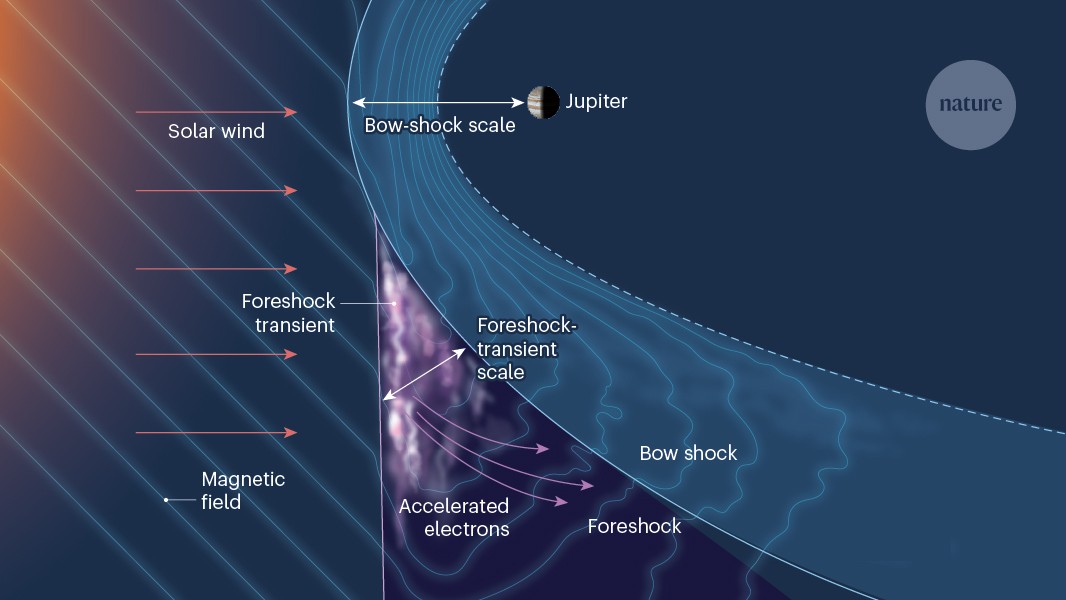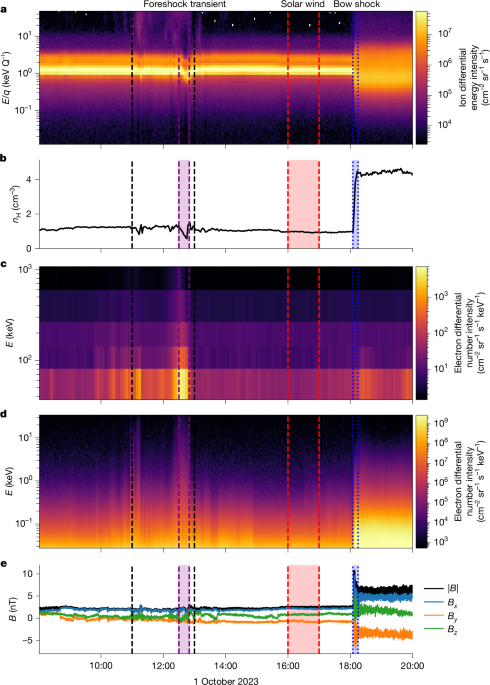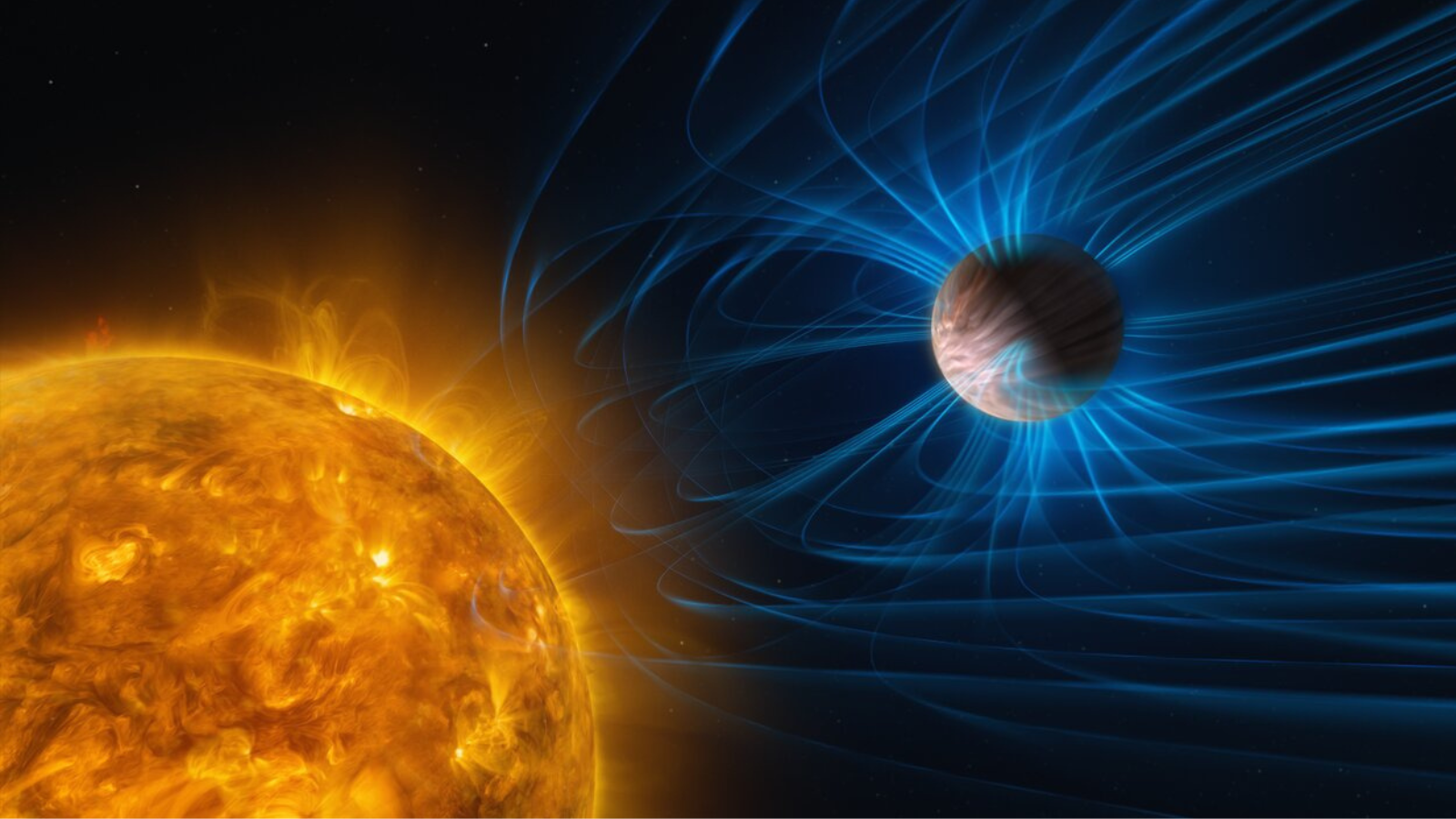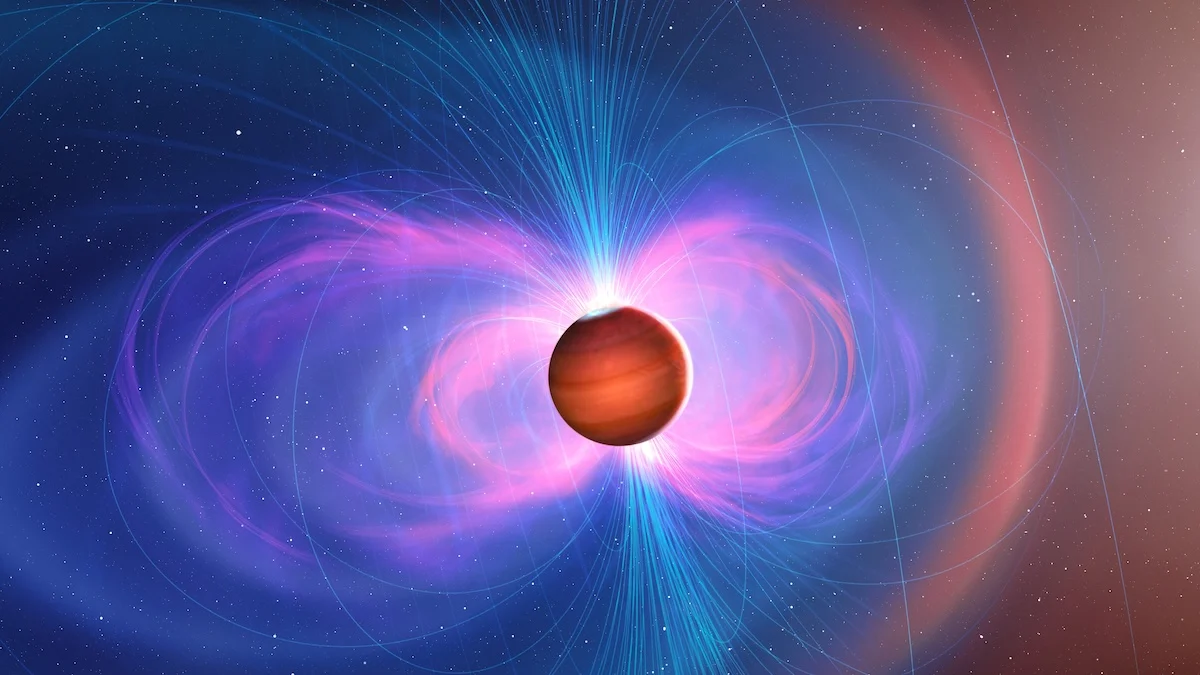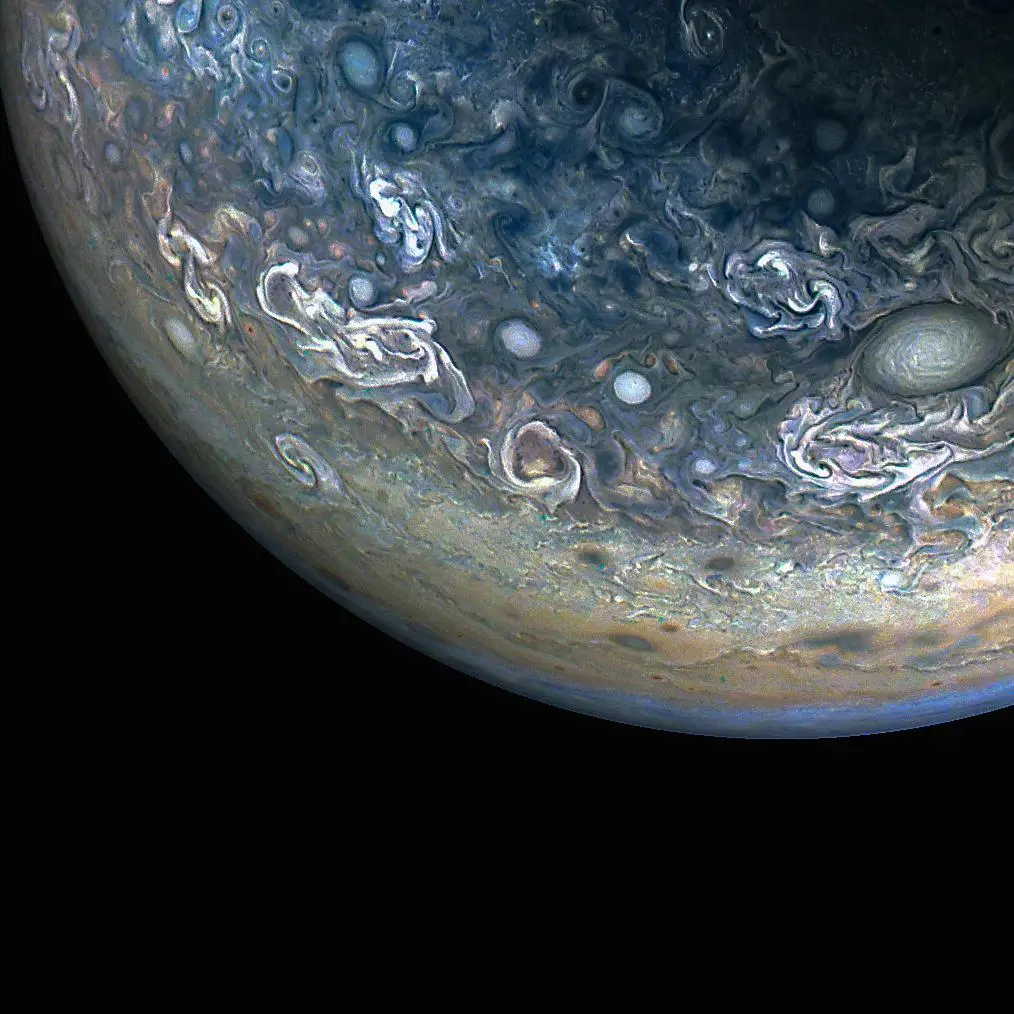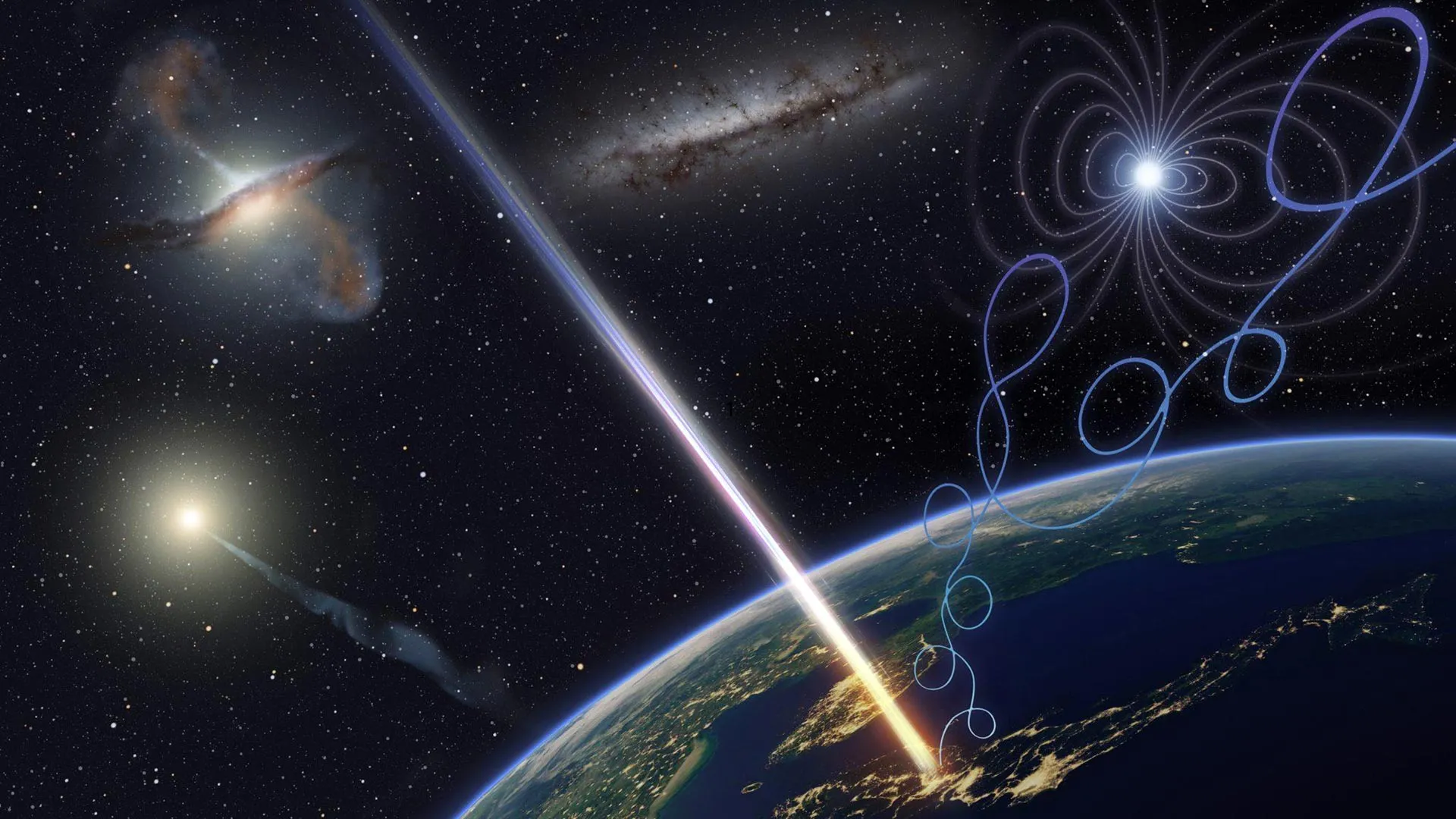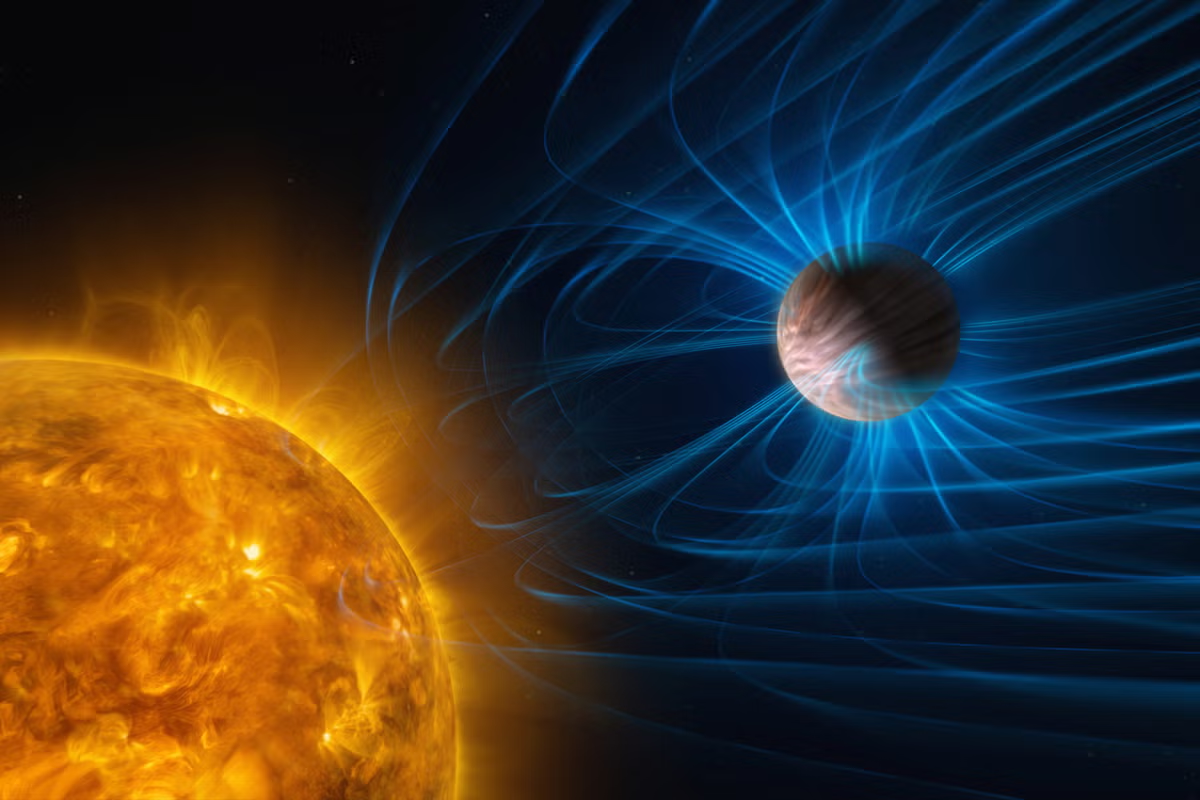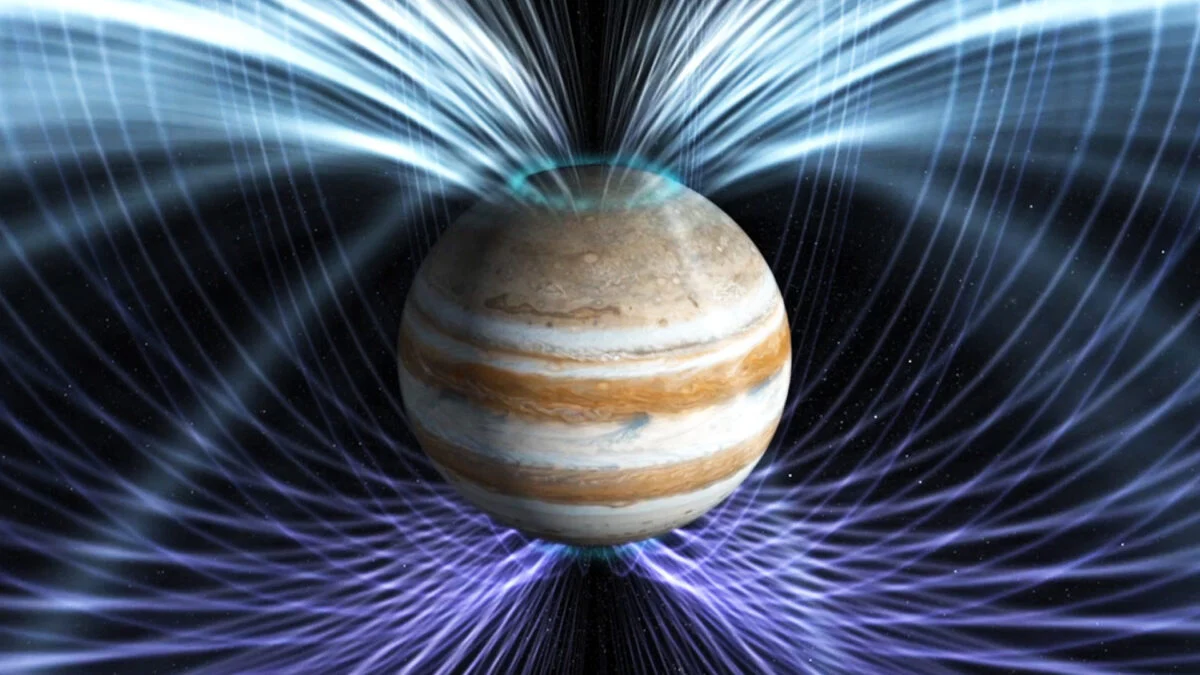
Our most powerful particle accelerators mimic near-light speeds of cosmic particles. But no upgrade may be capable of replicating the extreme complexity of the most violent objects in the universe. To understand these environments, astronomers are using entire planets as natural labs, including Jupiter’s tumultuous magnetosphere. In a Nature paper published today, researchers describe how electrons accelerate to near the speed of light upstream of Jupiter’s bow shock. The bow shock is a region of intense density and pressure changes created when the planet’s magnetosphere collides with the solar wind. Upon closer inspection, the team discovered that a turbulent zone called the foreshock forms large, naturally occurring particle accelerators that outperform the forces in the shock boundary. Importantly, the same process appears to be applicable to cosmic scales, far beyond our solar system. “We took a mechanism we demonstrated at Earth, found a clear analog at Jupiter, and showed that the underlying physics generalizes,” Savvas Raptis, the study’s first author and a researcher at the Johns Hopkins Applied Physics Laboratory, told Gizmodo. “That suggests the physics we can measure at our own planet may govern how cosmic rays—particles that constantly bombard Earth—get their energy at some of the most violent objects in the universe.”
Jupiter Flings Particles to Nearly the Speed of Light. The Weird Part Is How
Scientists are increasingly using our solar system as a natural laboratory for studying extreme phenomena.
920 words~4 min read