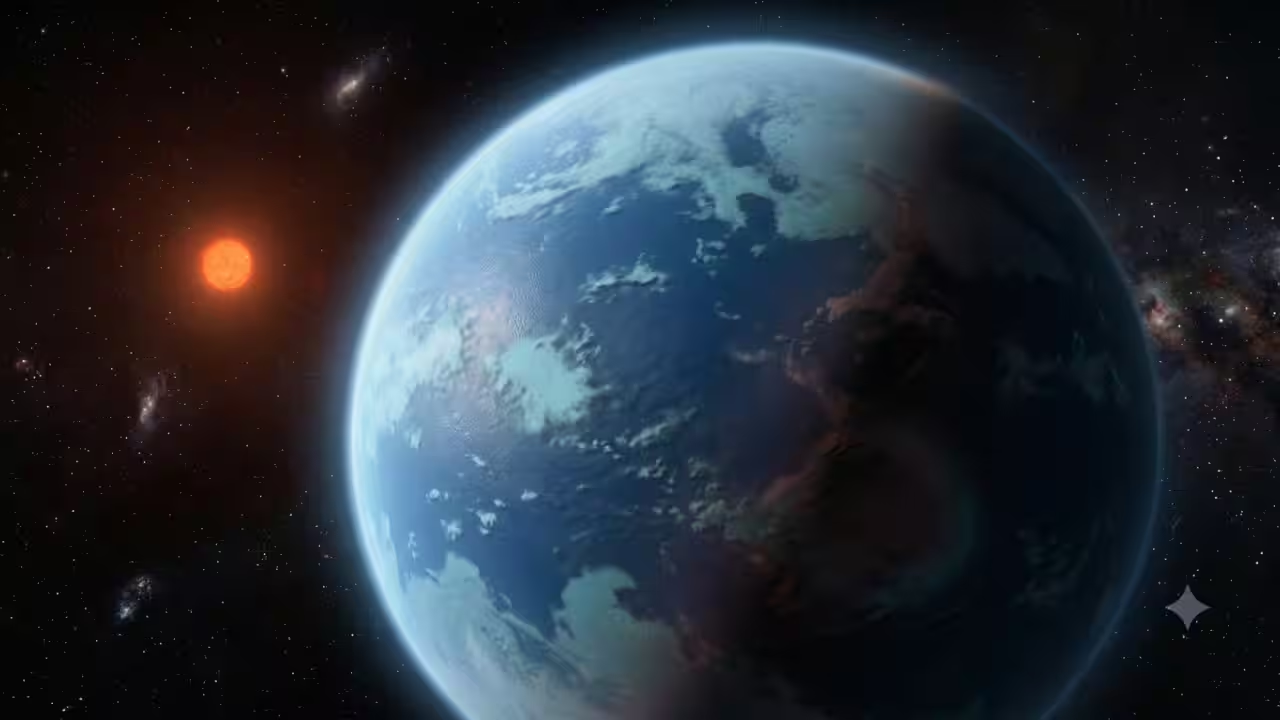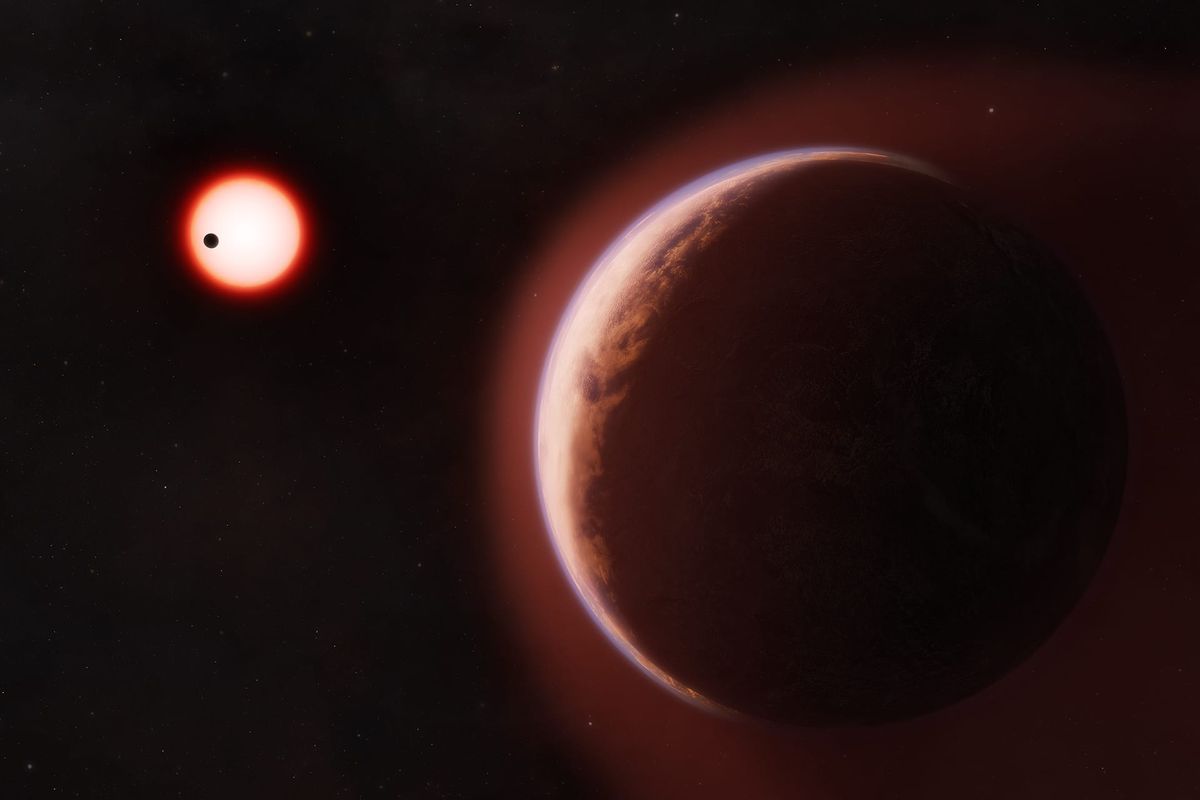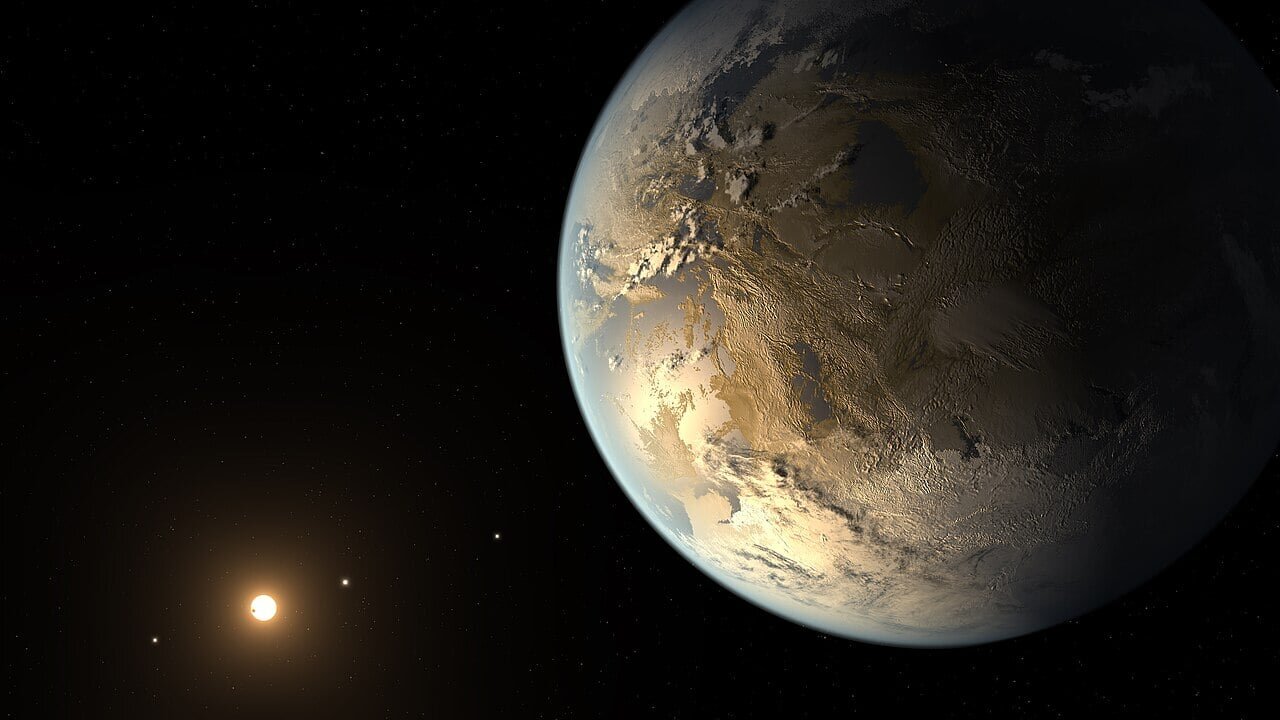
A new study has shone a new light on searching for habitable worlds, perhaps like Kepler 186f represented here in this artist impression. Credit: NASA Ames/SETI Institute/JPL-Caltech
When astronomers discovered the first planet outside our solar system, it was orbiting a pulsar, one of the most extreme, radiation-blasted environments imaginable. Not exactly the kind of place you'd expect to find a planet, let alone a representative one. The first confirmed exoplanet was an oddity, a product of the fact that pulsar timing is extraordinarily sensitive, not a reflection of what planets are typically like.
The same pattern repeats throughout astronomy. The first quasar discovered was the brightest quasar visible from Earth. The first asteroid found was the largest. The first hot Jupiter detected was a gas giant on a four-day orbit, a freakish extreme that represented less than one percent of planetary systems, yet dominated early catalogs simply because it was the easiest thing to spot.
A new paper from NASA's Goddard Space Flight Center argues that the first detection of a chemical sign of life on another planet will follow exactly the same pattern. We won't find the most common form of life in the universe, instead, we'll find the loudest one.