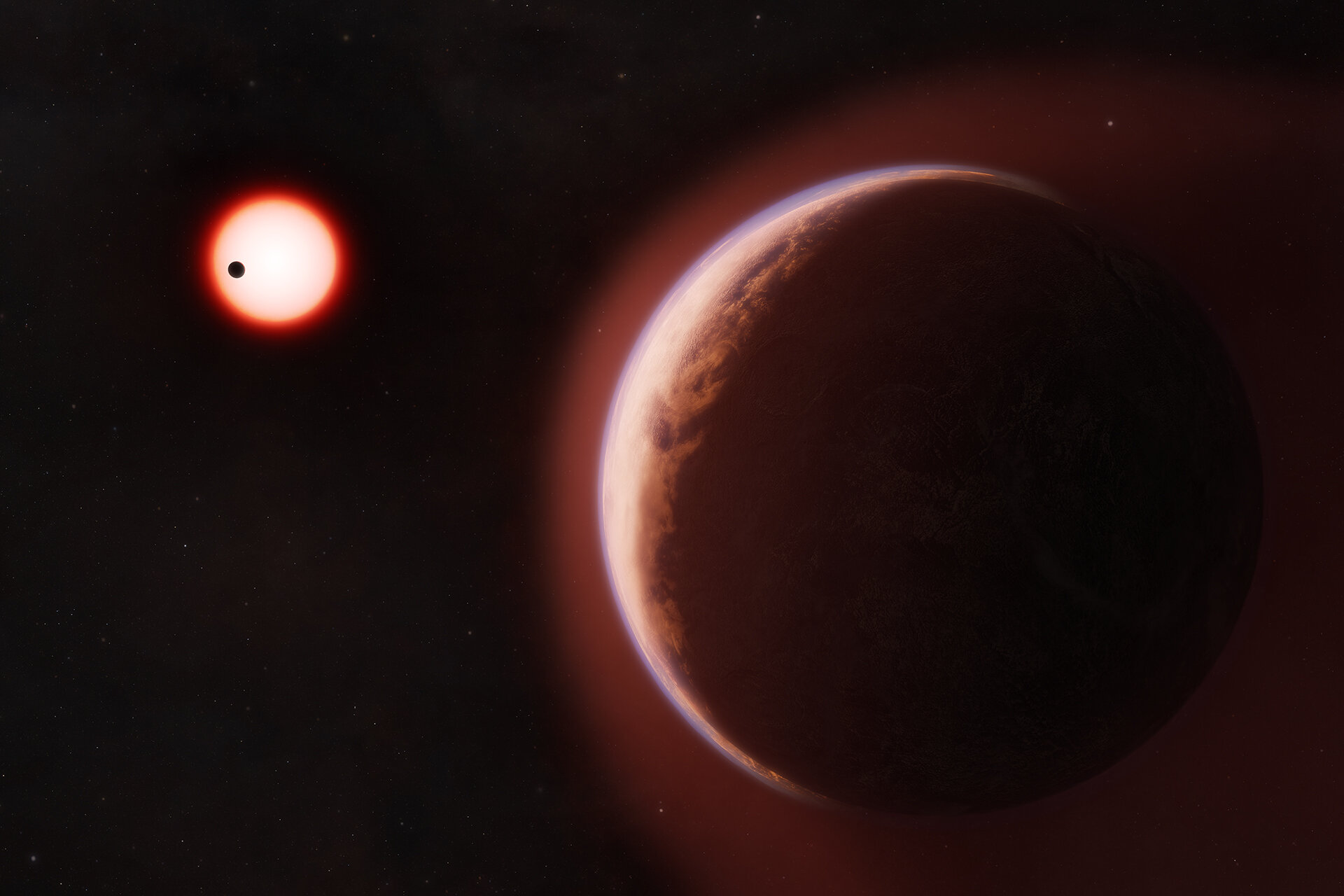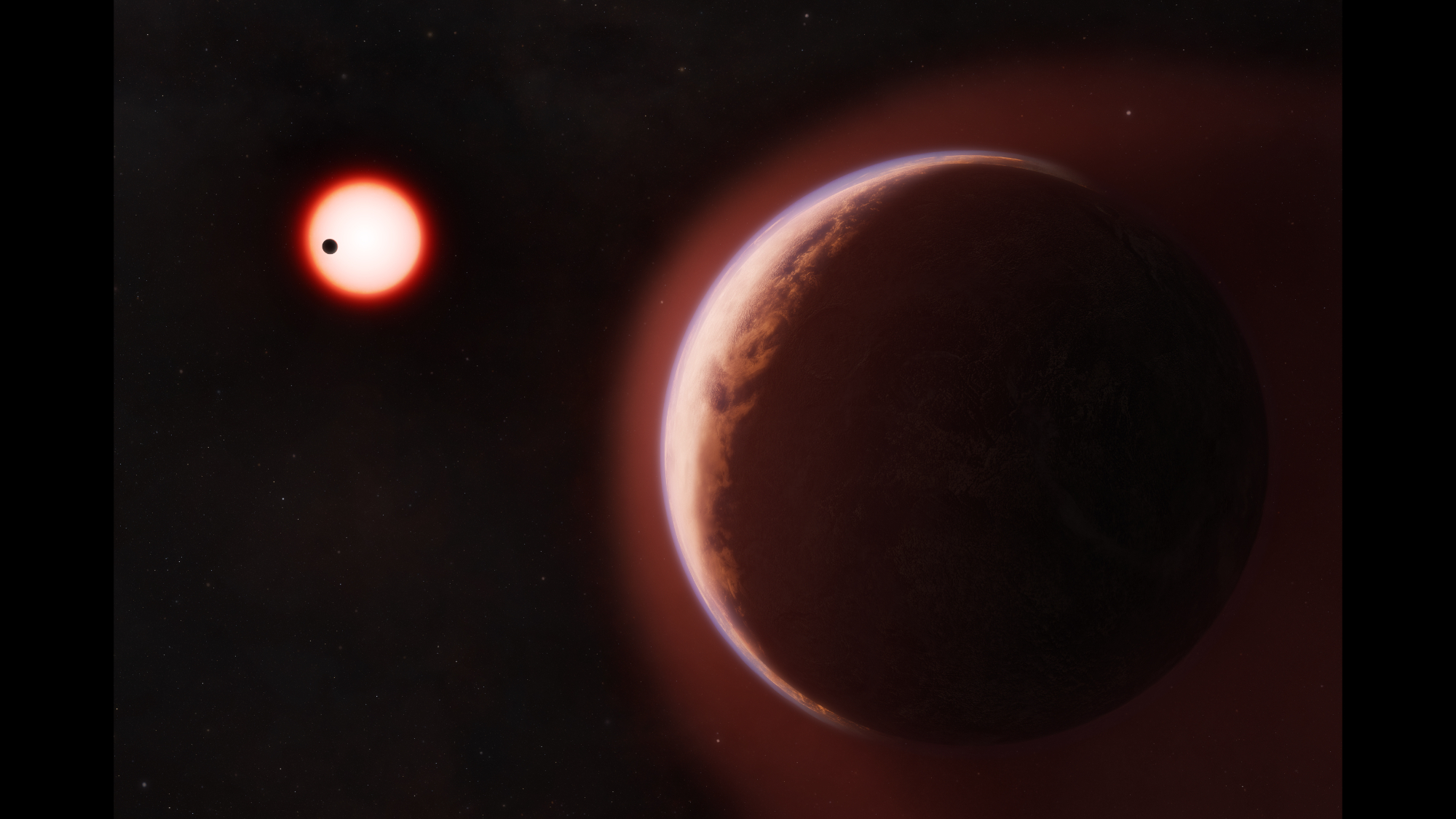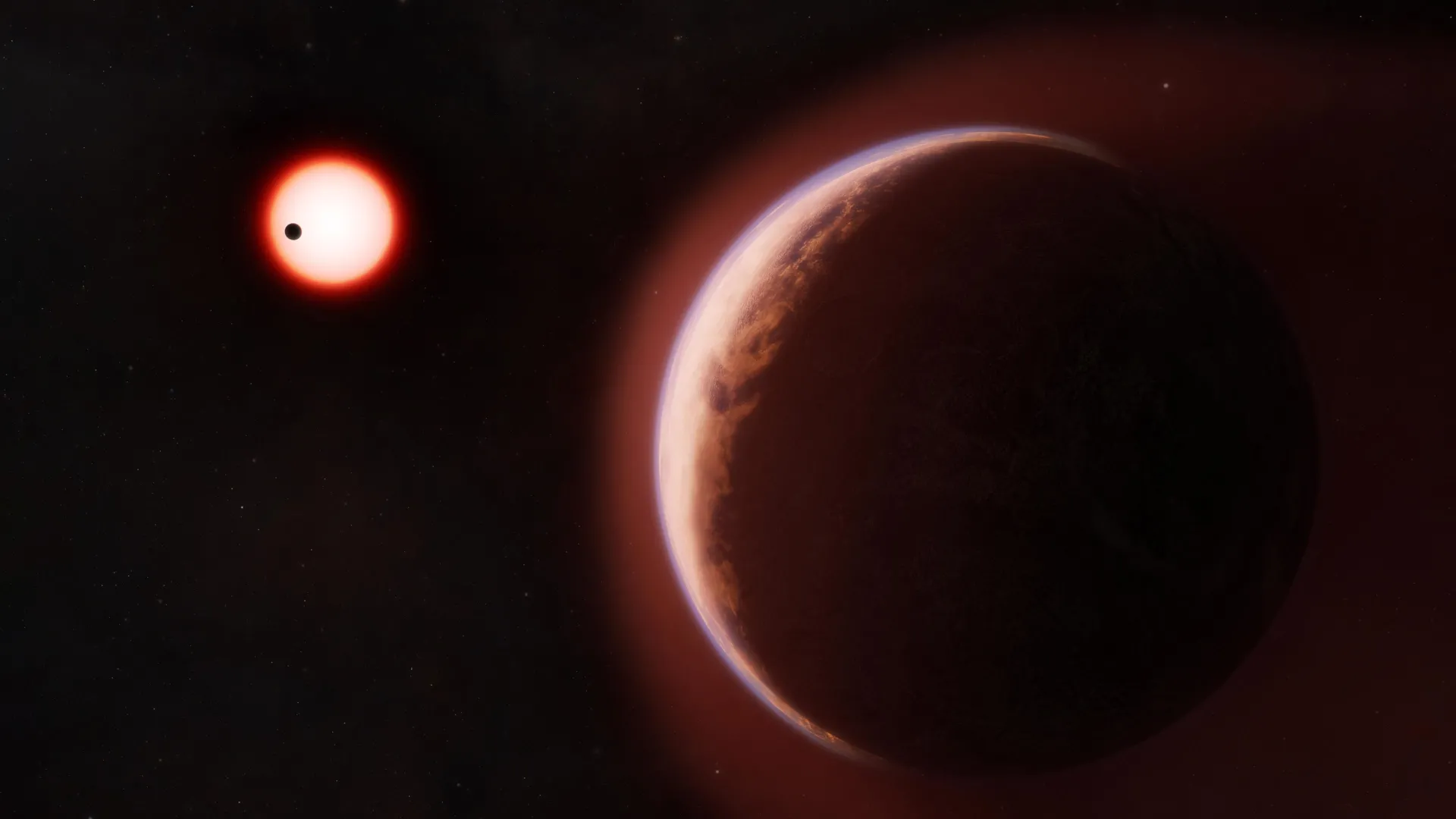
Astronomers have detected an atmosphere around a rocky exoplanet in the habitable zone of its star for the first time in history, signalling a major breakthrough in the search for alien life, according to a study published on Thursday in Science.
The planet, known as LHS 1140-b, is about 5.6 times more massive than Earth and orbits a small dwarf star about 48 light years from our solar system. While scientists have discovered atmospheres around many giant gas planets in our galaxy—and even a few rocky exoplanets outside the habitable zone—the new detection of helium in the skies of LHS 1140-b marks the first direct evidence that a habitable-zone rocky world can host an atmosphere, which is a critical factor for assessing their potential to support life.
“For rockier Earth-like planets, it has been a huge challenge in the field to detect any atmospheres at all,” said Collin Cherubim, a NASA Hubble Fellow at the University of Chicago, in a call with 404 Media. “This has been a huge question in the field that so much time and energy has been devoted to answering.”
The new discovery “is really the first claim ever of any rocky exoplanet atmosphere in the habitable zone that could potentially have liquid water and really support life,” added Cherubim, who conducted the research while he was a PhD student at Harvard University. “That's what sets it apart and makes it really exciting.”