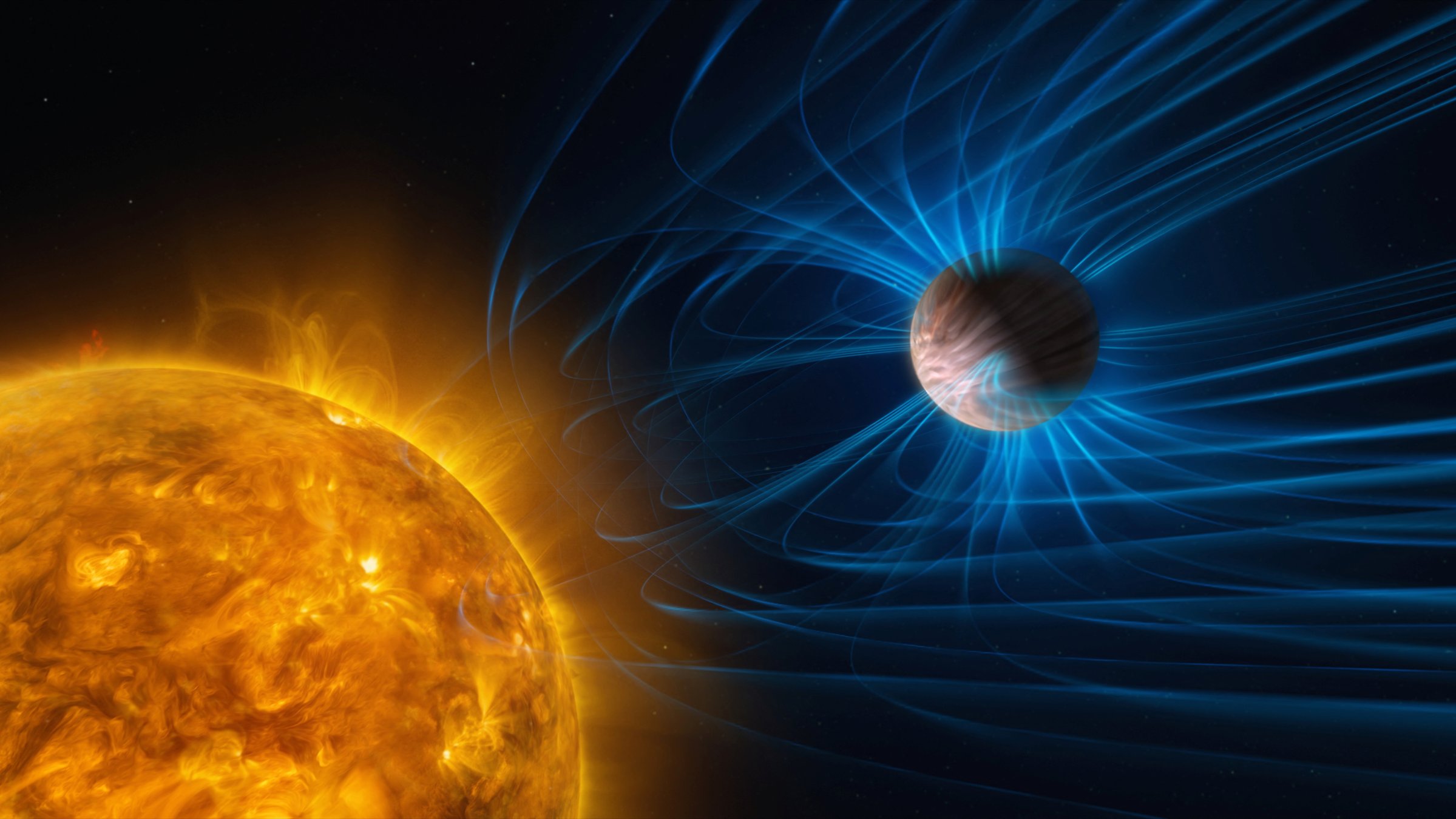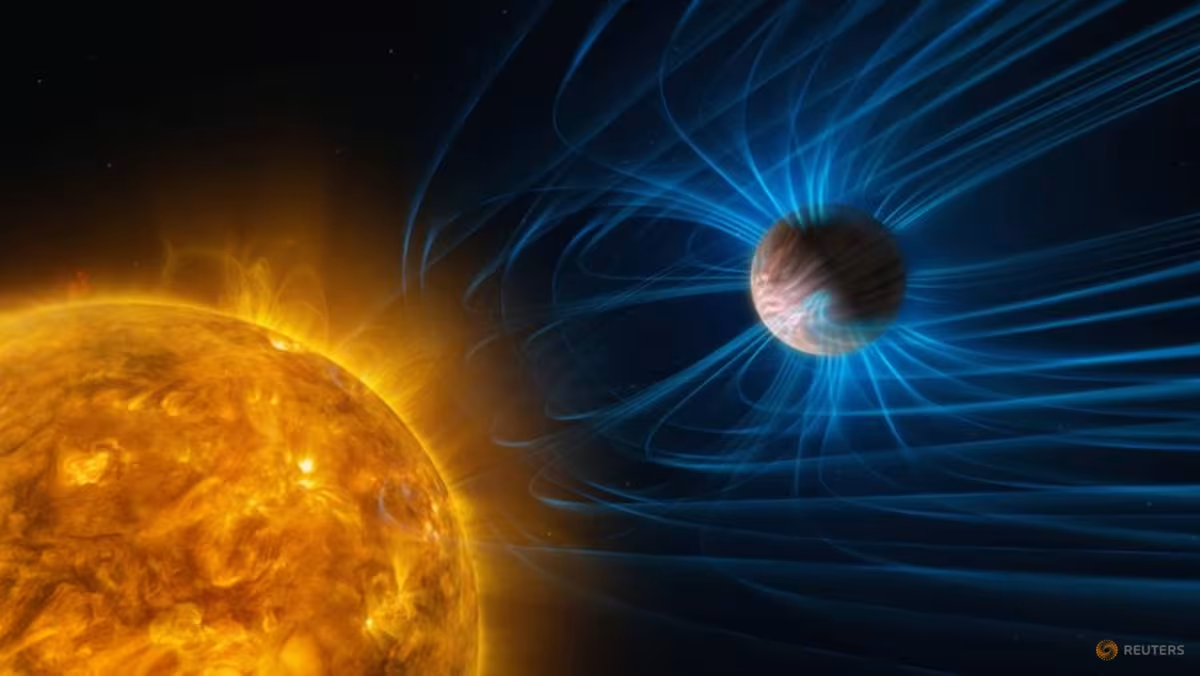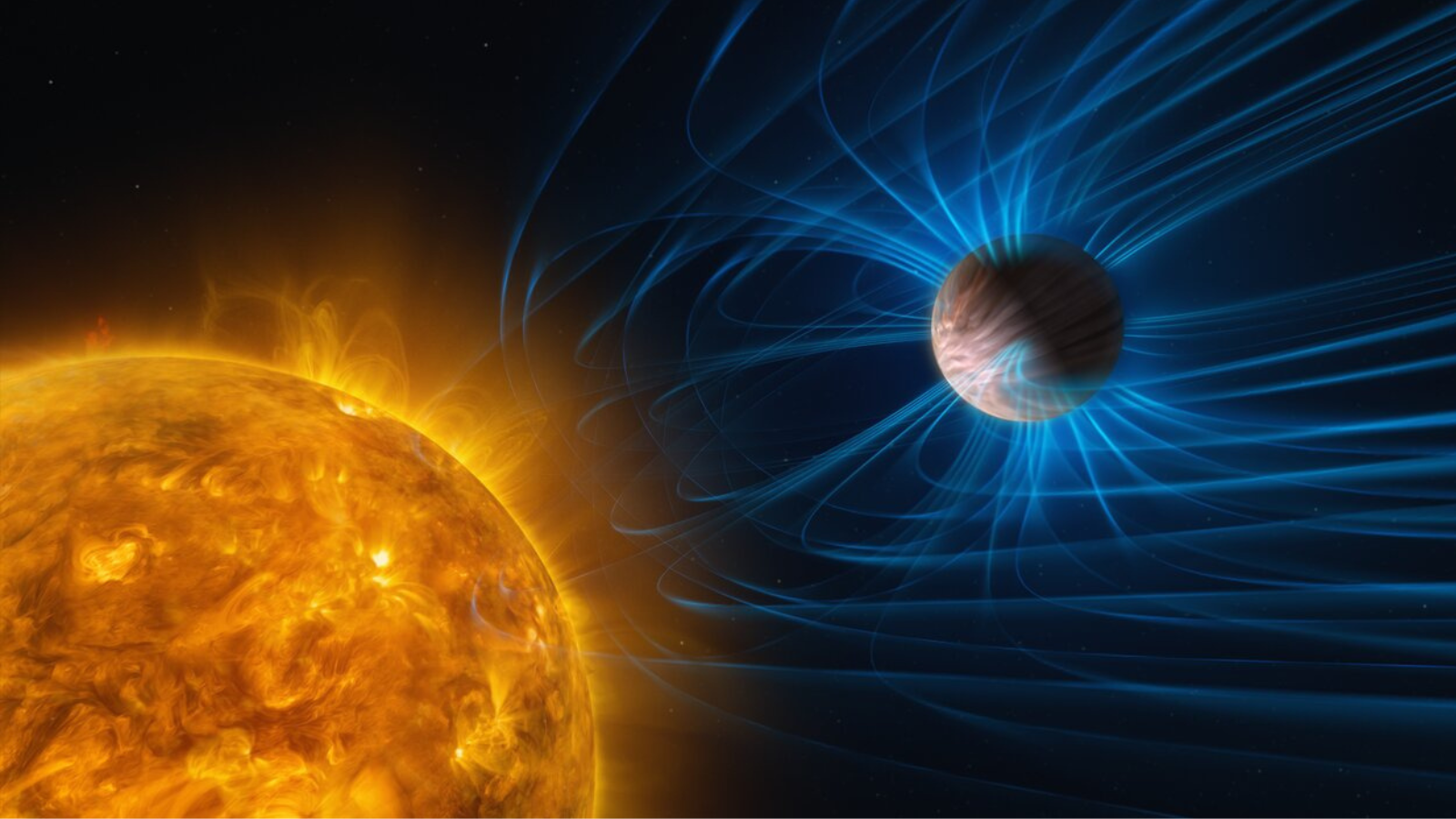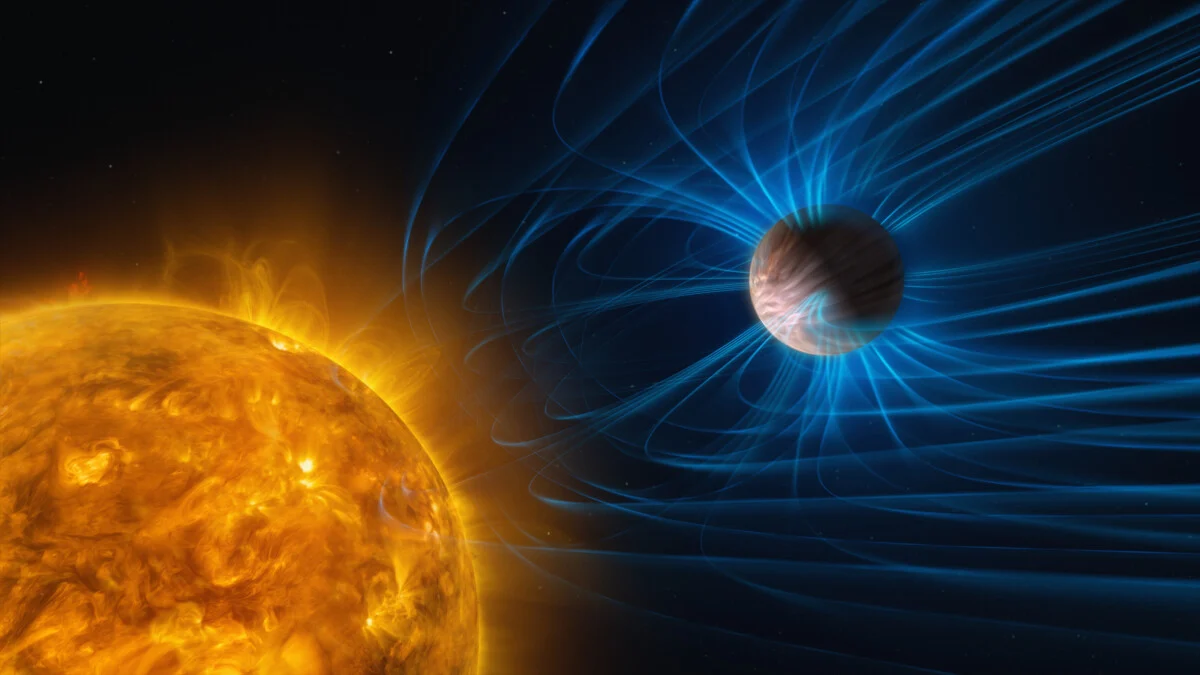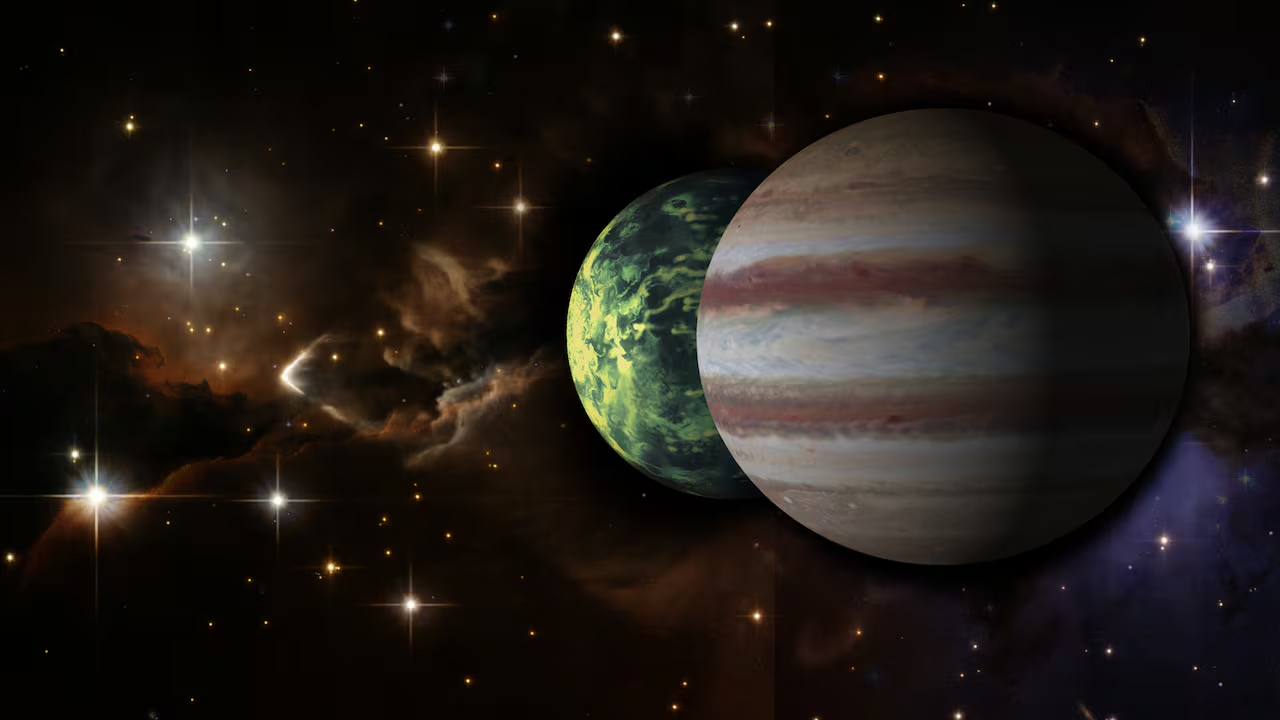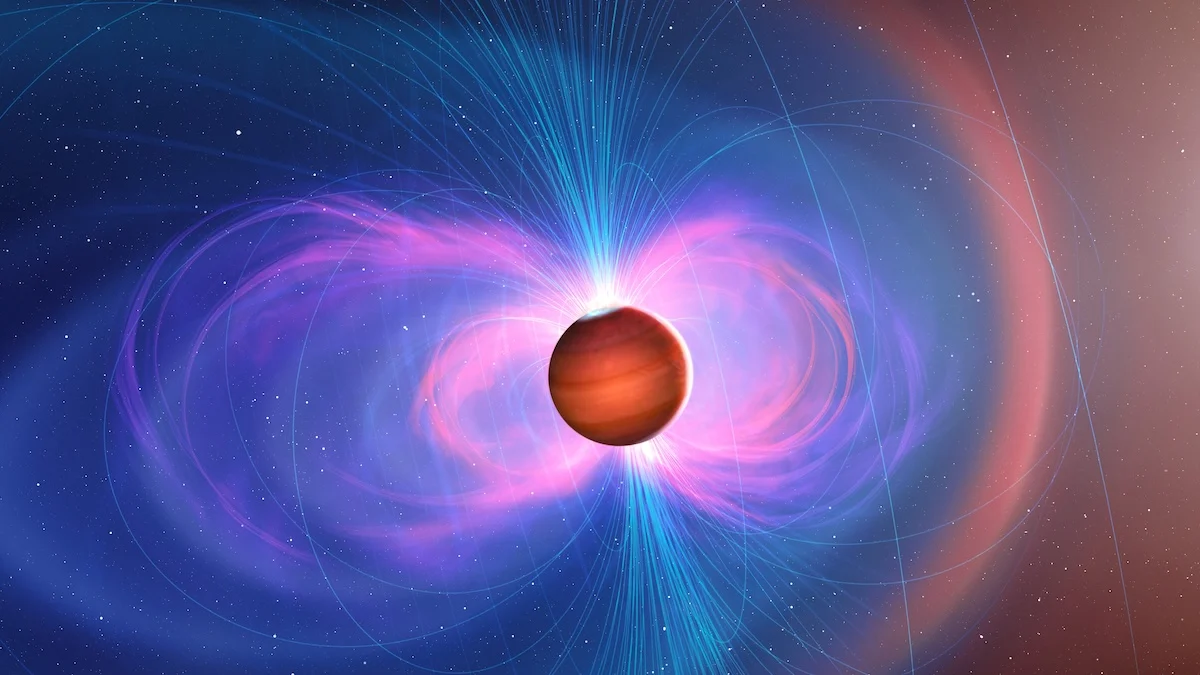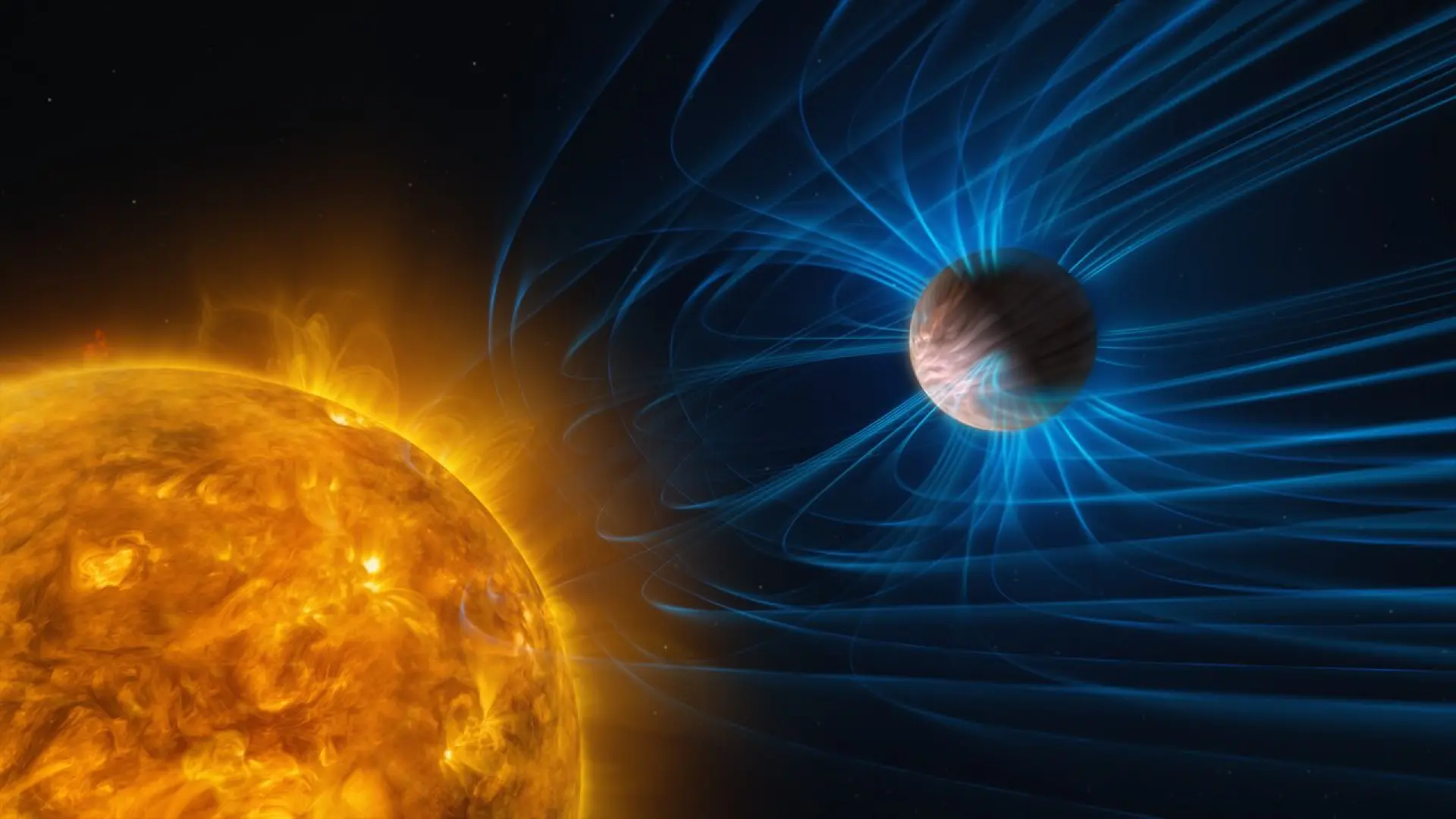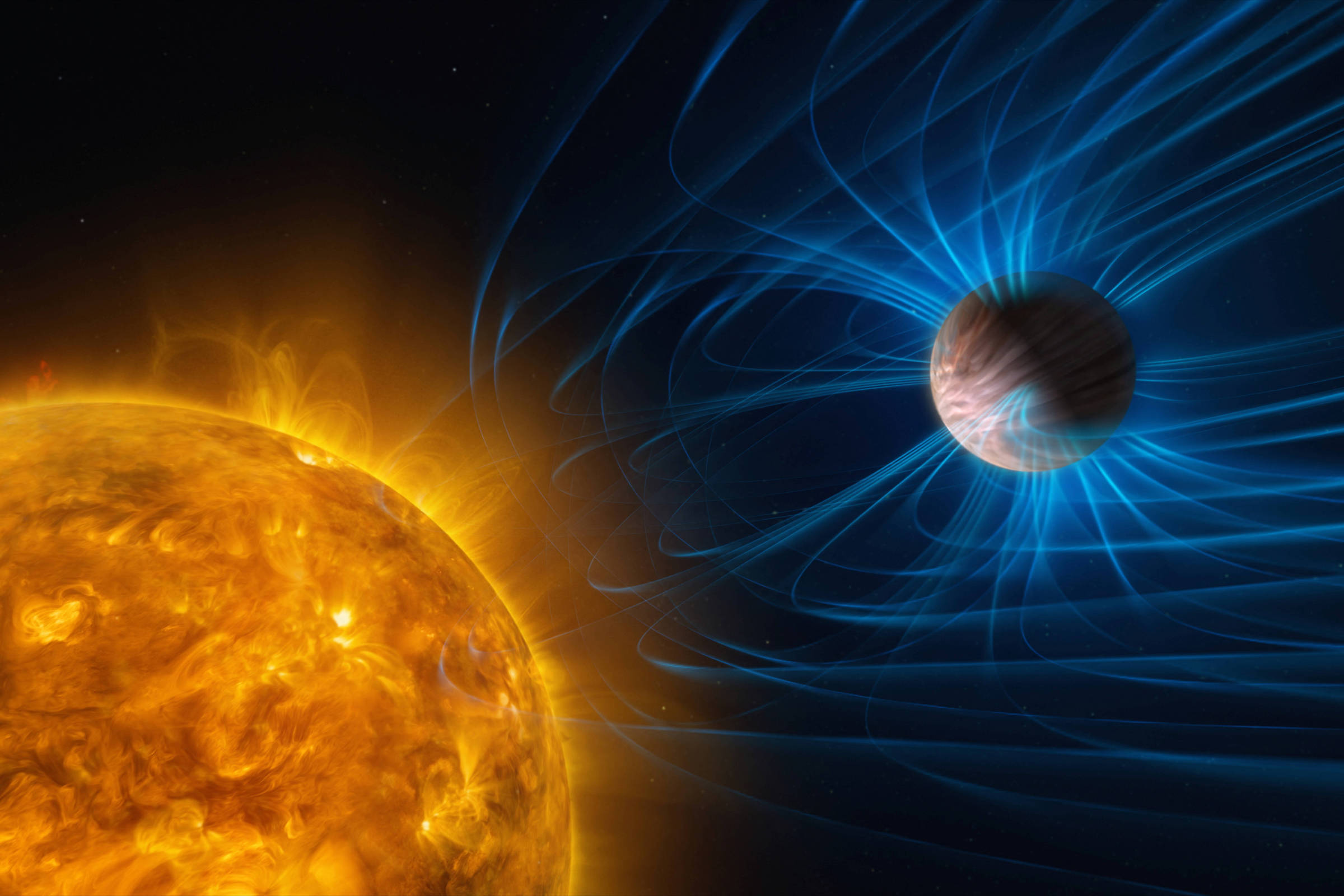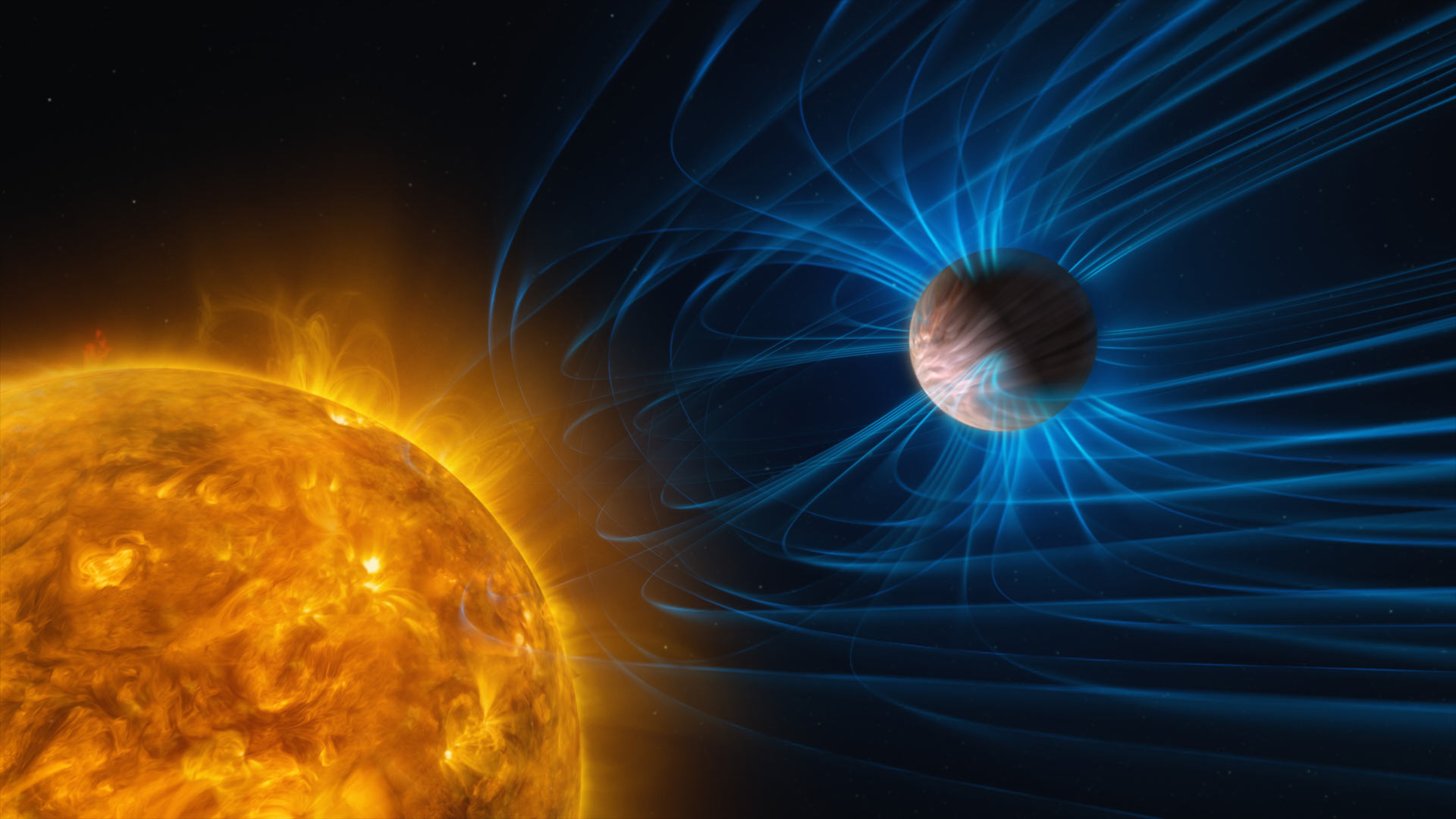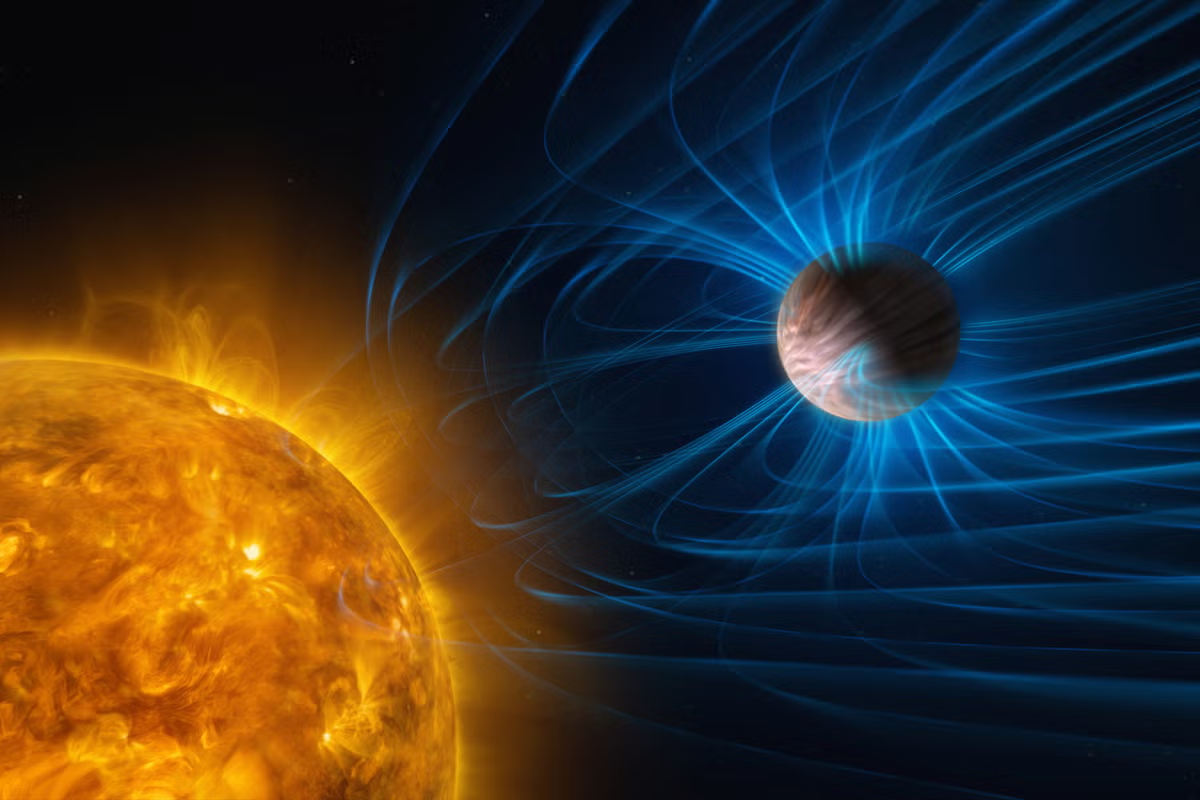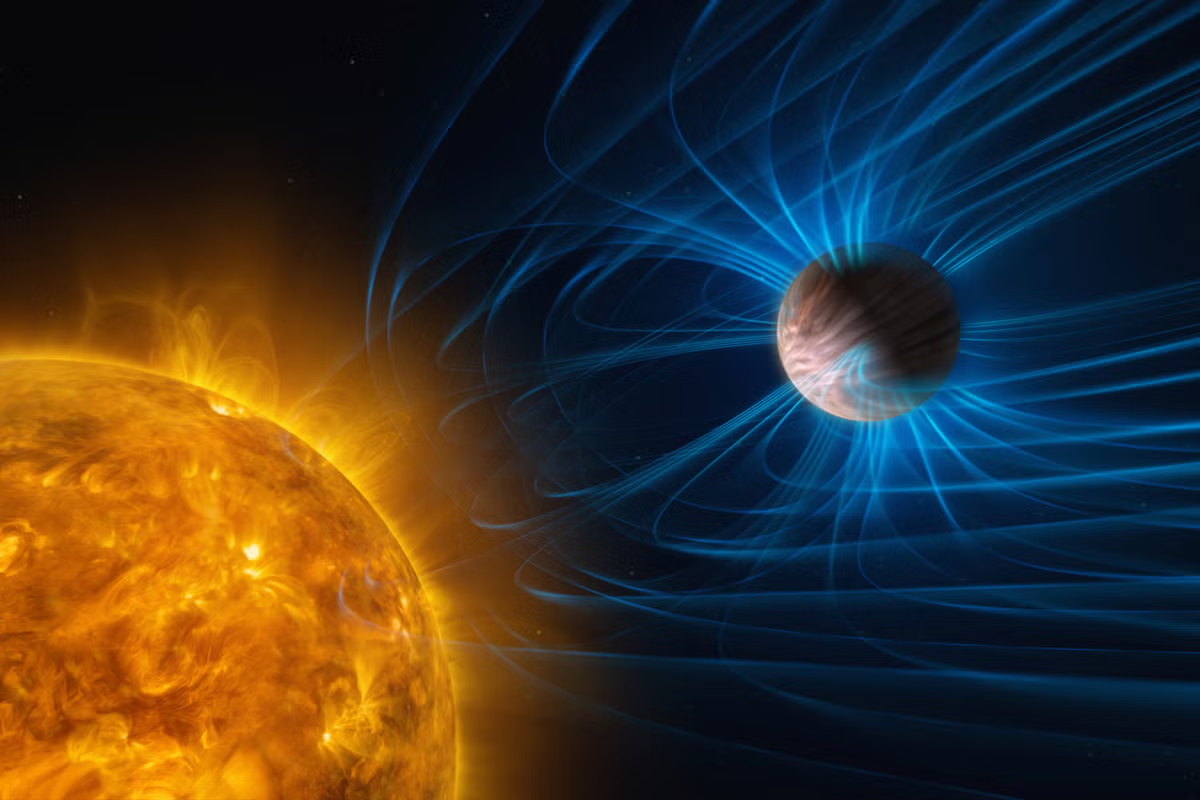
Stay up to date with notifications from The IndependentNotifications can be managed in browser preferences.Jump to contentThank you for registeringPlease refresh the page or navigate to another page on the site to be automatically logged inPlease refresh your browser to be logged inAllNewsSportCultureLifestyleThis illustration shows magnetic activity in an exoplanet that is a gas giant like Jupiter but orbits very close to its host star and is tidally locked (European Southern Observatory)Astronomers have found the strongest evidence to date that exoplanets possess magnetic fields, a characteristic shared by Earth and other planets in our solar system. The discovery stems from observations of unexpected wind patterns on seven large, hot gas exoplanets, known as "hot Jupiters," using data from telescopes in Chile and Hawaii. Researchers noted that hotter exoplanets exhibited weaker atmospheric winds, contrary to expectations, suggesting a different mechanism for energy dissipation. This anomaly is attributed to the interaction of magnetic fields with charged particles in the exoplanets' atmospheres, which effectively brake the high-speed winds. While not a direct sign of life, magnetic fields are crucial for a planet's ability to retain its atmosphere over long periods, influencing its potential for habitability. In fullScientists left stunned by strange phenomenon on distant planetsThank you for registeringPlease refresh the page or navigate to another page on the site to be automatically logged inPlease refresh your browser to be logged in
Invisible force foudn on alien worlds that are light years away
Stay up to date with notifications from The IndependentNotifications can be managed in browser preferences.Jump to contentThank you for registeringPlease refresh the page or navigate to another page on the site to be automatically logged inPlease refresh your browser to be logged inAllNewsSportCultureLifestyleThis illustration shows magnetic activity in an exoplanet that is a gas giant like Jupiter but orbits very close to its host star and is tidally locked (European Southern Observatory)Astronomers have found the strongest evidence to date that exoplanets possess magnetic fields, a characteristic shared by Earth and other planets in our solar system. The discovery stems from observations of unexpected wind patterns on seven large, hot gas exoplanets, known as "hot Jupiters," using data from telescopes in Chile and Hawaii. Researchers noted that hotter exoplanets exhibited weaker atmospheric winds, contrary to expectations, suggesting a different mechanism for energy dissipation. This anomaly is attributed to the interaction of magnetic fields with charged particles in the exoplanets' atmospheres, which effectively brake the high-speed winds. While not a direct sign of life, magnetic fields are crucial for a planet's ability to retain its atmosphere over long periods, influencing its potential for habitability. In fullScientists left stunned by strange phenomenon on distant planetsThank you for registeringPlease refresh the page or navigate to another page on the site to be automatically logged inPlease refresh your browser to be logged in
Astronomers detected magnetic fields on seven hot exoplanets using Chilean and Hawaiian telescopes, evidenced by atmospheric wind patterns weaker than expected. Magnetic field detection advances our understanding of planetary habitability mechanisms and informs exoplanet characterization models, with implications for astrobiology research frameworks and potential future space exploration priorities.