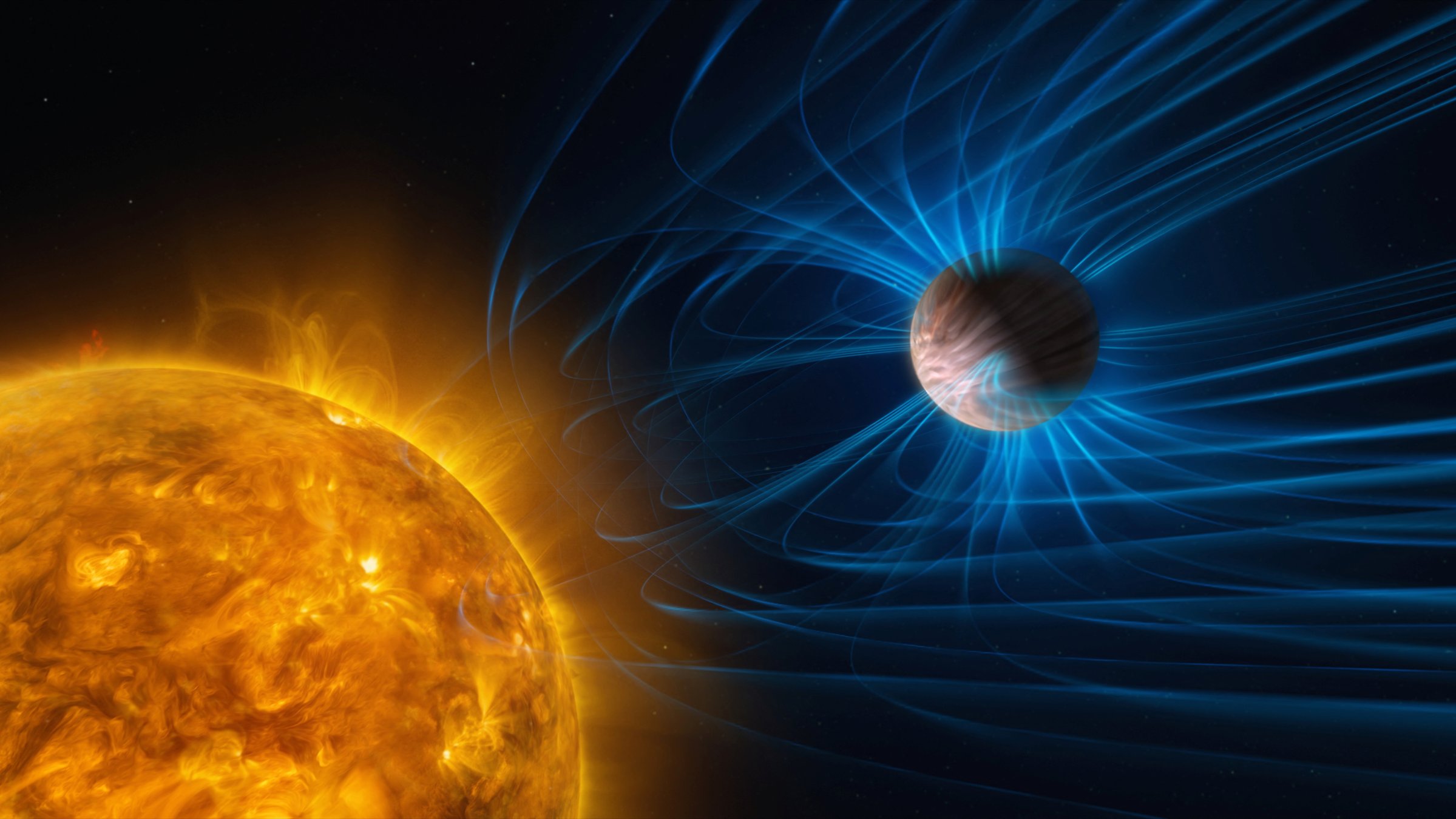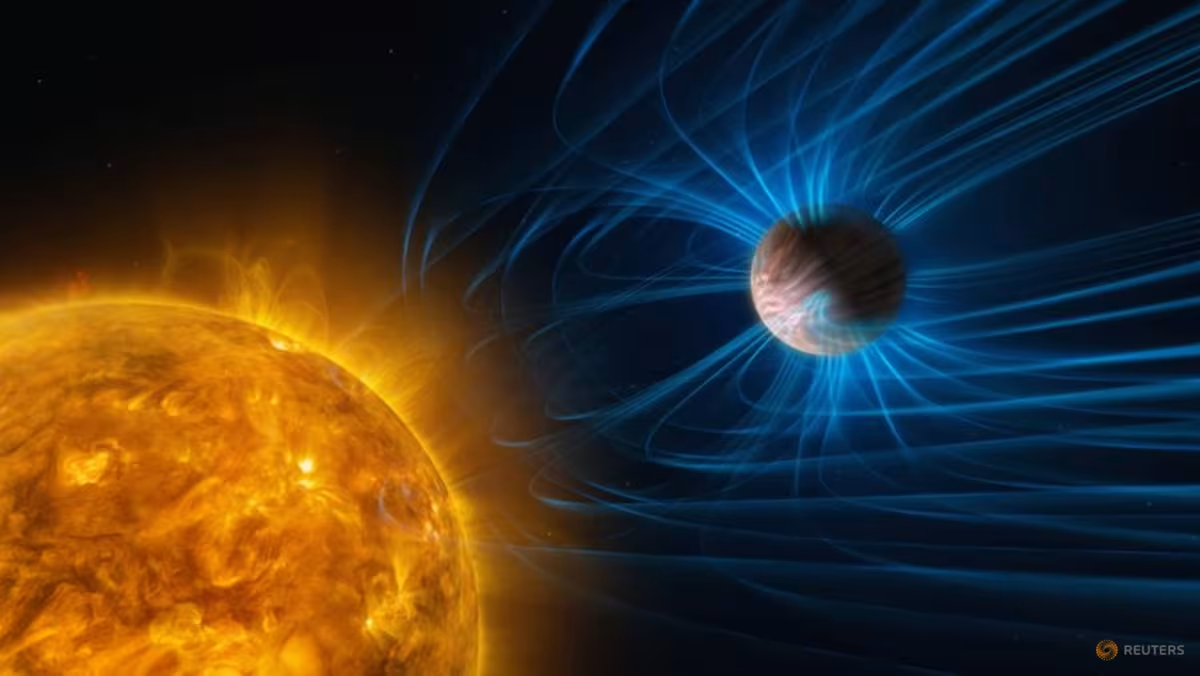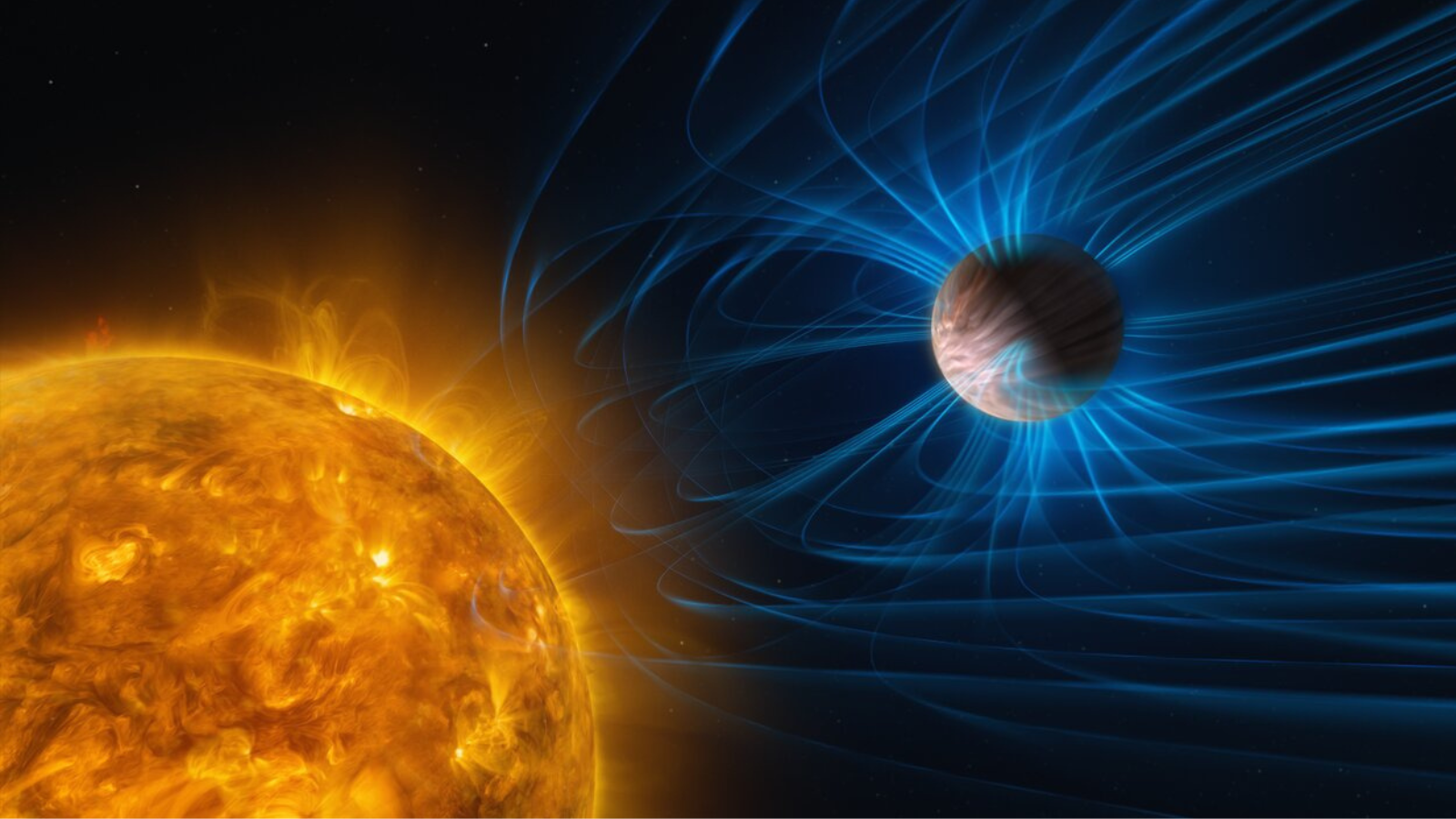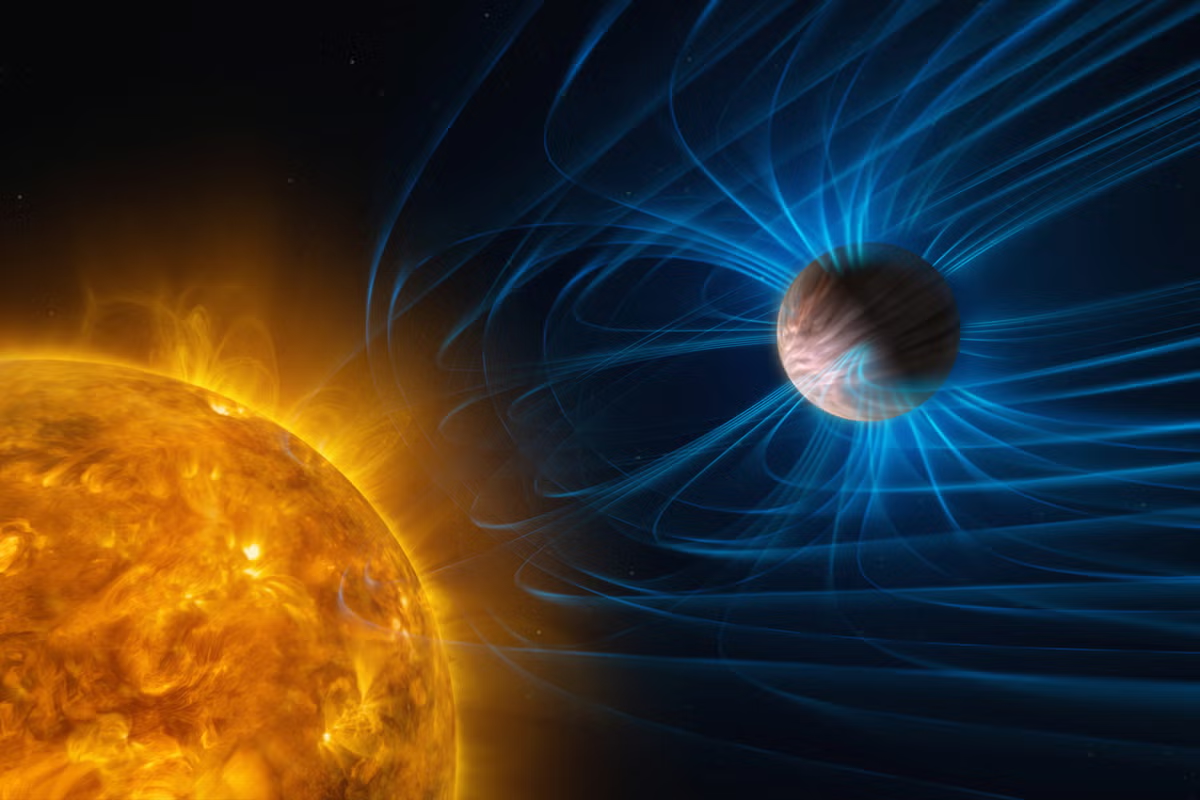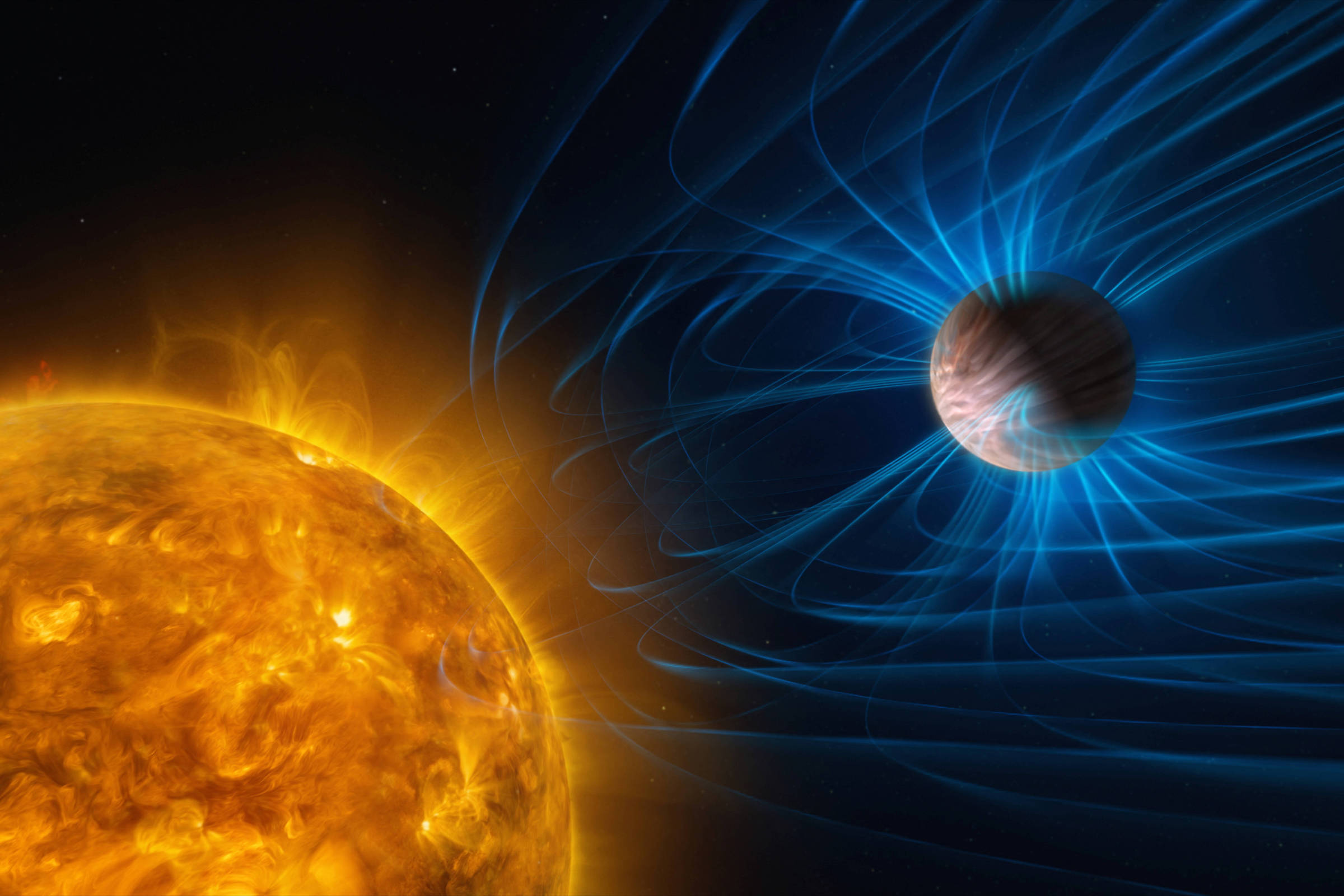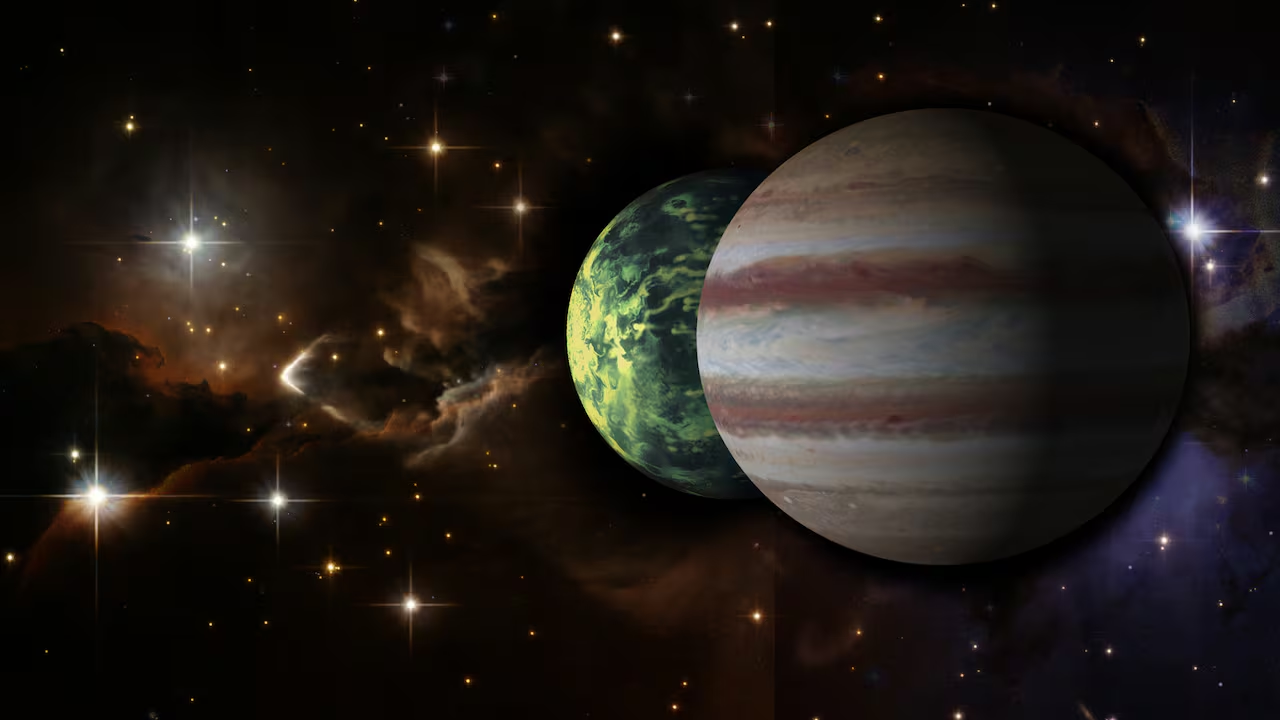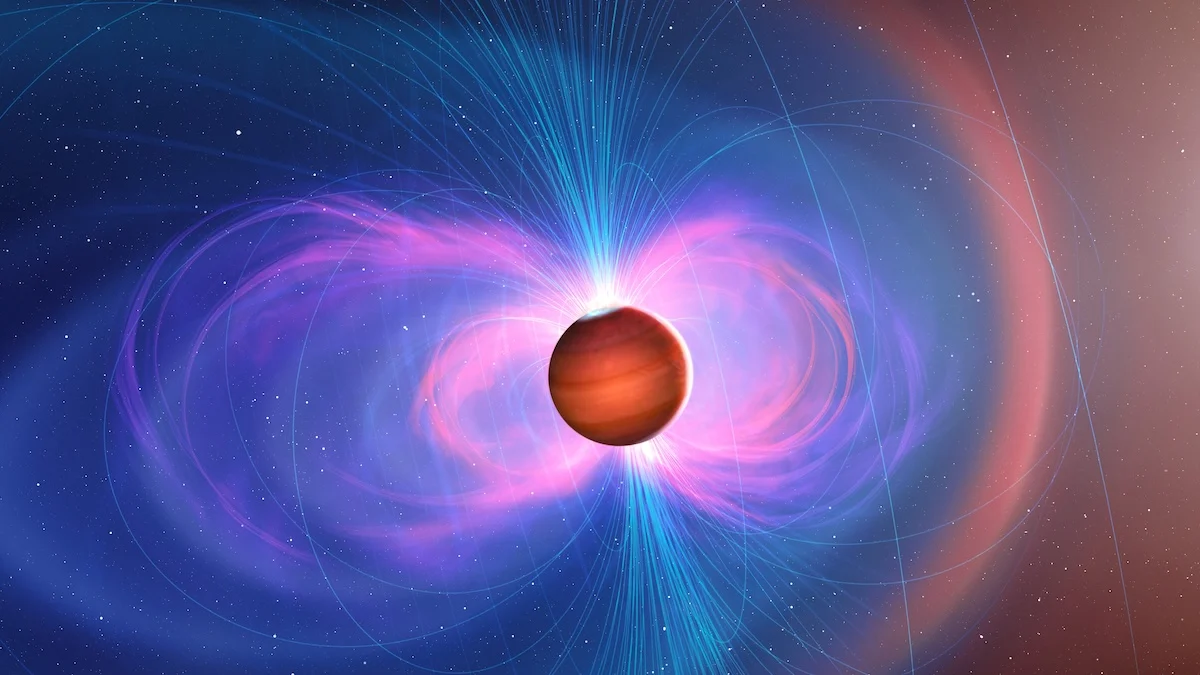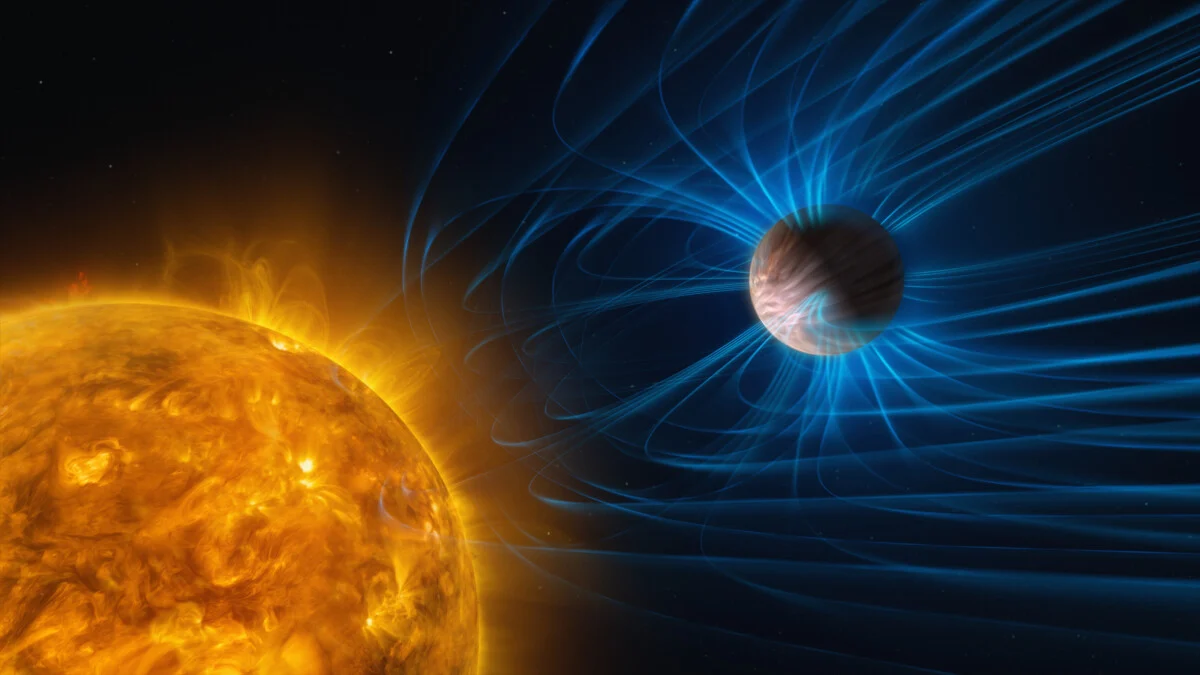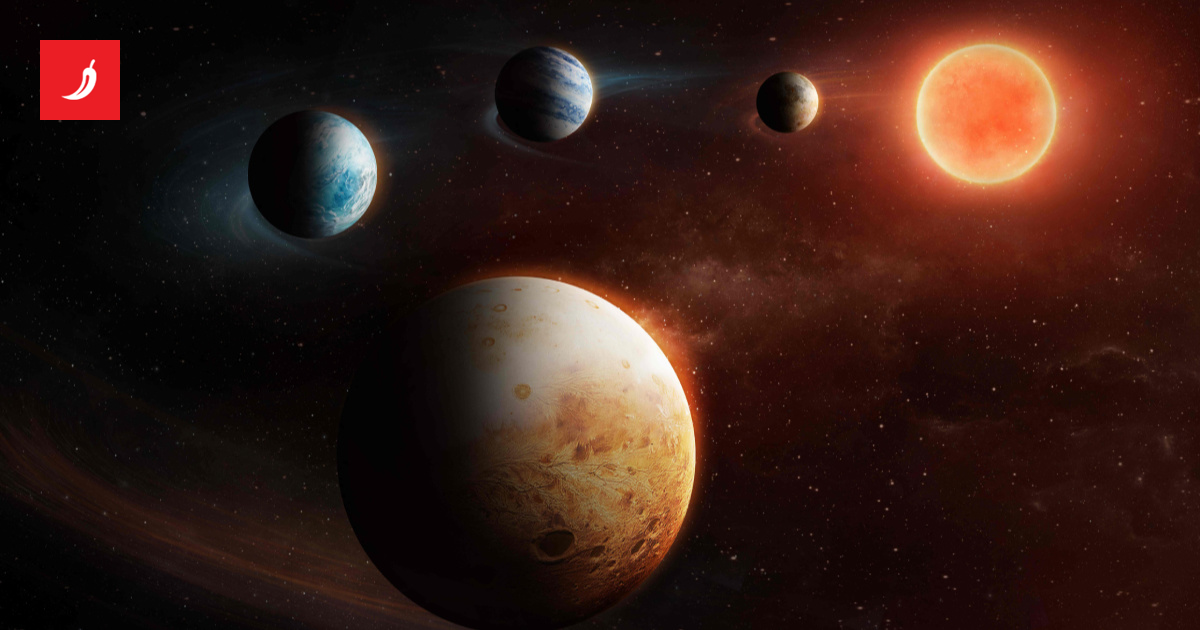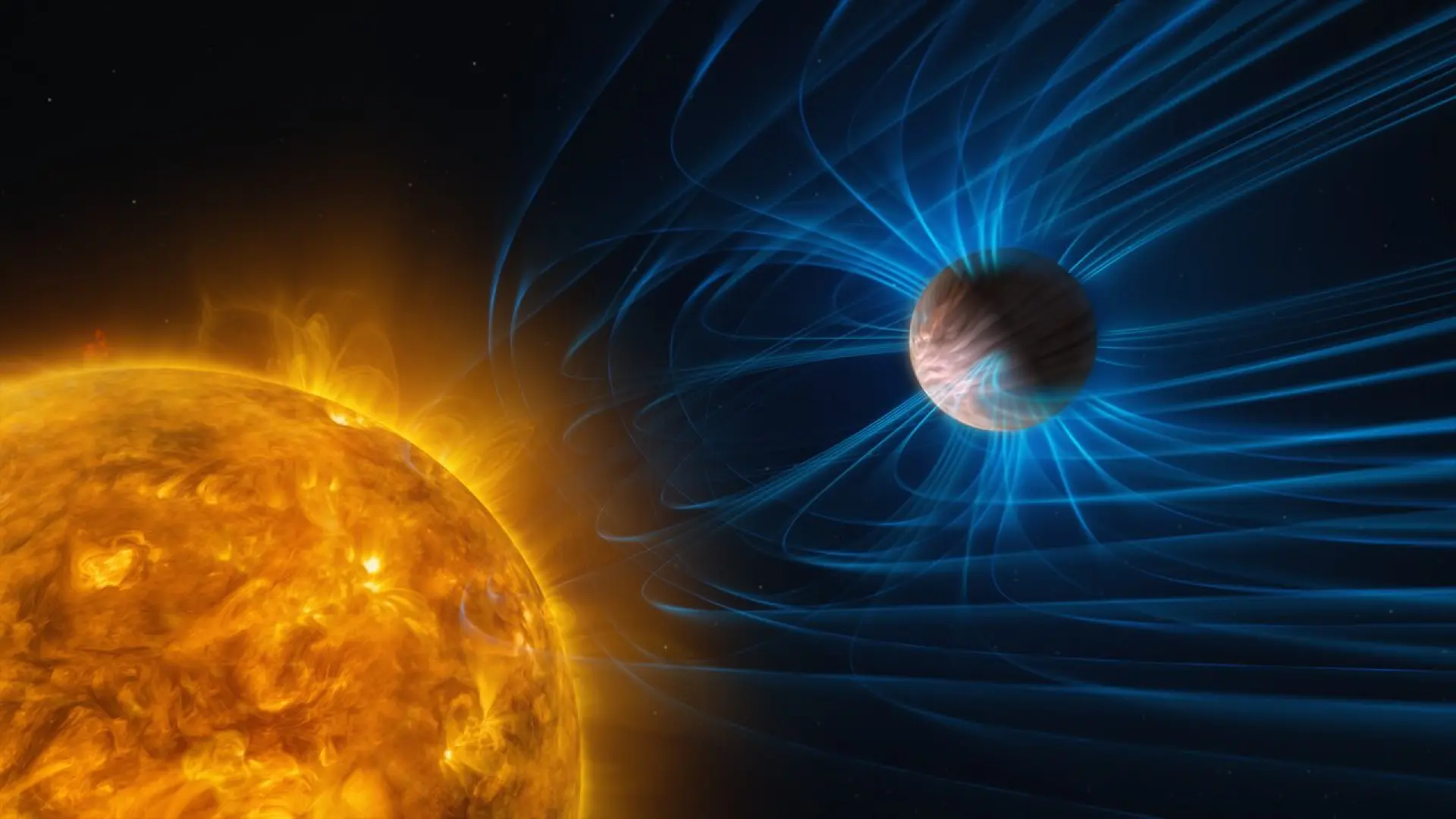
Astronomers have uncovered the strongest evidence yet that planets beyond our solar system possess magnetic fields, a characteristic shared by Earth and five other planets in our own cosmic neighborhood. This groundbreaking finding, derived from observations of wind patterns on seven large, hot gas exoplanets, significantly deepens our understanding of these distant worlds.The discovery, based on data collected by telescopes in Chile and Hawaii, reveals that at least some exoplanets share a crucial feature present in all but two of our solar system's eight planets. This illustration shows magnetic activity in an exoplanet that is a gas giant like Jupiter but orbits very close to its host star and is tidally locked (Reuters)A magnetic field, an invisible force generated by the movement of electrically conducting material deep within a planet's molten core, combined with its rotation, is not a direct indicator of life. However, it could be a vital factor in making a rocky planet like Earth habitable.The exoplanets studied are all "hot Jupiters," so named for their size and composition being comparable to those of our solar system's largest planet, though they are far hotter. Each orbits extremely close to a large, scorching star, resulting in one side permanently facing the star and the other perpetually turned away, much like Earth's moon. This orbital proximity leads to blistering atmospheric temperatures on their daysides, with all seven being closer to their host stars than Mercury is to the Sun.On these extreme worlds, powerful winds gust from the hot "dayside" to the cold "nightside." However, researchers observed an unexpected phenomenon. "What you would expect is that the planets with hotter temperatures would have stronger winds. The more energy you put into the system, the more violent the winds become. Venus and Mars are the two planets lacking a magnetic field, though Ganymede, a large moon of Jupiter, generates its own magnetic field. Earth's moon long ago also generated its own magnetic field (Getty/iStock)But we see the opposite," explained astronomer Julia Seidel of the Observatoire de la Côte d'Azur's Lagrange Laboratory in Nice, France, lead author of the study published in Nature Astronomy.Seidel elaborated on this puzzling observation: "It's the hottest planets that have the least strong winds mixing the atmosphere. And that's really strange from what we know of how atmospheres behave." She concluded that this implies a different mechanism for energy dissipation. "And the only possibility to brake the atmosphere that much that fast is via the magnetic field and its interaction with the moving charged particles of the atmosphere." Wind speeds on these exoplanets reached up to 15,500 miles per hour, surpassing those on Jupiter.While most planets in our solar system possess magnetic fields, making the existence of exoplanet magnetic fields unsurprising, scientists had previously struggled to find convincing evidence. ,Mercury, Saturn, Uranus and Neptune join Earth and Jupiter as the solar system's planets generating a global magnetic field (Local Library)"We do not look at a singular exoplanet, but we look at a population of them and see a trend emerge," Seidel noted. The magnetic fields generated by these seven exoplanets were smaller than Jupiter's but comparable to those found on other planets within our solar system.Earth, Jupiter, Mercury, Saturn, Uranus, and Neptune all generate global magnetic fields. Venus and Mars are the two planets in our solar system that lack them, though Ganymede, one of Jupiter's large moons, generates its own. Earth's moon also had a magnetic field long ago.A magnetic field plays a critical role in a planet's ability to retain its atmosphere over extended periods. Mars, for instance, once had a magnetic field but lost it billions of years ago as its interior cooled. This loss contributed to its current tenuous atmosphere and inhospitable landscape."Although it's a common misconception that magnetic fields directly determine whether a planet is habitable, they can play an important role in how a planet evolves over time," said astronomer and study co-author Bibiana Prinoth of the European Southern Observatory in Germany. "Life as we know it relies on having an atmosphere. An atmosphere helps maintain surface pressure, regulate temperature and, on Earth, allows liquid water to exist at the surface." This research marks a significant step toward understanding the complex dynamics of exoplanetary environments and their potential to support life.
Scientists stunned by strange phenomenon on distant planets
This groundbreaking finding, derived from observations of wind patterns on seven large, hot gas exoplanets, significantly deepens our understanding of these distant worlds
709 words~3 min read