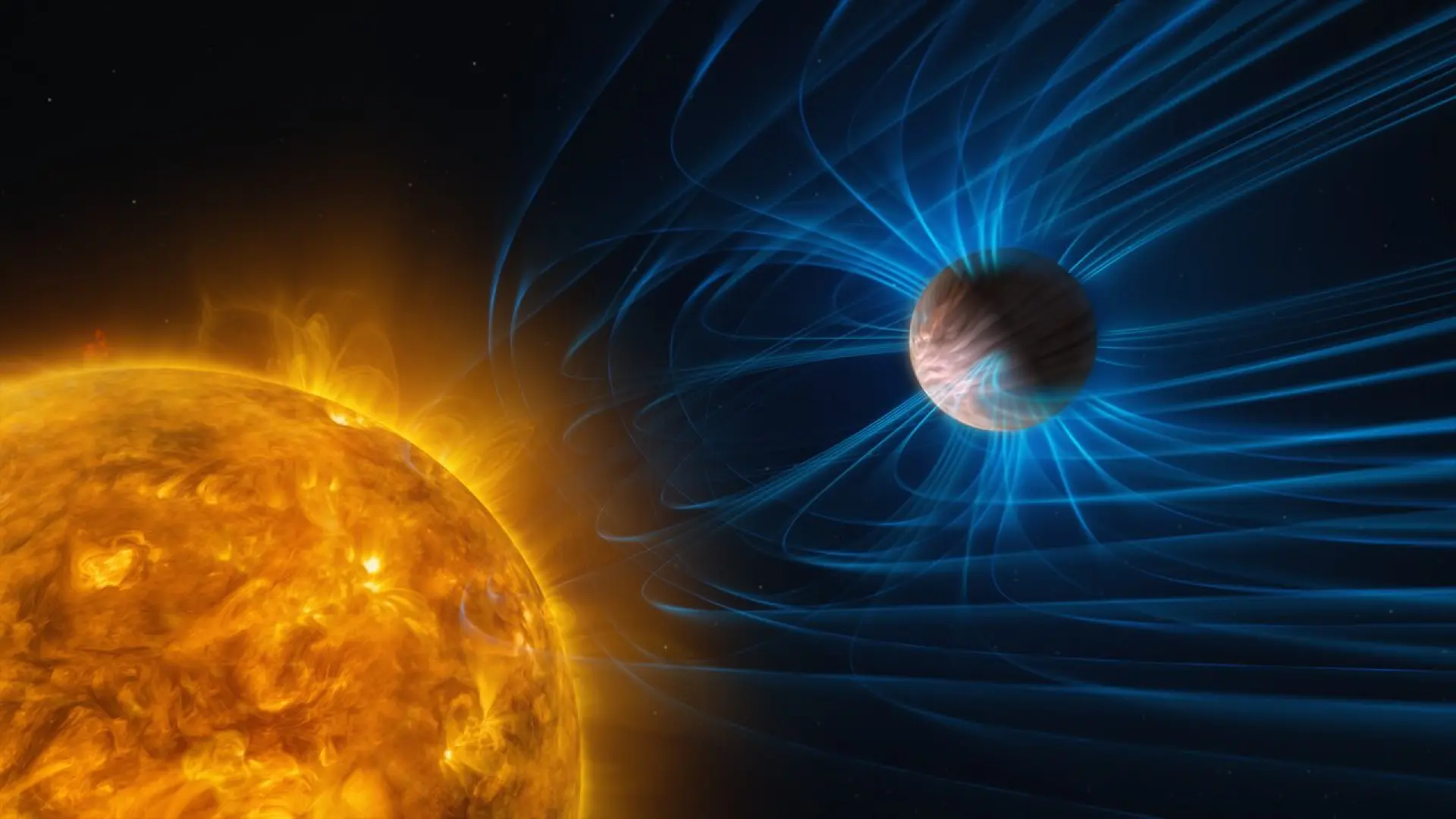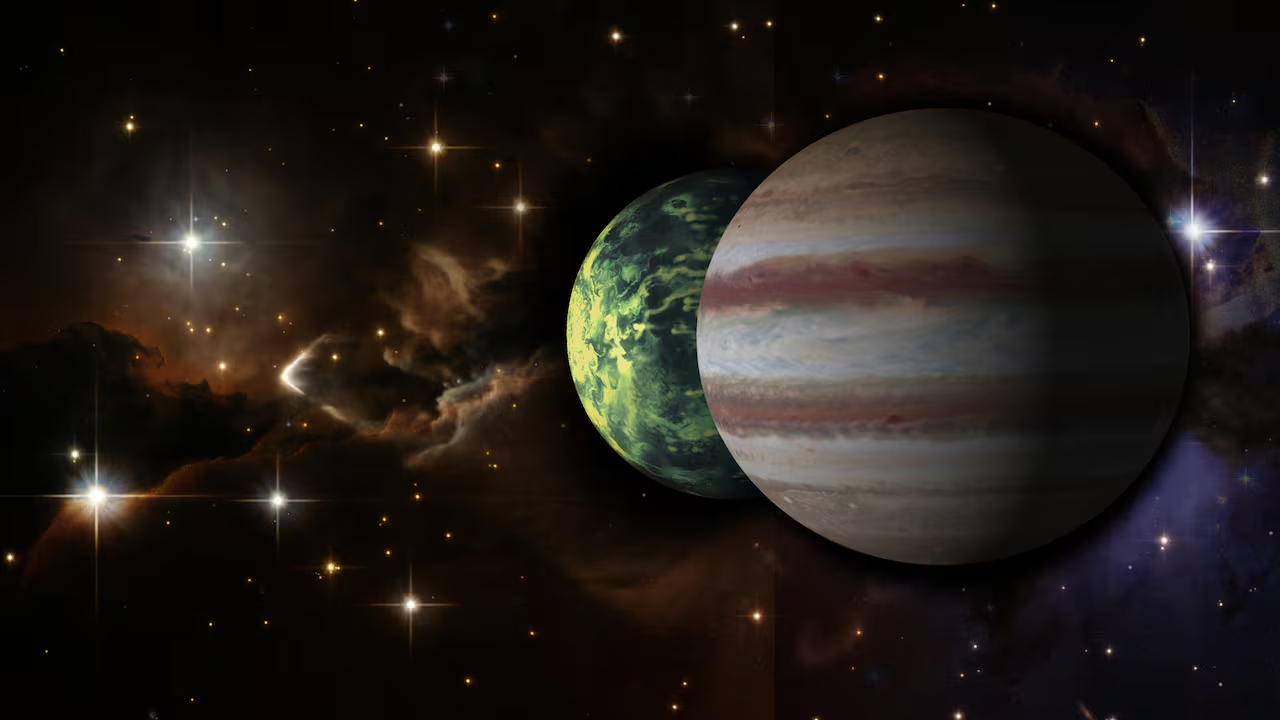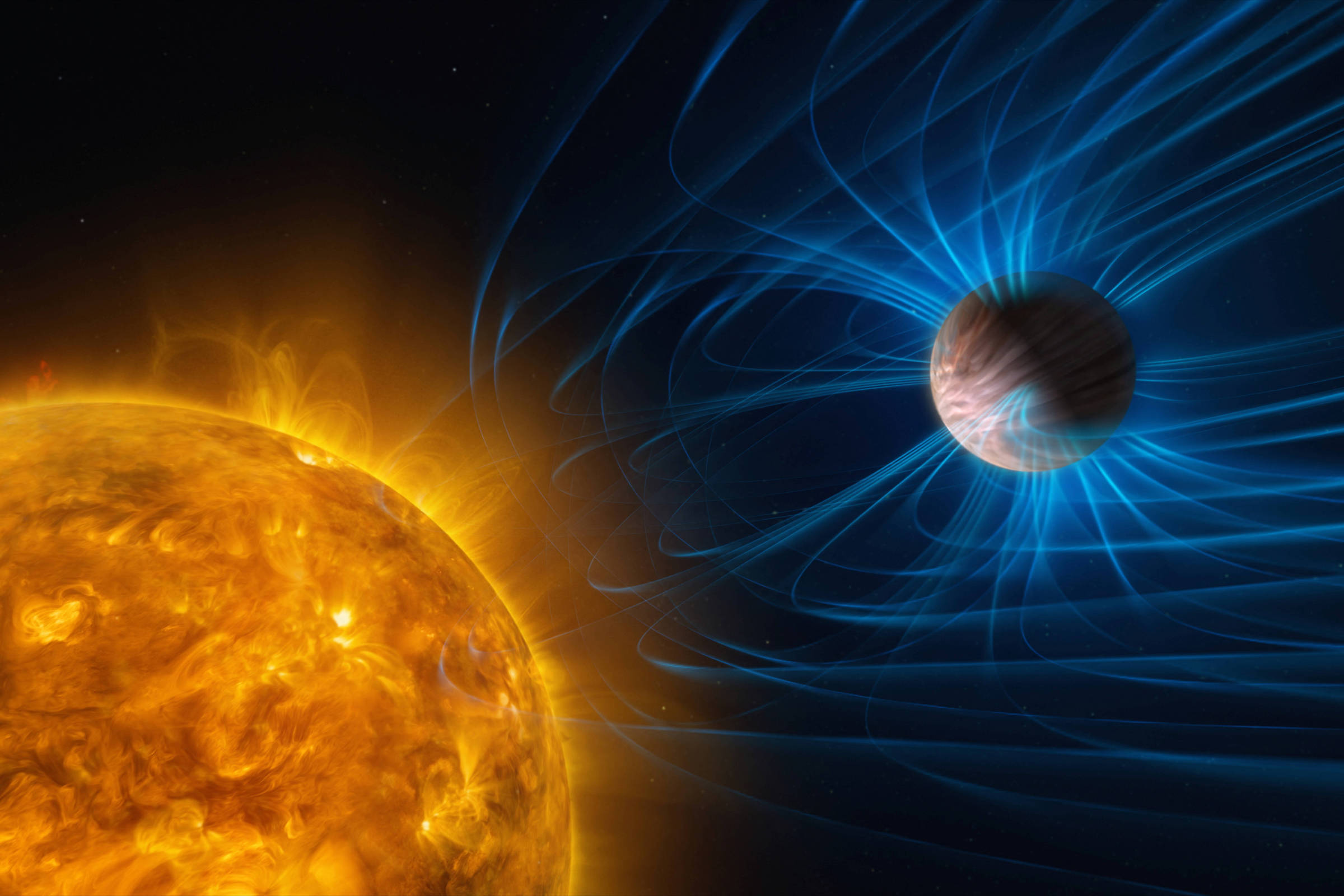
Astronomers have discovered the first evidence of magnetic fields around planets beyond the solar system, and they did so by studying the worlds' high-speed, violent winds. This marks the first direct measurement of exoplanet magnetic field strength, and represents a major step forward in exoplanet research.Because life on Earth was made possible thanks to our planet's magnetosphere protecting it from harmful solar radiation, the research could also be beneficial to the hunt for life beyond the solar system.Using the Very Large Telescope (VLT) and the Gemini North telescope, the team behind this discovery measured the speed of winds of seven extremely hot Jupiter-like gas giant exoplanets that are tidally locked to their stars, meaning they have a permanently raging hot "dayside" and a cooler, space-facing "nightside." The team found winds racing at speeds of between 4,470 miles per hour (7,194 kilometers per hour) and a staggering 15,530 mph (24,993 kph). For comparison, the fastest winds recorded on our solar system's Jupiter reached only around 930 mph (1,496 kph). The scientists think it is the magnetic fields of these exoplanets that are governing these winds.
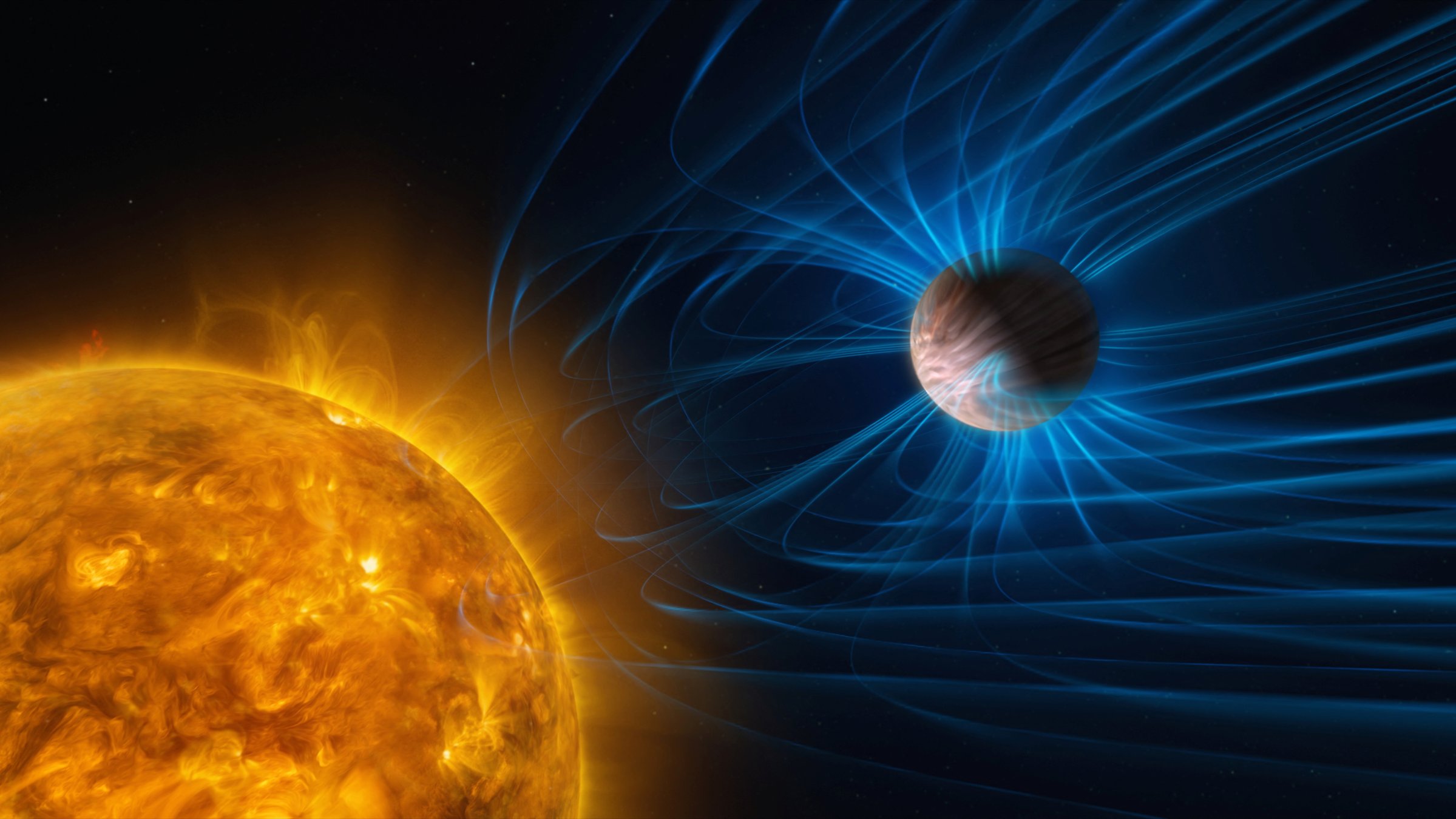
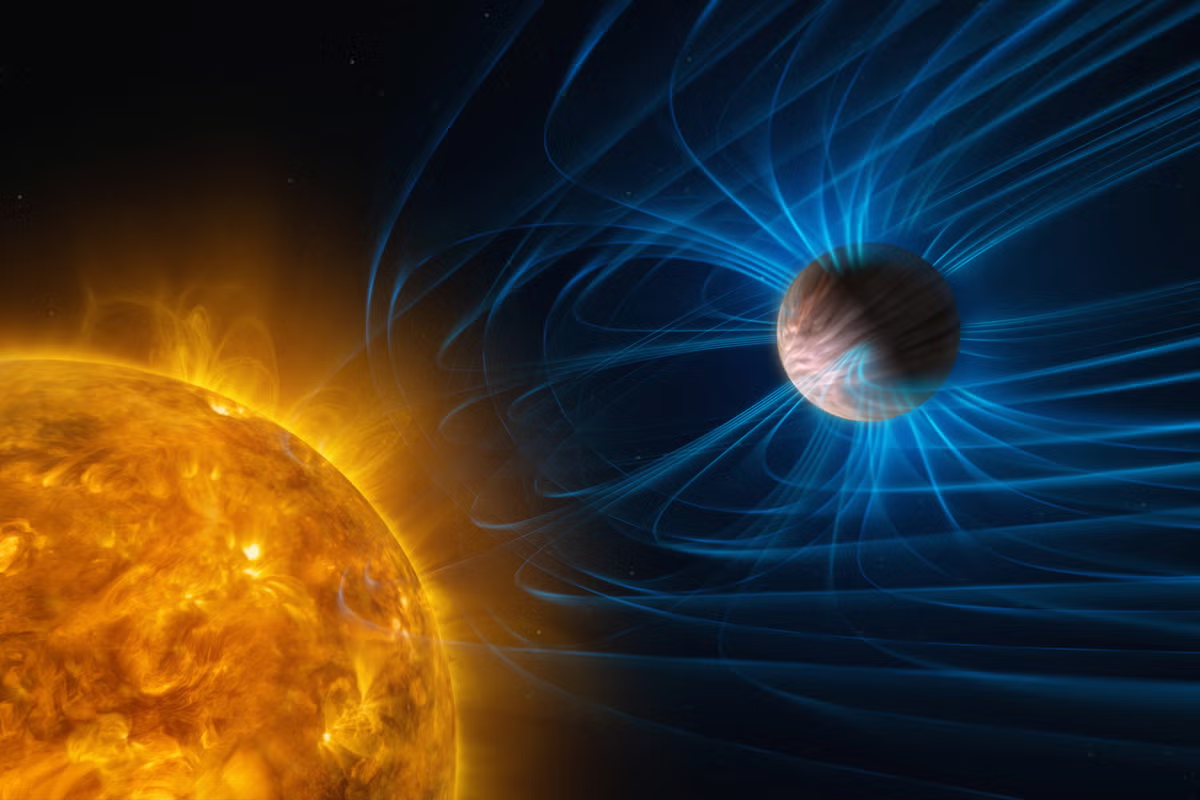
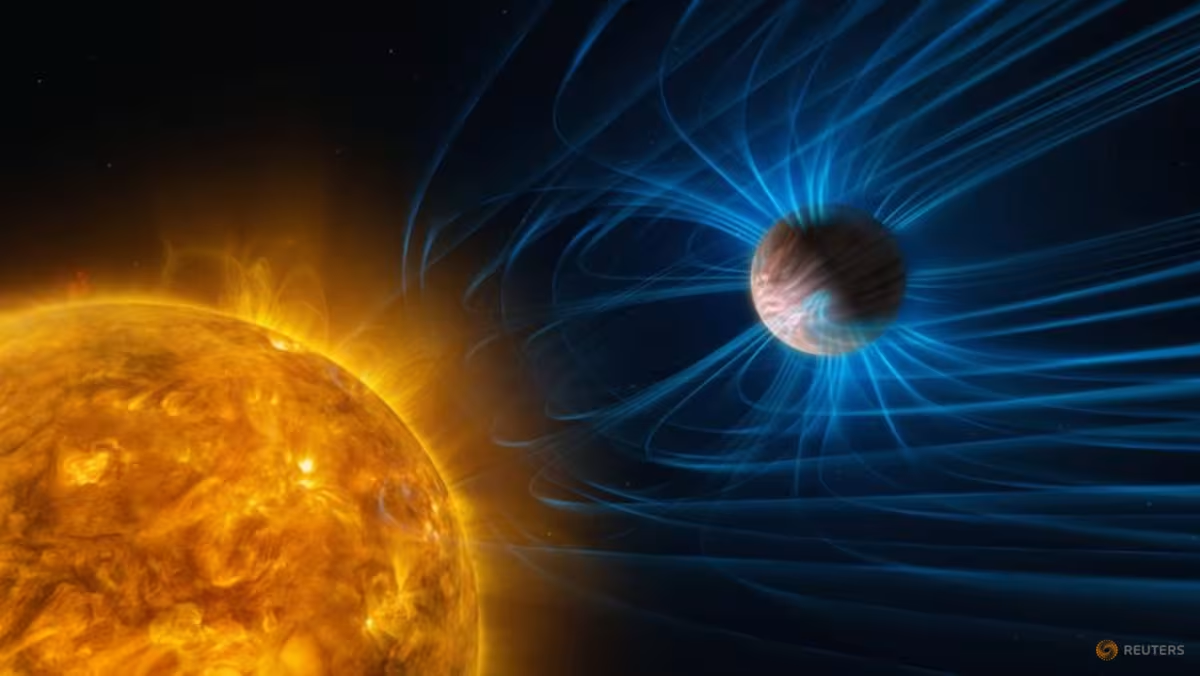
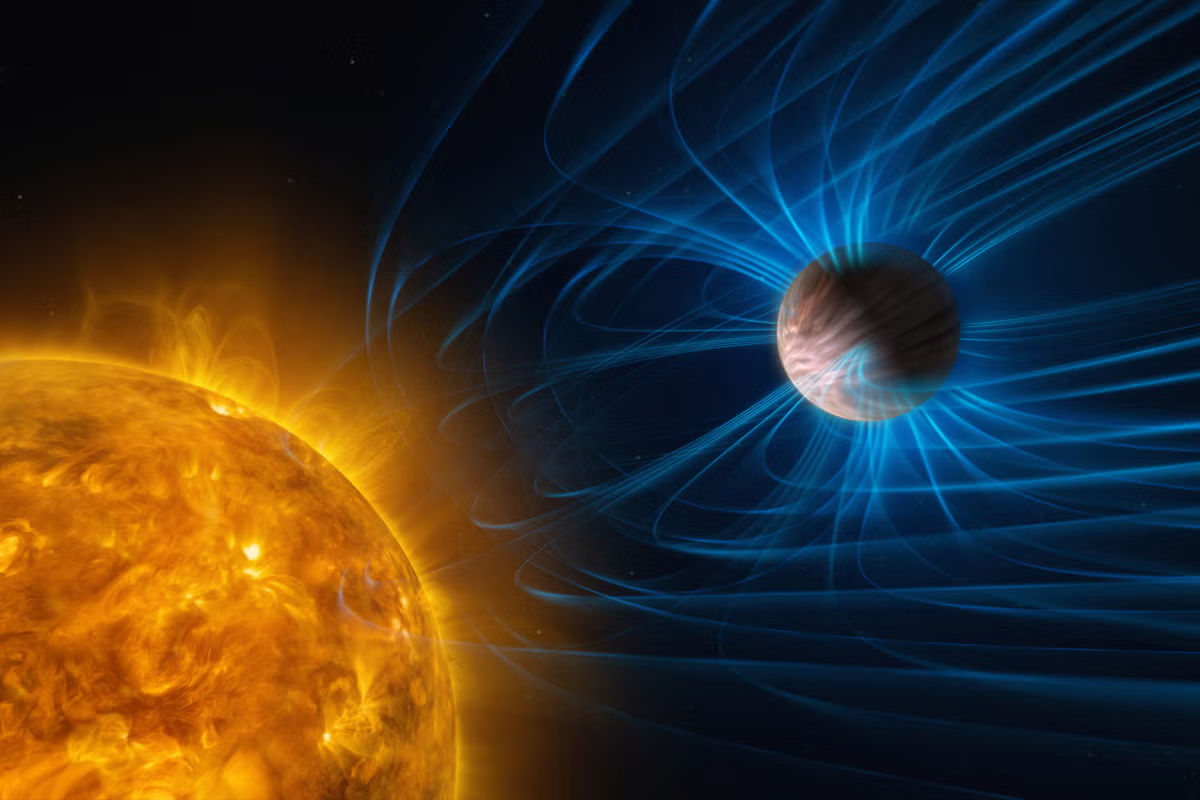
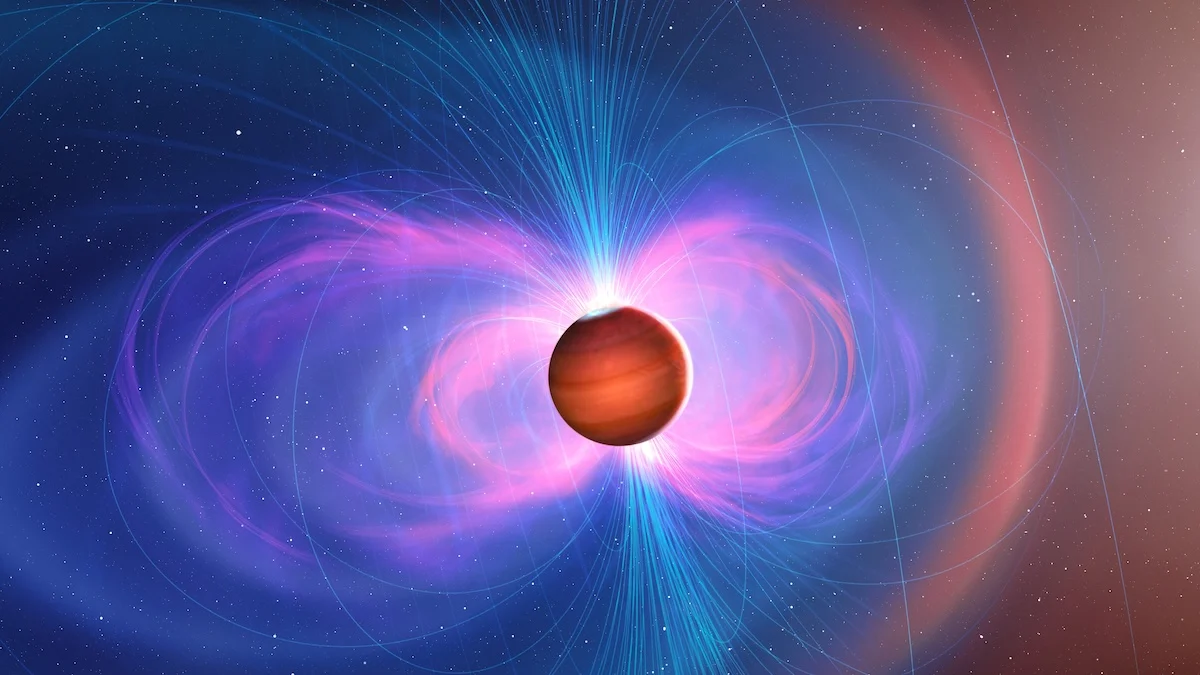
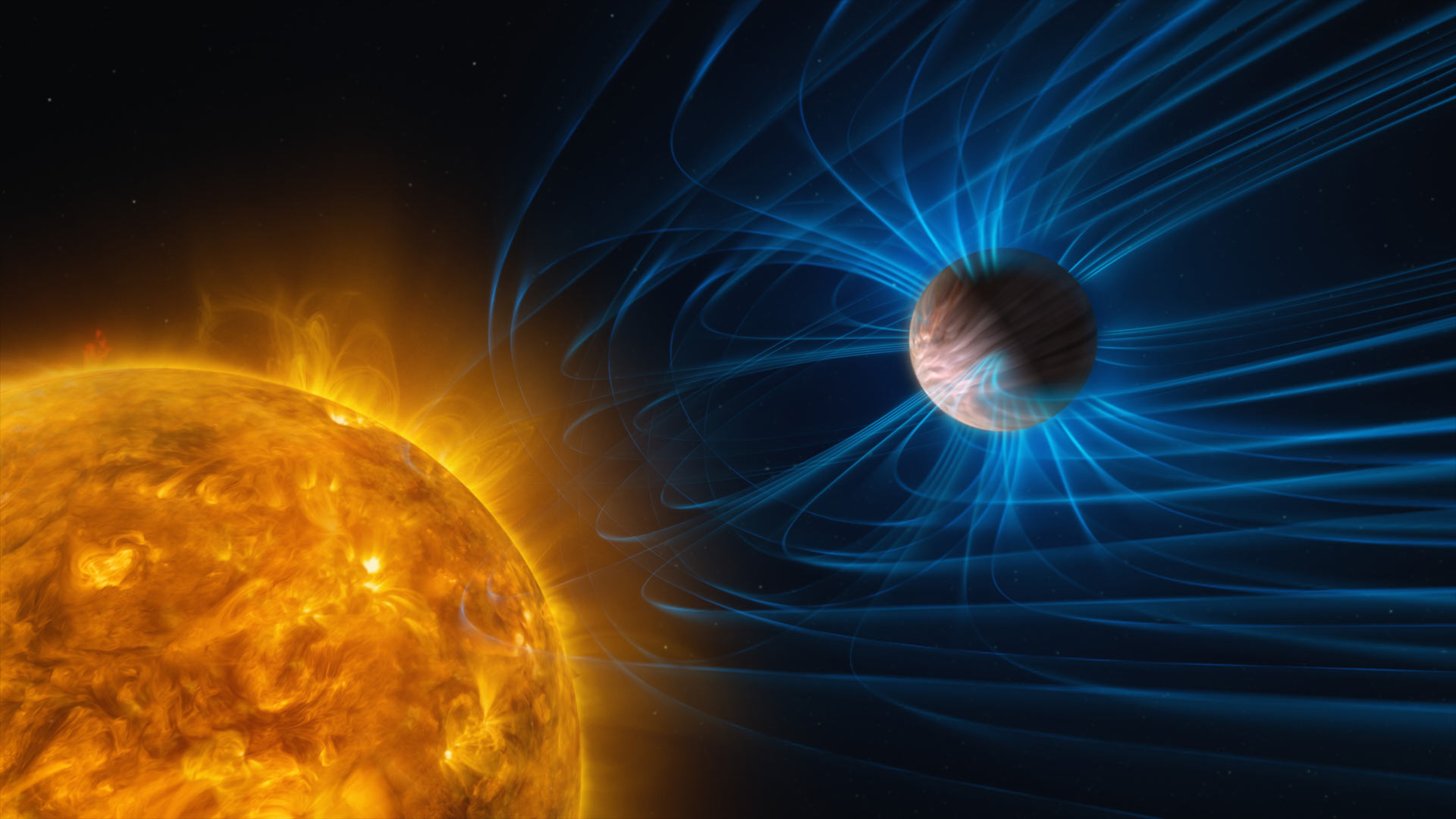
This illustration shows magnetic activity in an exoplanet. (Image credit: ESO/M. Kornmesser, L. Calçada)Astronomers have discovered the first evidence of magnetic fields around planets beyond the solar system, and they did so by studying the worlds' high-speed, violent winds. This marks the first direct measurement of exoplanet magnetic field strength, and represents a major step forward in exoplanet research.Because life on Earth was made possible thanks to our planet's magnetosphere protecting it from harmful solar radiation, the research could also be beneficial to the hunt for life beyond the solar system.Using the Very Large Telescope (VLT) and the Gemini North telescope, the team behind this discovery measured the speed of winds of seven extremely hot Jupiter-like gas giant exoplanets that are tidally locked to their stars, meaning they have a permanently raging hot "dayside" and a cooler, space-facing "nightside." The team found winds racing at speeds of between 4,470 miles per hour (7,194 kilometers per hour) and a staggering 15,530 mph (24,993 kph). For comparison, the fastest winds recorded on our solar system's Jupiter reached only around 930 mph (1,496 kph). The scientists think it is the magnetic fields of these exoplanets that are governing these winds."This breakthrough opens a completely new window on exoplanet research. It’s the first time we can compare the magnetic environments of other worlds — a key step toward ultimately understanding which planets can stay alive, keep their water, and perhaps even, one day, host life as we know it," team member Julia Seidel, an astronomer at the Laboratoire Lagrange, Observatoire de la Côte d’Azur, France, said in a statement.The hotter the planet, the more savage its windsThe team wasn't even really thinking about magnetic fields starting this research. The initial aim was to discover if all hot planets had winds that behaved the same. However, the researchers' curiosity was piqued when they discovered that wind speeds seemed to vary with the temperature of a planet. Strangely, the team found that the cooler the world was, the faster and more violent its winds were."This is totally counterintuitive because, all things being equal, hot planets have more energy to accelerate the winds!" team member Vivien Parmentier said in the statement. "Something must happen that slows down the wind speeds for hotter objects."