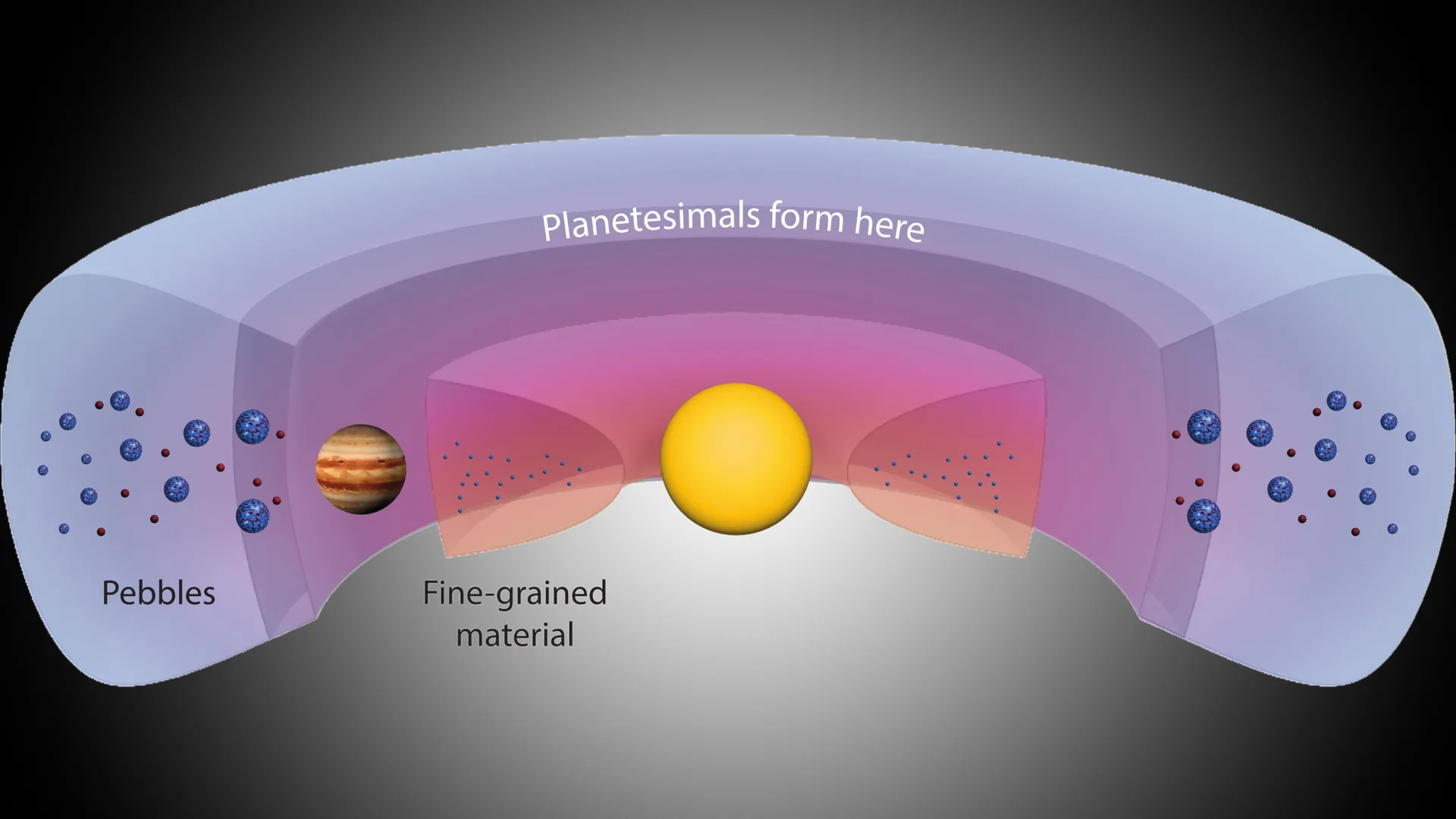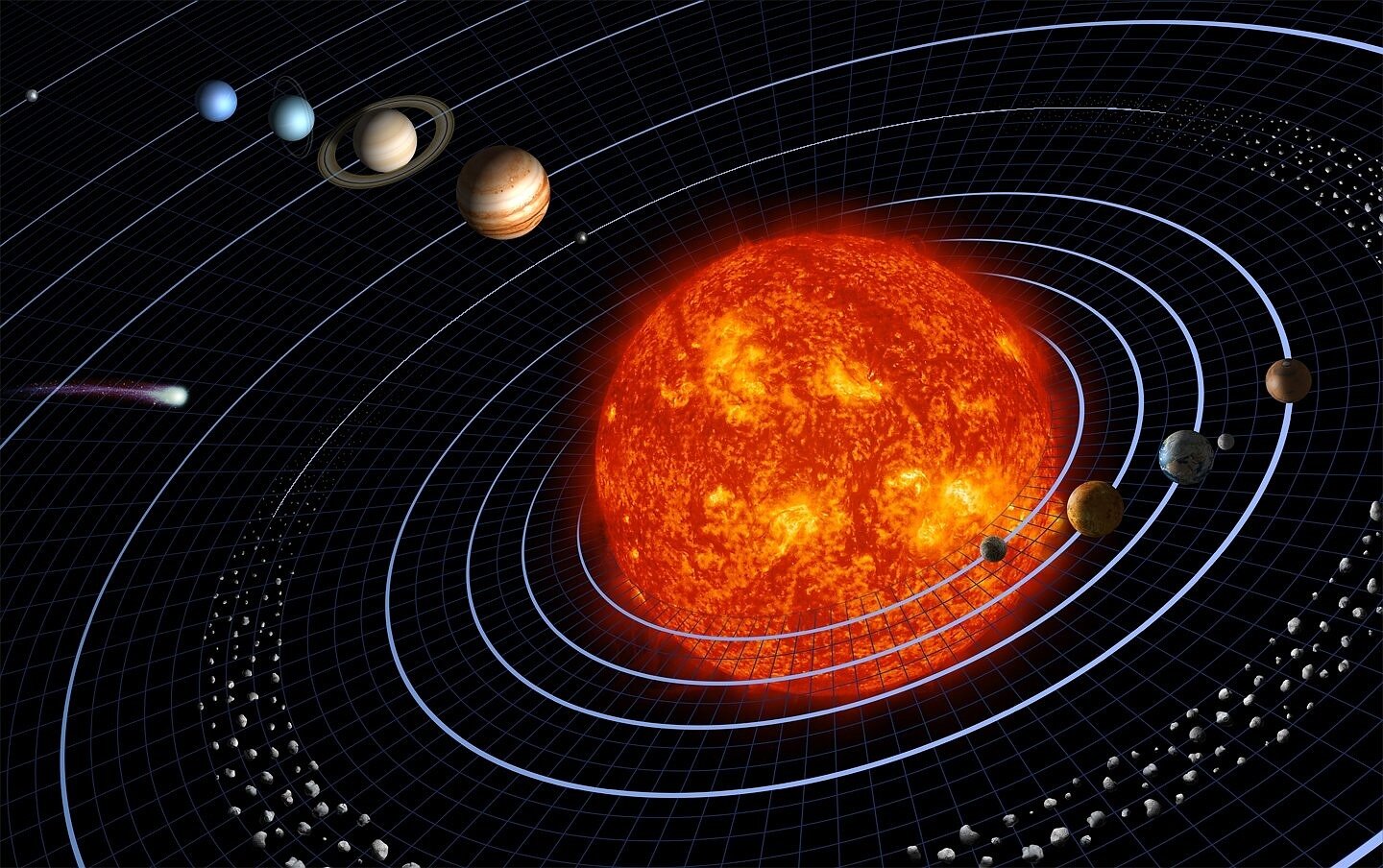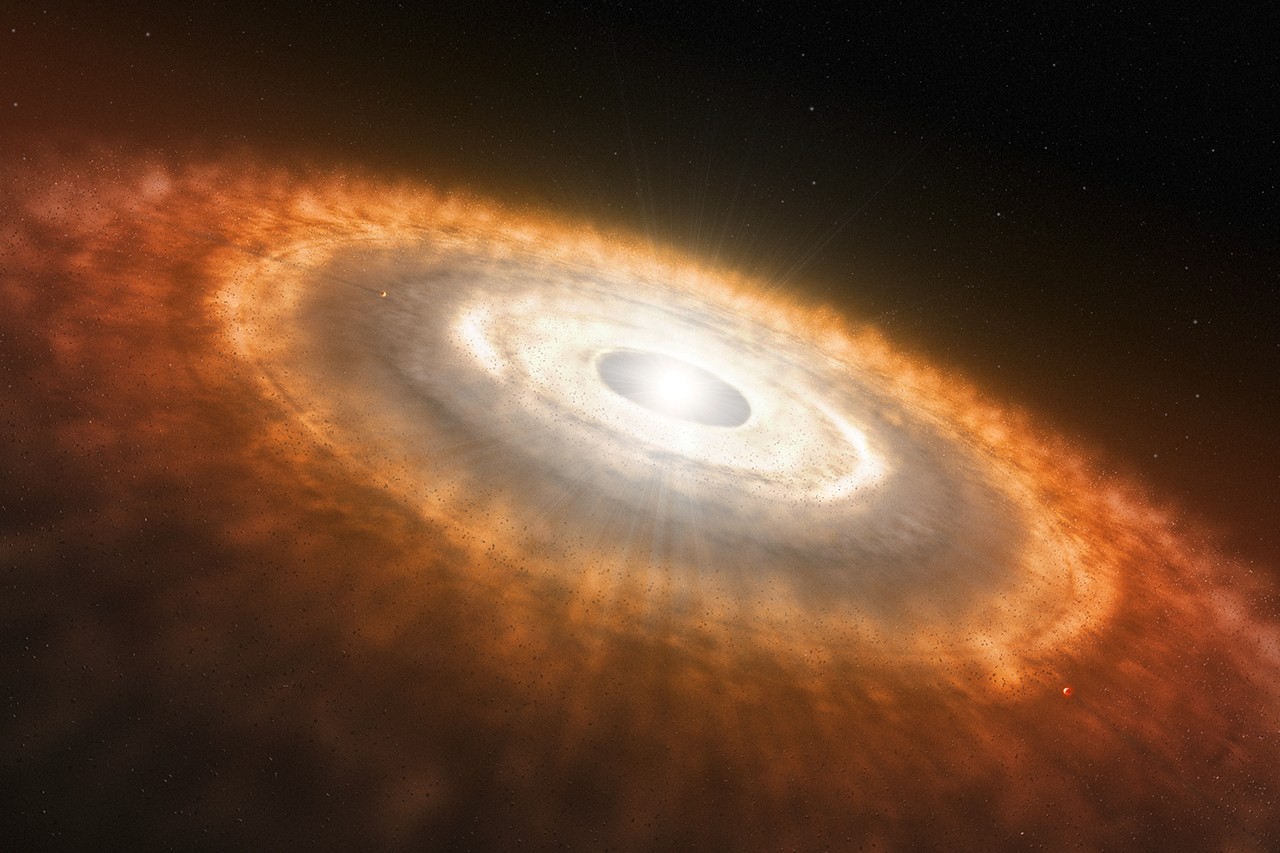
Scientists may have found one of the main sources of rocky material for the solar system, forming diverse populations of baby planets over millions of years. In a recent study published in The Astrophysical Journal, a team of researchers from the Max Planck Institute for Solar System Research (MPS) in Germany describe a planet-forming region beyond Jupiter responsible for generations of planetesimals with vastly different compositions. Celestial baby making The solar system formed roughly 4.5 billion years ago from the collapse of a giant cloud of gas and dust, and while the material at the center would go on to form the Sun, the remaining debris clumped together over time to form the building blocks of planets. There may be more to the story, however. Scientists believe that different regions of the solar system may have evolved under varying conditions while multiple stages of the planet formation process could have been taking place at the same time.
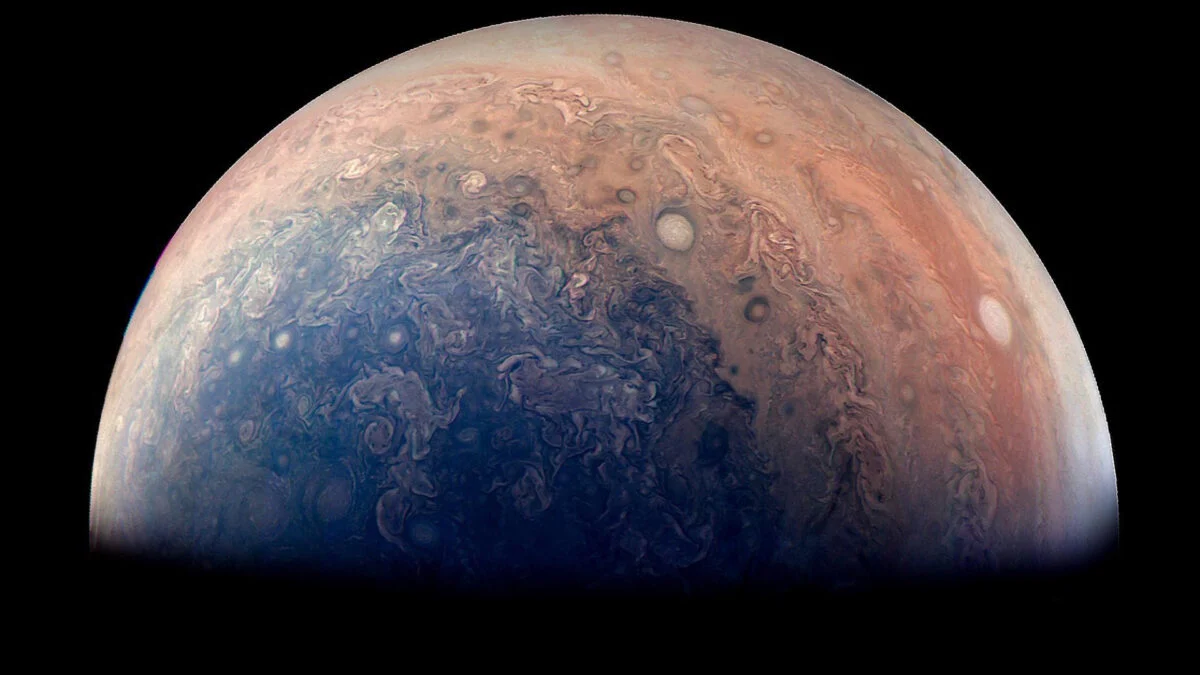
© MPS / hormesdesign.de The researchers behind the new study set out to uncover the early history of the solar system, narrowing in on a time period between two to four million years after its initial birth. By that time, Jupiter had already gathered much of the surrounding material around its orbit, possibly creating a gap in the disk of gas and dust from which the solar system initially formed.