view more
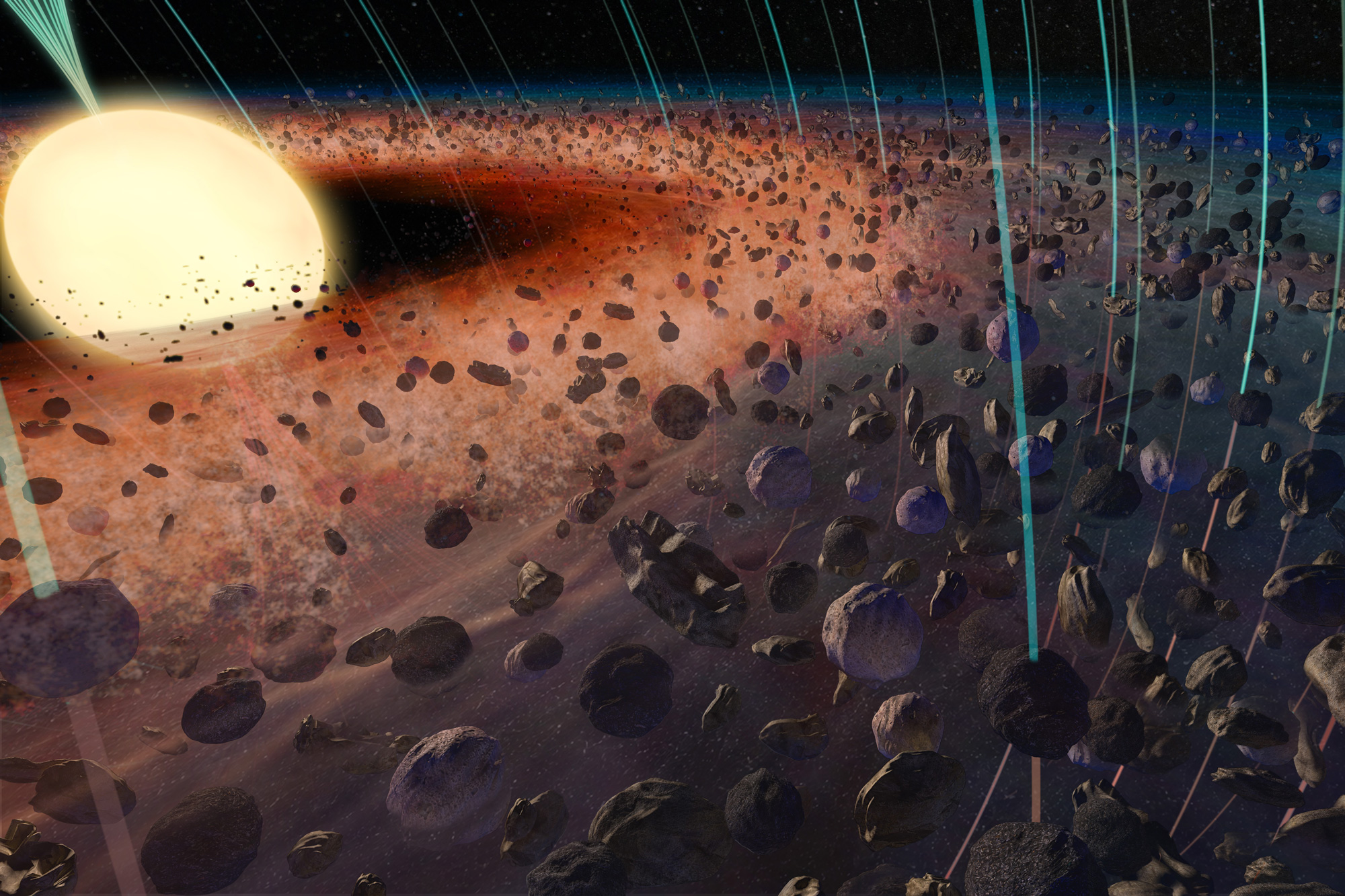
When the Solar System formed, a disk of gas and dust orbited the young Sun. Over the course of millions of years, the dust gradually clumped together to form kilometre-sized chunks known as planetesimals. Some grew into planets, while the rest are considered to be the precursors of today’s asteroids. Researchers assume that this development did not proceed in a linear fashion, with different stages of planetesimal development occurring simultaneously, and not every region of the disk offering favourable 'starting conditions' for planetesimals.
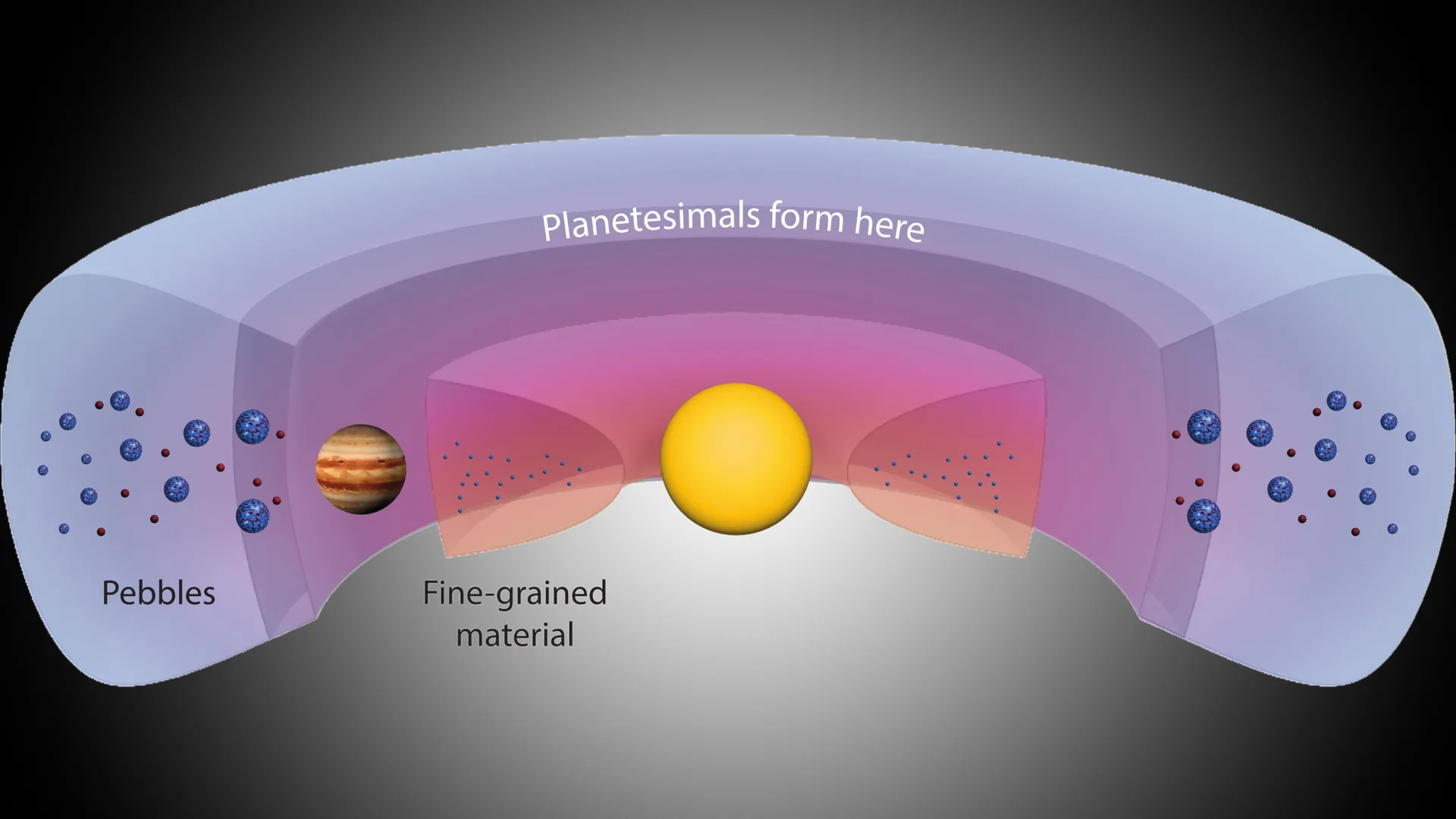
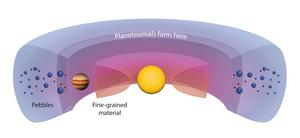
In their current study, published today in the journal The Astrophysical Journal, researchers at the Max Planck Institute for Solar System Research (MPS) in Germany identify the ring-shaped region just outside Jupiter’s orbit as not only an efficient, but also a 'pluripotent' planetesimal breeding ground. Computer simulations show for the first time that over the course of two million years, planetesimals with very different compositions formed there.
“Different types of planetesimals apparently formed in the same region of the early dust and gas disk, only at different times. The region just outside Jupiter’s orbit offered excellent conditions for this, said Joanna Drążkowska, head of the Lise Meitner Group on planet formation.