June 2nd, 2026
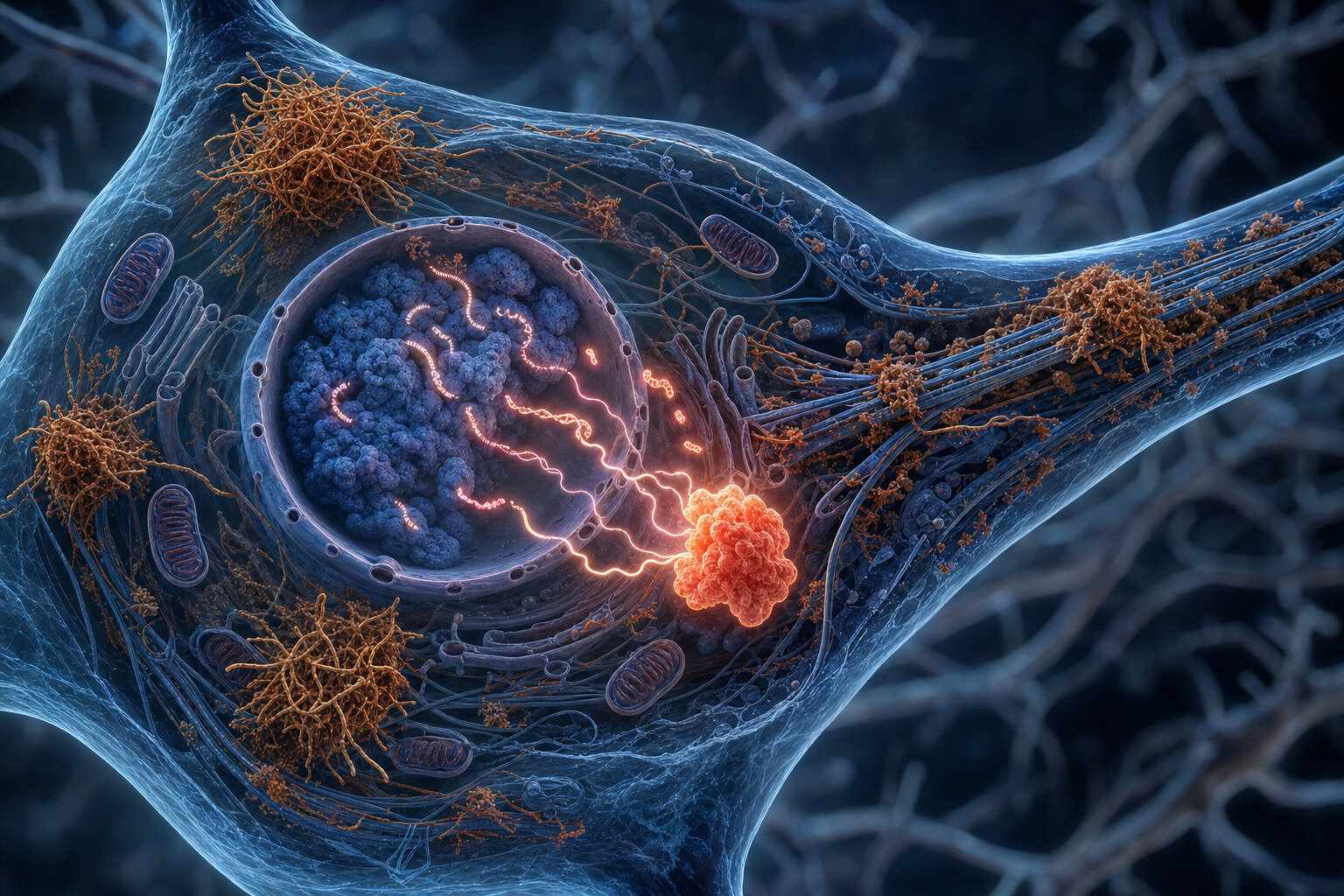
You might recall that gene therapy to overexpress caveolin-1 in the brain was recently shown to reduce pathology in a mouse model of Alzheimer's disease. In today's open access paper, researchers apply the same gene therapy to a mouse model of TDP-43 pathology in the aging brain. In this model, the mice express higher than normal levels of TDP-43, and thus as they age, the animals exhibit greater levels of altered forms of TDP-43 that form aggregates and disrupt cell biochemistry in the brain as a consequence. This pathological aggregation and its consequences are particularly important in amyotrophic lateral sclerosis (ALS) and the recently named limbic-predominant age-related TDP-43 encephalopathy (LATE), but it seems likely that TDP-43 aggregation contributes in some way to all of the major named age-related neurodegenerative conditions.
Of note, the viral vector used in these studies, AAV-PHP.eB, is a relatively recently developed AAV serotype that allows for both intravenous injection and efficient transduction of cells in the brain. From a logistics and cost perspective, this is a large improvement over the need for stereotactic approaches to direct injection of the brain and intrathecal injections, and is spurring more interest in the development brain targeted gene therapies.