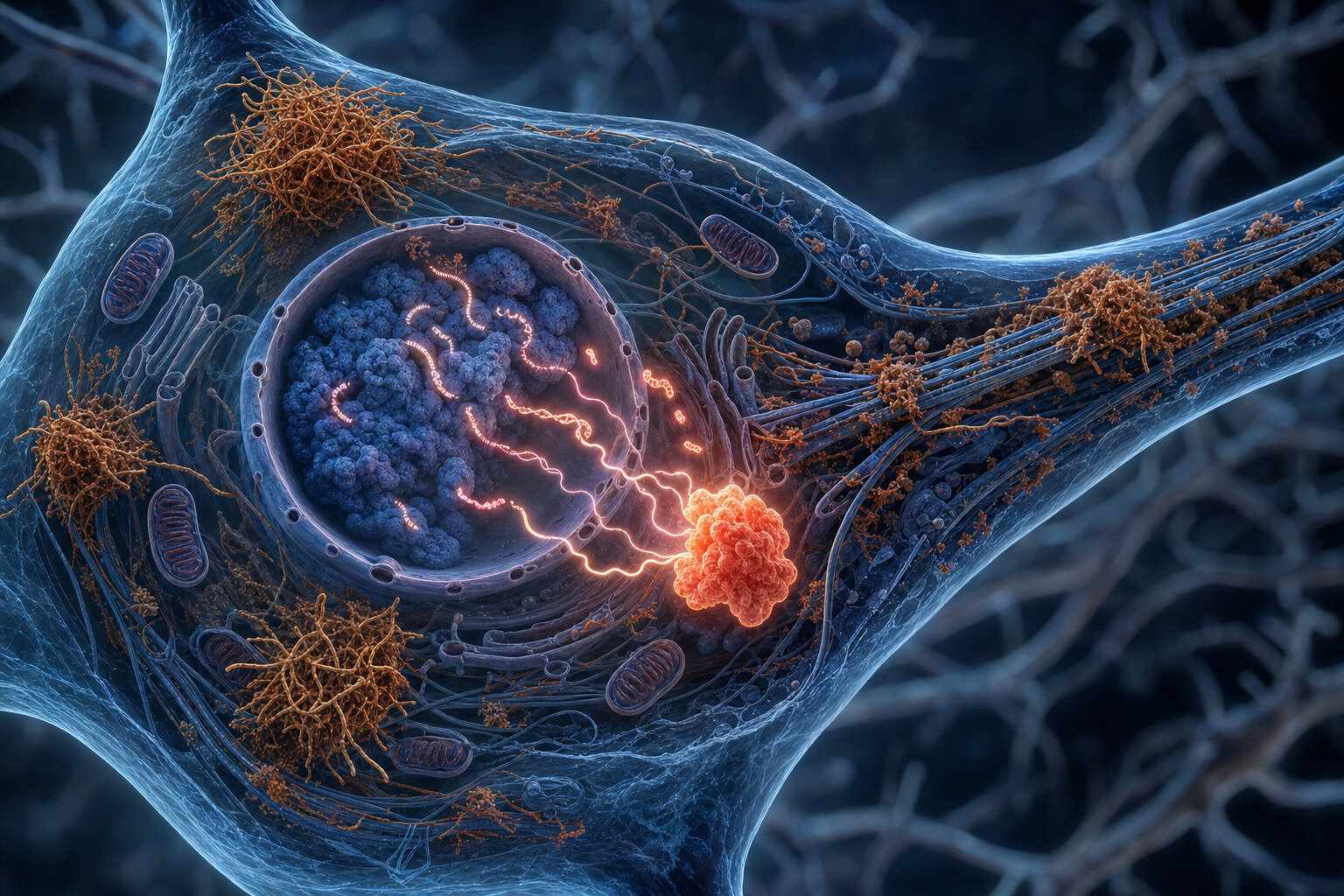
Alzheimer's disease is marked by the buildup of a toxic protein called Tau, which damages and eventually kills brain cells. As this harmful protein moves into new areas of the brain, the disease progresses, leading to worsening memory loss and cognitive decline.
Now, researchers have uncovered an unexpected player in that process. In a study of mice, they found that a brain protein called Arc, which normally helps neurons communicate, also appears to help toxic Tau spread from diseased brain cells to healthy ones.
The discovery points to a possible new strategy for slowing Alzheimer's disease. Rather than trying to eliminate Tau entirely, future treatments might stop it from reaching healthy brain cells in the first place.
"I'm excited by the fact that we've identified a new way of potentially stopping the progression of Alzheimer's disease," says Jason Shepherd, PhD, professor of neurobiology at University of Utah Health and senior author of the study.
The findings were published in the journal Cell.