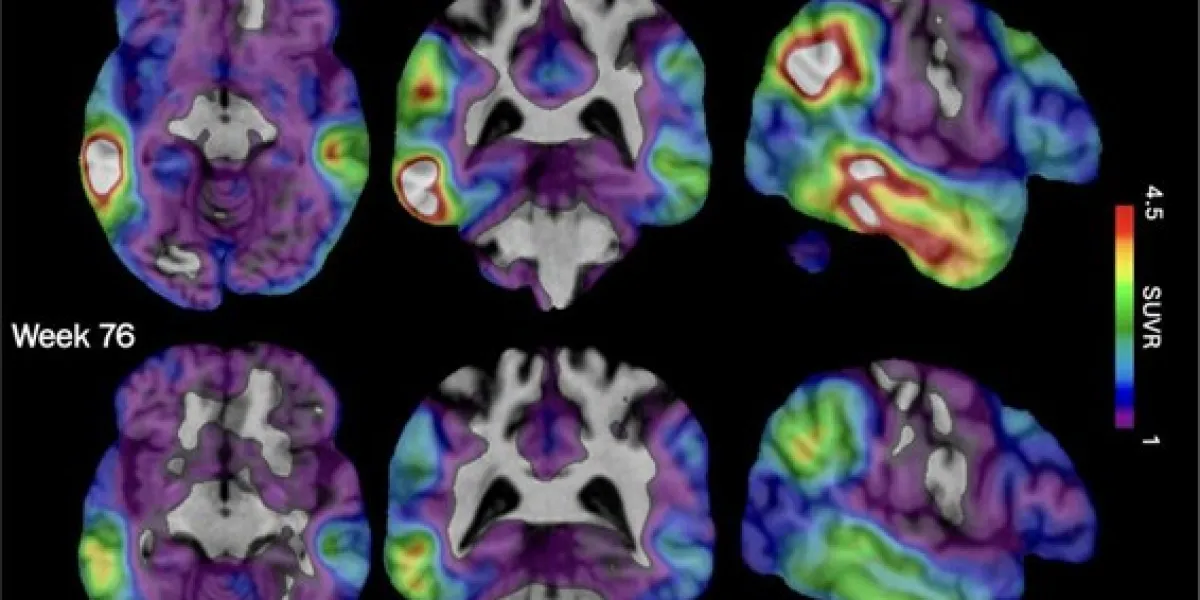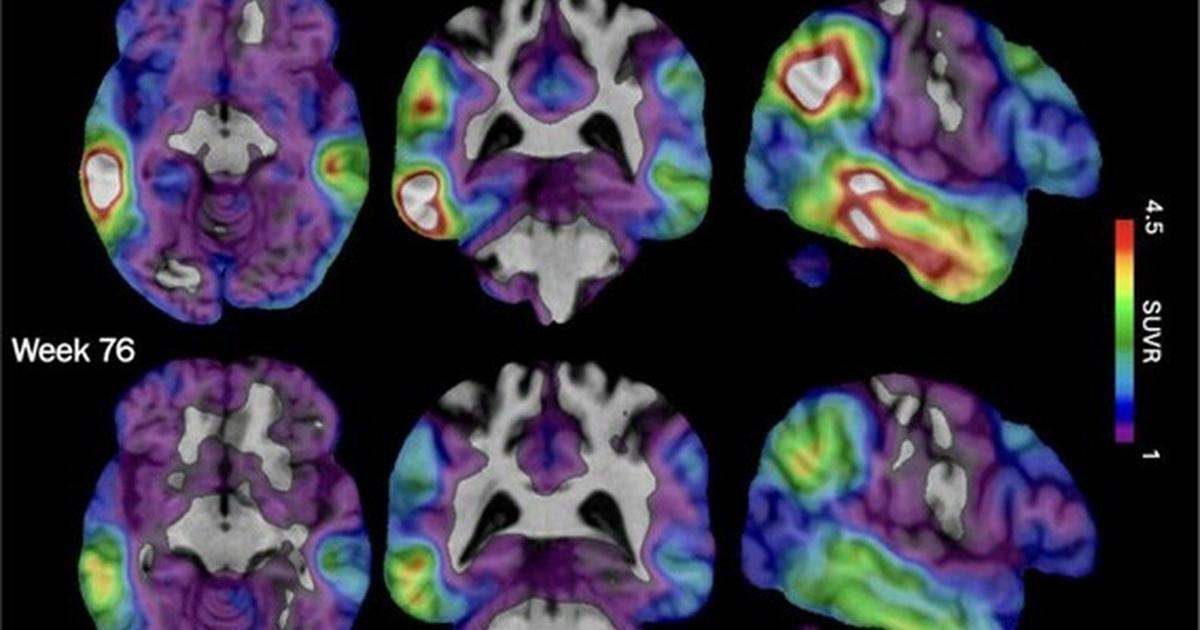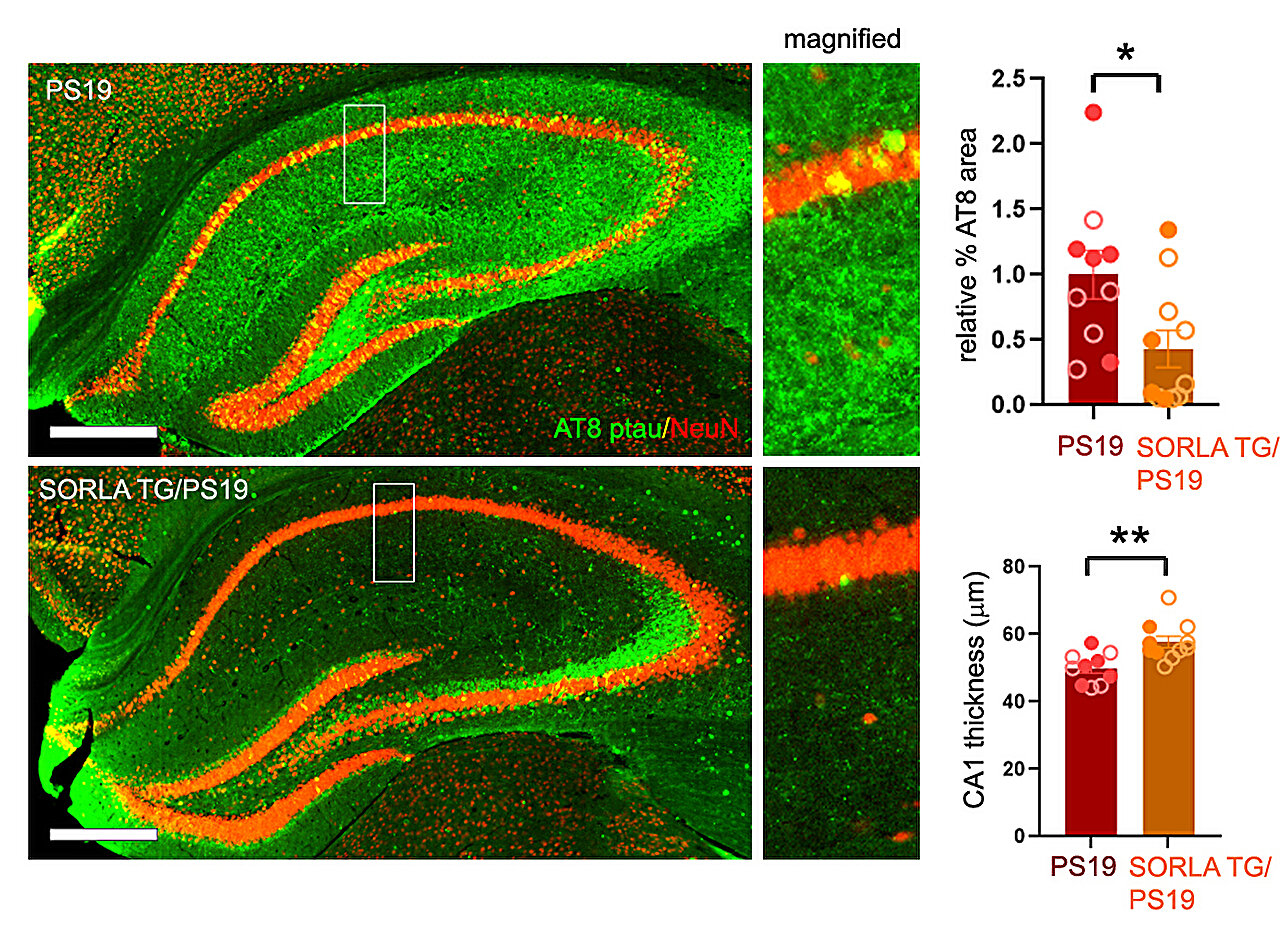
An overabundance of SORLA protein protects against a number of biological processes linked to the formation of tau tangles and progression of neurodegeneration. These include reducing the addition of too many phosphate groups to tau, known as hyperphosphorylation. In these biopsy images, less phosphorylated tau—stained to appear green—has accumulated in the bottom sample overexpressing SORLA. Credit: Tim Huang, Huijie Huang, Sanford Burnham Prebys
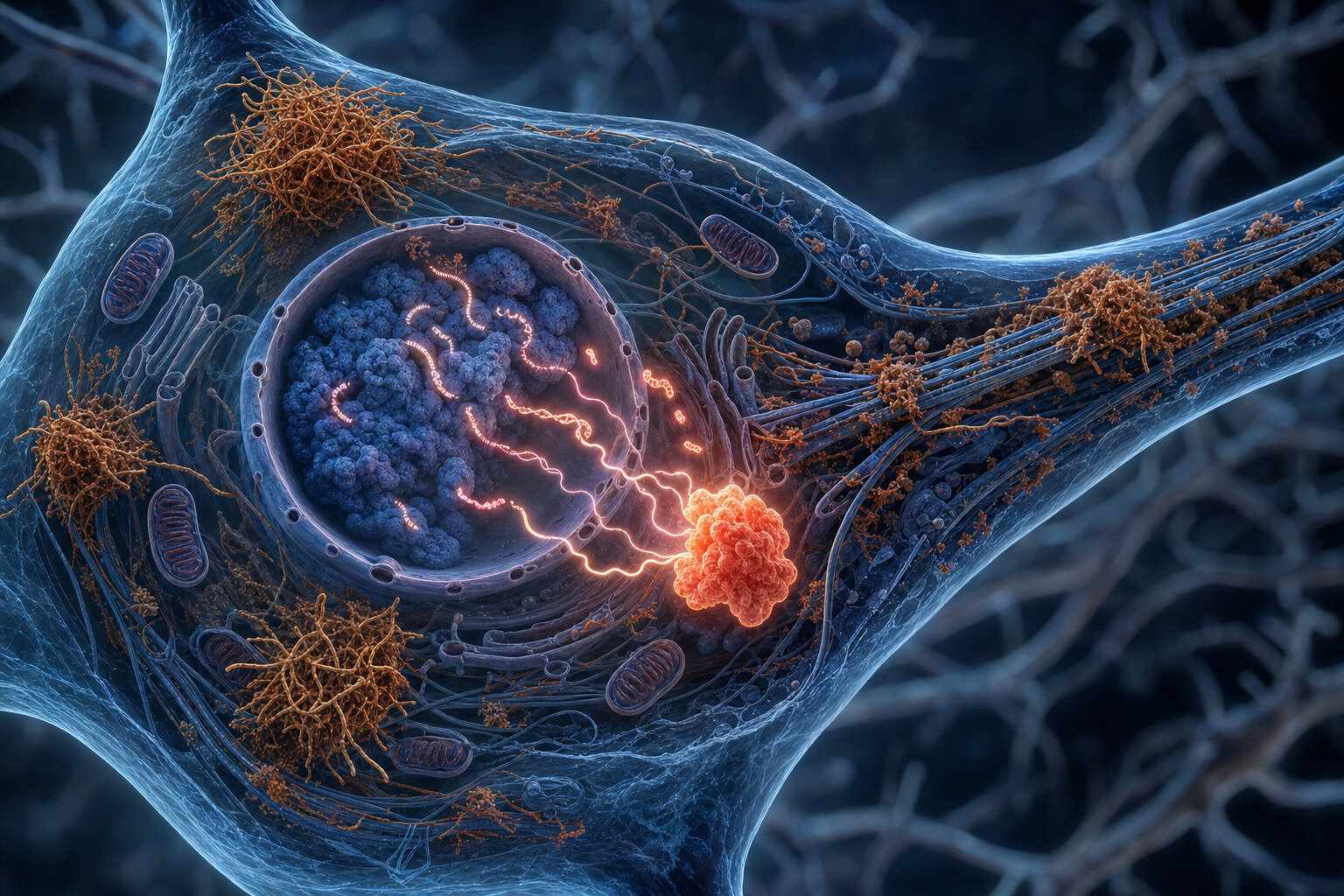
Alzheimer's disease and many other forms of neurodegeneration share a common culprit. In these diseases, tau proteins that normally stabilize neuronal microtubule filaments within our nervous system networks instead form noxious knots and gradually disrupt the circuits they would otherwise preserve.
Scientists at Sanford Burnham Prebys published findings in Science Advances showing that a different protein offers protection against the effects of these lethal loops. The results suggest that future research may yield new treatments capable of boosting this protein's ability to defend the brain.
Normally, tau proteins do not demand any such security measures. They are found throughout the brain and nervous system, helping to maintain the shape and structure of our neuronal wiring.