July 24th, 2026
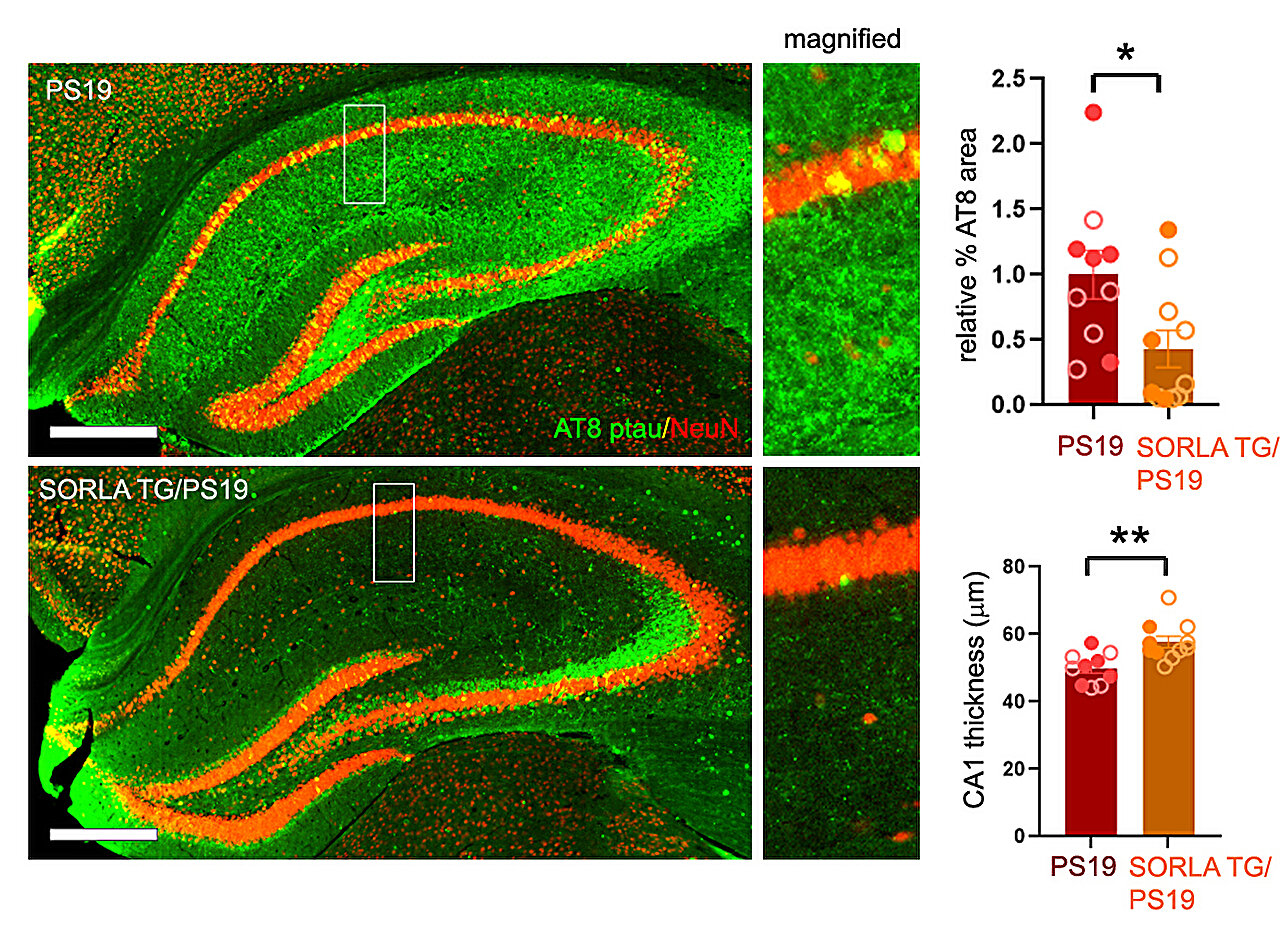
A number of neurodegenerative conditions, including Alzheimer's disease, are characterized by a pervasive chemical alteration of tau protein that causes tau to cease its normal function and aggregate into structures known as neurofibrillary tangles. This is harmful to neurons and their normal, necessary function. The feedback loop between maladaptive inflammation and tau aggregation drives the end stages of Alzheimer's disease, causing widespread cell death in the brain and the eventual death of the patient. Researchers here identify a compensatory maintenance process in neurons that can be made to operate more efficiently by increasing the expression of a protein called SORLA. In mice engineered to develop tau pathology, greater SORLA expression slows the progression of neurodegeneration.
Recent genome-wide association studies have linked multiple gene variants with altered Alzheimer's disease (AD) risk, including the class I membrane receptor endosomal trafficking factor, SORLA, or "Sortilin-related receptor containing LDLR class A repeats" (encoded by the SORL1 gene, also known as LR11). SORLA is a component of the retromer endosomal trafficking complex. Expression of retromer components have been shown to be down-regulated in AD and reduced SORLA expression was also linked to AD.