August 14th, 2026
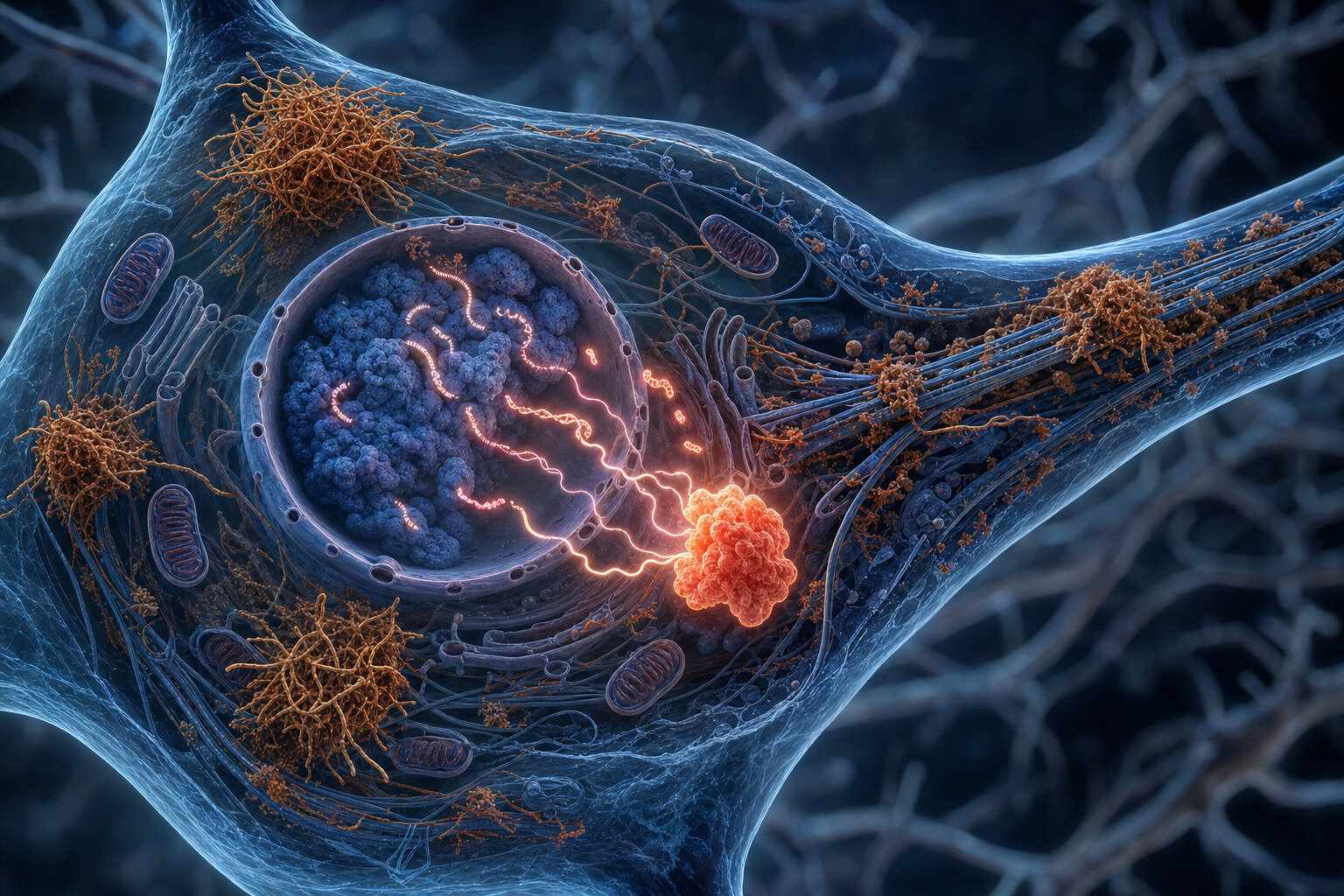
Tauopathies emerge in the aging brain, a pathological level of phosphorylation of the tau protein that is disruptive to cell function. Evidence suggests a feedback loop between tau phosphorylation and consequent aggregation into neurofibrillary tangles on the one hand and chronic inflammation in brain tissue on the other, ultimately leading to the widespread death of neurons. Here, researchers show that another feedback loop exists between pathologically altered tau and mitochondrial dysfunction in brain cells. Since it is well established that mitochondrial dysfunction promotes inflammatory signaling via a range of mechanisms, such as maladaptive reactions to mitochondrial DNA fragments released into the cell cytoplasm, this new discovery fleshes out the bigger picture considerably.
Tau molecules spend some of their time sitting on microtubules. But tau molecules spend even more of their time detached from their seats on microtubules. During this downtime, a free-floating tau molecule becomes especially prone to confrontations such as the stapling of a chemical cap onto its exposed parts by neighborhood enzymes. These modifications predispose tau molecules to clumping with one another, potentially aggregating into neurofibrillary tangles. A single tau molecule can acquire numerous chemical caps along its length, all the more pumping up its potential for mischief. More often than not, the chemical cap that gets attached is what chemists call a phosphate group. A single tau molecule can accommodate as many as 80 separate phosphate-group additions, or phosphorylations. Tau "hyperphosphorylation" is a uniting feature linking all tauopathies.