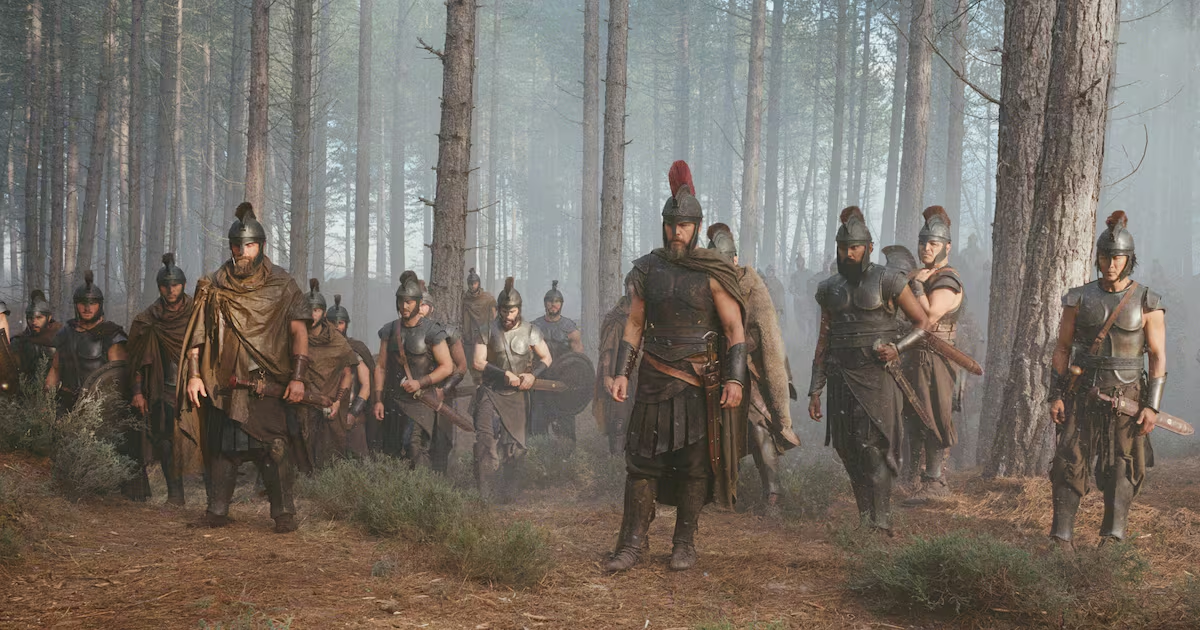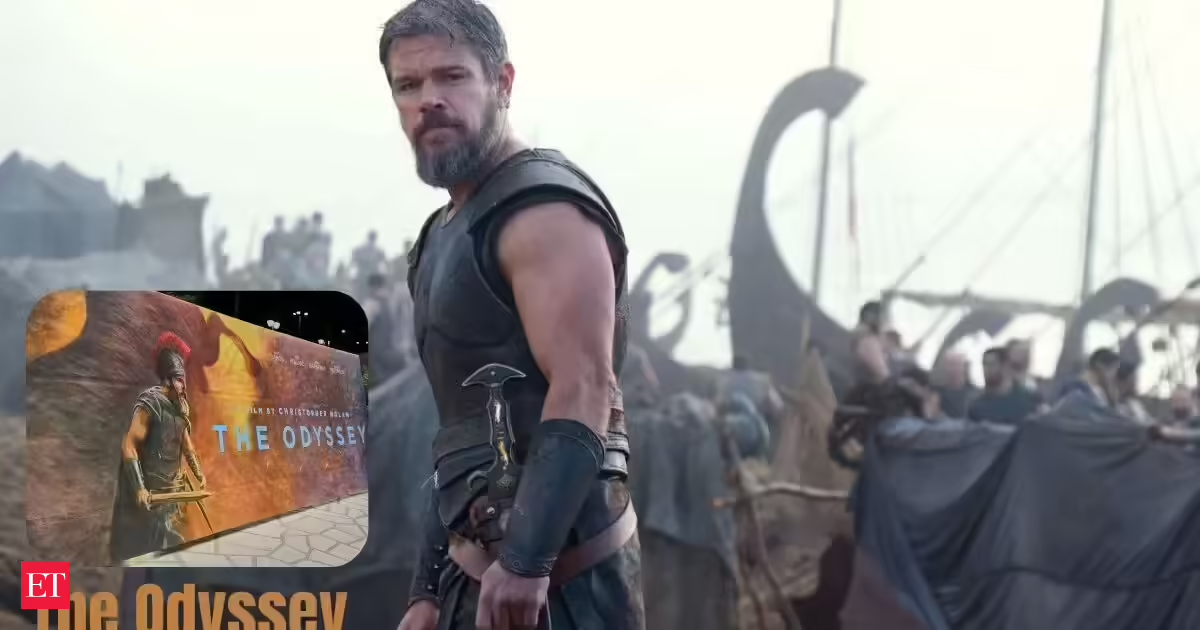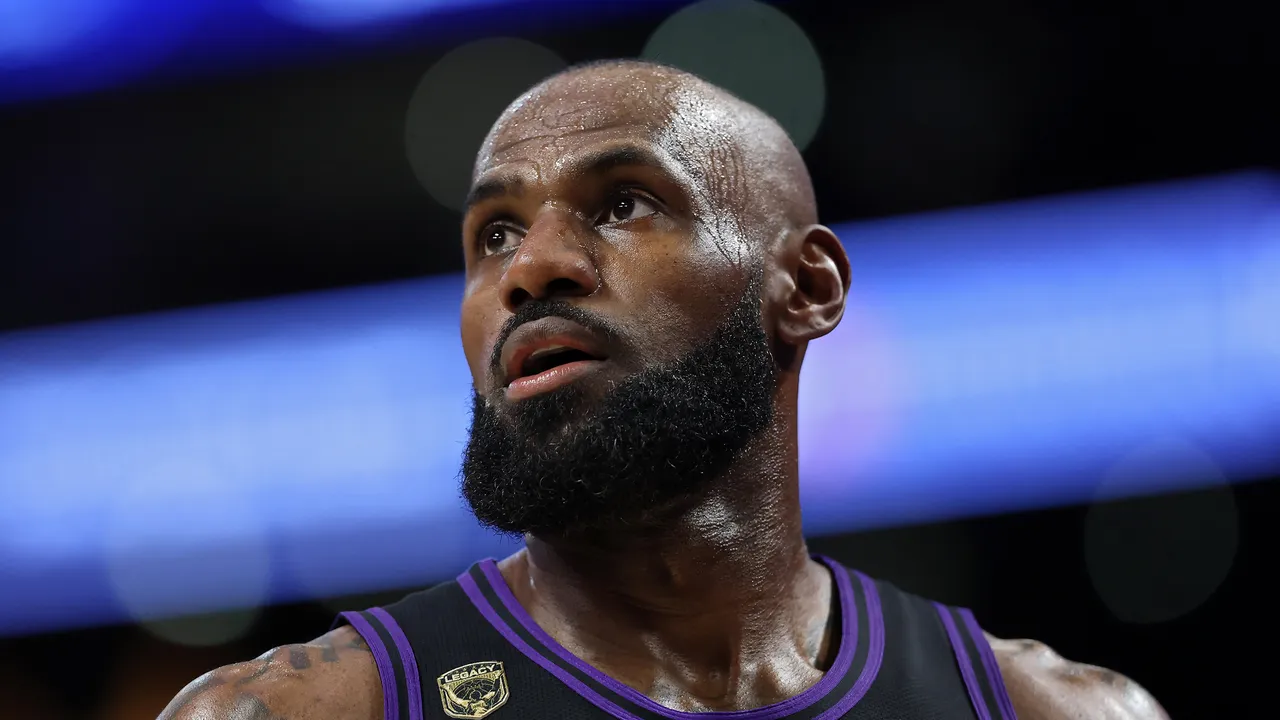
Book IEvery translator of the Odyssey faces the same problem at the start: how to characterize its hero? Homer began his epic of Odysseus’ ten-year journey from Troy to his home of Ithaca, during which the Greek warrior is beset by monsters, countless opponents, and the vicissitudes of the gods, by describing Odysseus as polytropos, which means, roughly, “much turny.” In some respects, polytropos is an unusual choice—most Homeric heroes are described in terms of their fortitude, their strength, or their prowess in battle. But Odysseus is not a typical hero. His cunning and his intelligence are his defining features, and the adjective is an ingenious one, suggesting, as it does, not only Odysseus’ itinerant path home but also his multiplicity, his capacity to adapt to many different environments, his ability to take on several divergent roles, and the sheer variety of his skills, all of which were an essential part of his genius. The word also refers, indirectly, to the story itself, foreshadowing the twists and turns to come.The phrase “much turny” wouldn’t suit the first line of an epic, though. Emily Wilson, whose rendering of the Odyssey in English was published in 2017, later wrote that she considered using “a man who was turning and turned,” and also toyed with “a man of many turns,” but those words didn’t work with the prosody of the rest of the translation, and besides, they required too much extratextual explanation. In the end, she went with “complicated.” It’s not a perfect translation of polytropos, but it carries, etymologically, the image of folding (which is a kind of turning), and it speaks to the multifaceted elements of his character. It hints at the complexity of the narrative as a whole. And it had the merit of being true. He’s complicated.So: tell me about a complicated man. Tell the old story for our modern times.Book IIOf all the claims to greatness that LeBron James can make—the four championships, the ten Finals appearances, the four M.V.P. awards, the twenty-one (twenty-one!) All-N.B.A. selections, the all-time scoring record, the three Olympic gold medals, the philanthropic contributions, the billion-dollar business empire, the international renown—perhaps the most impressive one is that he was burdened with perhaps the greatest expectations ever placed on a young athlete, and he met them. In fact, he exceeded them. He was made the heir apparent of the sport before he’d even turned eighteen. Many players are hyped, and a few actually live up to the hype. What James did is different. He turned the expectations into prophecy. He made them his fate.He was only seventeen when Sports Illustrated put him on the cover and labelled him “the Chosen One.” He looked like a man who was ready for it—six feet seven, already two hundred and twenty-five pounds—though he was at the time barely older than a child. He seemed not so much a talented high-school prospect as an amalgam of N.B.A. history. He could run the offense with the genius of Magic Johnson, post up like Larry Bird, bully his way to the boards like Charles Barkley. And he could shoot. James wore No. 23, in honor of his idol Michael Jordan, and Sports Illustrated began its story with a meeting between Jordan and James—His Airness and the boy who was called King.James didn’t shy away from the comparisons. Even as a teen-ager in the N.B.A., he looked like he belonged. No—he looked like he could dominate. Within only a few years, he was the best player in the league, an athlete who seemed to have no weakness. He moved with the grace of a much smaller man but was as unmovable as a much larger one; he could shoot with range, but could also detonate at the rim; his footwork and body control were perfect; his ball handling excellent; but most of all what made him special was his mind. He was a man of many strategies and much wiliness. He could anticipate decisions, see far ahead of the action, and guide the aims and actions of other men, sometimes without their awareness. He involved his teammates. In fact, he was sometimes criticized for involving his teammates, as if the goal of the game were personal glory and not winning, which always involves the team. He understood the internal logic of the court—and the game outside of it, too. He knew how to leverage his brand. He amassed power, and he used it. The power was something that seemed to emanate from within him, a kind of natural right but also something he felt, justly, that he had earned.Book IIIHis mother was sixteen when he was born. He grew up in Akron, Ohio, which was known for its rubber manufacturing, though the neighborhood he came from was not known for anything so fine. His father was absent. James was drafted with the No. 1 pick in 2003, by the Cleveland Cavaliers. The Cavs, like every Cleveland team, were hopeless, moribund. No Cleveland team had won a major sports championship since 1964. James turned the franchise into one of the top teams in the league. Game after game, with every buzzer-beater and highlight reel of assists, his legend grew.Some players have a signature move: a distinctive fadeaway, a slick crossover dribble, a hammer dunk. James did too many things too well to be known for any one of them. In fact, early on, he was underrated. He could do almost everything as well as anyone, and so people harped on what he didn’t do best. In 2010, he earned his second consecutive M.V.P. award. He was undisputedly the greatest player on the planet. And yet he was dogged by criticism. He scored twenty-five straight points in Game Five of the 2007 Eastern Conference Finals, but what was remembered was that he didn’t win the championship. Too passive. Wilted under pressure. He’d never be Jordan, who never lost a Finals series.And then he left.Book IVIn 2010, James held a television special called “The Decision” and announced that he was taking his talents to Miami. Miami was a siren’s song. It had pristine beaches, the clear blue water of Biscayne Bay. It had night clubs and beautiful people. It had a culture led by the old warrior, Pat Riley; it had his friends. It had the lure of a trap.In the eyes of the public, the Decision was a bad decision. The response to the move wounded him for a time, and the scar is still visible. Sixteen years later, it is hard to understand now the anger, the charges of egotism and selfishness, that accompanied James’s choice—and not just from Cavs fans who felt betrayed. It was shocking national news.Book VSurviving the bruising to his reputation became another test. James decided to team up with a few of the best players in the world, and then struggled during the Finals in 2011, against the Dallas Mavericks. Never mind that the Heat wouldn’t have made it to the Finals without his performance in the Eastern Conference Finals. If he’d been passive in Cleveland, now he was a “choker.”So he did the only thing a hero could do: he started winning. He kept improving, played in the post more often, and—before everyone else was doing it—embodied positionless basketball. He could, and did, play all over the floor. He won two more M.V.P. awards. When the Heat were facing elimination during Game Six of the 2012 Eastern Conference Finals, against the Boston Celtics, he scored forty-five points and pulled down fifteen rebounds—one of the great clutch performances of all time. Then he demolished the Thunder in the Finals. The following year, he carried the Heat to the team’s second-straight championship.Book VIAnd as he won, as he aged, he seemed to soften. He made it clear that he had left home but had not forgotten it. He was not quite so selfish and callow as he was sometimes made out to be. He gave kids in Akron backpacks and bikes—an ingenious offering. Many of the students who received those bikes were Black kids who’d been made to grow up too fast, who’d been constrained by circumstances their whole lives. A bike is a symbol of childhood, and a way to go places. It is a means to freedom. Then he built a whole school, with programs and services for all underserved people.He spoke out, too, against racial injustice, at a time when it was rare for athletes to do so. James didn’t invent the notion that athletes are more than athletes, but he became synonymous with it. “More than an athlete” became his slogan, and he named his production company “Uninterrupted.”He wasn’t trying to revolutionize the system. He wanted more control of it. He understood that sports were a Trojan horse, a way to sneak social issues into mainstream culture.But his journey was not done. Miami was his Ogygia, the island of Calypso. Miami wasn’t home.Book VIIThere were more tests. A suspicious press; the jealousy of Pat Riley. But he made it back to Ohio, where his biggest battle awaited: the Golden State Warriors—one of the greatest teams of all time.In Cleveland, James was in charge. There were subtweets and rumors of strife. This time around, he was not playing with his friends.In Cleveland, he was the underdog. His critics liked to point out that the team’s weaknesses were partly his own doing, a consequence of his demands. That seemed unfair—it wasn’t his job to say no to himself—but there was a sense that he was going into battle alone. He finished the 2016 N.B.A. Finals leading both teams in all five major statistical categories. If he had help, perhaps it came from some god. The Cavaliers lost the first two games of that series by a combined forty-eight points. A 3–1 deficit was almost insurmountable. James had back-to-back forty-one-point games to stave off elimination. He seemed to win Game Seven almost by his will alone, chasing down Andre Iguodala, as if sped up by a fleet-footed goddess, and blocking a layup attempt with less than two minutes remaining and the score tied. It was the stuff of legends.Book VIIIBut there was another prophecy, and this one said that Odysseus must leave Ithaca again after defeating his enemies. So LeBron left Cleveland again, for Los Angeles. And there, in the weirdness of the pandemic bubble, he won another championship, this time with the Lakers.Having been the youngest player to score forty-plus points in a game, he also became the oldest to do so. He broke the N.B.A. scoring title. He shared an N.B.A. court with his son.No one has played longer, or better, or had more impact on the league. The concept of the superteam, the leveraging of free agency, the notion that athletes might have something to say—these are commonplace because of James. And yet although he is universally admired, he is not universally beloved. He is loved as kings are loved, for their power and for their benevolence, and also for their distance.Book IXHis role changed again. He became the third option on the Lakers, after the team traded for Luka Dončić and encouraged the emergence of Austin Reaves. He missed games, suffering from sciatica, arthritis, and sundry injuries. But he reinvented his game again, changed his approach, and, once more against all odds, was fantastically effective. He had nothing left to prove.Book XAs the prophecy foretold, he turned inland, away from the sea. On Friday, he announced that he would sign a two-year, eight-million-dollar contract with the Philadelphia 76ers. “This is my last decision,” he wrote on social media. “I’m not going for money. I’m not going for family. What am I really playing for at this point? I still want to sacrifice. I still want to work. I still want to grind. I still want to compete, to win and to have a chance at the feeling of winning another championship.” Heroic words, and an epic idea. But there’s something mournful, something searching about his statement, too. What is he really playing for?The Odyssey has twenty-four books. This will be James’s twenty-fourth season. Coming up with the ending of his story may turn out to be the most complicated test yet. ♦
Other newsrooms on this story
· 10 sources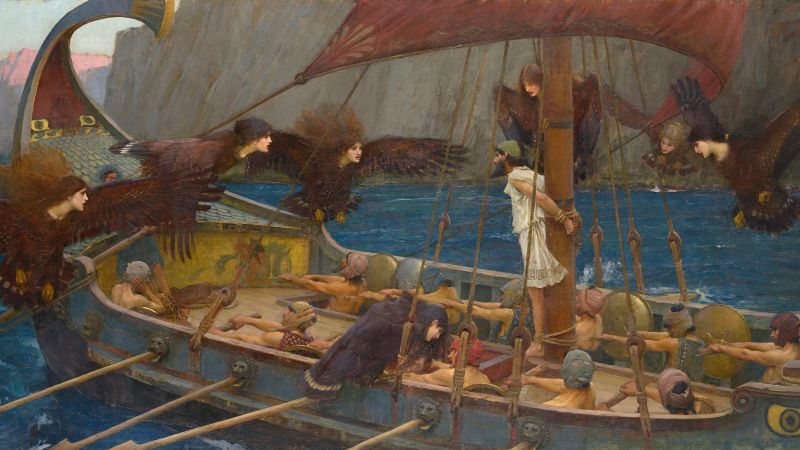
cnn.com·
What makes a journey an ‘odyssey’ anyway? | CNN

irishtimes.com·
Fintan O’Toole’s Odyssey offers a meaningful and perceptive opinion on a classic
Fintan O’Toole: Odysseus is all around us, not just in Christopher Nolan’s blockbuster Odyssey

ekathimerini.com·
Odysseus wasn’t real, but he had real worshipers | eKathimerini.com

news.yale.edu·
A summer ‘Odyssey’ through time
scmp.com·
As I see it | How an obscure psychologist reshaped the Homeric hero
scientificamerican.com·
Psychology researchers know why The Odyssey transcends time
thenationalnews.com·
Seven books that inspired Christopher Nolan’s The Odyssey – besides The Odyssey | The National
smh.com.au·
From one Homer to another, the ending to this opposition odyssey remains unclear
Nolan’s ‘Odyssey’: Reading Homer through the lens of Western modernity | eKathimerini.com