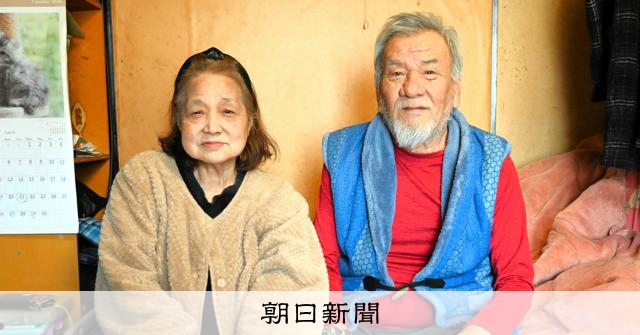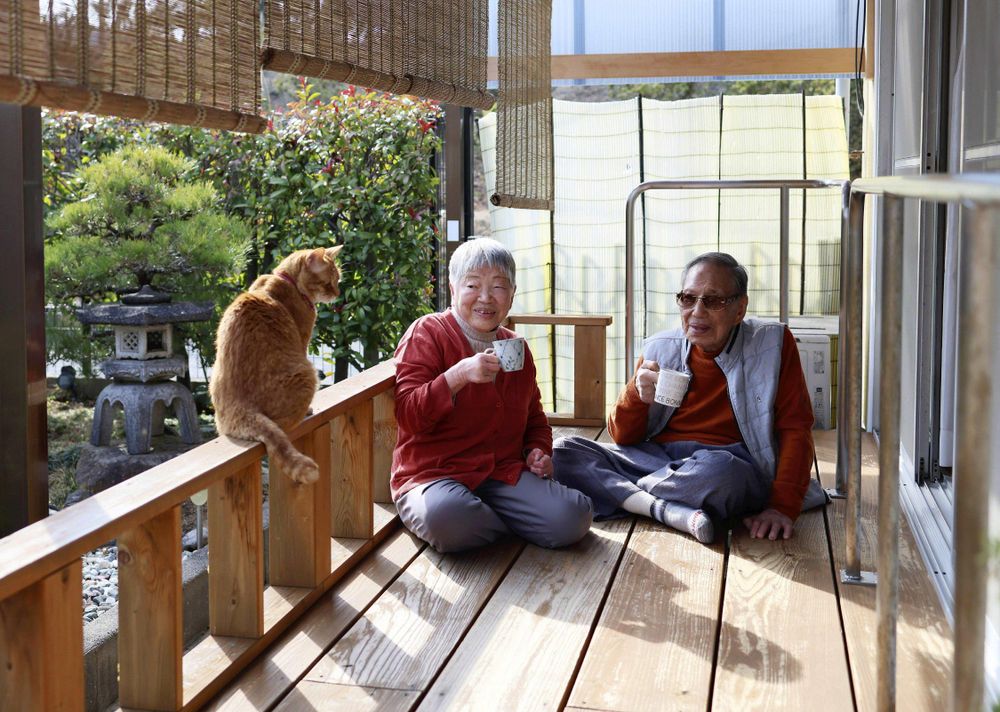
Masao Ishida, 89, and his wife, Natsuko, 76, have a daily routine of relaxing and drinking tea on the veranda of their home within a sanatorium grounds. Masao, who previously lived with five people in a 12-tatami-mat room, had always longed to live in a house with a garden.
Nanako Sudo
At the National Sanatorium Nagashima Aisei-en, a leprosy sanatorium in Japan's Setouchi, Okayama Prefecture, that was established in 1930, former patients Masao Ishida, 89, and his wife, Natsuko, 76, strolled beneath a row of cherry trees overlooking the calm sea.
"This island is most beautiful in spring," Masao said, and Natsuko nodded quietly. It took many long years for them to come to feel that way.
April 1 marked 30 years since the abolition of the Leprosy Prevention Law, which mandated the forced isolation from society of leprosy patients. They continued to be segregated even after treatment methods for the disease were established following World War II, and societal prejudice against them persists even today.