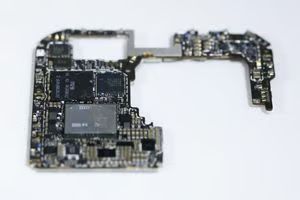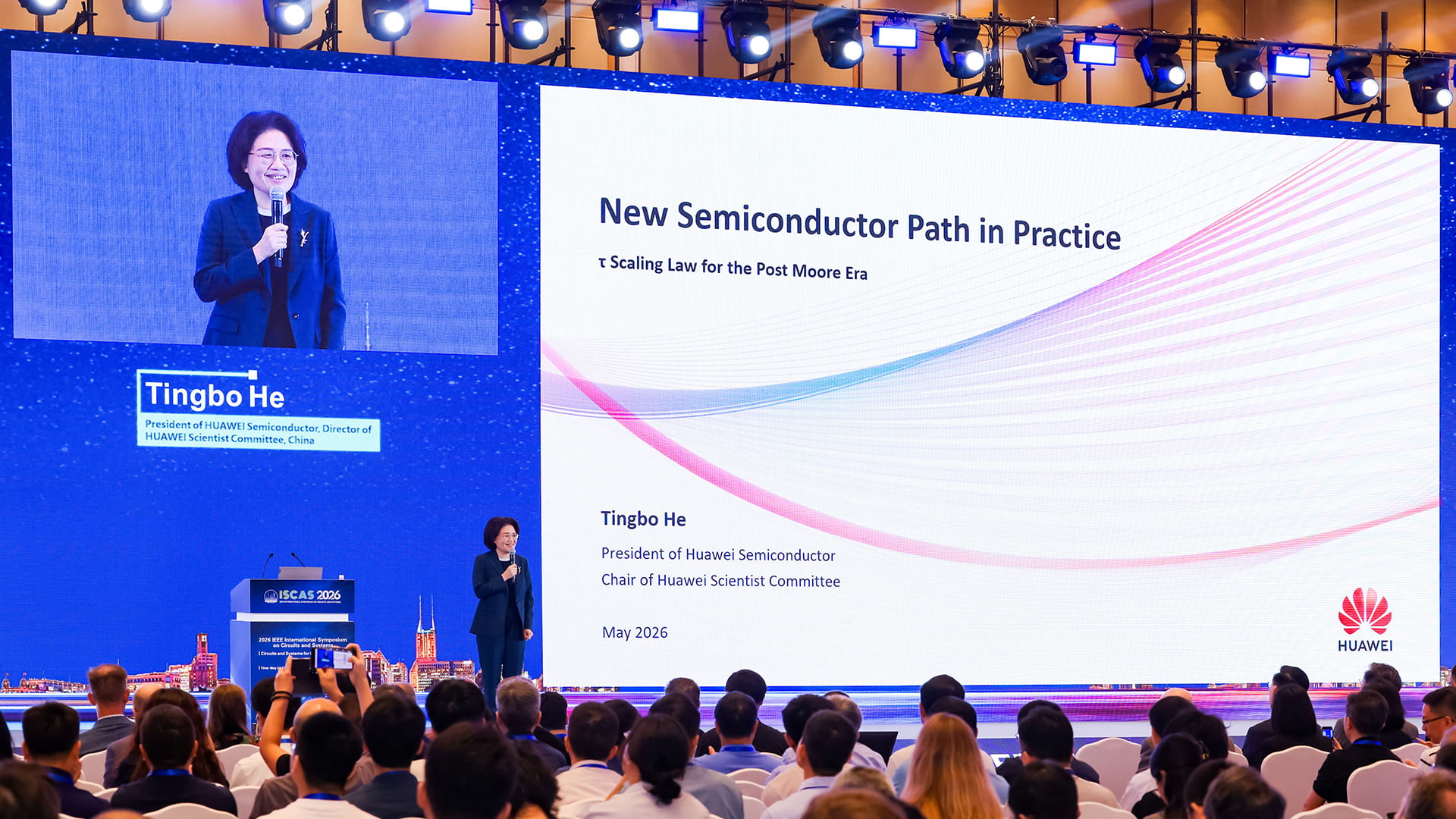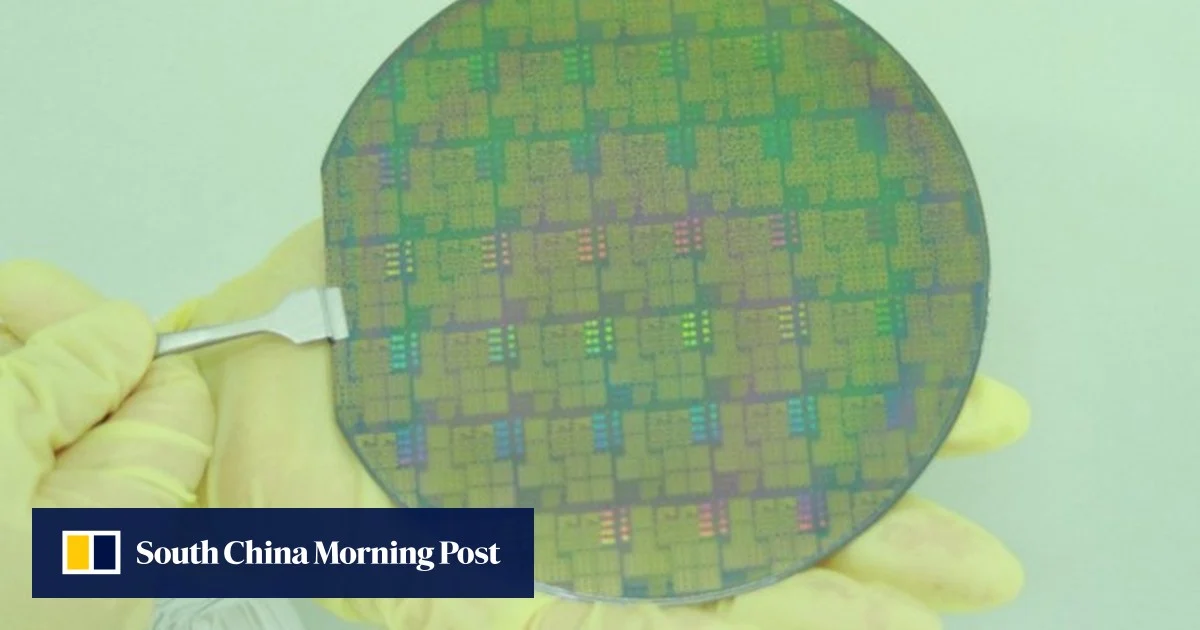
Chinese researchers, in collaboration with Huawei Technologies, have built the world’s first parallel processor using a two-dimensional (2D) semiconductor.As silicon devices approach their physical size limits, Moore’s Law – the observation that computing power doubles roughly every two years, while the cost of computers is cut in half – is hitting a wall.But two-dimensional materials such as molybdenum disulfide are naturally atom-thin, allowing electrons to move stably and efficiently and making them strong candidates to sustain Moore’s Law.A team from Nanjing University’s School of Integrated Circuits, together with Huawei, created the first molybdenum disulfide-based multi-bit parallel microprocessor. Their work was published in Nature Electronics on Tuesday.The device – called Mengqi-1000, or Magic-1000 in English – achieved record-breaking integration density, a measure of how many transistors can be packed onto a microchip.According to Nanjing University professor Shi Yi, this development shows that China is not only a leader in fundamental 2D semiconductor research but is also carving a path towards mass production through collaboration with industry.
Huawei, scientists build 2D parallel computing chip that rewrites Moore’s Law
Marking a global first for 2D semiconductors, the new microprocessor overcomes silicon size limits to boost density and slash data delays.
165 words~1 min read