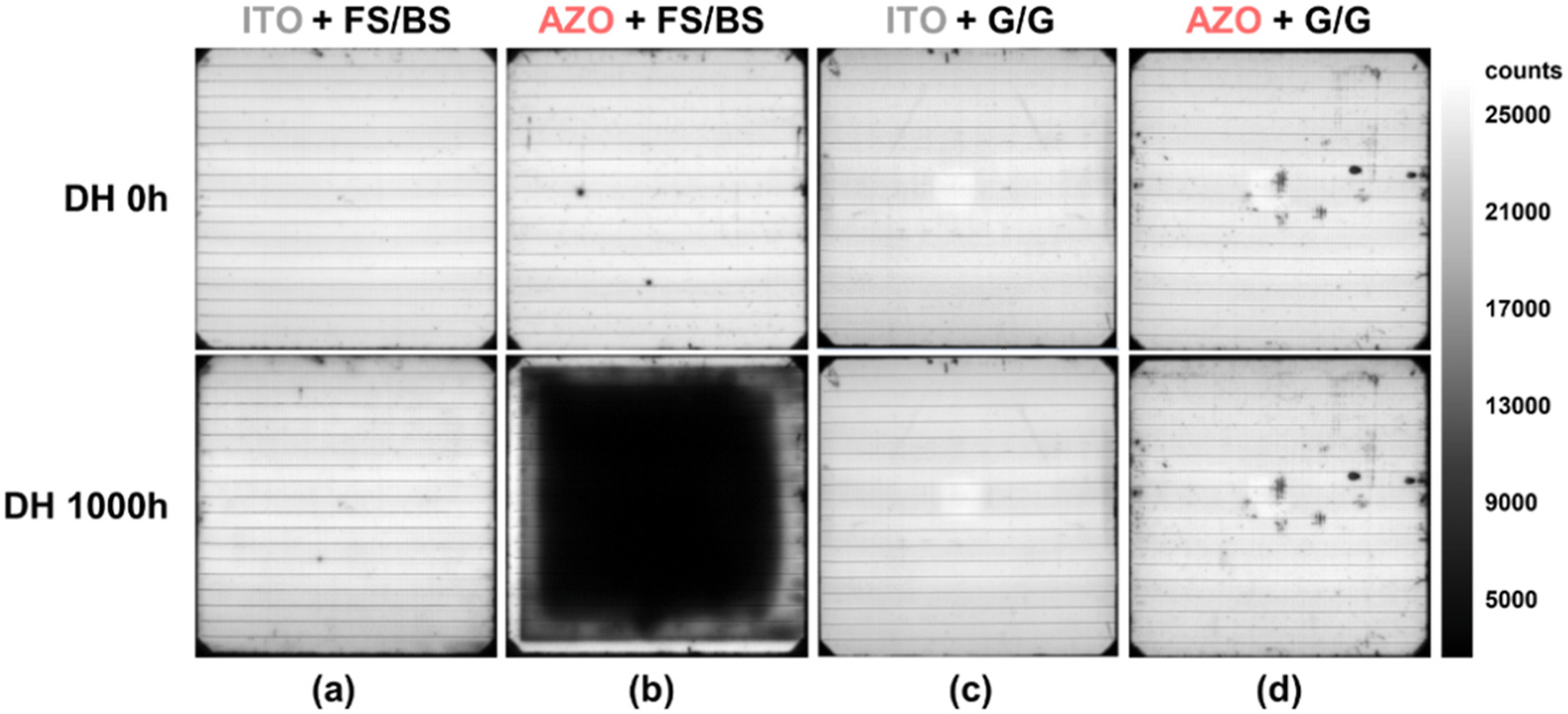
German researchers have found that aluminum-doped zinc oxide-based silicon heterojunction cells are more vulnerable to damp-heat-induced degradation than their indium tin oxide-based counterparts. To address this issue, they introduced a magnesium fluoride capping layer that significantly improved damp-heat stability by slowing moisture penetration and corrosion.
Researchers at Germany’s Forschungszentrum Jülich GmbH have found that heterojunction (HJT) solar cells using aluminum-doped zinc oxide (AZO) as an alternative to indium tin oxide (ITO) for the transparent conductive oxide (TCO) layer are more vulnerable to damp-heat conditions, potentially raising concerns about their long-term stability and reliability in humid environments.
“AZO grows in a polycrystalline structure that favors the rapid penetration of water molecules into the crystal boundaries, which leads to the degradation of the material’s electrical properties,” the scientists said, noting that moisture can reduce conductivity and optical transparency. “Therefore, in this study, we thoroughly investigated the changes in the optoelectronic properties and surface morphology of AZO-incorporated HJT solar cells under damp heat environmental conditions, comparing them with ITO references.”