Researchers in Japan have identified the circuit-level mechanism behind hotspot mirroring in half-cell HJT modules, showing that current mismatch can drive localized overheating in unshaded cells. The study combines outdoor measurements and simulations to reveal key design factors influencing hotspot severity, offering guidance for improving half-cell module reliability.
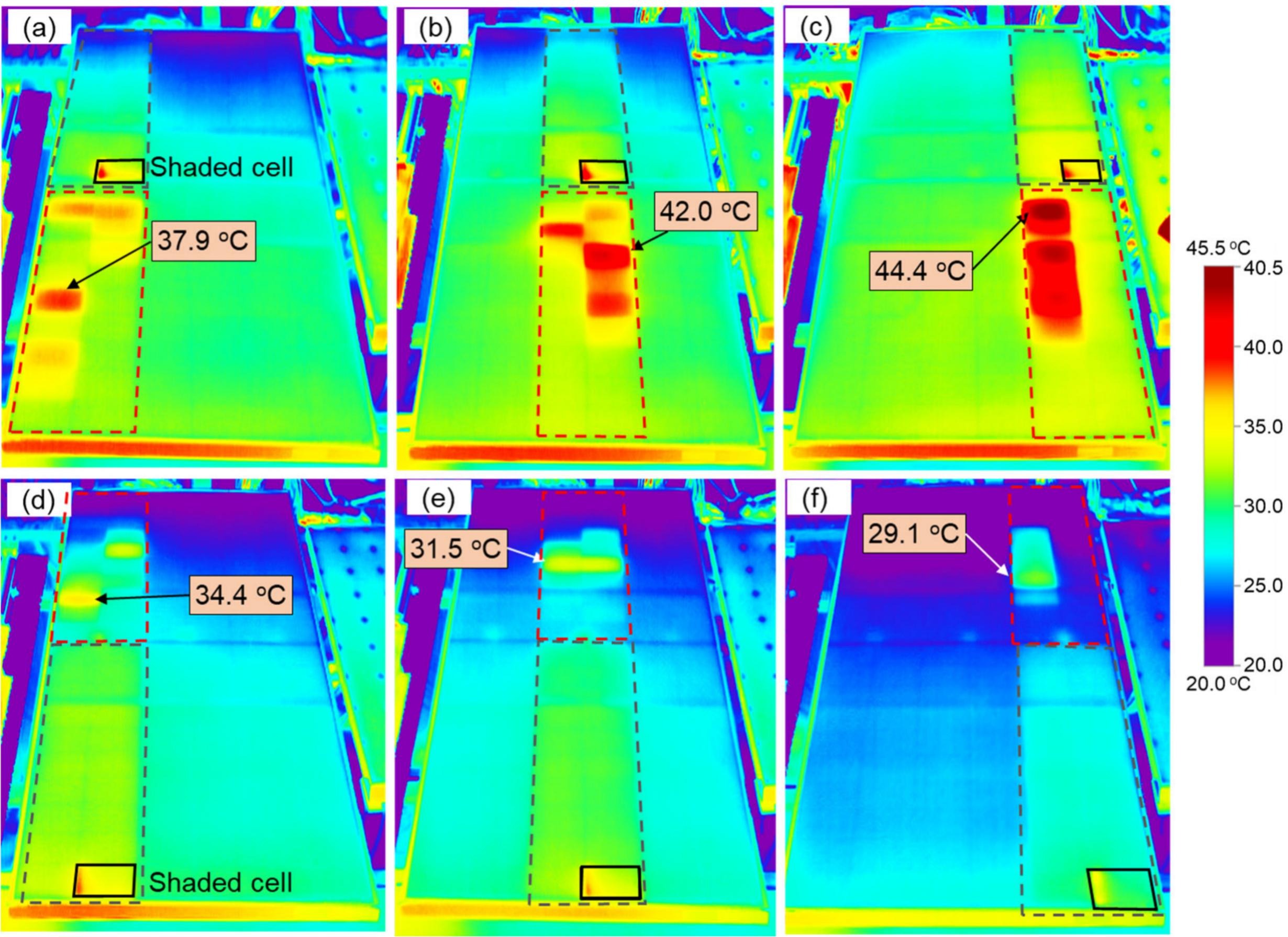
A research team from Japan’s Ritsumeikan University has investigated hotspot mirroring in commercial 120-half-cell silicon heterojunction (HJT) PV modules under partial shading conditions and has identified the electrical mechanisms that drive the phenomenon and developed a circuit-level model to predict hotspot formation in affected cells.
Hotspot mirroring occurs in half-cell PV modules when partial shading triggers a bypass diode, causing an unshaded cell in the parallel mirror substring to enter reverse bias. Due to current mismatch, the cell can experience localized overheating similar to the shaded cell.
“Previous studies established that hotspot mirroring occurs both under controlled laboratory conditions and in field-relevant outdoor environments,” the researchers said. “However, they did not provide a quantitative, circuit-level attribution of mirror-substring dissipation to its governing parameters, nor has the temperature–power feedback that modulates dissipation under real operating conditions been incorporated into a validated predictive framework.”