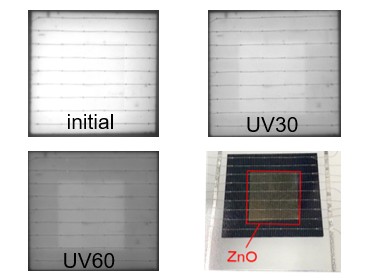
Researchers in China have demonstrated that zinc oxide (ZnO) thin films can act as a ‘sunscreen’ for heterojunction solar cells, reducing UV-induced degradation while maintaining high visible-light transmission. ZnO-coated modules achieved lower projected LCOE and 4.8% higher cumulative power generation over 25 years.
Researchers at the Southwest Petroleum University in China have tested zinc oxide (ZnO) thin films to protect silicon heterojunction (HJT) solar cells from UV-induced degradation (UV-ID) and have found that they can increase cumulative power output by 4.8%
“Current approaches to mitigating UV-ID can be broadly divided into two categories. At the material level, encapsulation materials are primarily used to achieve UV cutoff or UV conversion, thereby blocking or converting incident high-energy UV photons. At the device level, structural optimization is employed to enhance UV resistance, although its potential for further improvement is relatively limited,” the research’s corresponding author, Jian Yu, told pv magazine.
“We proposed a protection strategy based on wide-bandgap metal oxides, using ZnO as a representative example. By efficiently absorbing and blocking high-energy UV photons, a physical protective barrier analogous to a ‘sunscreen’ is formed on the cell surface, effectively suppressing UV-ID from a materials perspective,” he went on to say. “Although the ZnO film may temporarily affect the electrical performance of the cell, a comprehensive assessment from the perspective of long-term reliability over the full photovoltaic module lifecycle shows that the resulting UV resistance gain and extended service life can achieve superior overall cost-effectiveness.”