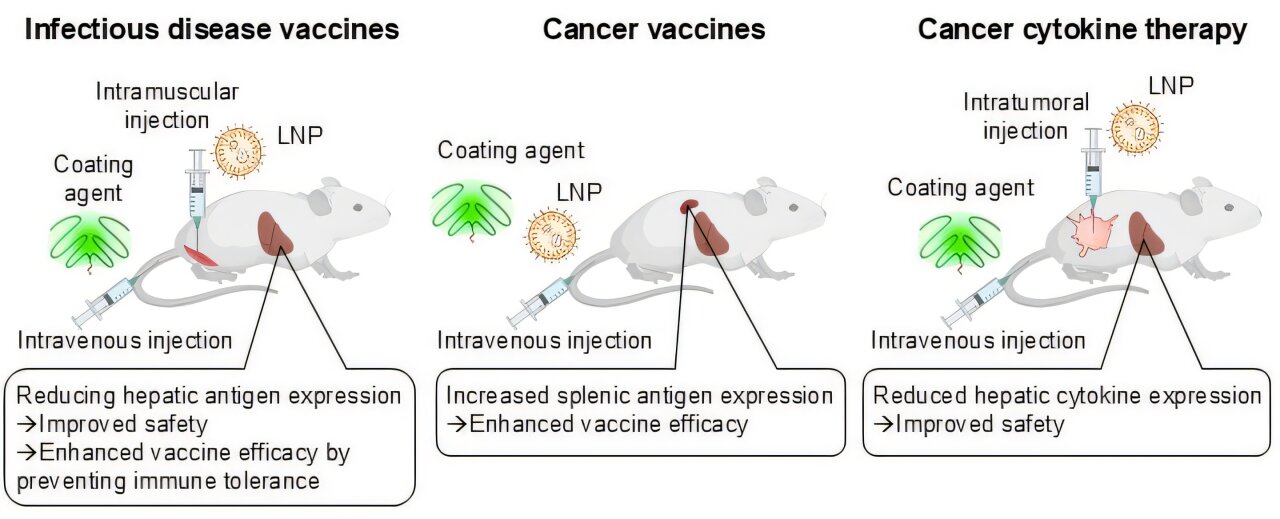
A study using mice has demonstrated that the use of a newly developed coating agent for the walls of the hepatic sinusoids enables the effective and safe administration of mRNA-based vaccines for the prevention of infectious diseases, cancer treatment vaccines, and cancer cytokine therapy. Credit: Satoshi Uchida, Science Tokyo
With the commercialization of mRNA vaccines against COVID-19, research and development into the application of mRNA in vaccines and pharmaceuticals is accelerating. In particular, it is attracting attention not only in vaccines for preventing infectious diseases but also in cancer immunotherapy.
For infectious diseases, vaccine development is underway for pathogens other than the novel coronavirus. For example, a respiratory syncytial virus (RSV) vaccine has been approved in Japan and overseas, and vaccines for various other infectious diseases are advancing to clinical trials.
In cancer immunotherapy, cancer vaccines—which involve administering mRNA encoding proteins specific to cancer cells to elicit an immune response that recognizes those proteins and attacks the cancer cells—are attracting attention. In addition, cytokine therapy, which involves the direct administration of mRNA encoding molecules called cytokines that activate the immune system against cancer, is also showing promise. Clinical trials for both cancer vaccines and cytokine therapy are being actively conducted worldwide.