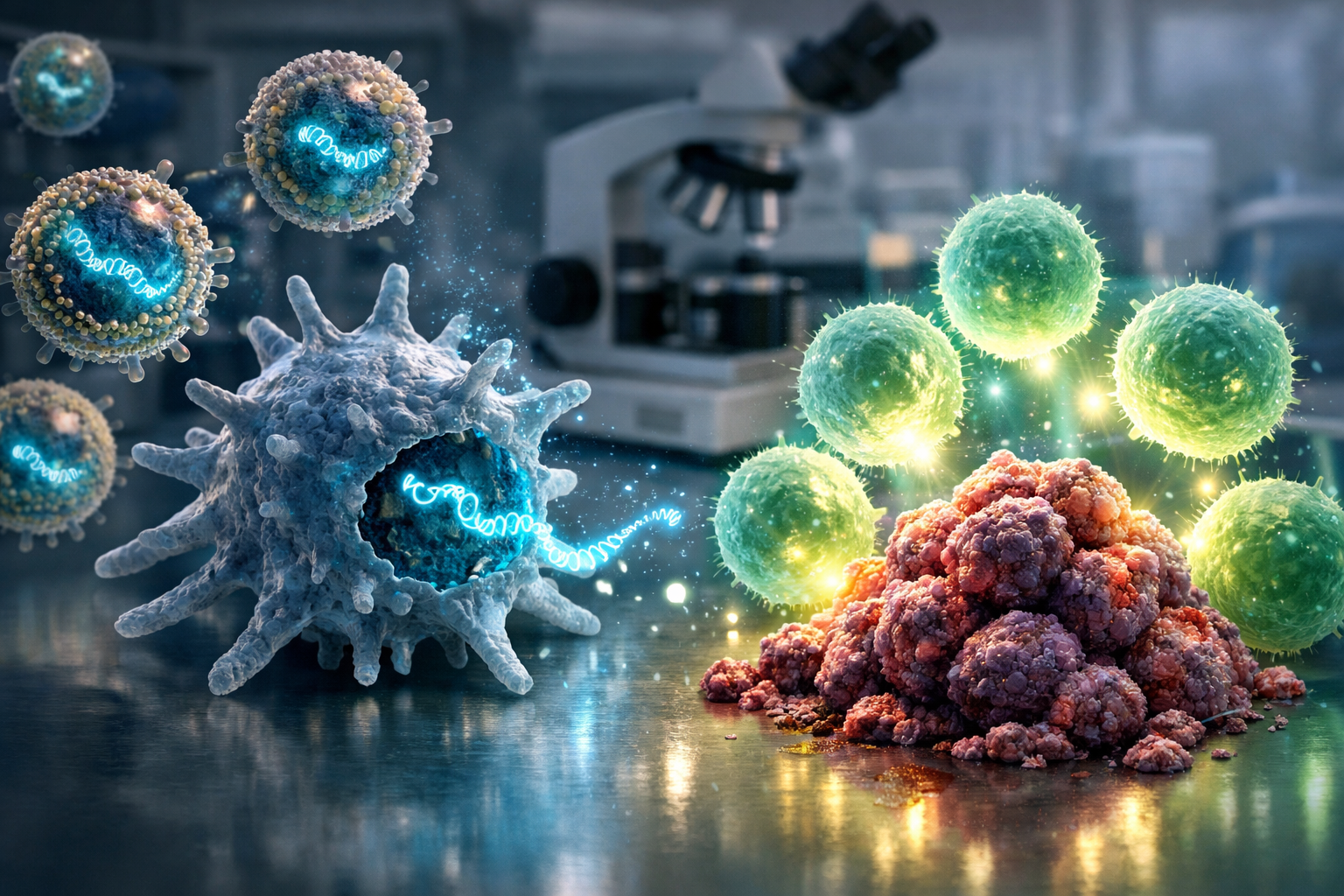
MIT engineers have developed a new way to amplify the T-cell response to mRNA vaccines — an advance that could lead to much more powerful cancer vaccines and stronger protection against infectious diseases.
Most vaccines generate both antibodies and T cells that can target the vaccine antigen by activating antigen-presenting cells, such as dendritic cells. In this study, the researchers boosted the T-cell response with a new type of vaccine adjuvant (a material that can help stimulate the immune system). The new adjuvant consists of mRNA molecules encoding genes that turn on immune signaling pathways and promote a supercharged T-cell response.
In studies in mice, this mRNA-encoded adjuvant enabled the immune system to completely eradicate most tumors, either on its own or delivered along with a tumor antigen. The adjuvant also boosted the T-cell response to vaccines against influenza and Covid-19.
“When these adjuvant mRNAs are included in the vaccines, the number of antigen-targeted T cells is substantially increased. These T cells play an important role in the immune response, assisting in the clearance of virally infected cells or, in the case of cancer, killing cancerous cells,” says Daniel Anderson, a professor in MIT’s Department of Chemical Engineering and a member of MIT’s Koch Institute for Integrative Cancer Research and Institute for Medical Engineering and Science.