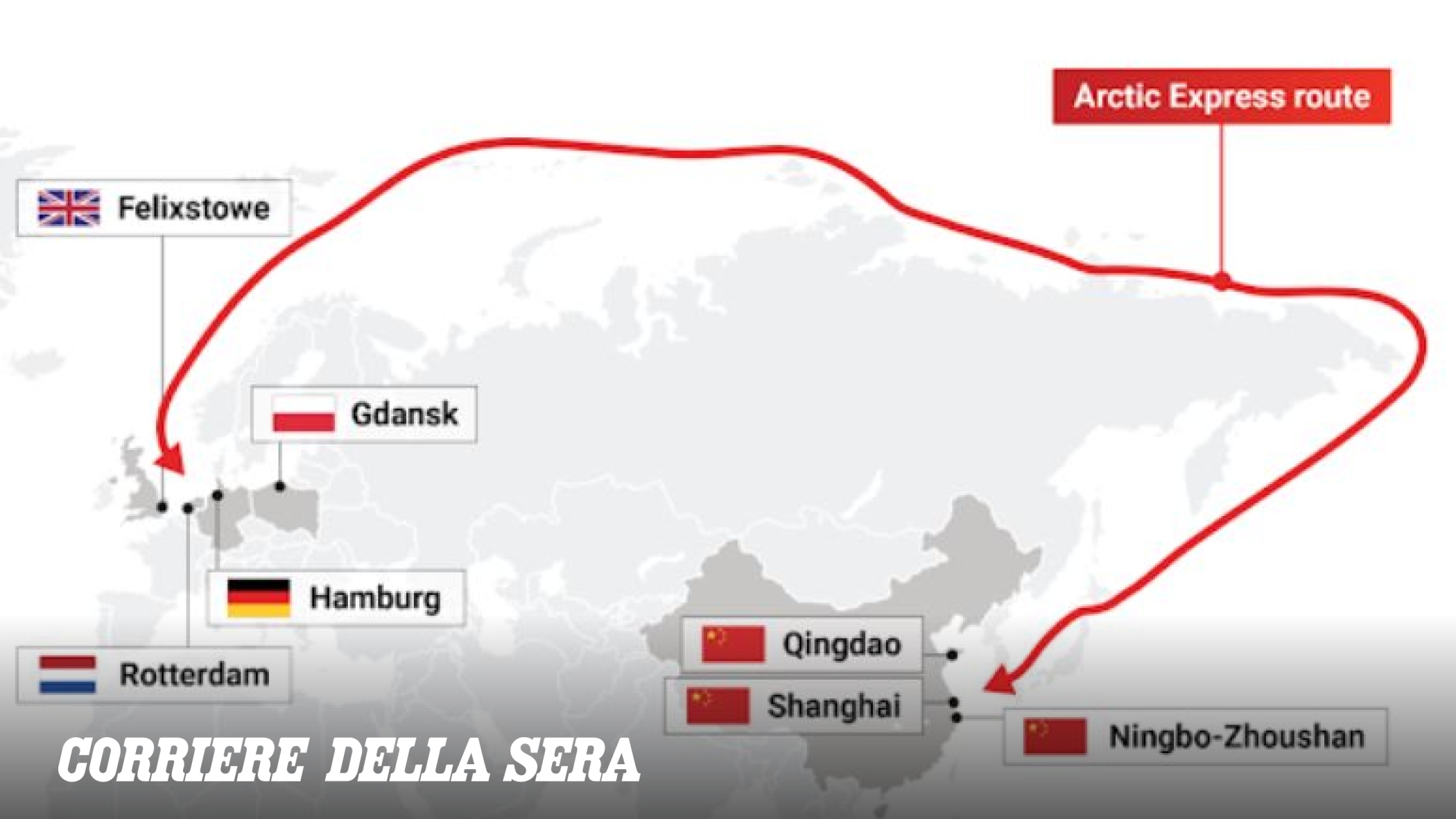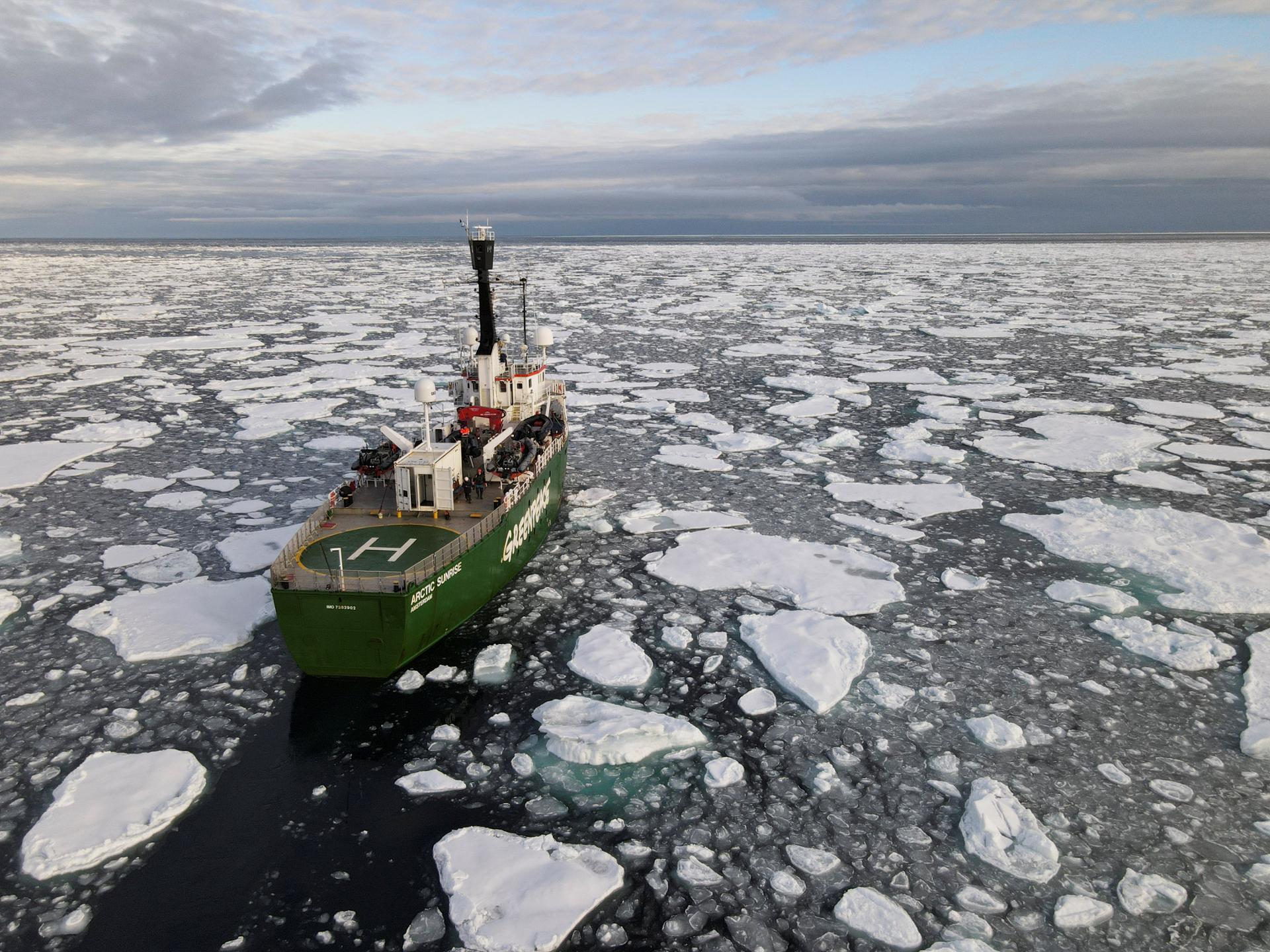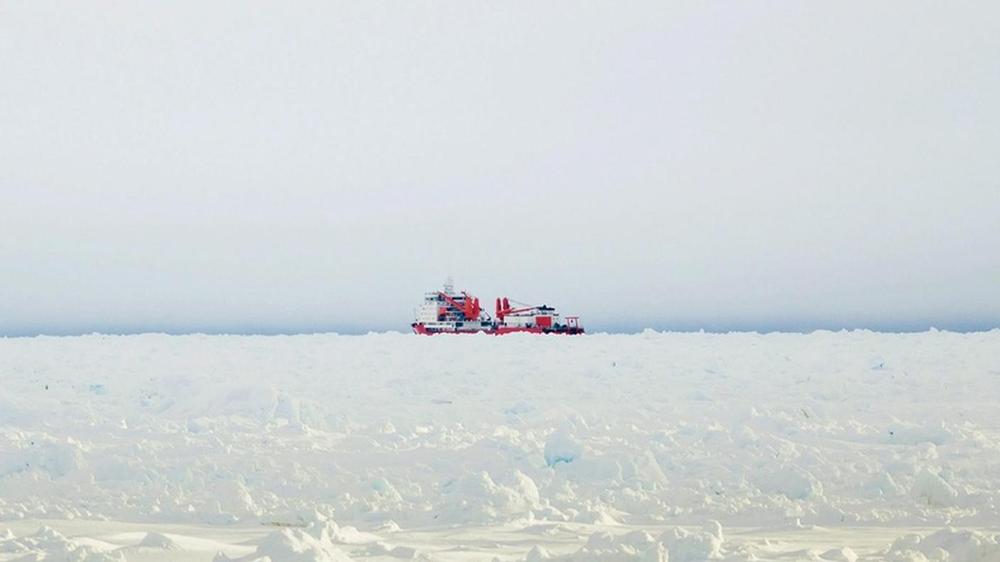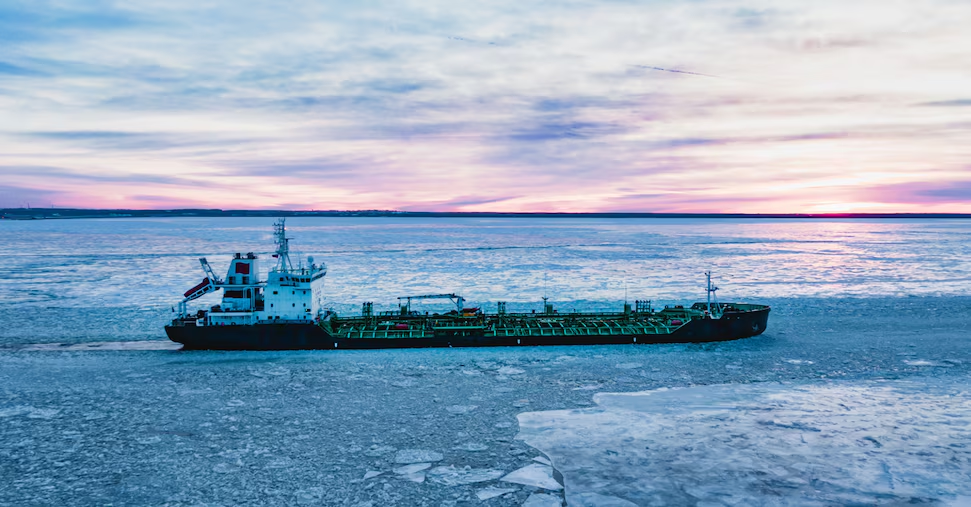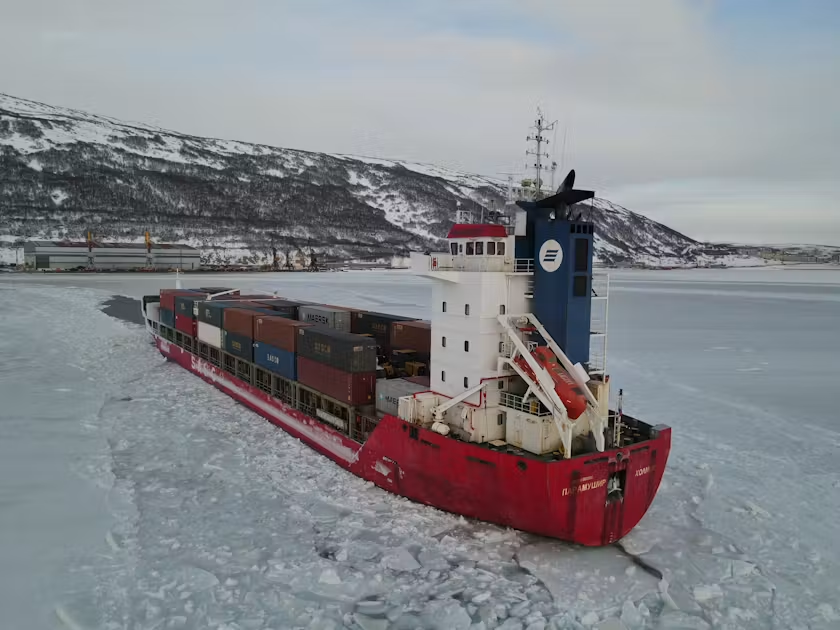
Skip to Content News Archives Economy Energy Oil & Gas Renewables Electric Vehicles Mining Commodities Agriculture Real Estate Mortgages Mortgage Rates Finance Banking Insurance Fintech Cryptocurrency Work Wealth Smart Money Wealth Management Investor Personal Finance Family Finance Retirement Taxes High Net Worth FP Comment Executive Women Puzzmo Newsletters Financial Times Business Essentials More Innovation Information Technology FP500 Podcasts Small Business Lives Told Tails Told Shopping Financial Post Store Obituaries Place a Notice Advertising Advertising With Us Advertising Solutions Postmedia Ad Manager Sponsorship Requests Classifieds Place a Classifieds ad Working Profile Settings My Subscriptions Saved Articles My Offers Newsletters Customer Service FAQ News Economy Energy Mining Real Estate Finance Work Wealth Investor FP Comment Executive Women Puzzmo Newsletters Financial Times Business Essentials HomeFinancial TimesEconomyChina bypasses shipping chokepoints with 'Ice Silk Road' through ArcticFirst scheduled container service between Europe and Asia will significantly reduce voyage timesAuthor of the article:Last updated 8 minutes ago You can save this article by registering for free here. Or sign-in if you have an account.The interest in using the Arctic region for shipping has also been shown in a rise in orders for ice-class vessels. Photo by Liu Shiping/Xinhua via Getty ImagesThe Arctic is emerging as a viable alternative to the world’s traditional shipping routes as melting polar ice shortens the journey between Europe and Asia and vessels seek to avoid maritime chokepoints.Subscribe now to read the latest news in your city and across Canada.Exclusive articles from Barbara Shecter, Joe O'Connor, Gabriel Friedman, and others.Daily content from Financial Times, the world's leading global business publication.Unlimited online access to read articles from Financial Post, National Post and 15 news sites across Canada with one account.National Post ePaper, an electronic replica of the print edition to view on any device, share and comment on.Daily puzzles, including the New York Times Crossword.Subscribe now to read the latest news in your city and across Canada.Exclusive articles from Barbara Shecter, Joe O'Connor, Gabriel Friedman and others.Daily content from Financial Times, the world's leading global business publication.Unlimited online access to read articles from Financial Post, National Post and 15 news sites across Canada with one account.National Post ePaper, an electronic replica of the print edition to view on any device, share and comment on.Daily puzzles, including the New York Times Crossword.Create an account or sign in to continue with your reading experience.Access articles from across Canada with one account.Share your thoughts and join the conversation in the comments.Enjoy additional articles per month.Get email updates from your favourite authors.Create an account or sign in to continue with your reading experience.Access articles from across Canada with one accountShare your thoughts and join the conversation in the commentsEnjoy additional articles per monthGet email updates from your favourite authorsSign In or Create an AccountorSea Legend, a Chinese container shipping company focusing on the Turkish and North African markets, will this week launch the first regular container shipping service through the Arctic.The weekly service will skirt the north Russian coast on its journey between Ningbo on China’s east coast and Felixstowe in the United Kingdom. The company has branded the service the “Ice Silk Road” in reference to the Silk Road trading route that once connected China and Europe.SUBSCRIBER EXCLUSIVE: FP West: Energy Insider brings you behind the oilpatch’s closed doors with exclusive insights from insiders every Wednesday morning.By signing up you consent to receive the above newsletter from Postmedia Network Inc.A welcome email is on its way. If you don't see it, please check your junk folder.The next issue of FP West: Energy Insider will soon be in your inbox.We encountered an issue signing you up. Please try againThe voyage will cut the usual 40-day sailing time between the two ports by about half, depending on the conditions in the Arctic Circle. The move follows a record 23 transits through the Northern Sea Route last summer, up from 15 voyages in 2024.Sea ice melts far enough south in summer to allow ships to pass without needing icebreaker capabilities.Despite geopolitical rivalry over control of the region, shipping companies are becoming increasingly interested in the route as a way to avoid chokepoints such as the Bab al-Mandab Strait into the Red Sea, where the Houthis, an Iranian-backed military group, renewed threats last month.Houthi militants said on July 23 they had attacked two Saudi Arabian tankers in the Red Sea, which sent oil prices back above US$100 a barrel.“There’s been a definite increase in traffic through the Arctic and Northern Sea Route,” said Rahul Khanna, global head of marine risk consulting at the insurer Allianz. “Vessels and shipowners now see it as more of an opportunity, first to save a lot of time and cost” but also to “take out all the geopolitical chokepoints and conflict zones”, he said.The Northern Sea Route is broken up into 28 sections with different guidelines set by the Rosatom-controlled Northern Sea Route administration depending on the varying ice conditions. The Russian state-controlled company issues permits to sail through the area.Despite Maersk sending the first container ship through the Arctic route between Vladivostok and St Petersburg in 2018, the Danish shipping line and many other European companies have pledged not to use the route for fear of damaging the delicate Arctic ecosystem.Arctic sea ice during the peak winter period was down 5.8 per cent between 2024 and 2025 — the biggest drop on record, according to a recent paper by University of Southampton researchers. Peak sea ice recovered slightly this year but was the second-lowest extent ever recorded, the paper said.“The impact of global warming in the Arctic is quite staggering,” said former Canadian environment minister Steven Guilbeault, who is sailing across the Arctic to raise awareness of issues affecting the far north. “Climate change will enhance security risks in the Arctic, particularly if there are more and more vessels in the Arctic which are not necessarily from Arctic nations.”Reasons European companies were staying away from the route included relations with Russia and climate change, said Malte Humpert, an expert in Arctic shipping at High North News, which is run by Norway’s Nord University.The interest in using the Arctic region for shipping has also been shown in a rise in orders for ice-class vessels. There were 167 constructed last year, the highest level in more than a decade, while a further 164 are due to be built this year, according to maritime data company Veson Nautical.However, the Arctic still presents critical challenges to seafarers who need experience navigating ice fields often without GPS, which can fail to work that far north.“There is always the risk of oil spill or pollution and you are far from search and rescue. But you can also argue that you are reducing CO₂ emissions by going the shorter route,” Humpert said.Ships must also abide by the International Maritime Organization’s Polar Code that sets strict safety and environmental protection standards for vessels.“There is a big chance of vessels getting stuck if no icebreaker facilities are available,” said Khanna, who added that there had been a rise in enquiries about using the Northern Sea Route over the past five years. “If we have a casualty in the Arctic, we have limited salvage, assistance, firefighting or rescue. To deal with a contingency or casualty in the Arctic is much more difficult.”Allianz analysis shows that there have been more than 500 reported shipping incidents in the Arctic Circle over the past 10 years, with machinery damage or failure responsible for almost half the total.© 2026 The Financial Times Ltd Join the Conversation This website uses cookies to personalize your content (including ads), and allows us to analyze our traffic. Read more about cookies here. By continuing to use our site, you agree to our Terms of Use and Privacy Policy.
China bypasses shipping chokepoints with 'Ice Silk Road' through Arctic
The Arctic is emerging as an alternative shipping route as melting polar ice shortens the journey between Europe and Asia. Find out more now
1,286 words~6 min read