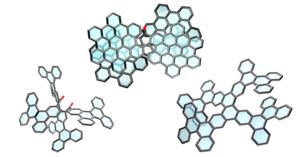
Chemists depend on sophisticated molecules to develop life-saving drugs, produce advanced high-tech materials, and recreate processes found in living systems. One of the most useful tools for building these complicated structures is single-electron transfer, a technique that can activate molecules that would otherwise resist reacting and allow them to join together.
For decades, however, chemists have faced a basic limitation in how electron transfer works. When two molecules are competing to receive an electron, the electron typically goes to the molecule that is easier to reduce. That natural preference can prevent researchers from directing reactions toward other potentially useful pathways.
Researchers led by chemists at the University of Wisconsin-Madison, working with teams at Colorado State University and the University of Colorado Boulder, have now demonstrated a different approach to reaction design. Their new strategy, recently reported in Nature, addresses a long-standing problem involving electron-transfer selectivity and could make a wide range of previously inaccessible coupling reactions possible.
Releasing Electrons Directly Into Solution
Rather than trying to control which molecule receives an electron through conventional chemical preferences, the researchers developed a catalyst that releases the electron directly into the surrounding solution.