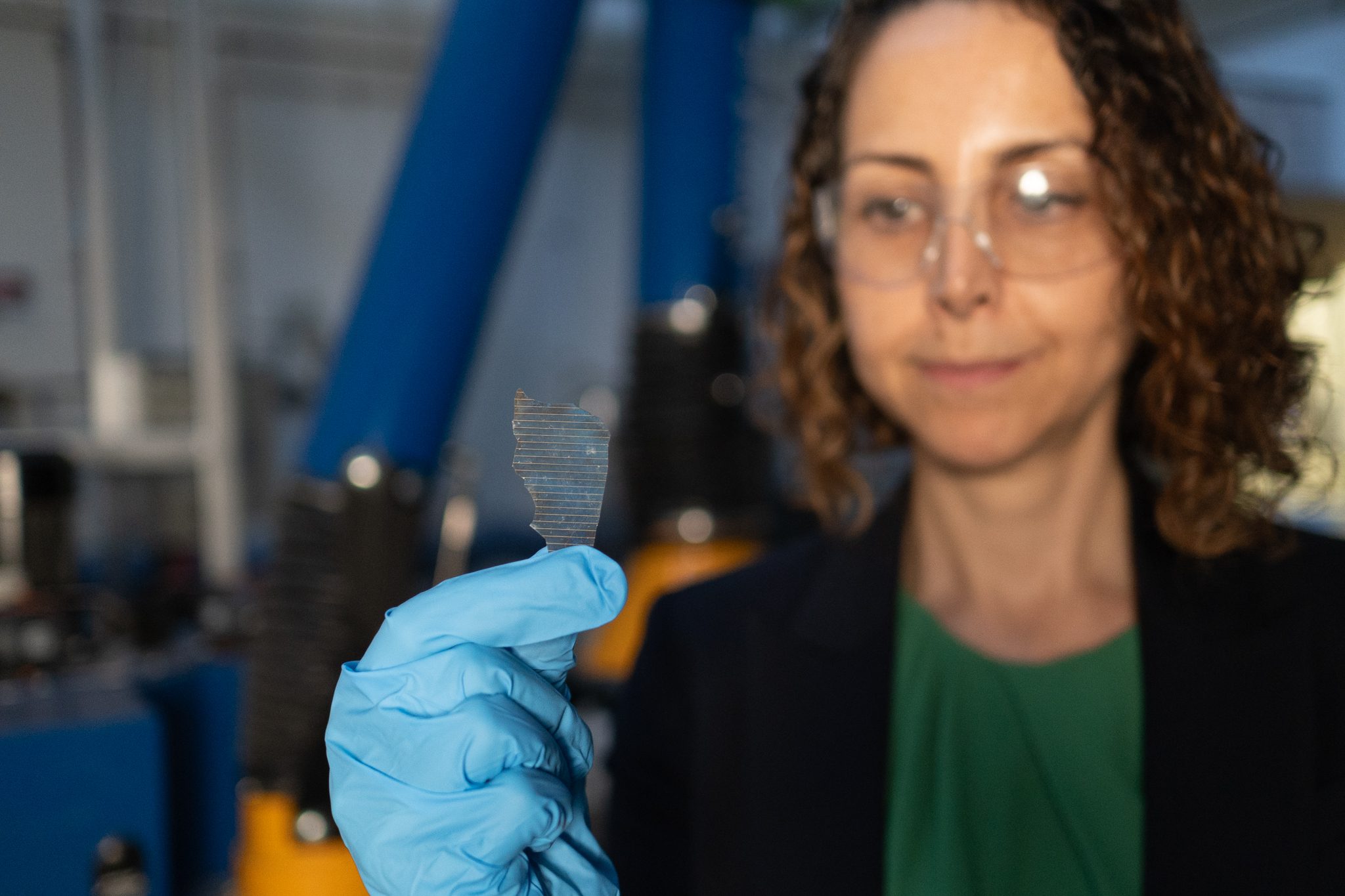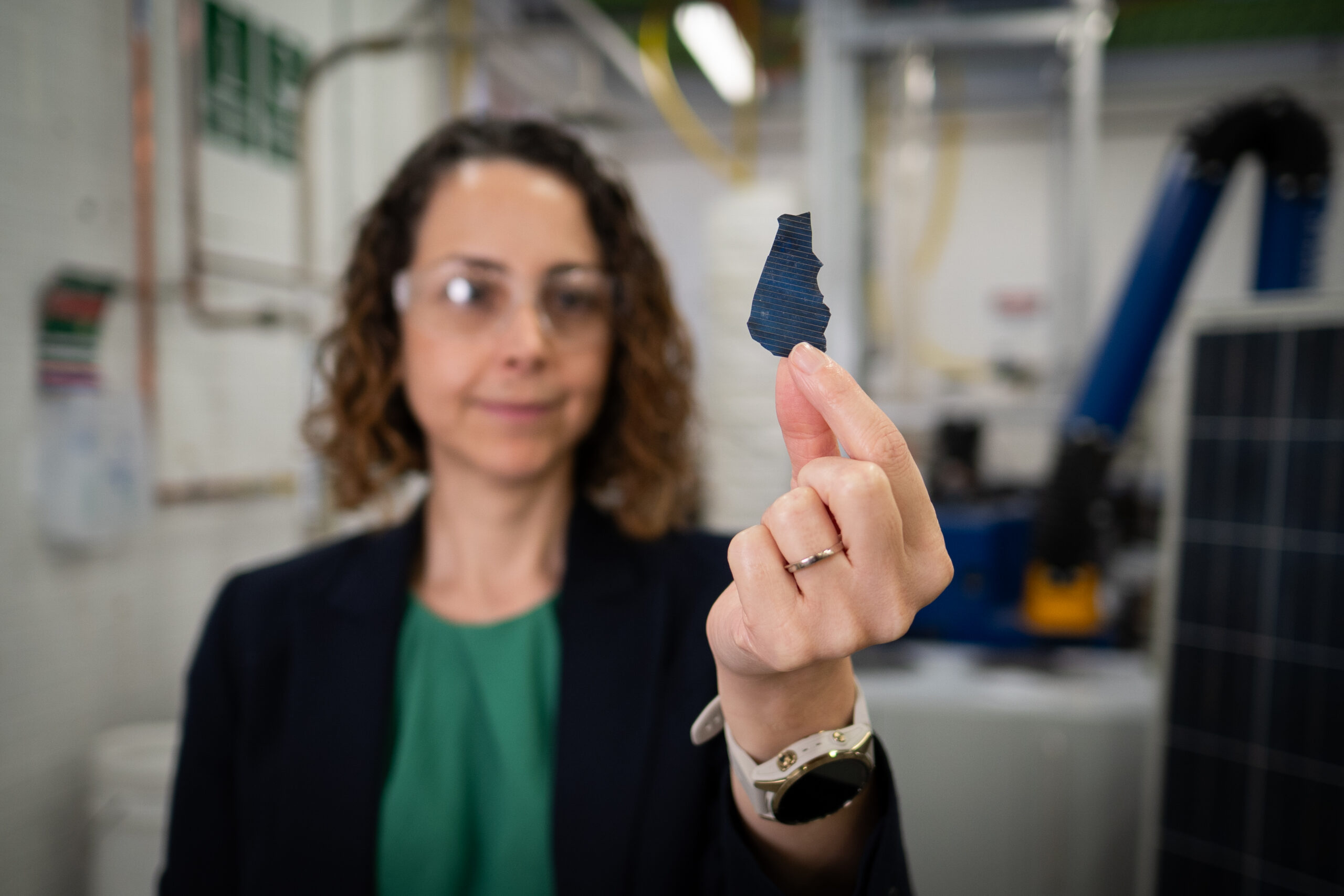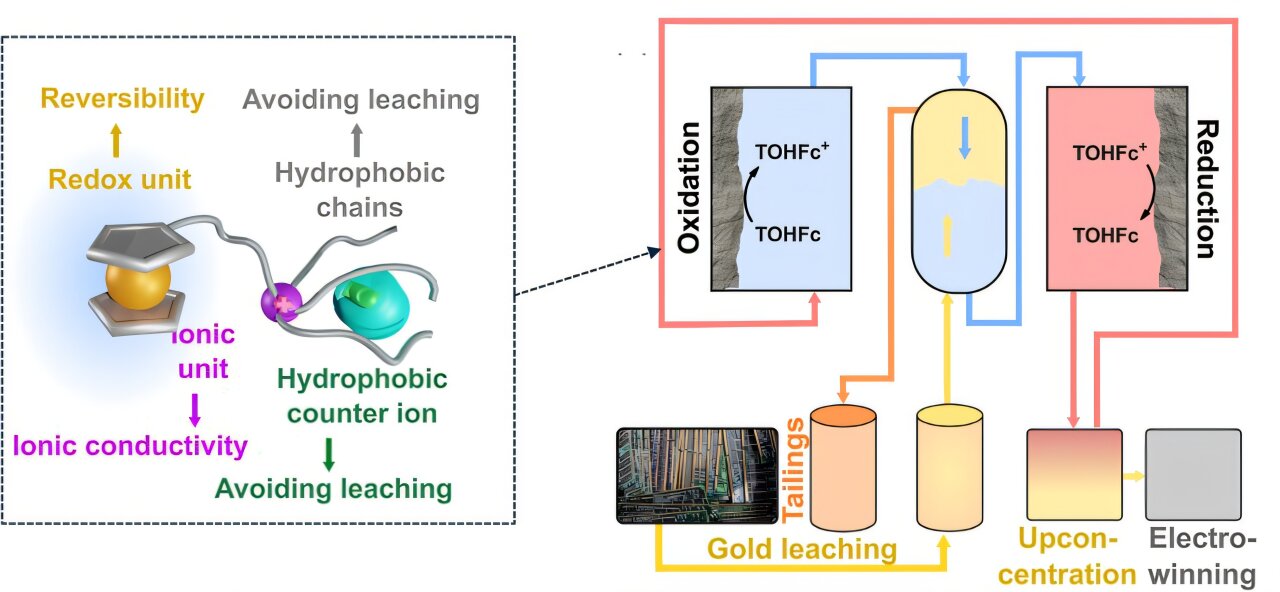
New synergistic design for redox-extractants by the Su group combines selectivity, ionic conductivity, and reversibility to enable a simplified, directly electrified metal separations approach. Credit: Xiao Su
Recovering valuable metals from electronic waste, mining streams and industrial waste typically requires large quantities of chemical reagents. Researchers at the University of Illinois Urbana-Champaign have developed a new molecule that could replace much of that chemistry with electricity—a fundamental advance that could potentially make metal recovery cleaner, simpler and more energy-efficient.
Led by chemical and biomolecular engineering professor Xiao Su, the team's findings were reported in ACS Energy Letters.
The study builds on a 2024 breakthrough from Su's research group, which introduced a continuous electrochemically mediated liquid-liquid extraction process, or e-LLE, for recovering gold from electronic waste. That work demonstrated that electricity could replace many of the acids and bases traditionally used in liquid-liquid extraction, a widely used method for separating and purifying metals. However, the process still relied on additional chemical reagents to complete the extraction cycle.