Developing new medicines often depends on finding the right molecular building blocks. Some important drugs, including penicillin, rely on small ring-shaped molecules that store large amounts of internal tension. These strained structures can drive chemical reactions that help scientists create complex compounds more efficiently.
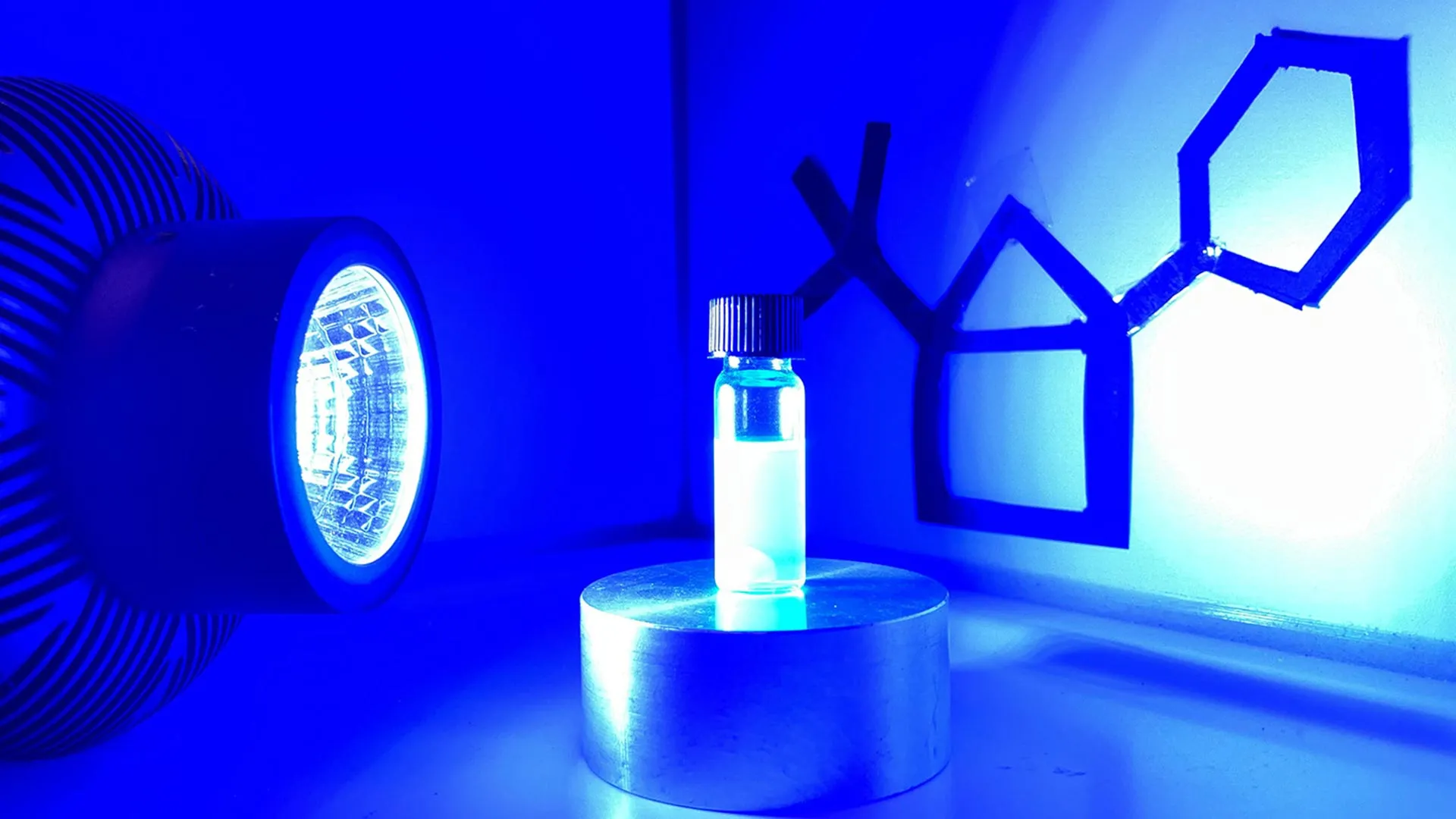
A research team led by Prof. Frank Glorius at the University of Münster's Institute of Organic Chemistry in Germany has now introduced a new way to make one of these challenging molecular structures. The method transforms simple and widely available starting materials into compact, highly strained molecules known as "housanes," named because their shape resembles a simple drawing of a house. The reaction is powered by a photocatalyst that transfers energy from light into the molecules, allowing the transformation to occur.
Why High-Strain Molecules Matter
Small ring molecules behave somewhat like bent branches under pressure. Because they contain so much stored tension, they can release energy during later reactions, making them valuable tools for producing useful chemicals and pharmaceuticals.
Despite their importance, these molecules are notoriously difficult to manufacture. Earlier approaches for making housanes often required high temperatures and other harsh conditions. Those methods also struggled to tolerate additional atoms or molecular side groups, known as functional groups, attached to the starting materials. These functional groups are especially important because they strongly influence how a molecule behaves and what properties it has.