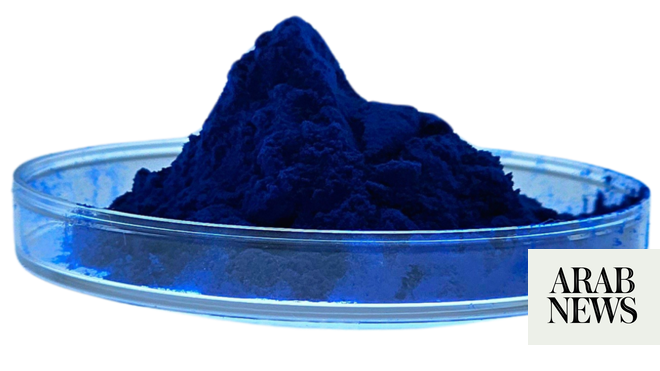
JEDDAH: Scientists at King Abdullah University of Science and Technology have engineered nanoscale particles capable of transporting six proteins into living cells, where they work together as a miniature “drug factory” to produce violacein, a bioactive compound under study for therapeutic use.
The findings, detailed in a news release published on KAUST’s news site, offer an early demonstration of how future therapies might one day generate treatment compounds directly inside the body, only where they are needed. Researchers said the approach could eventually allow treatments to act more precisely at the site of disease while reducing unwanted effects on healthy tissue.
Published in the journal Advanced Materials, the study combines nanotechnology, materials science and bioengineering to tackle a longstanding medical challenge: delivering multiple proteins into cells simultaneously so they can perform coordinated biological functions.
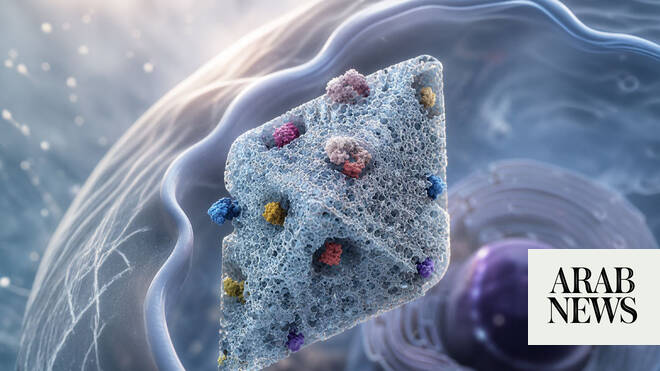
Researchers packaged six proteins inside porous, sponge-like particles known as metal-organic frameworks, or MOFs, creating what they described as synthetic organelles — engineered structures that mimic functions found in living cells.
Once inside mammalian cells, the proteins remained active and worked sequentially to convert a simple amino acid into violacein. According to the researchers, it is the most complex multiprotein system yet delivered into living cells and the first example of a “protein pathway transplant.”