ALKHOBAR: King Saud University’s College of Engineering is positioning itself as a proving ground for a new kind of Saudi engineer — one who treats AI not as a mere software tool, but as an engineering layer that redefines how the Kingdom designs infrastructure, energy systems, defense technologies, communications networks, and smart materials.
This transformation is not cosmetic. It is structural, embedded deep in the curriculum, linked with industry, and aligned with a national mandate. “KSU’s College of Engineering is aligning its AI push squarely with Vision 2030 toward building a talent base to deliver on the 66 of 96 national objectives linked to data and AI,” said Abdulelah Alshehri, assistant professor of chemical engineering at the college.
“The result would be engineers who do not just adopt tools, but create local and superior technologies that boost competitiveness, security, and a knowledge economy.”
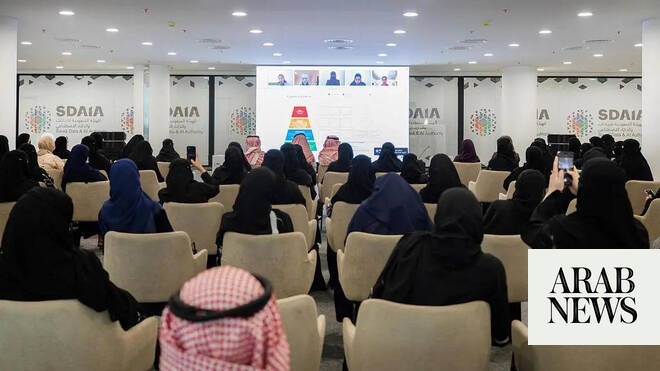
King Saud University and Saudi Data & AI Authority unite to advance AI-driven education. (Supplied)
The shift reflects a broader reality: AI is no longer an isolated discipline buried inside computer science departments. It has become a force multiplier shaping which nations lead in defense autonomy, manufacturing localization, space systems, medical devices, energy optimization, and the next generation of 6G networks. To lead, engineers must understand physics, hardware, data, and algorithms as a unified system, not as separate domains.