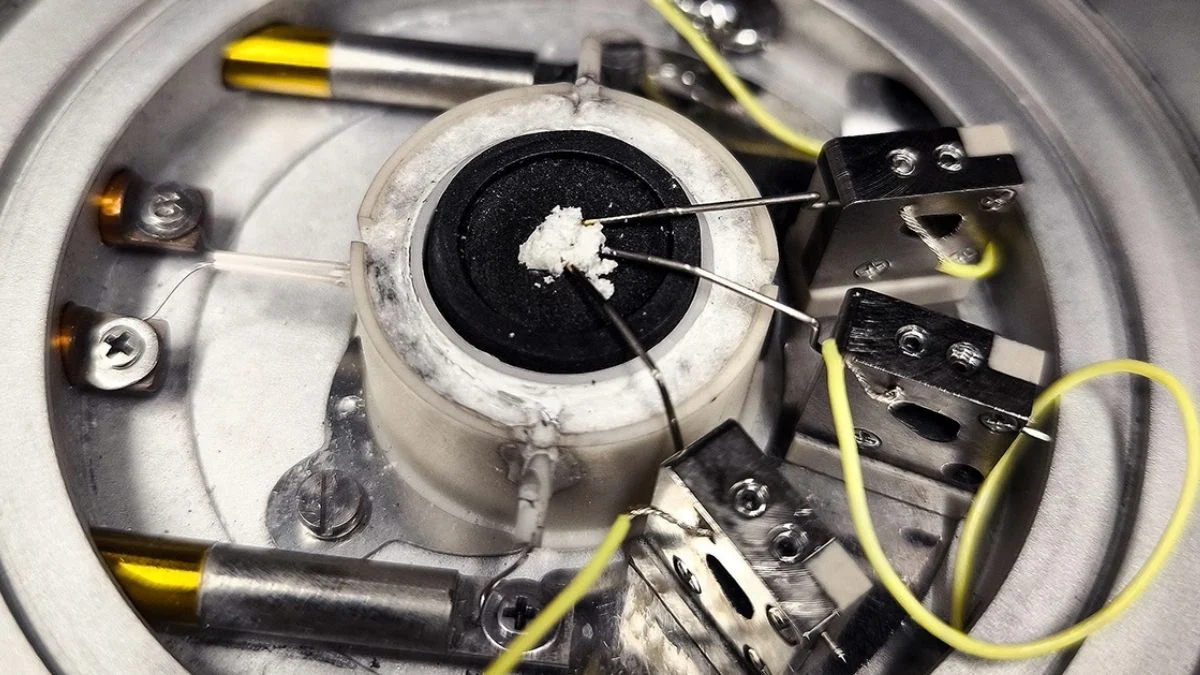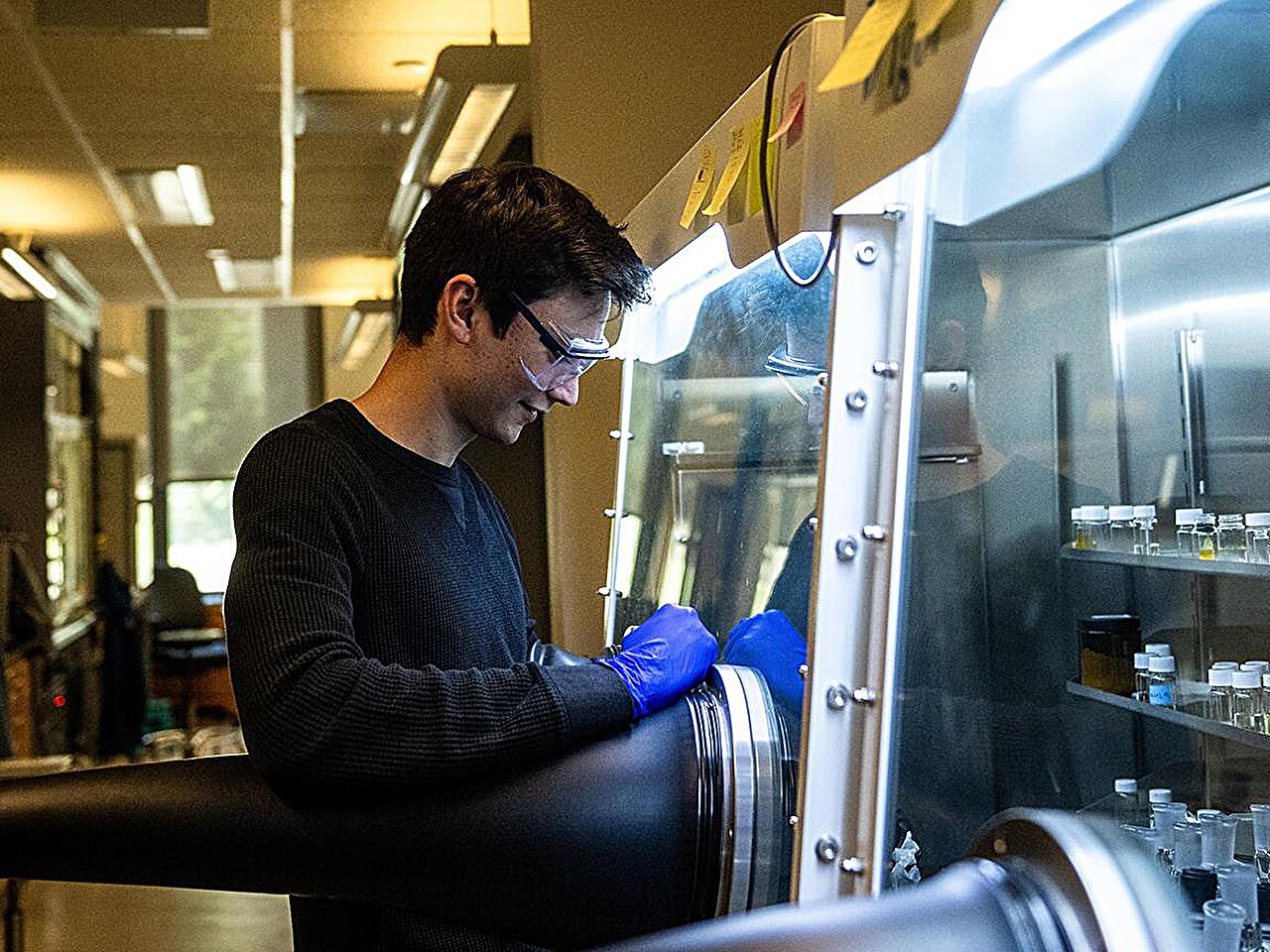
Graduate student Alexander Arnette working in the lab of Jonathan Kuo, assistant professor of chemistry in the Penn State Eberly College of Science. Credit: Jaydyn Isiminger / Penn State. Creative Commons
Oxygen provides the driving force for many vital chemical reactions. Two well-known examples include respiration, the process that allows living things to break down food to release its energy, and combustion, reactions that produce heat and light. But oxygen has an unusual electronic configuration that tends to slow reactions with organic matter, so reactions often need help to get started. In nature, specialized proteins called enzymes can activate oxygen on demand by first rearranging its electrons.
Now, a team led by Penn State researchers has developed a synthetic mimic of one of these enzymes that drives an enzyme-like reaction. This reaction, like its analog in nature, produces only water as waste. The research could be used in sustainable industrial chemical synthesis and pharmaceutical drug development.
A paper describing the synthetic enzyme was published in the Journal of the American Chemical Society.
"Oxygen is a marvelous molecule; it is produced by photosynthesis, making it essentially the sun's energy stored in chemical form," said Jonathan Kuo, assistant professor of chemistry in the Penn State Eberly College of Science and the leader of the research team.