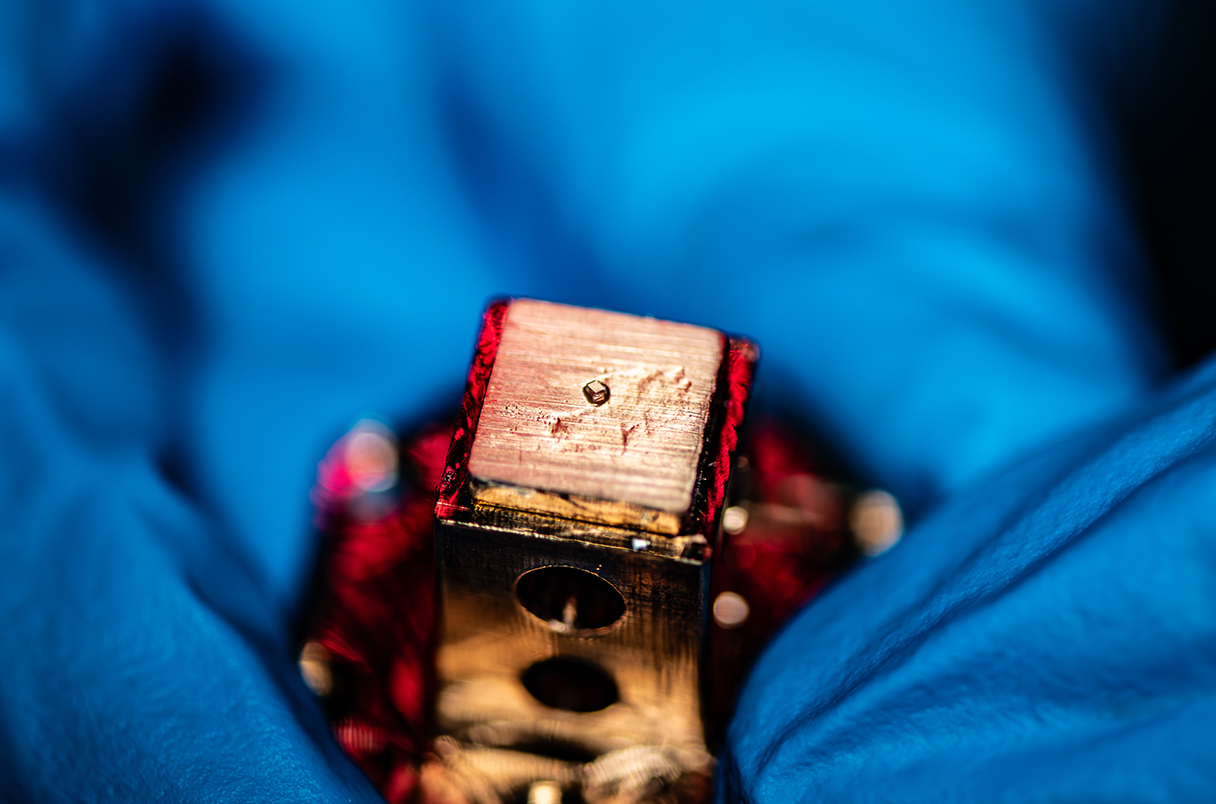
Oxygen is a cornerstone of chemistry, largely because it is so good at building the organic molecules that make up our world. Some oxygen-based compounds, called peroxides, are famous for being highly reactive — they act like oxygen delivery trucks, transferring atoms to other molecules. This process is essential for everything from creating new medicines to industrial manufacturing.
In an open-access study published April 24 in Nature Chemistry, researchers from the labs of MIT professors Christopher C. Cummins and Robert J. Gilliard, Jr. have revealed a brand-new type of peroxide containing boron. This molecule, called a dioxaborirane, represents a major advance in a field where such structures were long-proposed, but considered too unstable to actually isolate.
Room-temperature breakthrough
Dioxaborirane forms when a specially engineered boron molecule reacts with oxygen gas. What makes this discovery remarkable is that the reaction happens almost instantly at room temperature. Usually, creating strained oxygen-containing rings like this requires extreme, “punishing” conditions — like freezing temperatures or high pressure — to keep the molecule from falling apart.
Using advanced tools such as crystallography and computational modeling, the team proved the existence of a highly strained, three-member ring made of one boron and two oxygen atoms.