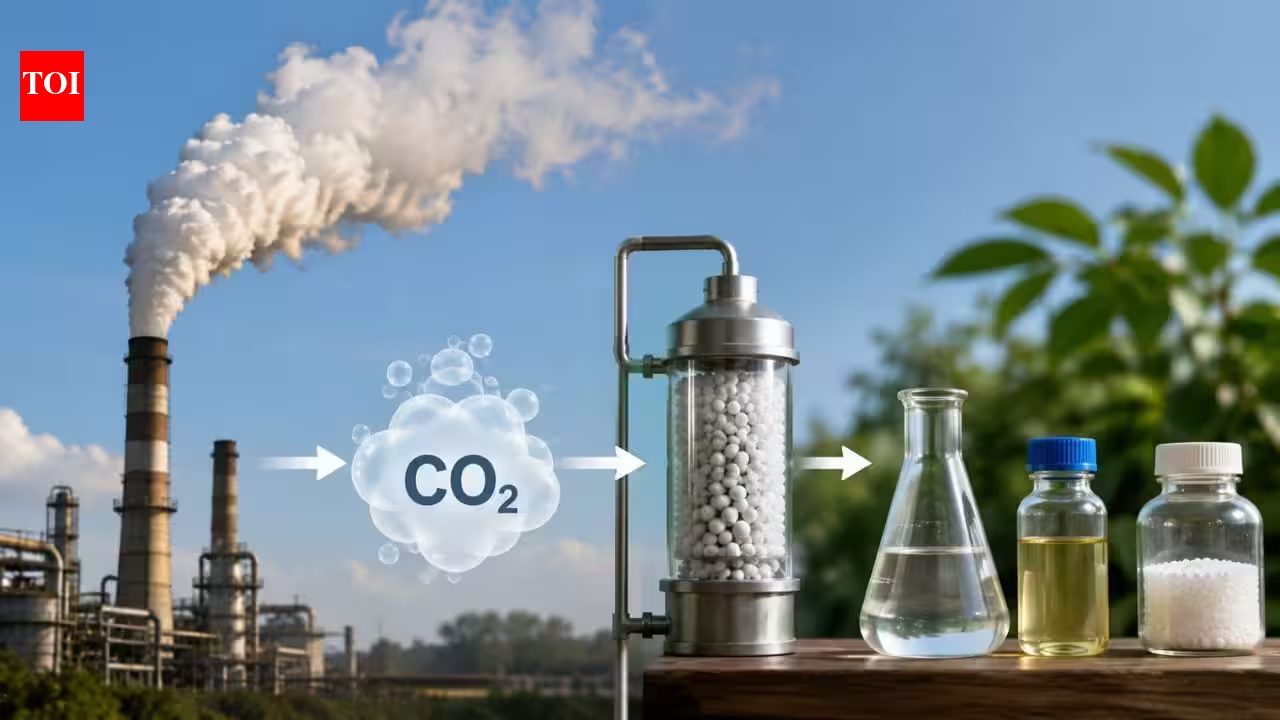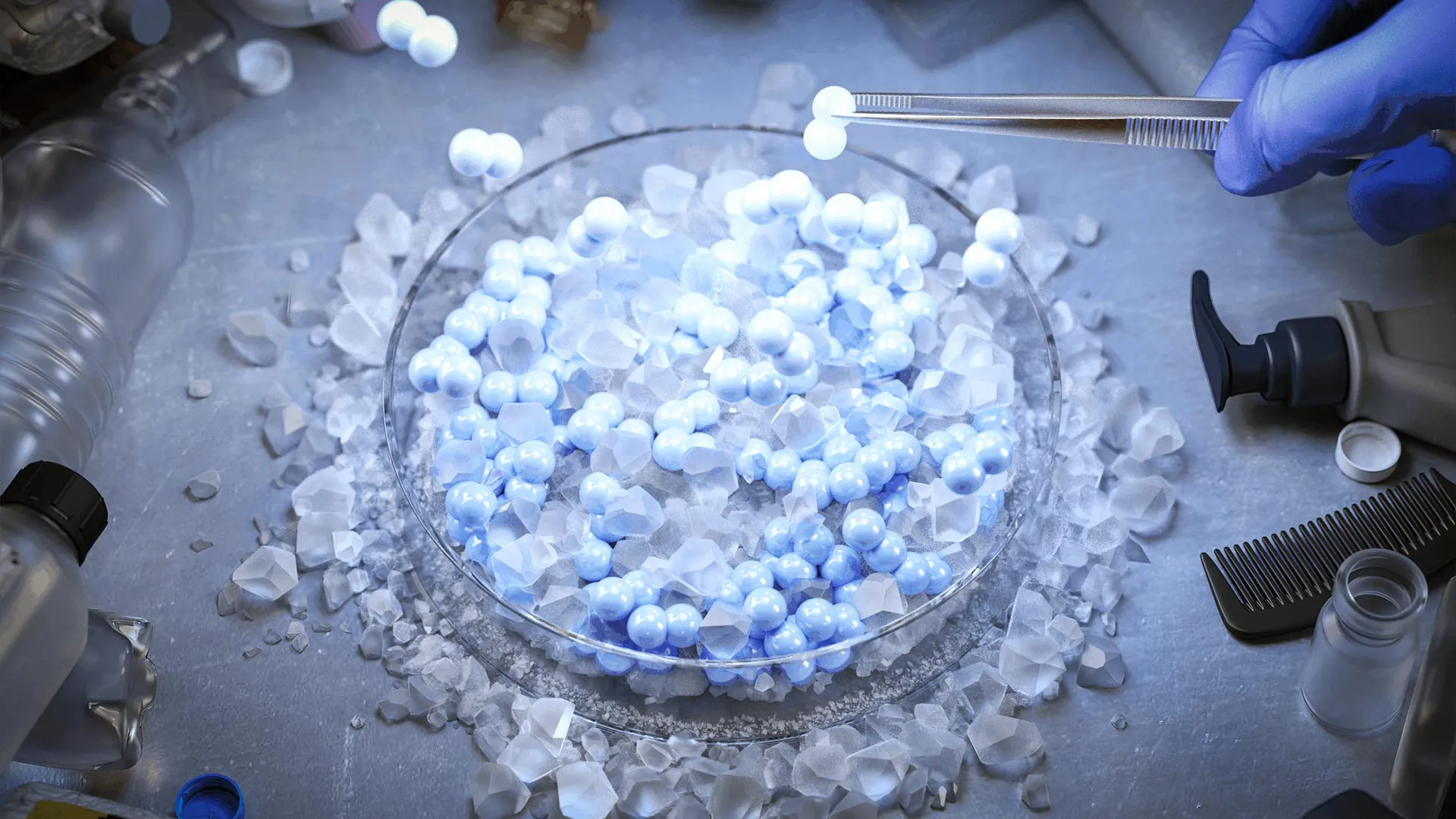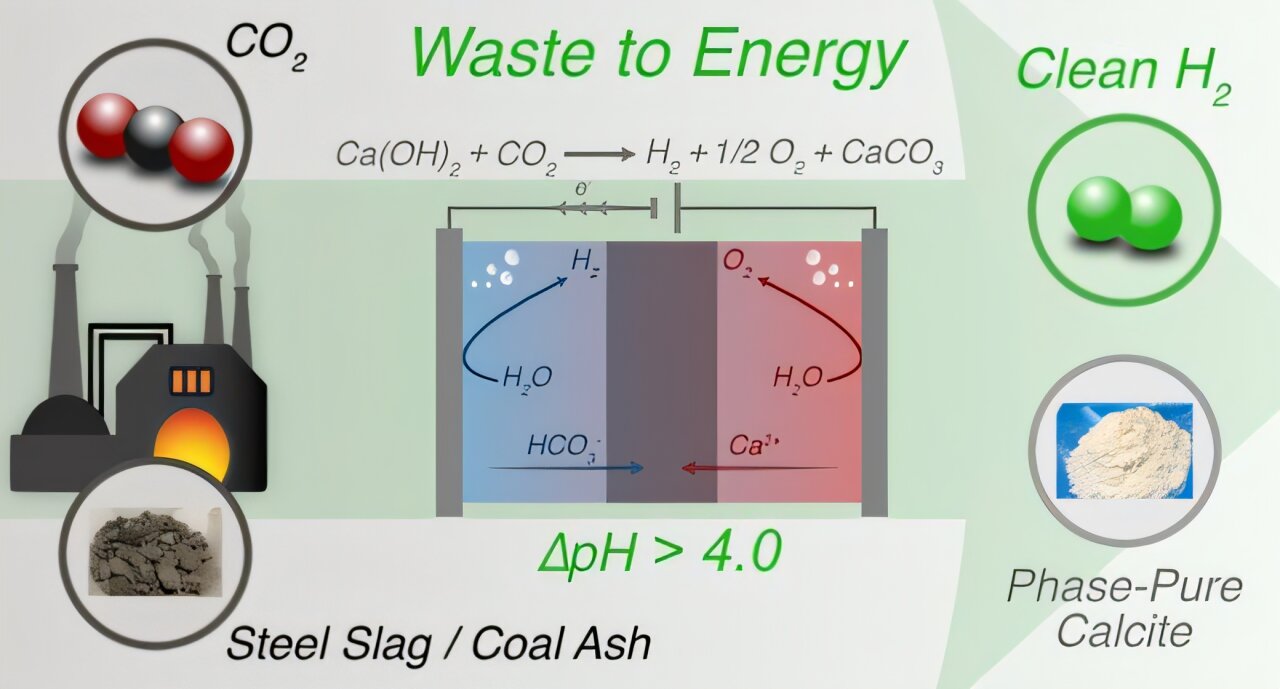
Researchers have developed a process for converting carbon dioxide and industrial waste into green hydrogen, reporting in a new study that turning trash into valuable mineral products could usher in a more efficient way to produce clean fuel.
Green hydrogen, produced when water is split into hydrogen and oxygen using a process called electrolysis, is a promising tool for decarbonizing the planet: Unlike power created by burning fossil fuels, when run on renewable electricity, it has no negative impact on the environment.
As reliable energy sources become increasingly vital for ensuring a consistent and enduring global energy supply, many industries are pivoting to embrace next-generation zero-emission technologies, said Tomaz Neves-Garcia, a postdoctoral researcher in chemistry and biochemistry at The Ohio State University and lead author of the study published in ACS Energy Letters.
"Carbon dioxide is an abundant resource that we need to make an effort to capture and utilize," he said. "When paired with industrial waste, it can be transformed into valuable products, so we came up with a process where instead of releasing its energy, we actually harvest it from the capturing process to produce green hydrogen and valuable calcite."