Story audio is generated using AI
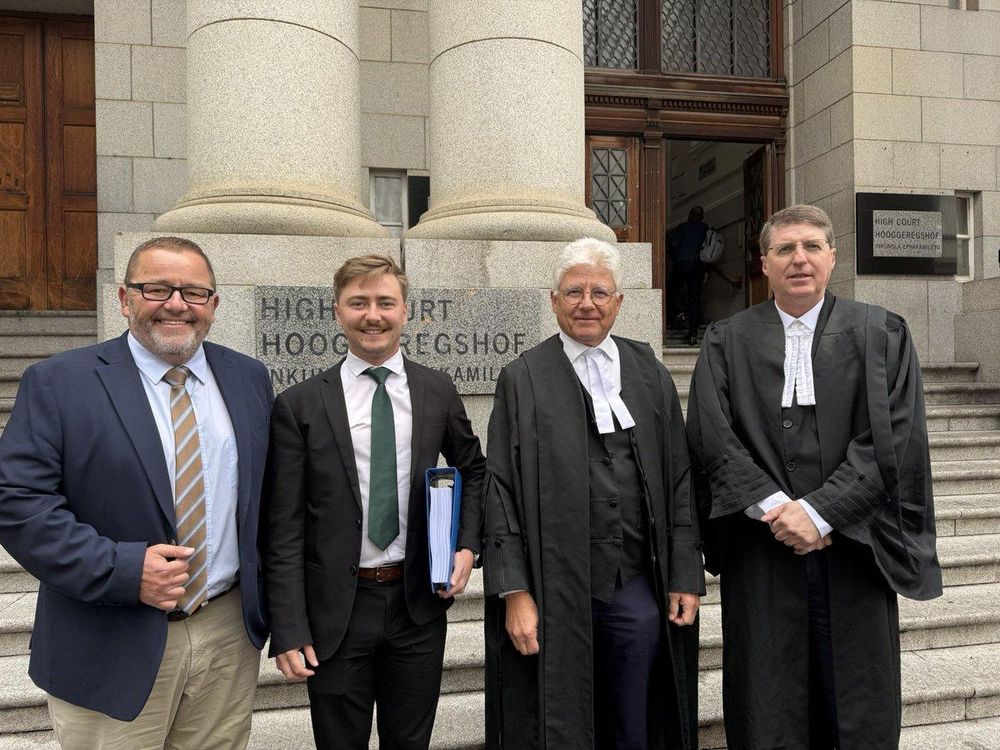
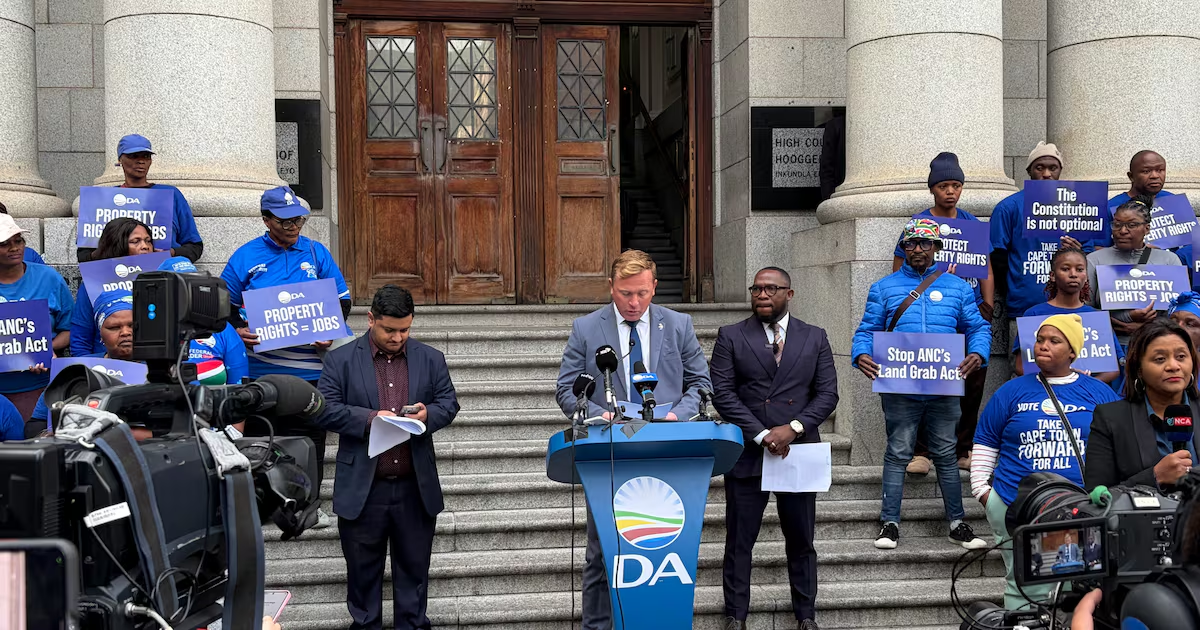
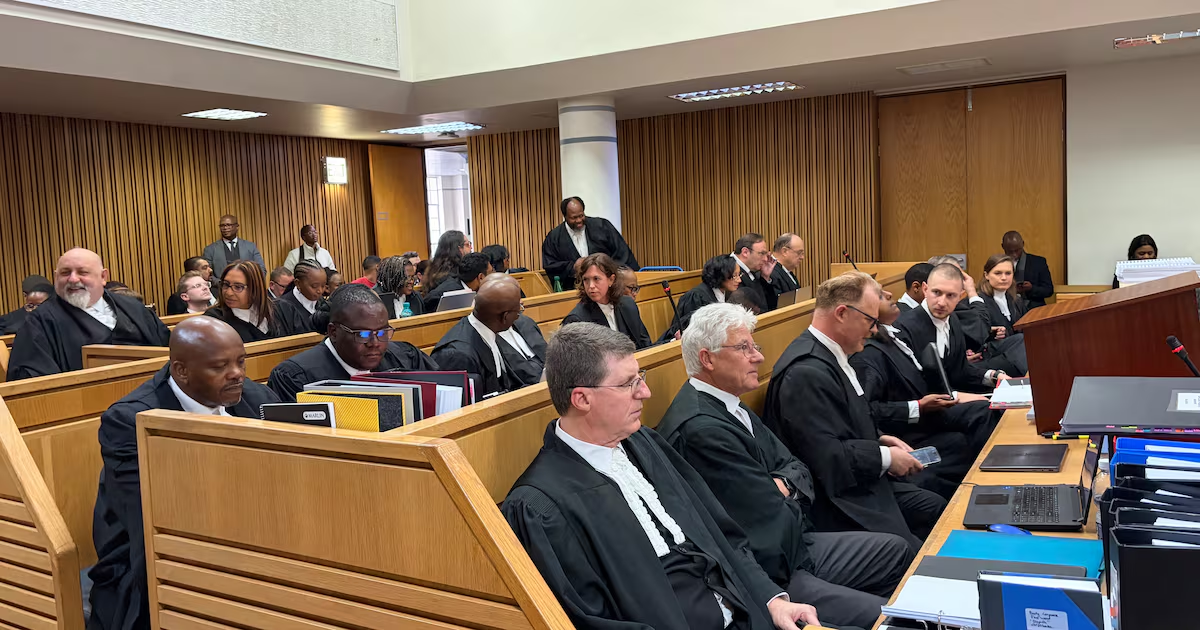
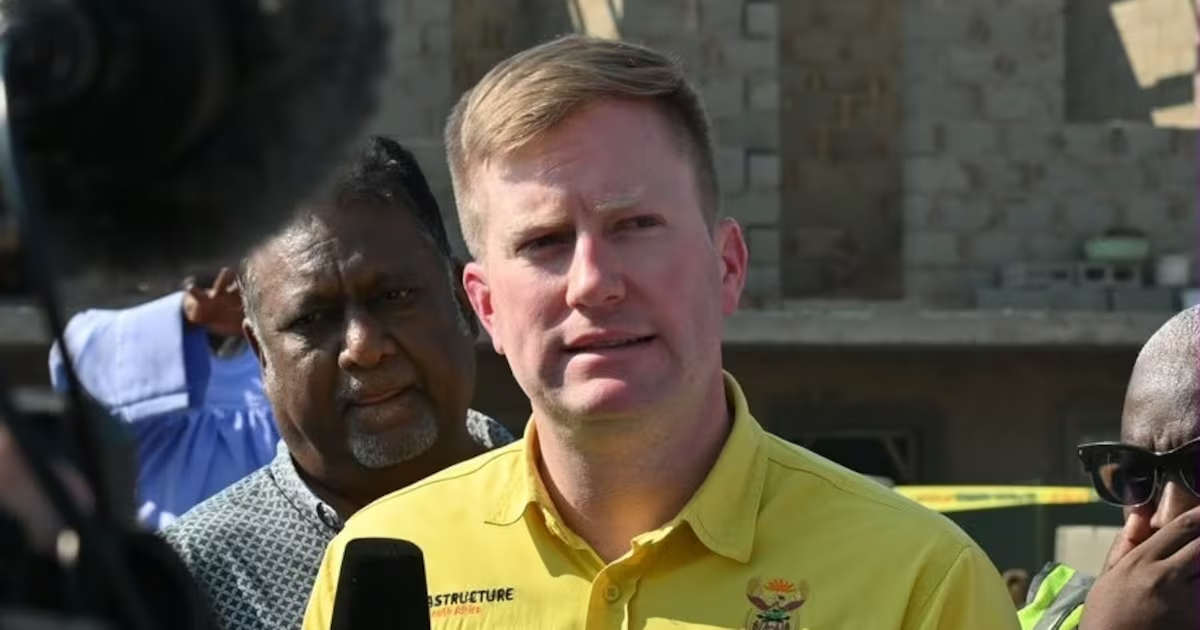
Provincial legislatures on Thursday defended the constitutionality of the Expropriation Act, arguing the DA’s challenge to the parliamentary process lacks a constitutional foundation. They backed President Cyril Ramaphosa’s proposal to cure a drafting error in the legislation rather than invalidate the act.Kate Hofmeyr, appearing for the provincial legislatures, argued the DA’s challenge to the provincial mandates used during parliament’s passage of the bill has “no constitutional hook”, saying the constitution does not require provincial legislatures to grant mandates only in plenary sittings.Instead, she argued, section 116 of the constitution expressly gives provincial legislatures the authority to determine their own internal arrangements, procedures and rules.“The only way the DA gets that order from this court is if they have managed to convince you that there is a provision in the constitution that requires that,” Hofmeyr submitted.She argued that even if the court found fault with the manner in which mandates were granted, no constitutional provision has been breached that could justify invalidating the legislation.The legislatures also maintained that the Western Cape High Court lacks jurisdiction to hear the DA’s application.Hofmeyr argued the DA has chosen to institute proceedings in the Western Cape despite challenging decisions taken by provincial legislatures outside the court’s territorial jurisdiction. She submitted that new arguments advanced during the hearing, including reliance on public works minister Dean Macpherson’s affidavit consenting to the court’s jurisdiction, cannot cure what she described as the application’s jurisdictional defects.“If the court were to conclude that it does not have jurisdiction in this case, we say the appropriate order is to strike the matter from the roll,” she said.She argued such an order would leave the DA free to institute fresh proceedings in another court.On the merits, Hofmeyr submitted that the DA’s challenge ignores section 116 of the constitution, which grants provincial legislatures discretion to regulate their own procedures, including the manner in which mandates are issued to National Council of Provinces delegations.She also rejected the DA’s argument that provincial rules conflict with the Mandating Procedures of Provinces Act, arguing the act deliberately leaves the internal process for issuing mandates to provincial legislatures.Counsel for the legislatures, Lerato Zikalala, addressed the court on the admitted drafting error in sections 19(2) and 19(3) of the Expropriation Act.She accepted that parliament failed to update a cross-reference after amending the bill during the legislative process to move compensation disputes from taking place after expropriation to before expropriation.“The error is not a flaw in the design of the act,” Zikalala submitted.She argued the defect resulted from parliament failing to make a consequential amendment after changing the legislative scheme elsewhere in the bill.According to Zikhalala, the error is confined to a single phrase and can be remedied through a narrow reading-in rather than invalidating the act.She argued section 172 of the constitution requires courts to declare legislation invalid only “to the extent of its inconsistency”, making a limited remedy preferable to striking down the legislation in its entirety.However, the proposed remedy attracted sustained questioning from the bench.Judge Vincent Saldanha questioned whether the proposed reading-in adequately catered for negotiations between the parties before formal mediation begins.The judge expressed concern that, under the proposed wording, the 180-day period for approaching a court could begin running while negotiations are still taking place.Read: Expropriation Act subverts constitution, says AfriForumSaldanha suggested this could unfairly reduce the time available to parties seeking to resolve compensation disputes outside court.After extended exchanges with the bench, Zikalala sought an opportunity to take instructions.She said the legislatures and the presidency would return on Friday to address the court’s concerns about whether the proposed wording sufficiently accommodates negotiations before mediation.Concluding the legislatures’ case, Hofmeyr reiterated that the DA’s challenge should fail on jurisdiction and on the merits.She argued that if the court reached the merits for jurisdiction, none of the relief sought by the DA should be granted because the provincial mandates are constitutionally valid, the provincial rules are not inconsistent with the constitution, and a limited reading-in could cure the drafting error in section 19.The hearing continues on Friday.Business Day