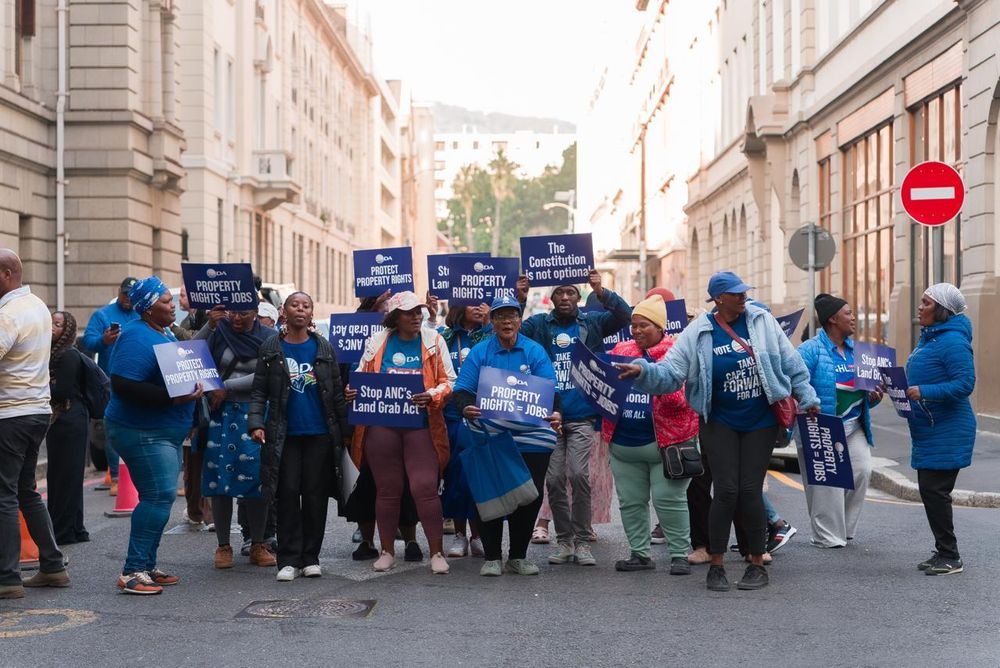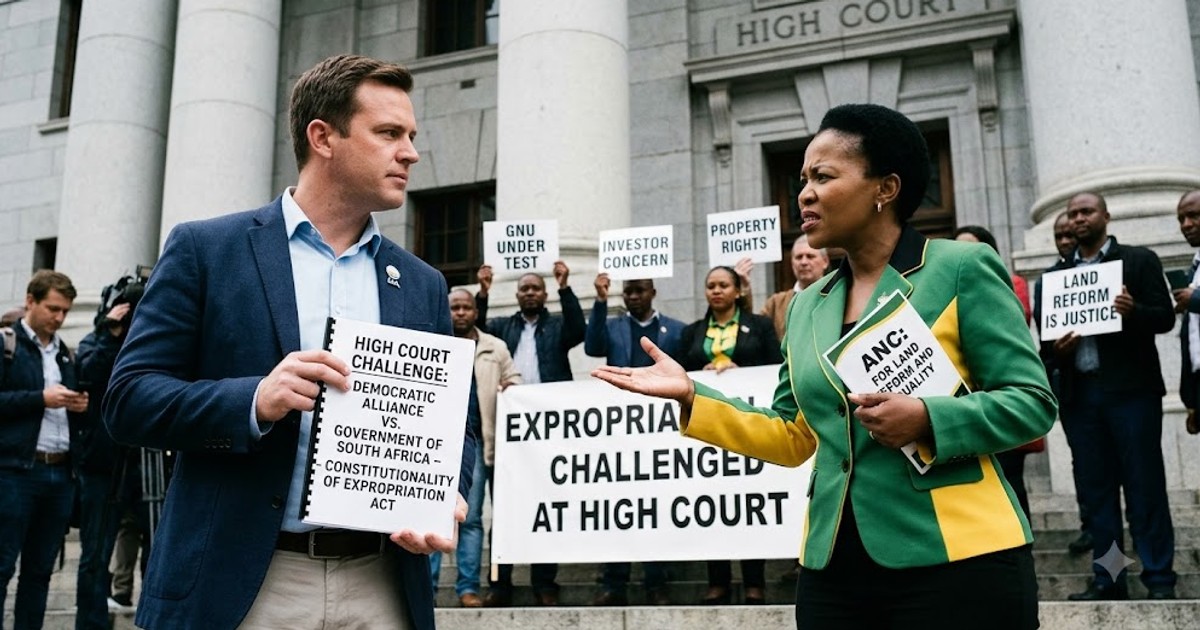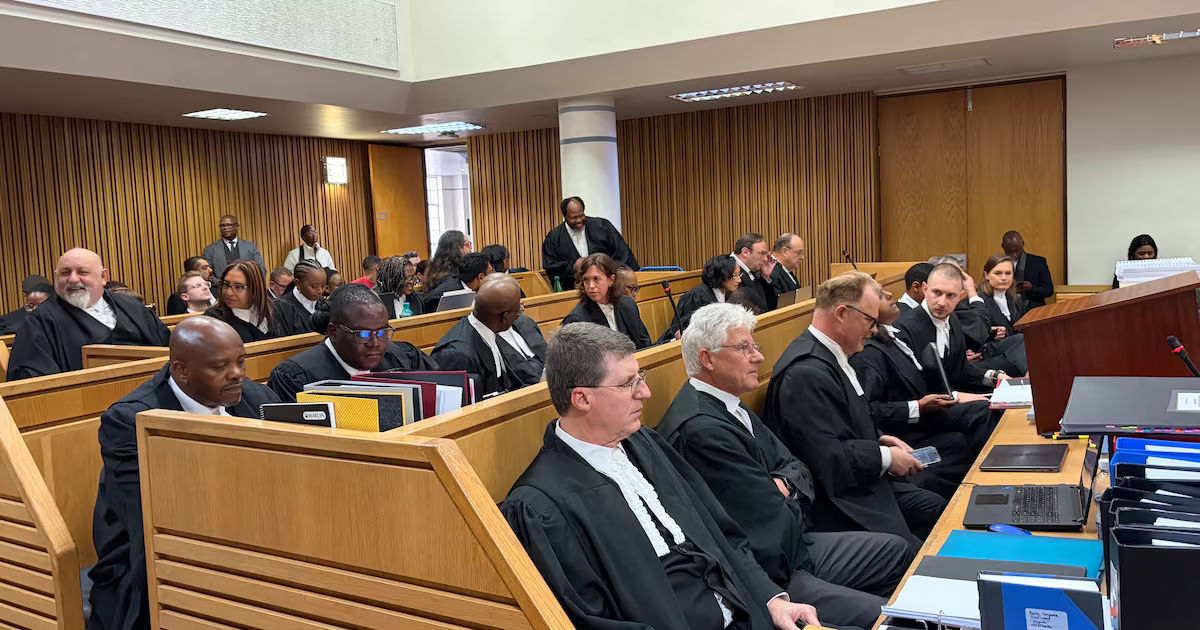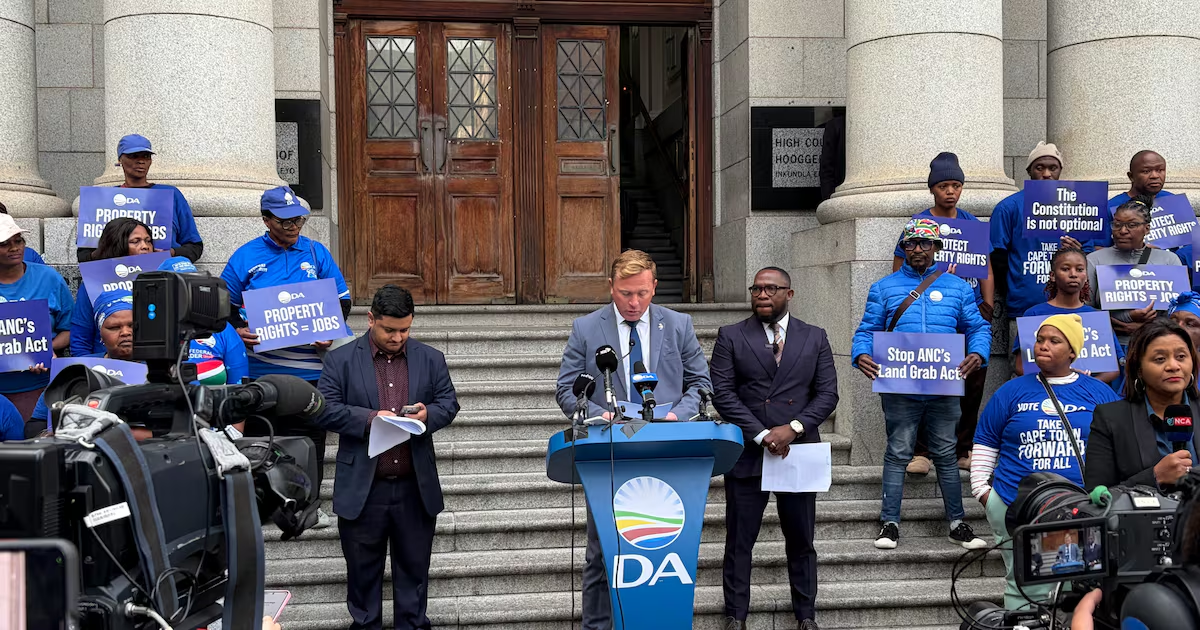
The DA on Monday defended its challenge to the Expropriation Act in the Western Cape High Court, arguing the legislation is unconstitutional because it was unlawfully passed by parliament and contains legal flaws that make it impossible to implement.Addressing supporters and the media outside court before proceedings began, DA federal council chairperson Ashor Sarupen said the party’s case rested on two central arguments: that parts of the Act are irrational and it was not validly adopted by the National Council of Provinces (NCOP).Sarupen said sections 19(2) and 19(3) of the act created what he described as an “irresolvable circularity”.He argued the legislation requires a notice of expropriation to include compensation already determined by a court, while simultaneously stating court proceedings to determine that compensation can only begin after the notice of expropriation has been issued.“It can’t be both ways,” Sarupen said. “Parliament did not properly consider this act.”He also alleged the act failed to secure the constitutionally required support in the NCOP because several provincial delegations lacked lawful mandates to vote in favour of the bill.Property rights make the economy work, and it allows jobs to be created. Temporary ownership is vulnerable ownership and it is at the mercy of the state— Jan de Villiers, DA national spokesperson According to the DA, four provincial delegations received final mandates from speakers who did not have the legal authority to issue them, while three others voted contrary to the rules of their provincial legislatures.“On either argument, the Expropriation Act was passed unconstitutionally and it must be declared invalid,” Sarupen said.DA public works and infrastructure spokesperson Bonginkosi Madikizela said the party had consistently opposed the legislation throughout its passage in parliament.He traced the history of the bill back to earlier attempts to amend expropriation legislation and Section 25 of the constitution, saying the DA had opposed each effort because of concerns over property rights.Madikizela argued the act allows the state to expropriate land for nil compensation and said the party was fulfilling its promise to challenge the legislation in court.DA national spokesperson Jan de Villiers said secure property rights were fundamental to economic growth, investment and job creation.“Property rights make the economy work, and it allows jobs to be created,” he said. “Temporary ownership is vulnerable ownership and it is at the mercy of the state.”What we need is stable legislation that attracts investment, ensures people can build intergenerational wealth and protects as many rights as possible— Ashor Sarupen, DA federal council chairResponding to questions about land reform, Sarupen said South Africa needed legislation that protected property rights while allowing expropriation for legitimate public purposes, such as infrastructure development, with compensation.“What we need is stable legislation that attracts investment, ensures people can build intergenerational wealth and protects as many rights as possible,” he said.AfriForum CEO Kallie Kriel also spoke to the media ahead of the court session in support of the challenge.Kriel argued the act would create legal uncertainty and warned it could undermine investment and economic growth. He said AfriForum is prepared to pursue the matter through the appeal courts and ultimately the Constitutional Court if necessary.He said South Africa’s land restitution challenges stemmed primarily from corruption and administrative failures rather than shortcomings in existing legislation.The respondents cited in the DA’s application include:the president;the minister of public works and infrastructure;the speaker of the National Assembly;the chairperson of the NCOP; and the speakers of the nine provincial legislatures.The Western Cape High Court is expected to hear arguments in the matter on Monday.Business Day
DA defends its challenge to the Expropriation Act in a precedent-setting court case
Legal uncertainty and investment risks cited as key concerns by opposition
580 words~3 min read