Story audio is generated using AI
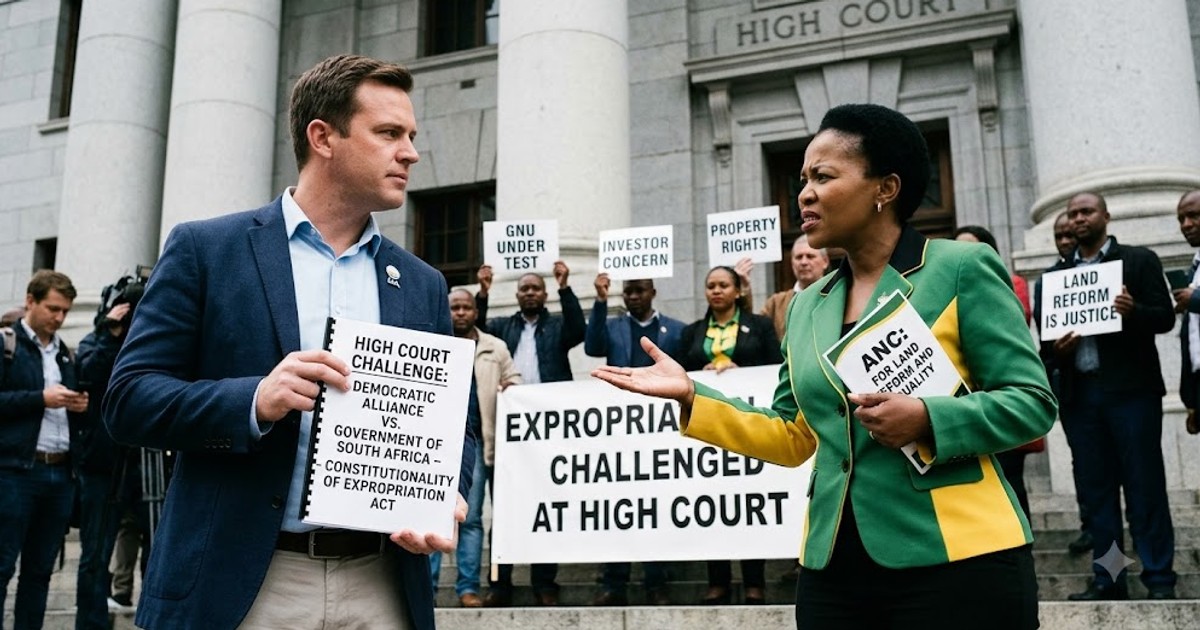
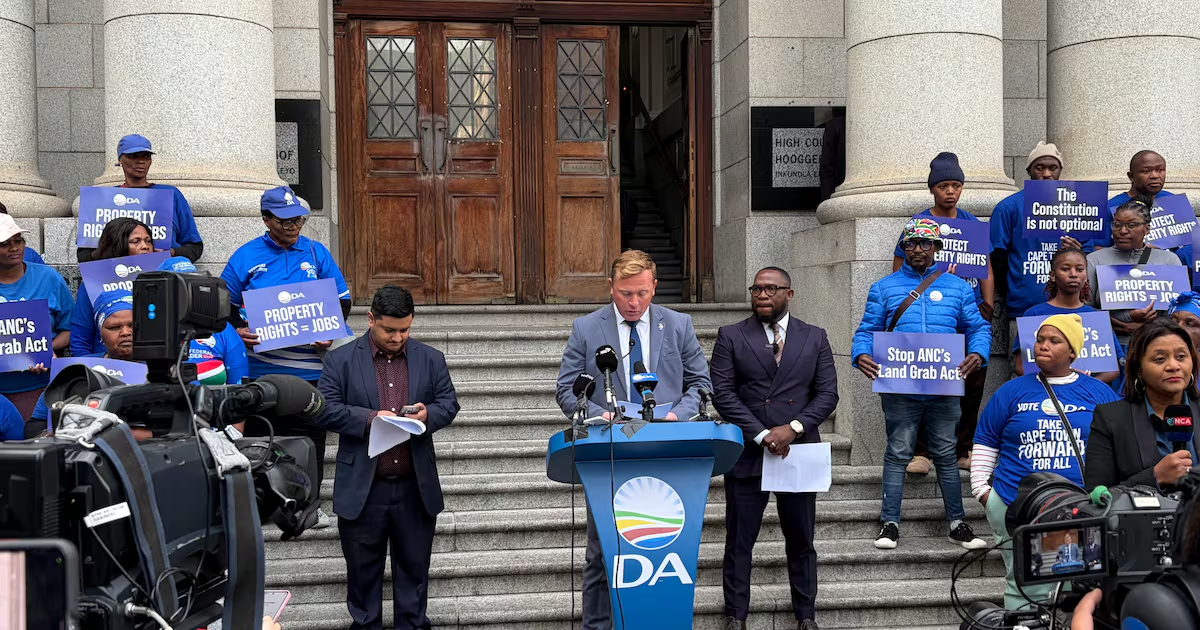
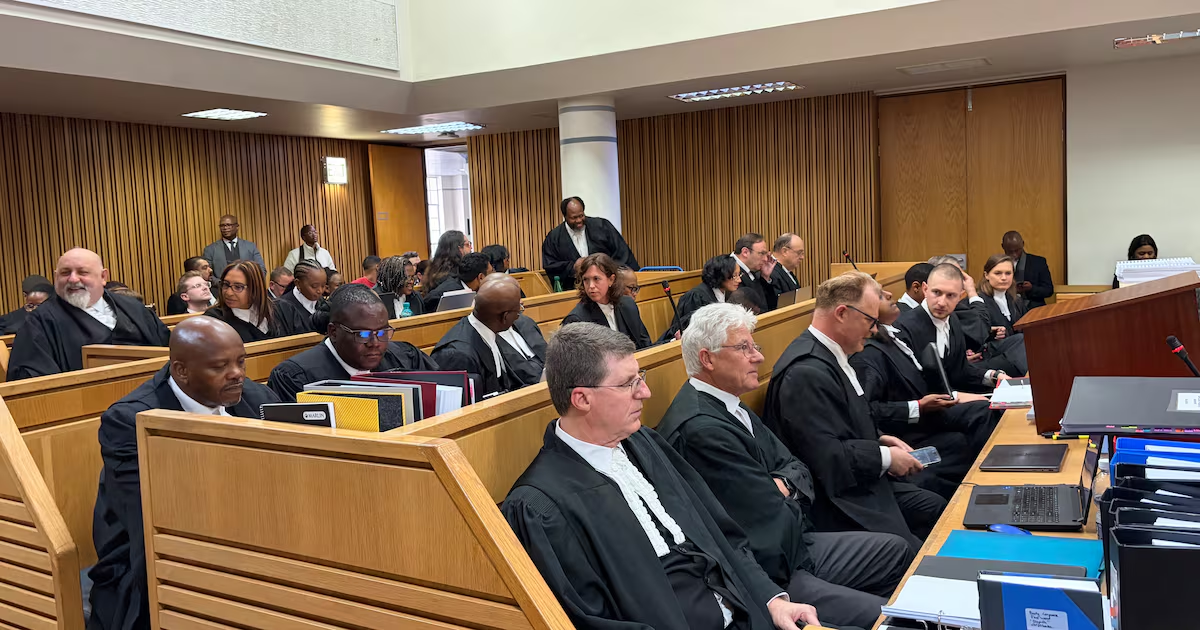
A dispute that once threatened to unravel the government of national unity (GNU) reaches the Western Cape High Court on Monday with the DA, the second-largest party in the governing coalition, asking judges to strike down a law its own cabinet minister is now legally bound to defend.The DA filed papers seeking to have the Expropriation Act of 2024 declared unconstitutional in a challenge that has been consolidated with two other cases and set down for hearing on August 3-7. Among the respondents is Dean Macpherson, the DA politician who serves as minister of public works & infrastructure, whose department is responsible for administering the act.The arrangement puts Macpherson in an uncomfortable position; he is listed as first respondent because his ministry is the state’s designated expropriating authority in terms of the law. Macpherson previously gave President Cyril Ramaphosa a legal opinion warning that the bill was unconstitutional, but the president signed the bill into law in December 2024 anyway, six months after the GNU was formed. The act has not yet come into force, so the 1975 law it was meant to replace remains in operation regardless of the outcome of the court challenge. However, a ruling against the government would hand the DA an important political victory over an ANC signature policy that it could not achieve through negotiation and that the GNU’s internal dispute mechanism proved unable to settle.The DA previously formally invoked clause 19 of the coalition’s founding statement of intent, which is meant to govern how disagreements between GNU parties are resolved. That clause points disputing parties toward a clearinghouse mechanism, a body created specifically to keep disagreements like this out of public view ― and out of court.However, with no resolution achieved in the coalition the case now heads to court, alongside a separate challenge brought by AfriForum, which targets different provisions of the act concerning nil compensation for expropriation, as well as a third consolidated case.The DA’s heads of argument, filed in June, rest on two grounds unrelated to compensation. The first is that section 19 of the act, which sets deadlines for parties to take expropriation disputes to court, is internally circular and cannot function since the notice meant to trigger the deadline can only be issued after a court has already ruled. The DA said the minister, president and speaker of the National Assembly have all in effect conceded that section 19 is irrational. The second ground concerns four provincial delegates whose final mandates to vote for the bill in the National Council of Provinces were signed by legislature speakers rather than adopted by the legislatures themselves, which the DA argues breached the constitutional and statutory procedure for passing the law.“The DA’s primary submission is that the consequence of either of its grounds of challenge succeeding is that the Expropriation Act must be declared inconsistent with the constitution and invalid,” the documents read. The Association for Rural Advancement (AFRA), represented by the Legal Resources Centre, is on the other side of the fight, though it is answering AfriForum’s challenge rather than the DA’s. AFRA backs the law’s compensation rules, specifically sections 12(3) and 12(4), which allow for nil compensation in some cases.It said the constitution doesn’t just protect property owners but also requires the state to fix the imbalances left by apartheid land policy and that the cost of compensation has been one of the factors slowing down land reform. AFRA said courts in other countries give governments wide room to set their own expropriation rules and that any problems with the act can be fixed without scrapping the whole law. “AFRA has been admitted as amicus curiae in support of the constitutionality of the act and agrees with the state respondents’ contention that the challenged provisions are consistent with the constitution. Its submissions emphasise that the constitution does not only protect property rights against interference but also requires redress through land reform,” the association said in a statement. “AFRA recognises that inflated costs are among the factors contributing to the slow pace of land reform in South Africa and argues that reduced or nil compensation in just and equitable circumstances, while not a complete solution, can assist in advancing land reform,” it said.Business Day