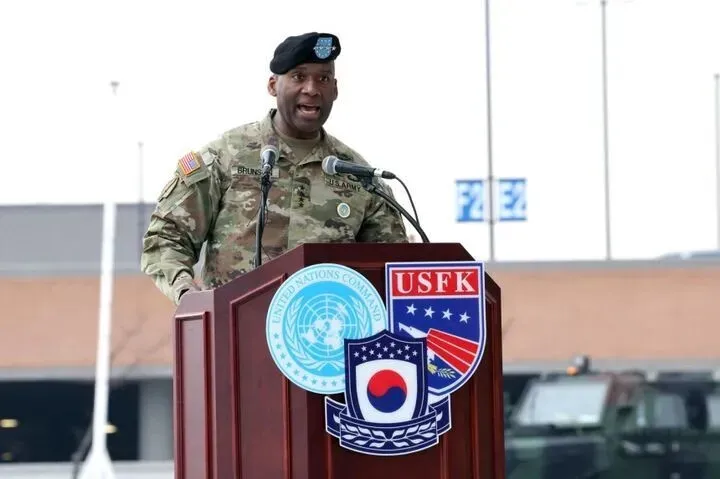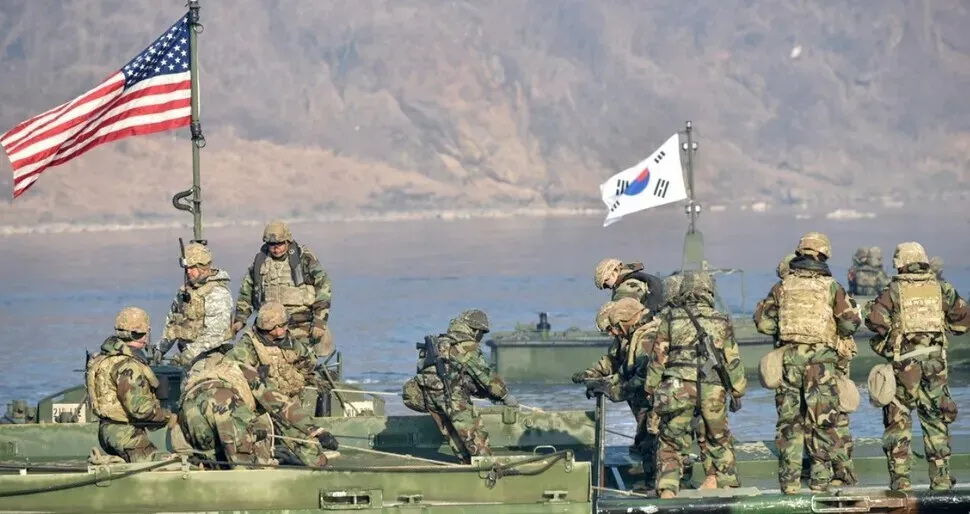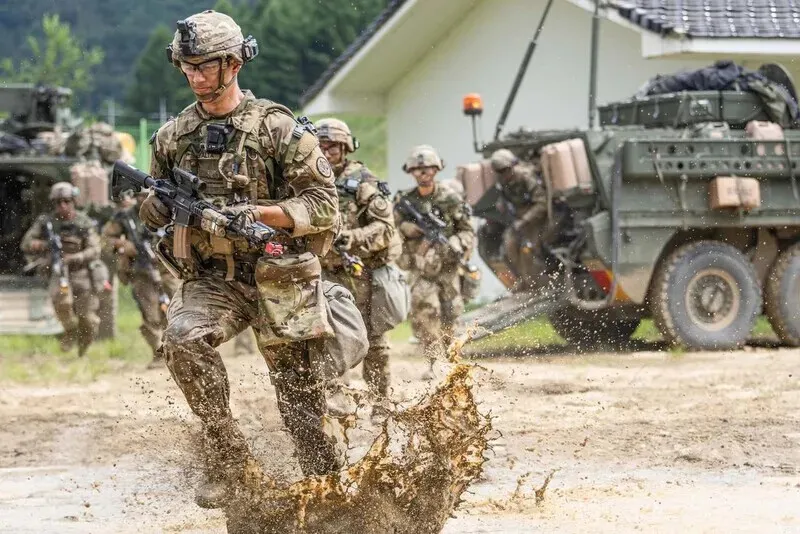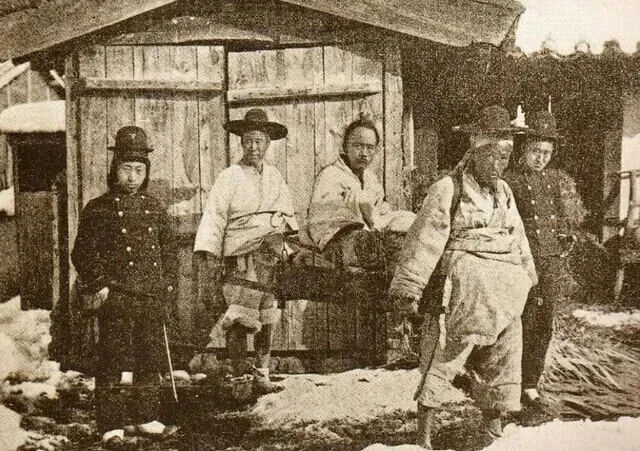
On Oct. 20, 1894, the government of Joseon finalized its policy of quashing the Donghak Peasant Revolution after a second uprising expressing anger at the Japanese army’s occupation of Gyeongbok Palace, the seat of power. Kim Gojong established the Dosunmuyeong, the supreme military command in charge of suppressing the Donghak forces, appointing Shin Jeong-hee (1833-1895), a highly respected figure with experience negotiating with Japan, as its commander. How did Shin face off against the Donghak forces, who, in the words of the revolutionary Jeon Bong-jun as seen in his first interrogation document from March 5, 1895, were enraged by how the Japanese military “stormed Joseon’s capital and destroyed the royal palace in the middle of the night,” and believed that an uprising was inevitable to demonstrate their “loyalty to the king and patriotism”? Sadly, there is not much to say on this matter, as Shin did not have the authority to wield operational control, which would have allowed him to directly command Joseon forces. That power had been transferred to Commander Koshiro Minami (1842-1921), the battalion commander of the Japanese army’s 19th infantry. Before the establishment of the Dosunmuyeong, on Oct. 16, Inoue Kaoru, the Japanese minister in Seoul, sent correspondence to Foreign Minister Kim Yun-sik demanding that he “make arrangements for local officials and commanders of expeditionary forces to work in concert with our troops so that we may swiftly and effectively crush the rebels.” This was a blatant demand to hand over operational control of the Joseon army. The demand took place just 80 days after Japanese troops stormed Gyeongbok Palace on July 23, taking King Gojong prisoner, and after the same army had defeated the Qing Dynasty, which had claimed to be the suzerain of Joseon, during the Battle of Pyongyang on Sept. 15, 1894. The Joseon government, which lacked both the strength and energy to protest, submitted. The Japanese government’s policy of suppressing Donghak forces was relayed to its troops stationed in Joseon on Oct. 27. Soroku Kawakami (1848-1899), a chief military strategist in the Imperial Japanese Army, sent a telegram to the military’s southern office in Incheon, instructing that “utmost severity” must be taken when implementing measures against the Donghak forces. “All must be slaughtered, with no exceptions,” he wrote. It would not take a genius to anticipate that serious conflict would arise between the Japanese command, which ordered the complete slaughter of Donghak forces, and the Joseon military, who could not agree to this. The collection of letters sent by Lee Gyu-tae (1841-1895), who served as the vanguard commander of the Joseon army, to Shin, chronicles a succession of harrowing incidents difficult to stomach. “The Japanese army does not let any single command pass without interfering.” “The Japanese military is harassing the Chungcheong provincial governor, forcing him to cease tending to administrative issues.” “After entering this town, I finally met the Japanese commander, but the rebuke I received was worse than that expected for a slave.” The Japanese forces were the ones who held the reins of power. Even before the operation to suppress the Donghak forces was over, the Dosunmuyeong was disbanded on Jan. 22, 1895, and military commanders including Shin and Lee were demoted. As we reflect on Korea’s sorrowful past, we must ponder our current prospects. In his book “The Conditions for a Strong Military” (March 2025), Kang Gun-jark, the first deputy director of the National Security Office, Kang wrote, “Among the ROK-US combined forces deployed to defend Korea’s territory, US military forces are now virtually non-existent; 99.9% of ground forces, over 95% of naval forces, and nearly 90% of air forces are Korean.” Despite such facts and figures, conservatives continue to argue that it is too early to shift gears in terms of national security, citing the growing North Korean nuclear threat and the rapidly changing security environment. No matter how hard we strive, we will never be on par with the military prowess of the US, so it’s safe to say that the debate won’t end anytime soon. However, some points that warrant further consideration are that the nature of US Forces Korea has changed significantly, and that the US’ commitment to engagement has also weakened. Since Donald Trump’s return to the White House, the US has devolved into a superpower that only has its own interests at heart. Part of that process is evidenced by the way it shifted the role of US forces stationed in Korea from that of defending Korea to keeping China in check. Furthermore, Seoul should not expect Washington to provide large-scale reinforcements even if war were to break out on the Korean Peninsula. The maximum level of engagement that we can hope for from the US is for it to firmly guarantee its commitment to extended deterrence so that we can thwart nuclear strikes by our adversary while making sure that our forces take the lead in responding to North Korean attacks. The US also seems to be on the same page, as stated clearly in its National Defense Strategy released in January. If we do not act, the US commander of the US Forces Korea will end up waging war with our troops, which constitutes more than 90% of the ROK-US combined forces. If our military hesitates to act on issues where the national interests of Korea and the US sharply diverge, the US commander may “not let any single command pass without interfering,” and rebuke us more harshly than they would a slave. Can we really call this situation normal? If it is not, we should be brave and change these circumstances. Only when we can stand independently can our precious Korea-US alliance remain healthy over the long term. Please direct questions or comments to [english@hani.co.kr]
[Column] Lessons from the tragedy of the Donghak rebellion for regaining OPCON
Only a self-reliant Korea can sustain a strong Korea-US alliance
955 words~4 min read