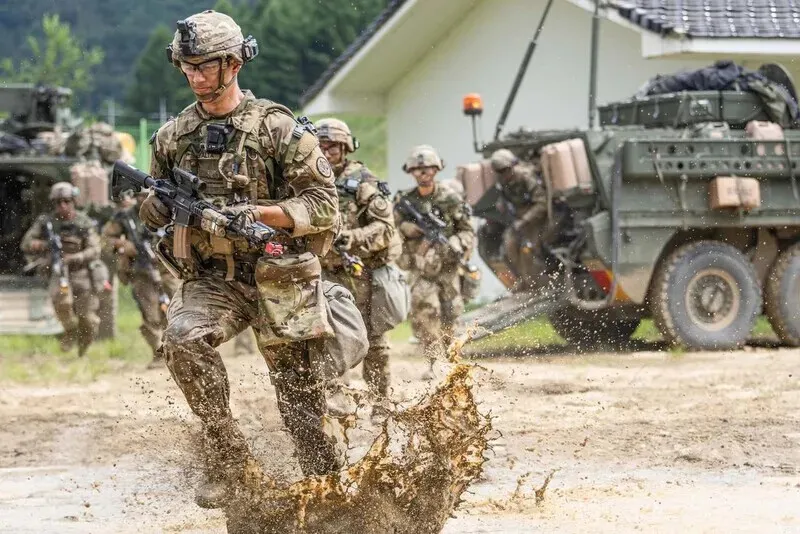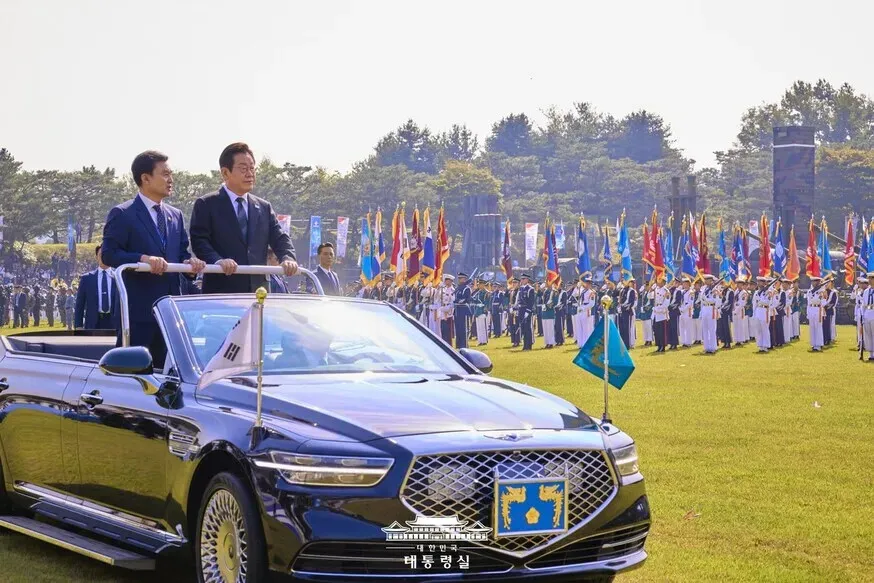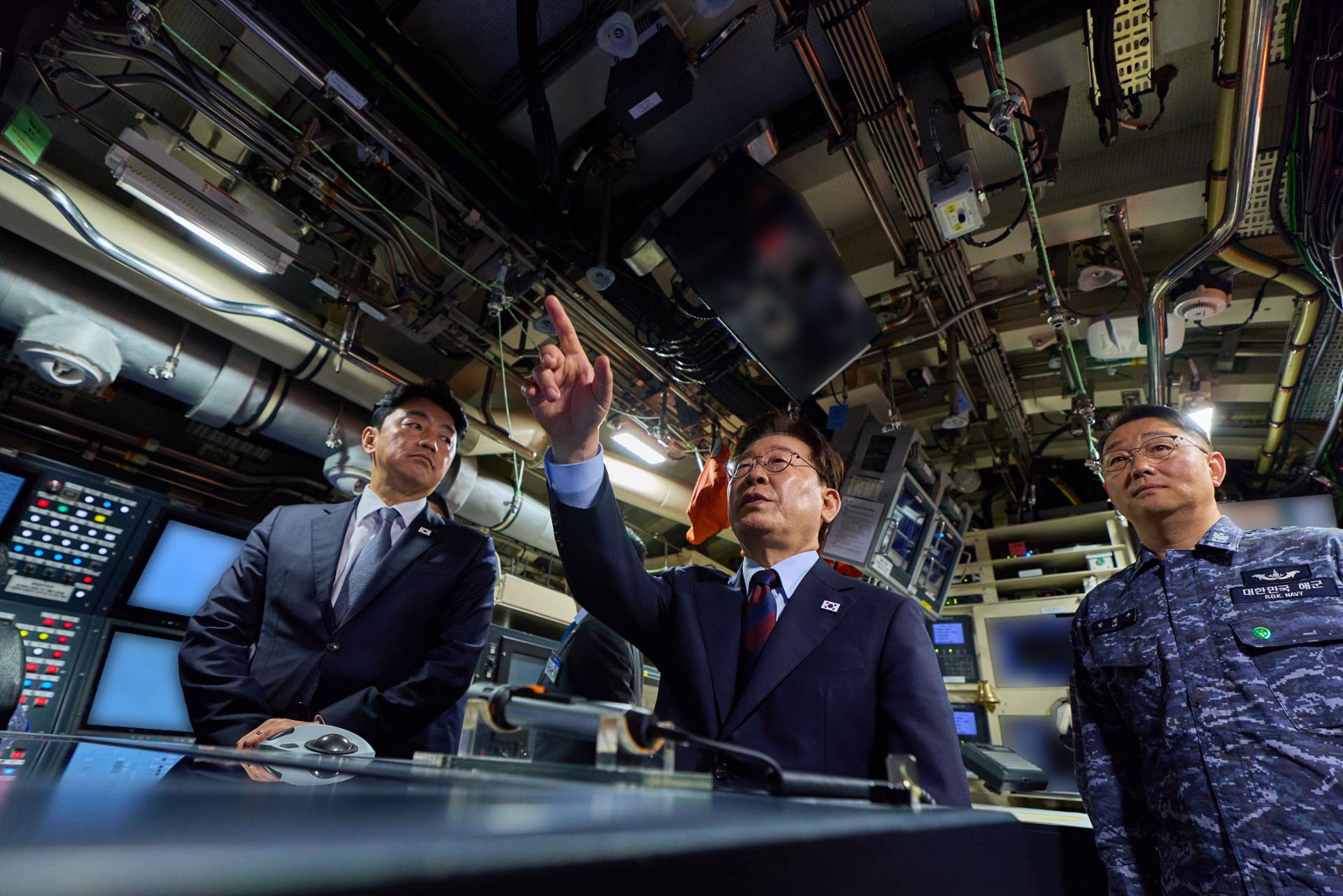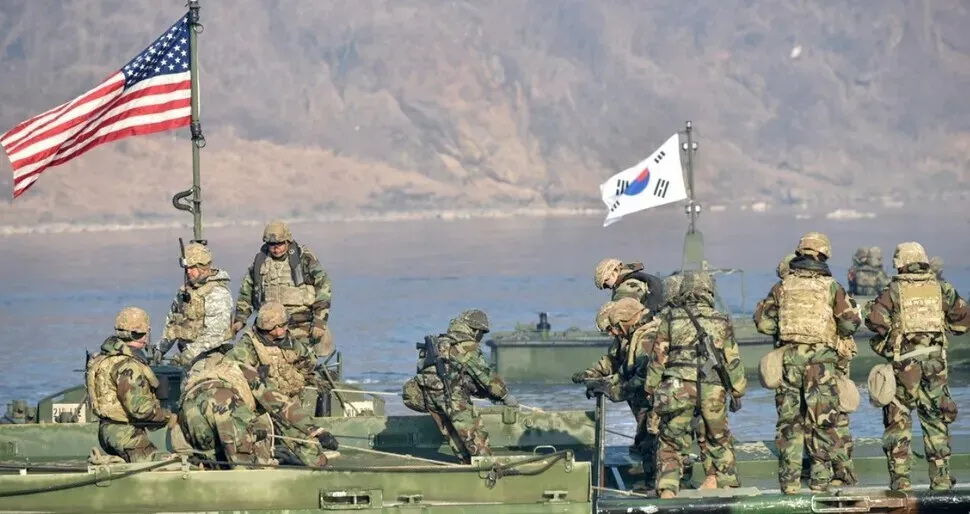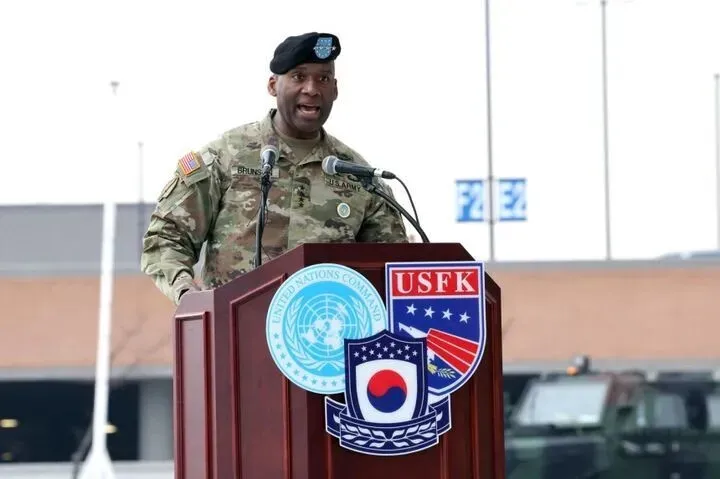
Gen. Xavier Brunson, commander of US Forces Korea/UN Command/Combined Forces Command, speaks at a change-of-command ceremony held at Camp Humphreys in Pyeongtaek, South Korea, on Dec. 20, 2024. (courtesy Defense Daily)
On the eve of the June 3 local elections, Rep. Jang Dong-hyuk, the leader of the main opposition People Power Party, blasted the Lee Jae Myung administration for policies that he said threatened South Korea’s alliance with the US. “Today, he is calling the US Forces Korea a foreign military and pushing for the early transfer of wartime operational control. Tomorrow, he will dismantle the South Korea-US alliance,” Jang said. The conservative camp opposes the transfer of OPCON back to Korea, warning that the “emotional appeals about restoring military sovereignty” based on the notion that a country ought to command its own armed forces will “destroy” the alliance and undermine national security.Yet the crux of the matter is Korea’s aim of building a war-ready military, something conservatives, who are all about robust national security, should welcome.In December 1994, the country regained operational control of its military during peacetime, but wartime OPCON remained the exclusive remit of the ROK/US Combined Forces Command (CFC).This peculiar command structure of the military in which operational control was divided into peacetime and wartime has lasted for 32 years, causing Korea’s military to drift further and further away from its raison d’etre: prevention of and preparation for war. “The saying goes that while US officers discuss operations when they gather, ours talk about promotions and assignments,” a military source said. “This is because they believe that the CFC, which holds operational control, will handle war just fine on its own.”Even conservatives in the past raised fears of the military losing its focus on its core purpose of being able to wage war.“The solid ROK-US alliance is the primary factor in maintaining peace on the Korean Peninsula,” then-Minister of National Defense Lee Sang-hee told a meeting of senior military leaders in 2008, during the Lee Myung-bak administration. “But,” he went on, “it’s also true that relying on the ROK-US combined defense system has incurred the unintended side effect of our military taking on the traits of an administrative and management-oriented force rather than one ready for combat. We must stay vigilant against the threat of our military’s degeneration into an administrative-oriented force instead of a combat-ready one.” The consensus among those familiar with the armed forces’ inner workings is that if the country’s generals were asked to choose between being appointed the chief of staff of a military branch and the chairman of the Joint Chiefs of Staff, nine out of ten would choose the former.The chairman of the Joint Chiefs, the military’s highest-ranking active-duty officer, commands the Republic of Korea Army, Navy, Air Force and Marines and exercises operational control in peacetime. Because the position commands all peacetime operations on the peninsula including the Military Demarcation Line and the Northern Limit Line, the chairman is responsible for any operational failure, 24 hours a day.But if the crisis on the peninsula escalates, leading to DEFCON-3, the highest level of peacetime readiness, OPCON is transferred to the CFC. The Joint Chiefs chairman’s authority is greatly reduced in the event of war in the region. On the other hand, the chief of staff of each branch is not responsible for operations but holds strong influence over administration like personnel and logistics. “The chairman of the Joint Chiefs doesn’t even have the authority to appoint or remove field-grade officers and generals serving at the Joint Chiefs headquarters,” a military source said. “Each branch operates under the leadership of its chief of staff, who holds authority over personnel appointments.”Because the military’s attention is entirely focused on personnel matters, if the CFC exercises OPCON, this would be tantamount to putting the lives of Koreans in the hands of a foreign entity in the event of a war.