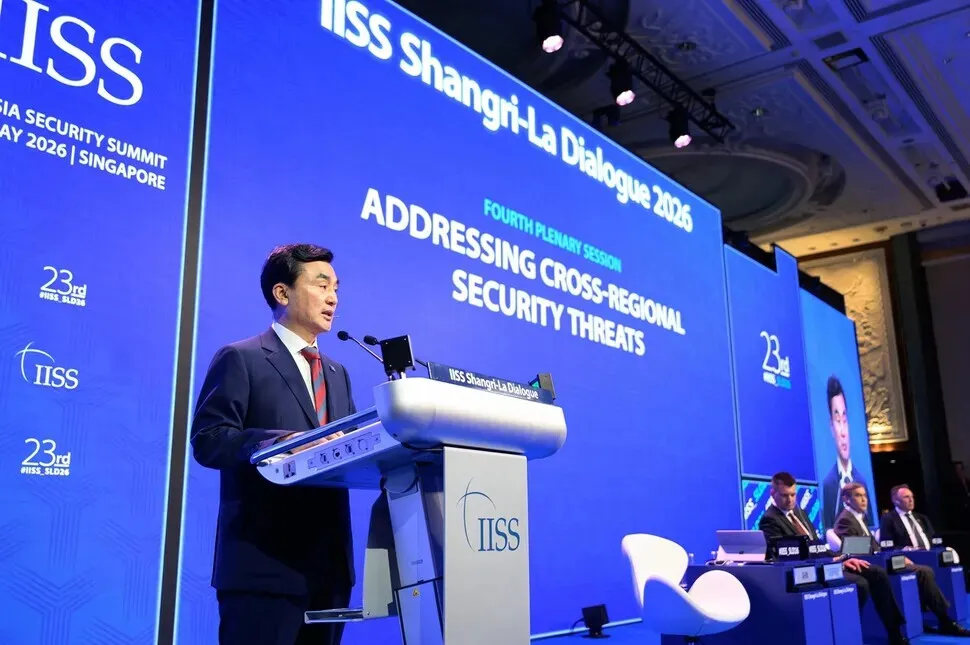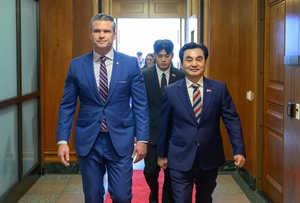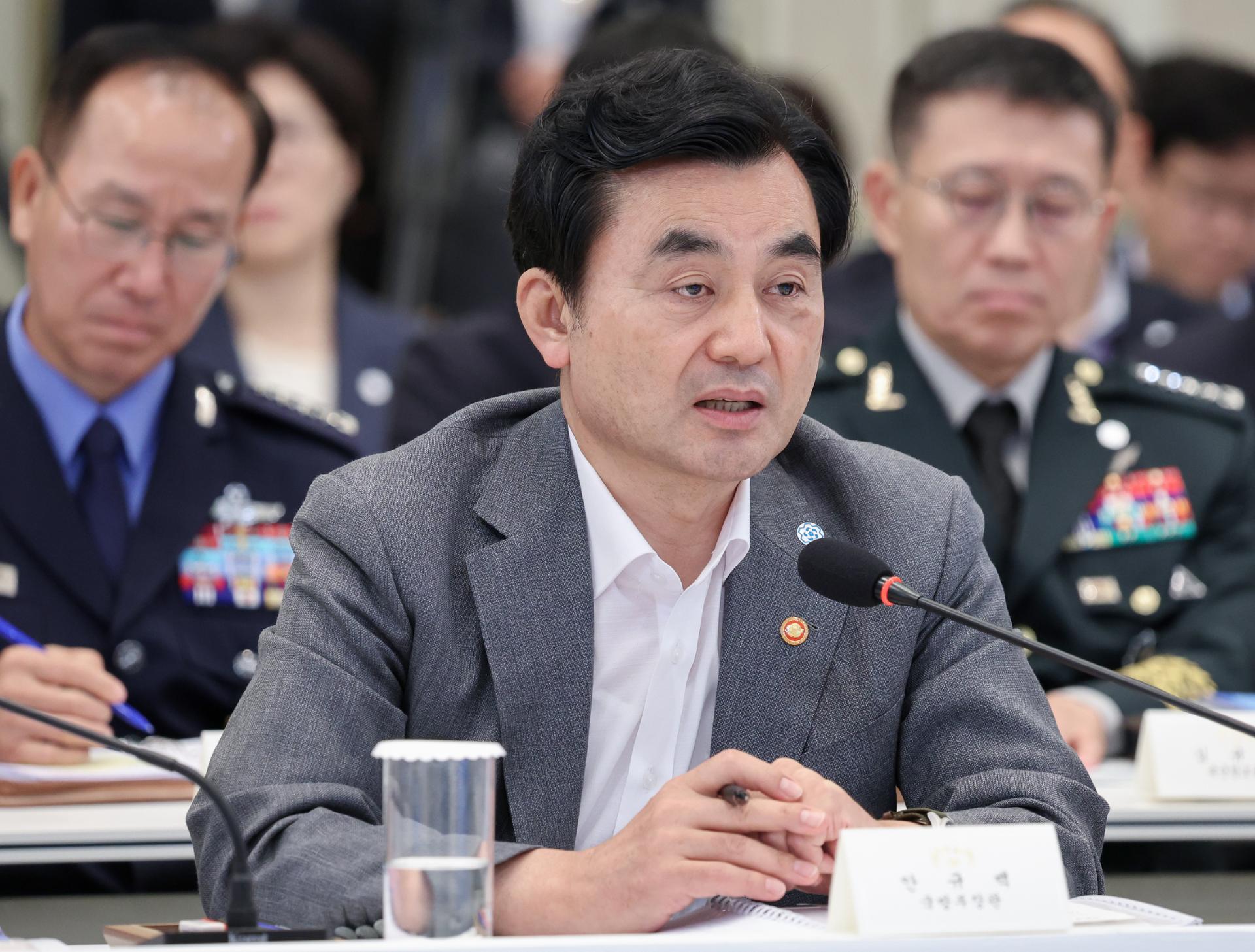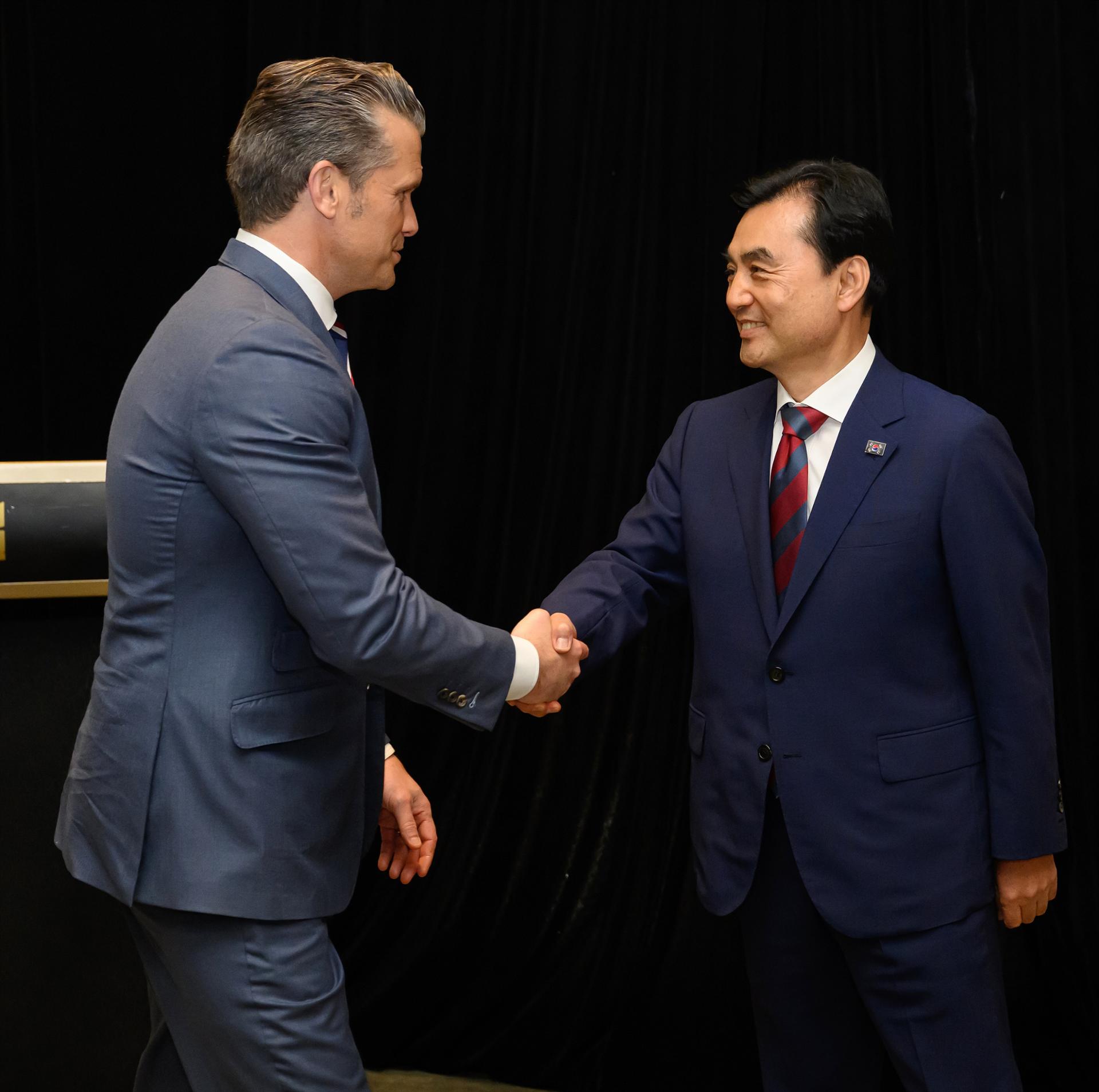
Korean Defense Minister Ahn Gyu-back, right, shakes hands with U.S. Secretary of Defense Pete Hegseth during their meeting at the 23rd Shangri-La Dialogue, an Asia security forum, in Singapore, May 30 (local time). Yonhap
The decision by the U.S. Senate Armed Services Committee to tighten congressional oversight of the transfer of wartime operational control (OPCON) on the Korean Peninsula has reignited a long-running debate over sovereignty, alliance management and regional security. A provision in the Senate version of the annual U.S. defense bill would require the U.S. defense secretary to submit quarterly reports on the implementation of the U.S.-South Korea OPCON transition road map through 2030, including independent military assessments by the Indo-Pacific Command and the commander of U.S. Forces Korea.
The measure reflects a growing determination in Washington to ensure that any transfer of wartime command authority is guided by military readiness rather than political expediency. That concern is understandable. North Korea continues to advance its nuclear and missile capabilities, while strategic cooperation between Pyongyang, Beijing and Moscow has become increasingly pronounced. In such an environment, neither the United States nor South Korea can afford a transition that undermines deterrence or creates uncertainty within the alliance.