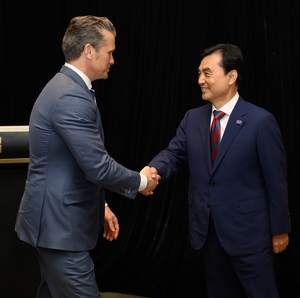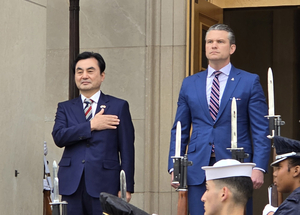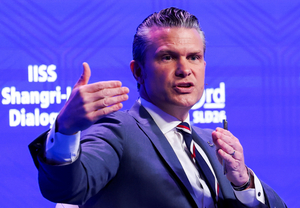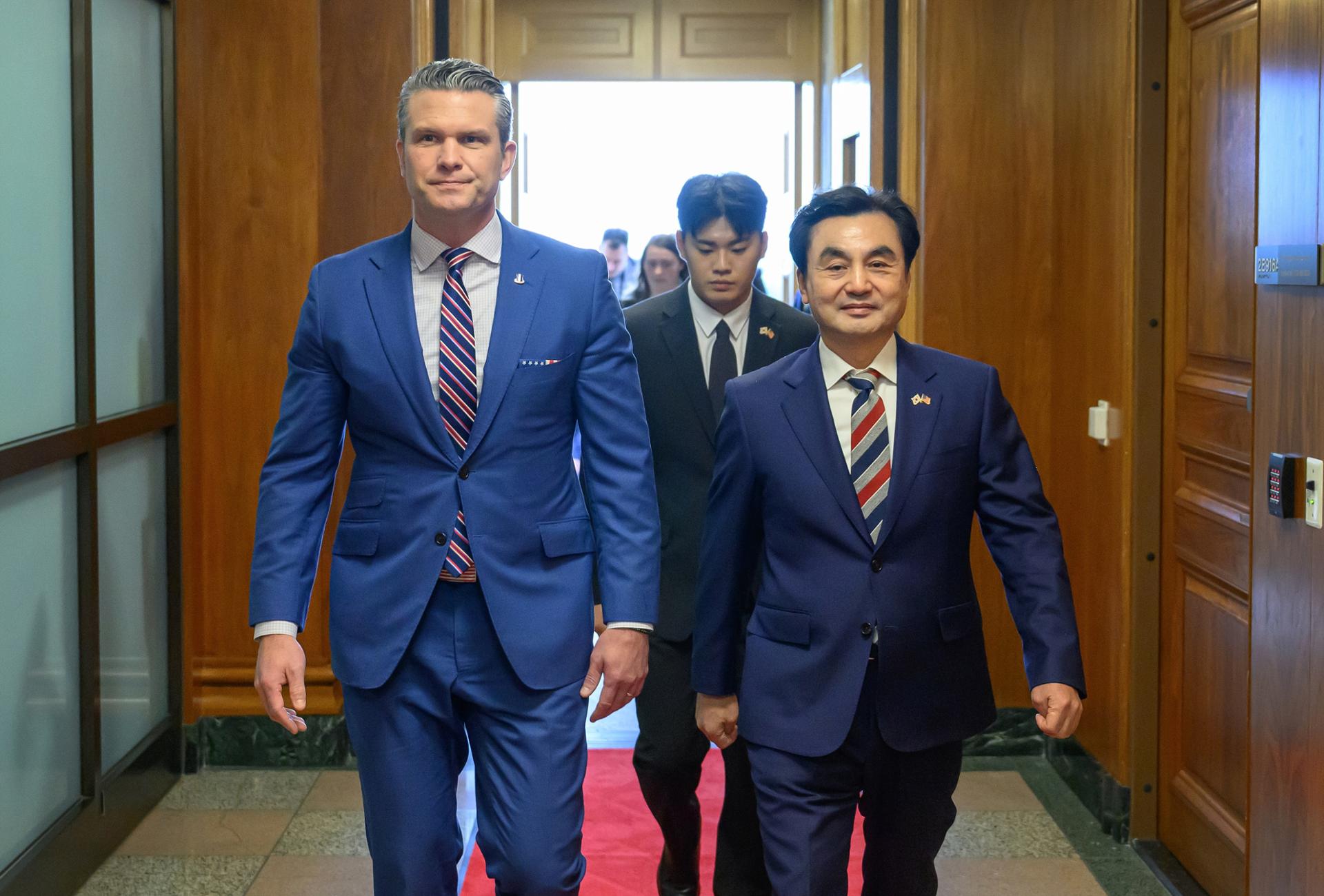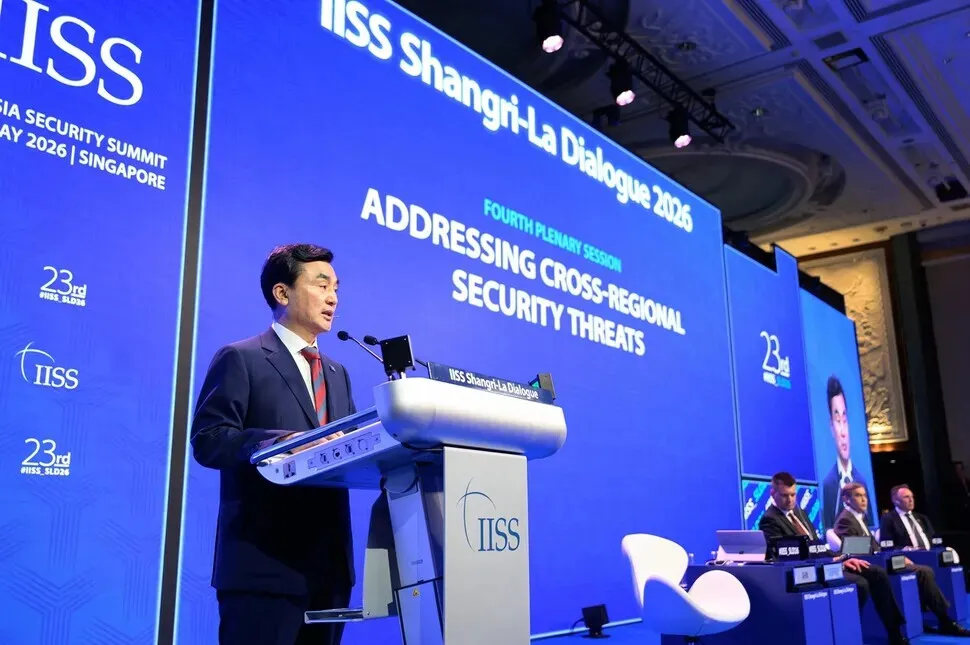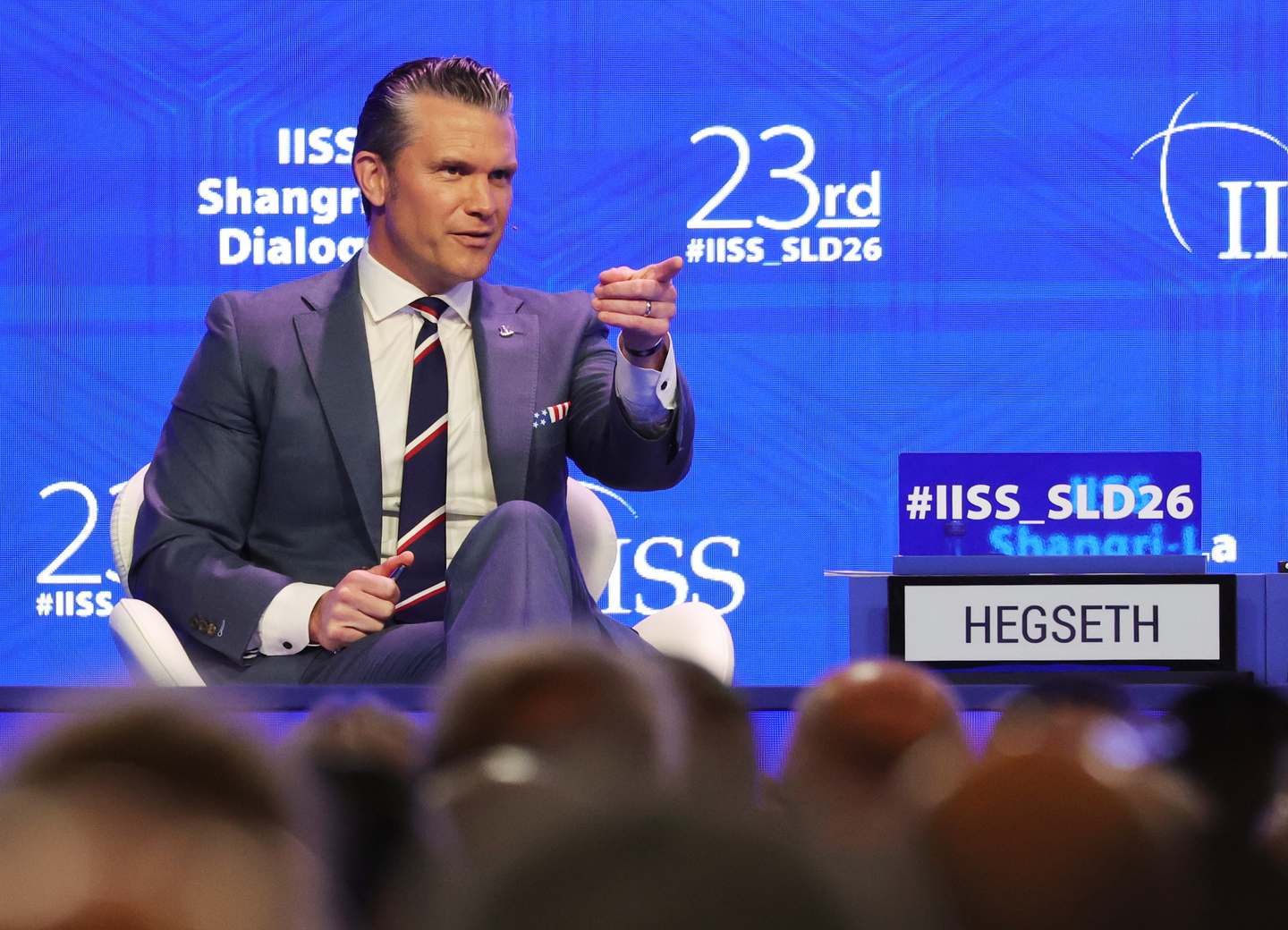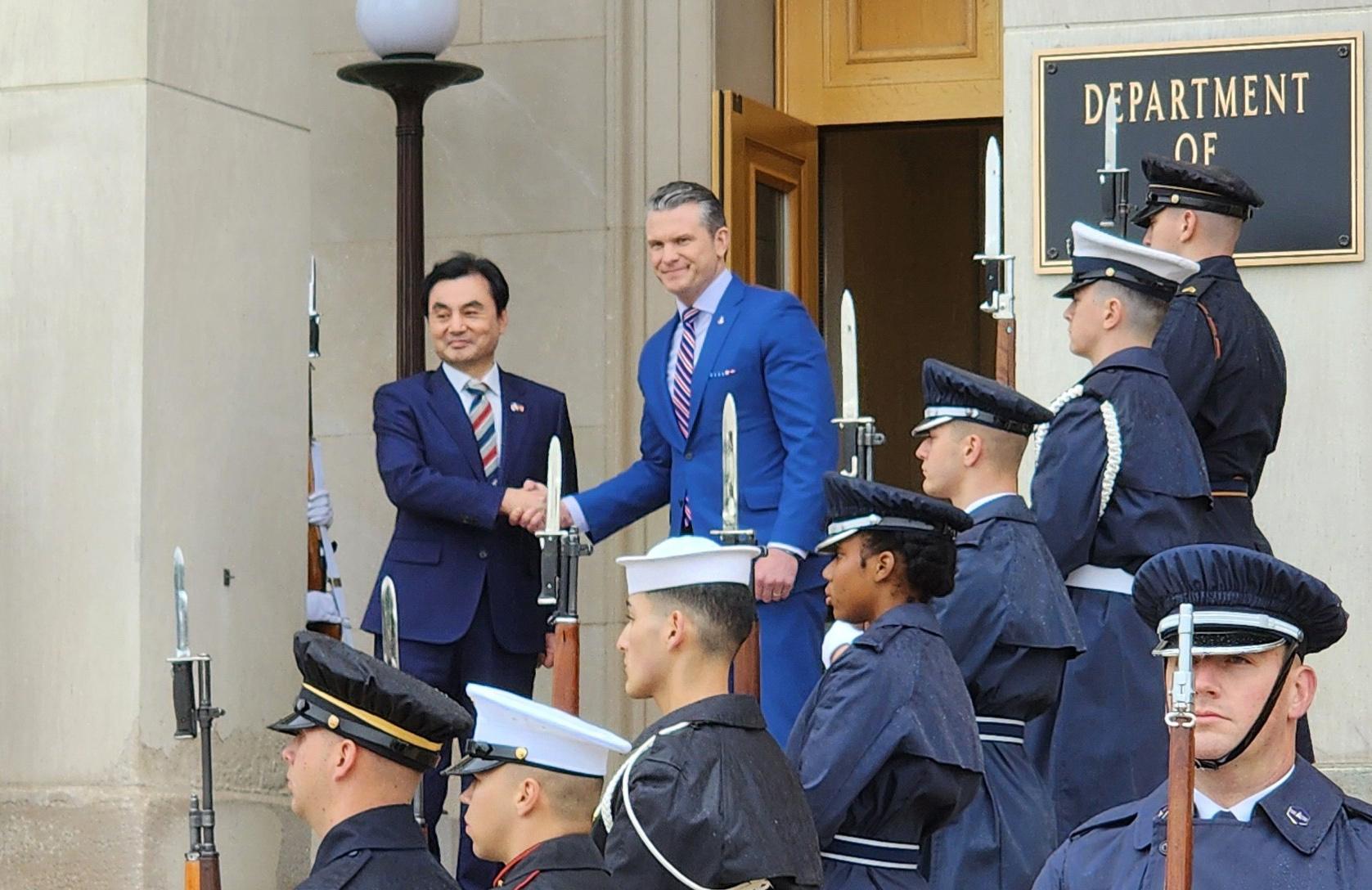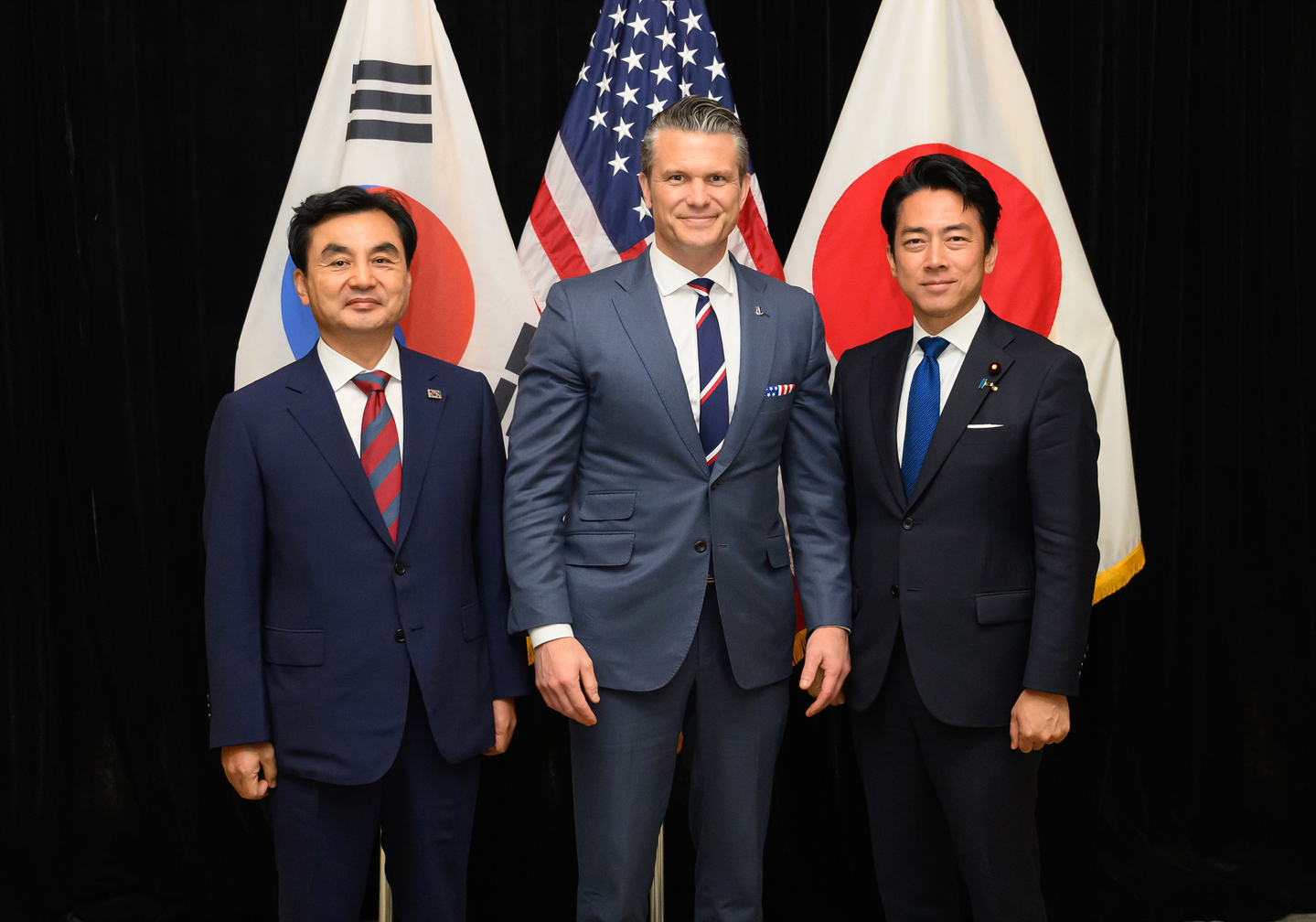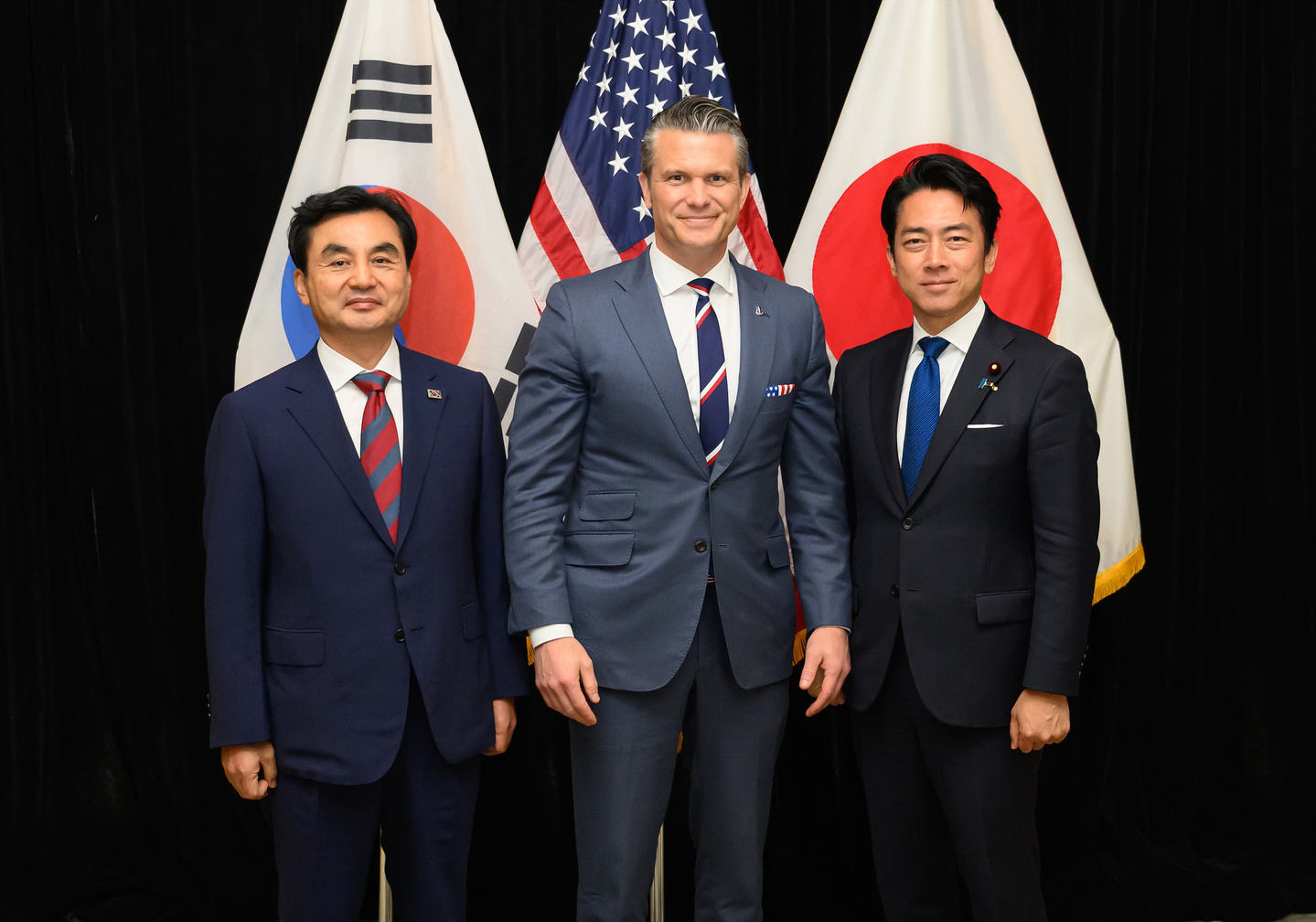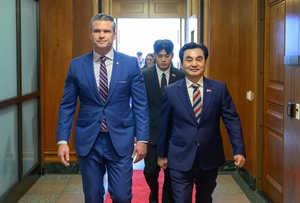
Defense Minister Ahn Gyu-back (right) and US Defense Secretary Pete Hegseth walk to a meeting room at the Pentagon in Washington on May 11. (Ministry of National Defense via Yonhap) The gap between Seoul and Washington over the timing of and conditions needed to complete the transfer of wartime operational control remains “manageable,” a senior presidential official said Friday.The remarks came amid concerns about a possible rift between the allies over the issue, which the Lee Jae Myung administration has sought to expedite, possibly as early as next year, before the end of its term.“In reality, the difference in views between Korea and the US regarding wartime operational control is not that large,” the senior Cheong Wa Dae official said on condition of anonymity.The official said “there is not a big difference in how the two sides view the conditions,” adding that the allies “can readjust and align them again.”The official further underlined that neither the conditions nor the timing “would become a major sticking point,” adding that “from now on, we will study the final phase of the conditions and coordinate the timing so the two sides can resolve the issue smoothly.”“The most important guiding point and shared objective in handling this issue is to ensure that combined defense capabilities are not impaired.”Concerns of a potential rift between the allies have grown after senior US military and defense officials voiced caution about Seoul's accelerated push for a wartime OPCON transfer.US Forces Korea Commander Gen. Xavier Brunson suggested in April during a House Armed Services Committee hearing that the two sides aim to meet the conditions required for the OPCON transfer no later than the first quarter of 2029.Brunson also warned during a Senate Armed Services Committee hearing the same month that “political expediency should not get ahead of the conditions.”US Defense Secretary Pete Hegseth stressed that any transition must preserve the longstanding roles and responsibilities of US forces and avoid undermining the allies’ combined defense posture."I think we have to find the balance of where our military OP (operational plans) and the responsibilities that US uniformed members have had for decades now (are) honored, as we phase over to wartime OPCON transfer for the Republic of Korea, which we welcome the fact that they want that," he said during a session of the Asia Security Summit, also known as the Shangri-La Dialogue. The Republic of Korea is the official name of South Korea.Expediting the wartime OPCON transfer is a key pillar of the Lee administration's self-reliant defense policy.In May, Defense Minister Ahn Gyu-back personally briefed President Lee Jae Myung during the inaugural meeting of the Committee on Future Defense Strategy, saying the ministry would finalize a road map this year to accelerate the wartime OPCON transfer process.Ahn said Seoul and Washington aim to complete verification of full operational capability, the second phase of the three-stage transition framework, at the 58th Security Consultative Meeting, the annual defense ministerial talks scheduled for this fall.Ahn added that the Defense Ministry would make the transition more concrete by recommending a transfer timeline to Lee after the full operational capability verification.
Gap between allies over OPCON transfer ‘not that large’: Seoul
The gap between Seoul and Washington over the timing of and conditions needed to complete the transfer of wartime operational control remains “manageable,” a se
518 words~2 min read