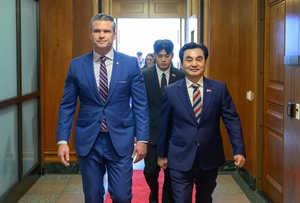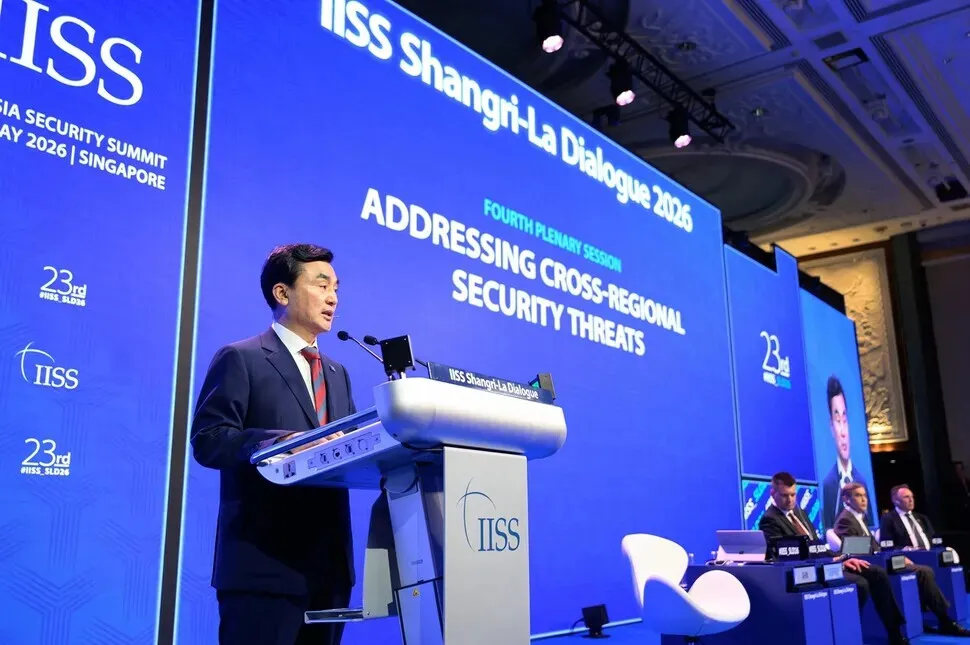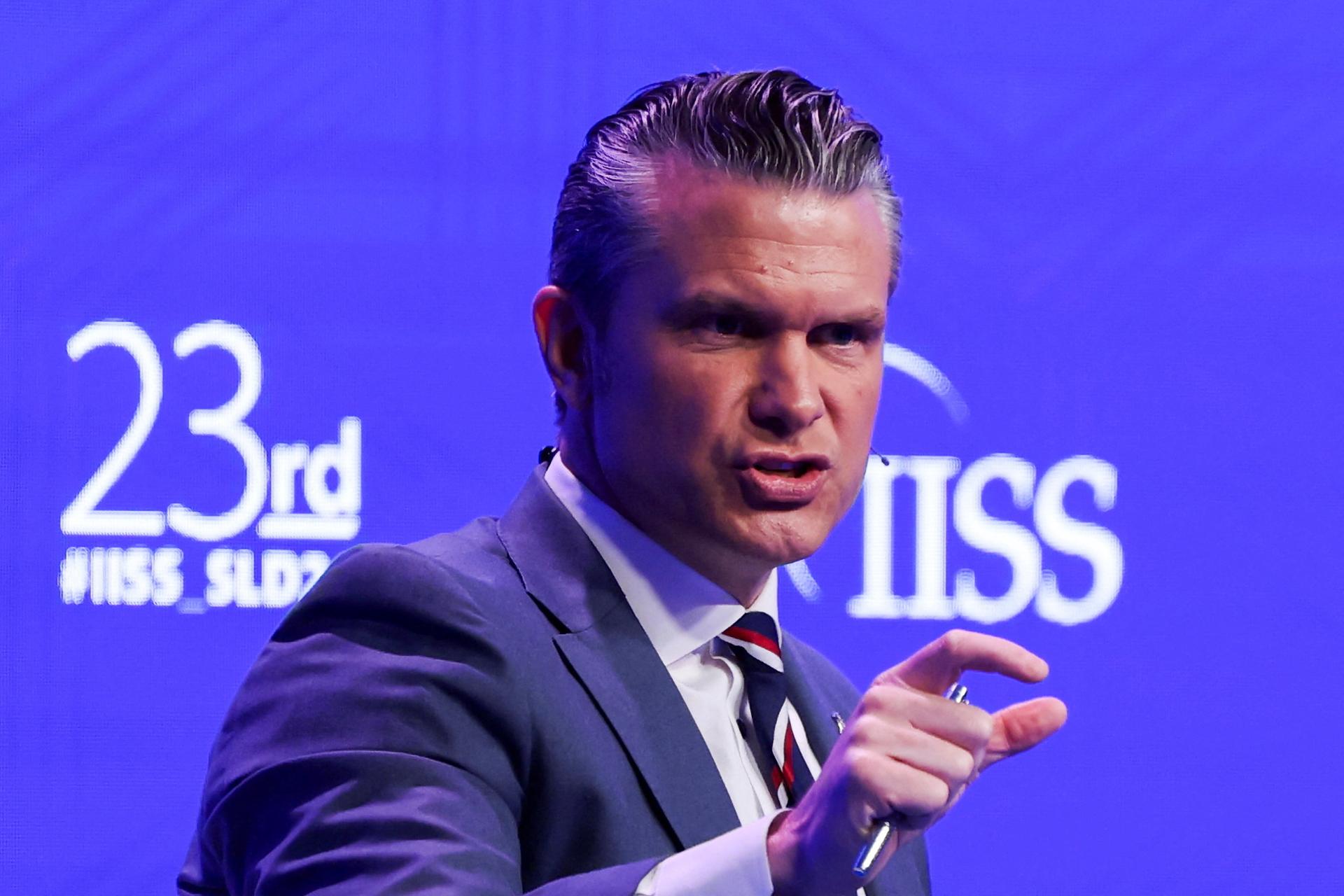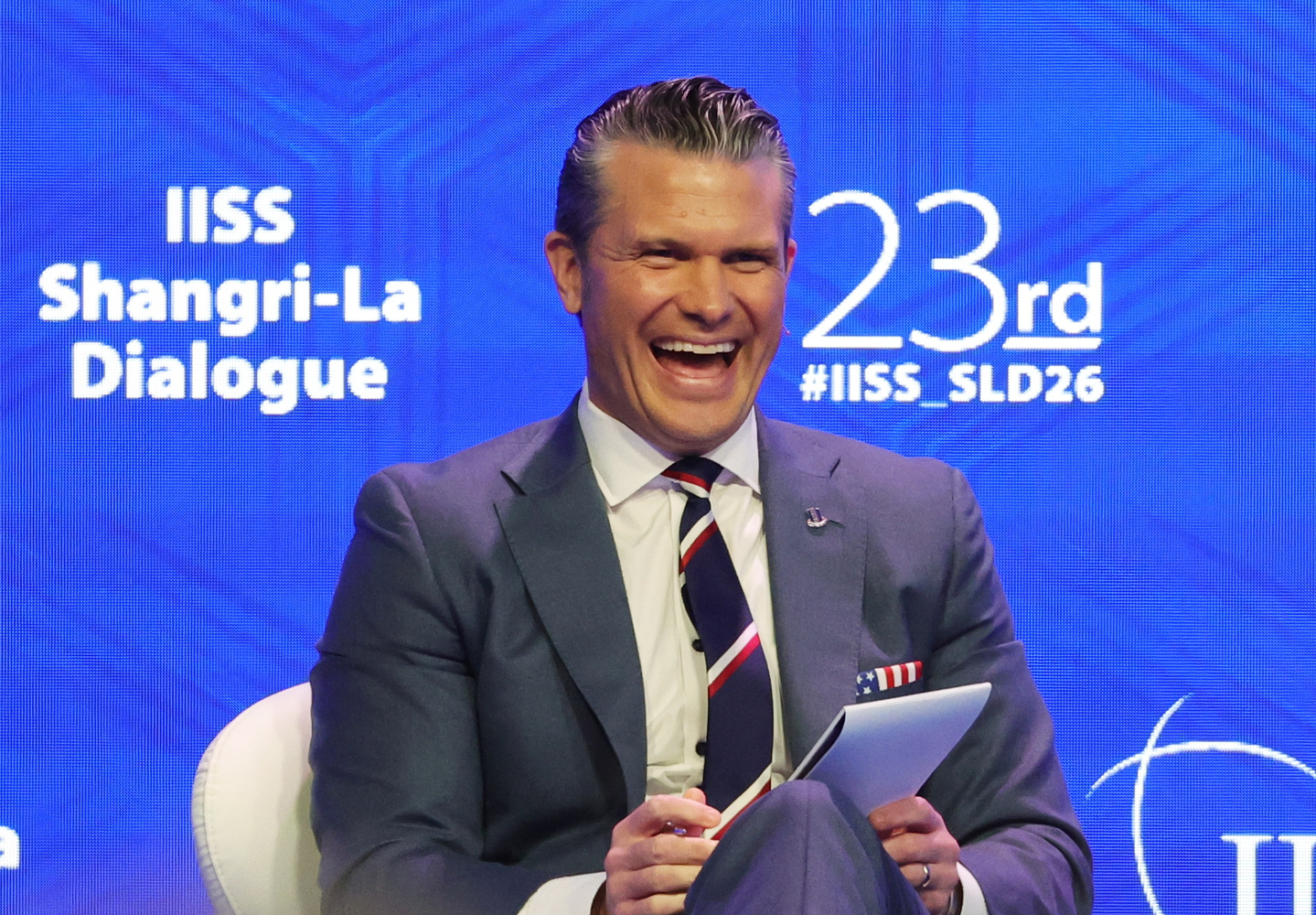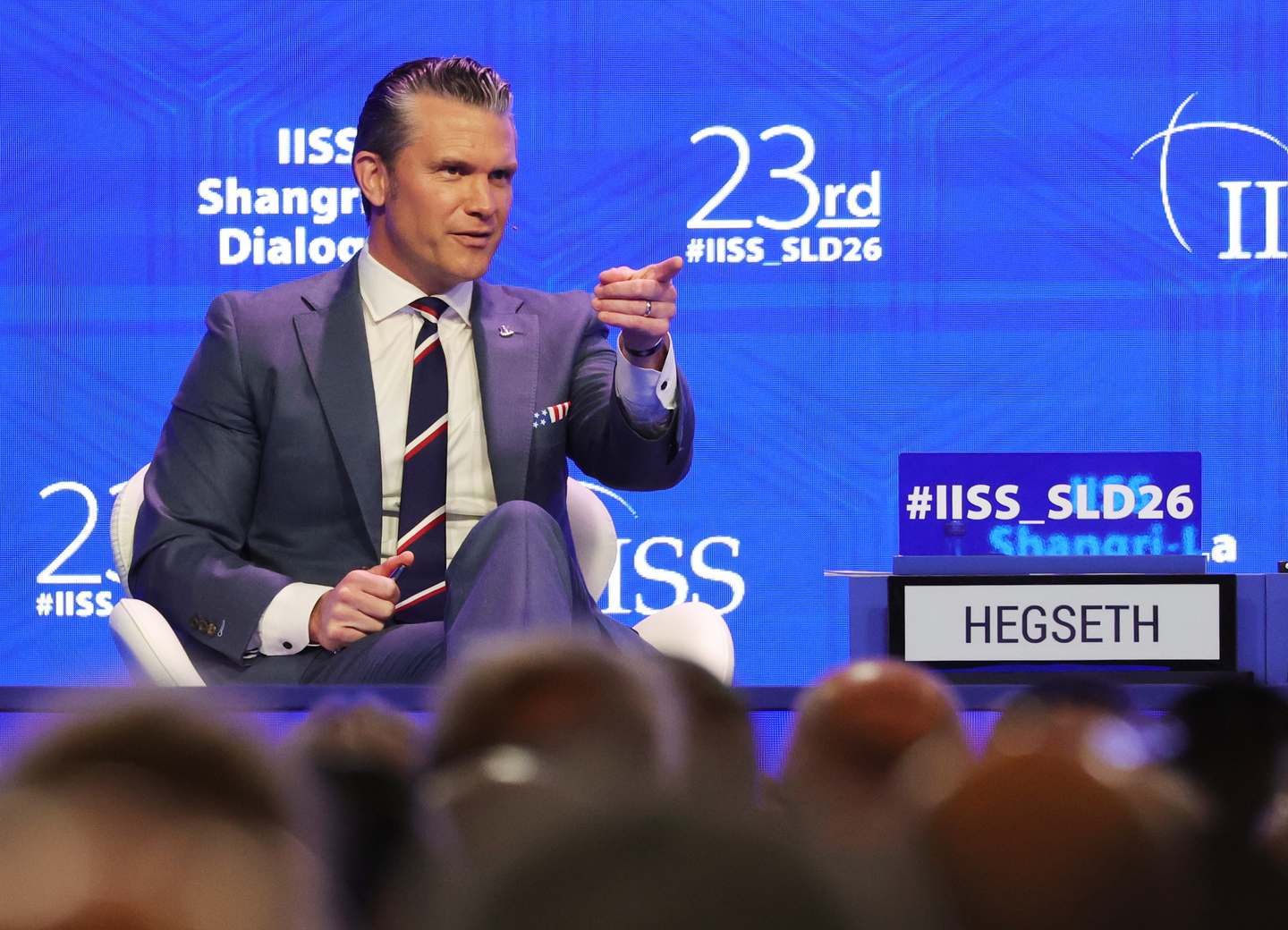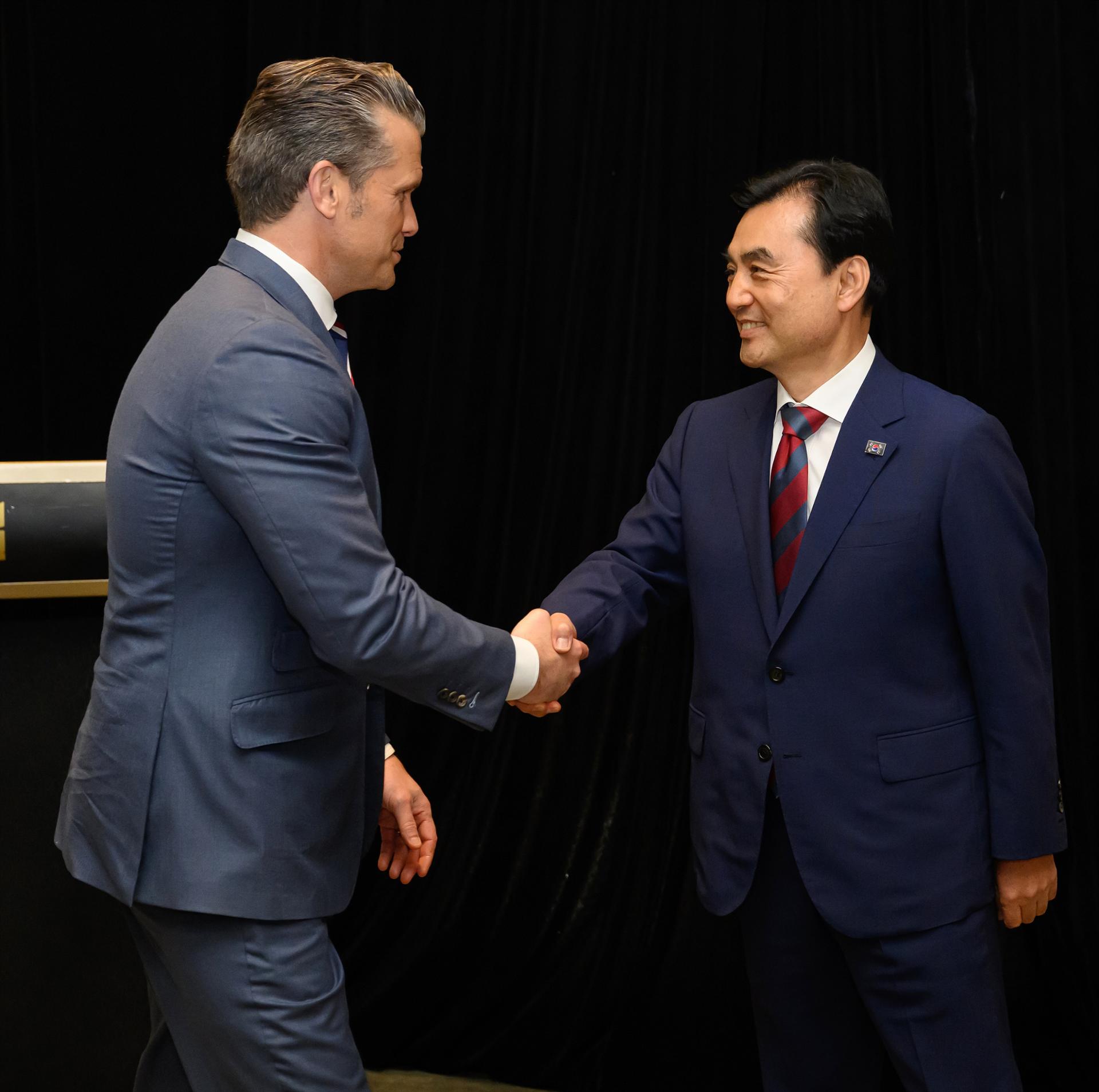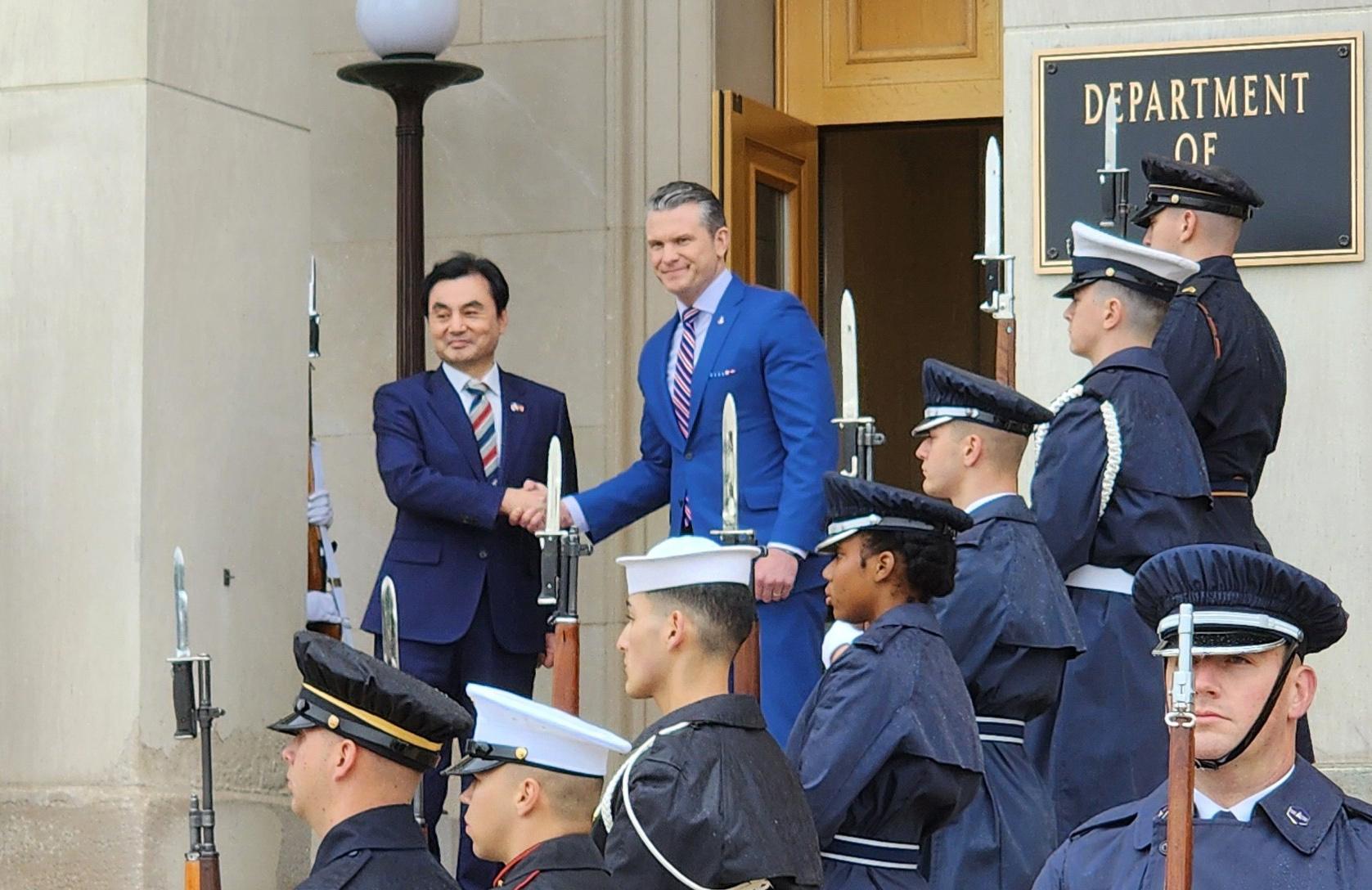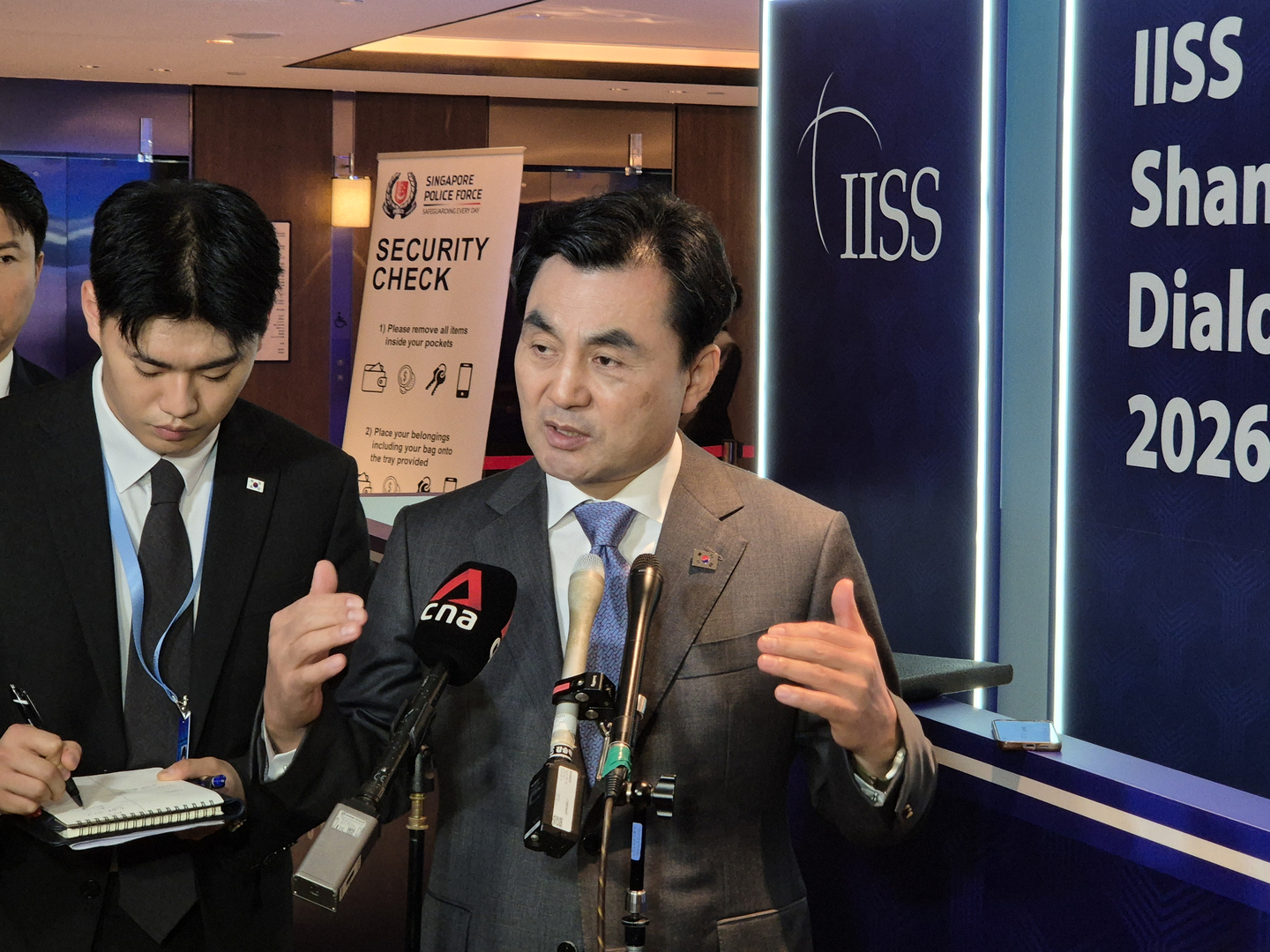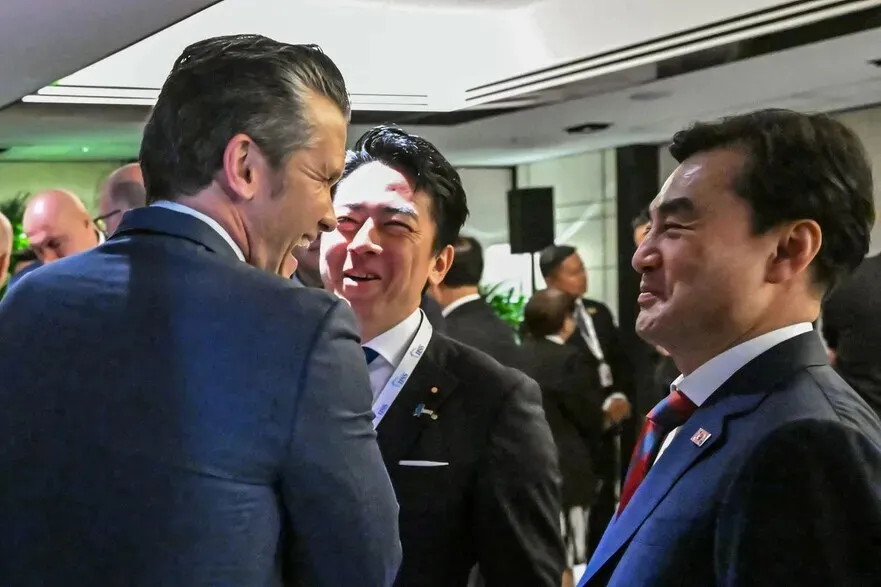
Defense Minister Ahn Gyu-back (right) shakes hands with US Defense Secretary Pete Hegseth during their meeting on the sidelines of the 23rd Shangri-La Dialogue in Singapore on Saturday. (Ministry of National Defense) Seoul and Washington appear to be moving with different priorities in their approach to the transfer of wartime operational control in South Korea. One side eyes speed while the other stresses balance and caution.During the Shangri-La Dialogue over the weekend, Defense Minister Ahn Gyu-back stressed Seoul's push for a South Korea-led defense posture, underscoring the Lee Jae Myung administration's drive to accelerate the transfer of wartime operational control from the United States.Speaking at a plenary session of the annual security forum, Ahn said South Korea would "actively pursue the strengthening of independent capabilities for a Republic of Korea-led defense of the Korean Peninsula," highlighting Seoul's broader effort to build a more self-reliant military. The Republic of Korea is South Korea's official name.The minister delivered a similar message during meetings with bipartisan delegations from the US Senate and House of Representatives on the sidelines of the forum.According to the Defense Ministry, Ahn stressed the importance of maintaining a robust combined defense posture amid growing regional security uncertainties while explaining Seoul's commitment to assuming a leading role in defending the Korean Peninsula.He also sought bipartisan congressional support for key alliance issues, including wartime OPCON transfer, nuclear-powered submarines, and cooperation in shipbuilding and maintenance, repair and overhaul.Ahn's remarks came as the Lee administration seeks to accelerate the conditions-based transfer of wartime OPCON from Washington, with some officials hoping the process can be completed before Lee's five-year term ends in 2030.US officials, however, have signaled a more cautious approach.Speaking at a separate Shangri-La Dialogue session, US Defense Secretary Pete Hegseth said the allies should "find the balance" between transferring wartime OPCON and honoring the operational plans and responsibilities that US forces have maintained for decades, Hegseth said.The Pentagon chief nevertheless described South Korea's desire to assume greater responsibility as a "breath of fresh air," saying Washington welcomes allies willing to take a larger role in their own defense.The differing emphasis suggests a gap in priorities rather than a disagreement over the ultimate objective.While Seoul has floated a timeline that could see the transfer completed before 2030, US military officials have continued to stress that all required conditions must first be met.Earlier at the forum, Gen. Xavier Brunson, who concurrently heads US Forces Korea and the South Korea-US Combined Forces Command, stressed that the allies must ensure they possess the necessary capabilities and readiness before completing the transition process. His comments pointed to a timeline extending to around 2029 before the final conditions for OPCON transfer could be fulfilled.Brunson expressed a similar view during a congressional hearing in April, when he referred to a roadmap extending to 2029 for fulfilling the conditions required for OPCON transfer.Seoul, however, has publicly rejected the notion of a fixed 2029 timeline. South Korean officials said the allies had not agreed on such a roadmap and stressed that the timing of the transfer remains a policy decision to be made by the two governments.
Seoul, Washington defense chiefs strike different notes on OPCON transfer at Shangri-La
Seoul and Washington appear to be moving with different priorities in their approach to the transfer of wartime operational control in South Korea. One side eye
517 words~2 min read