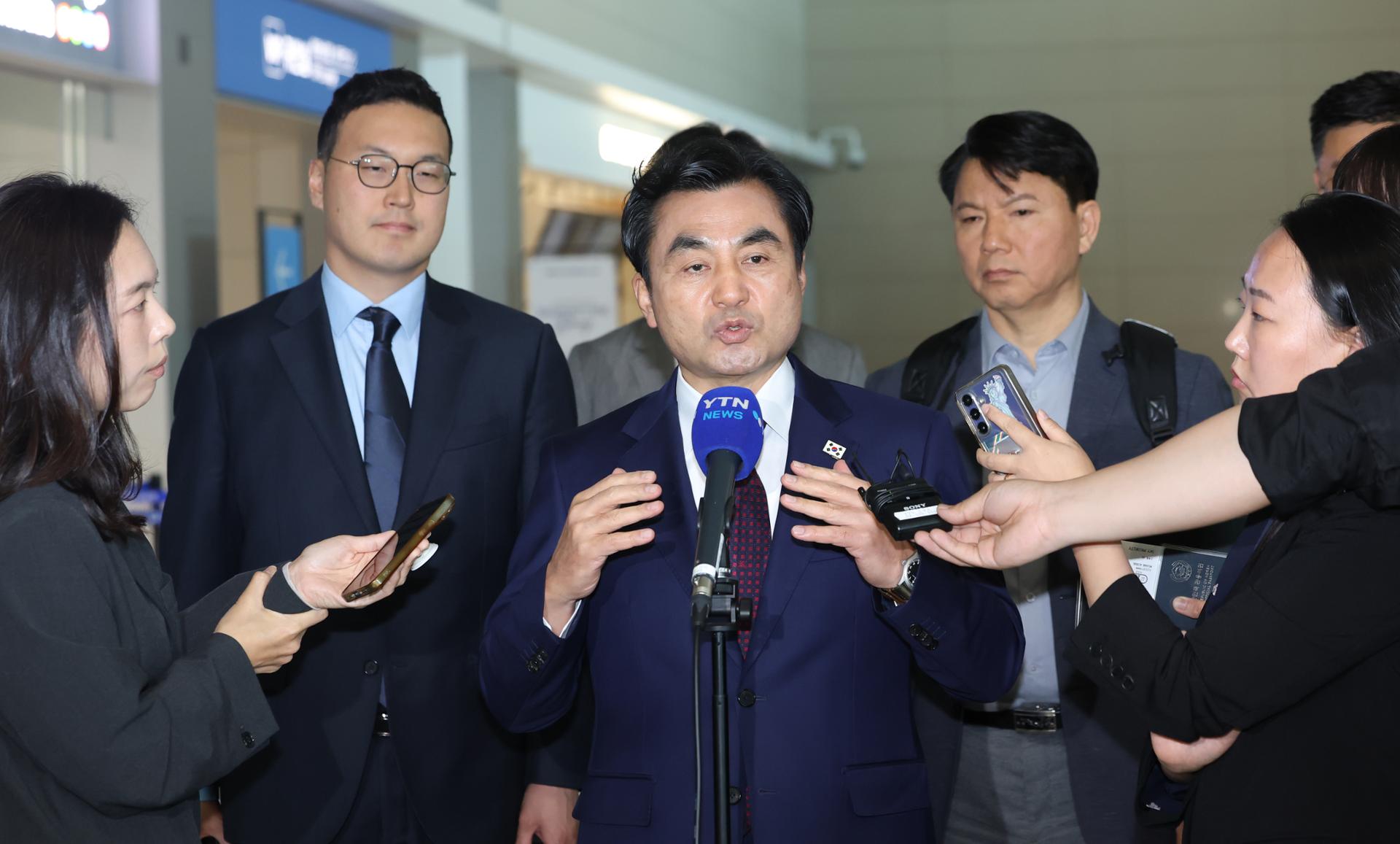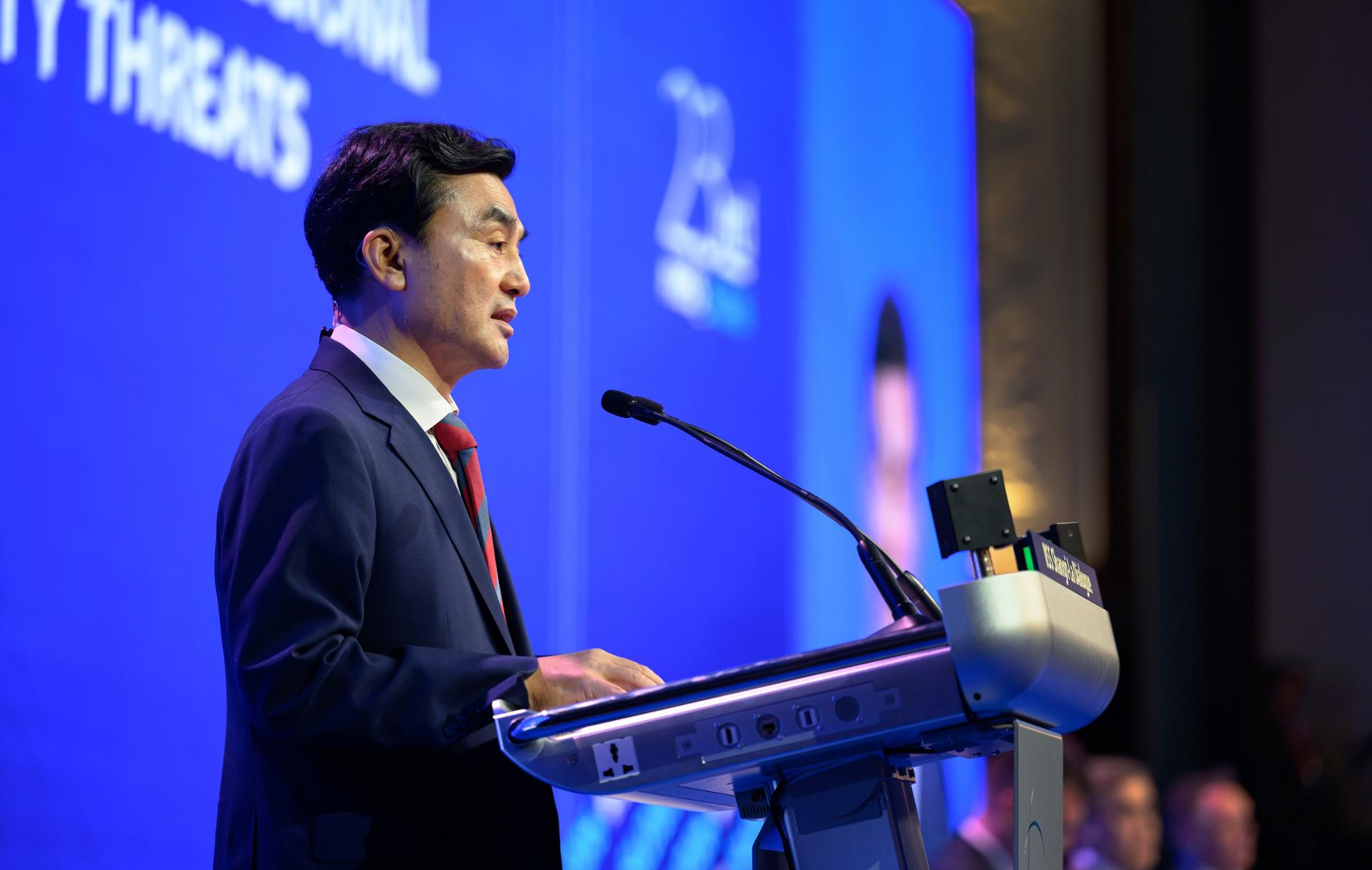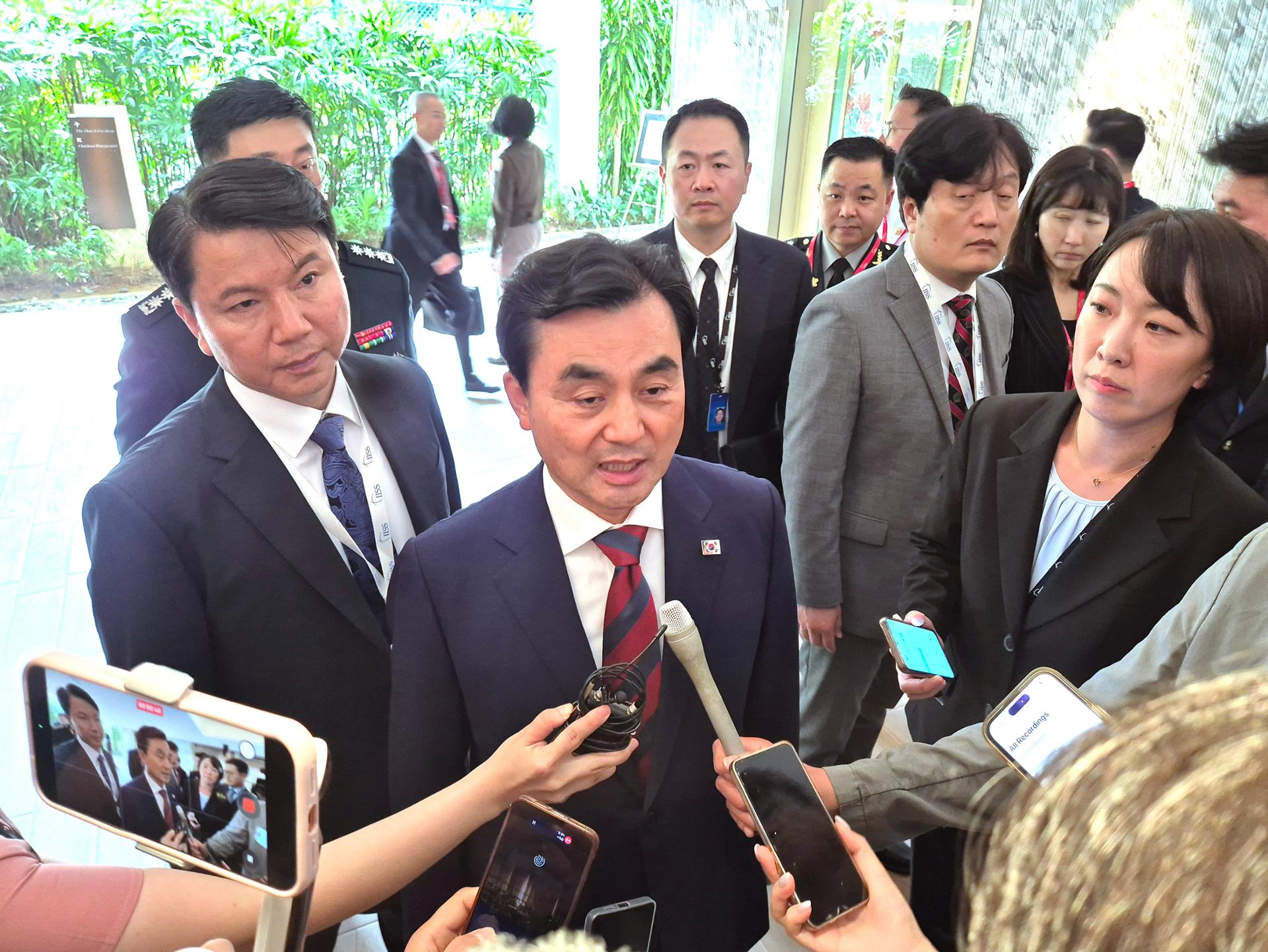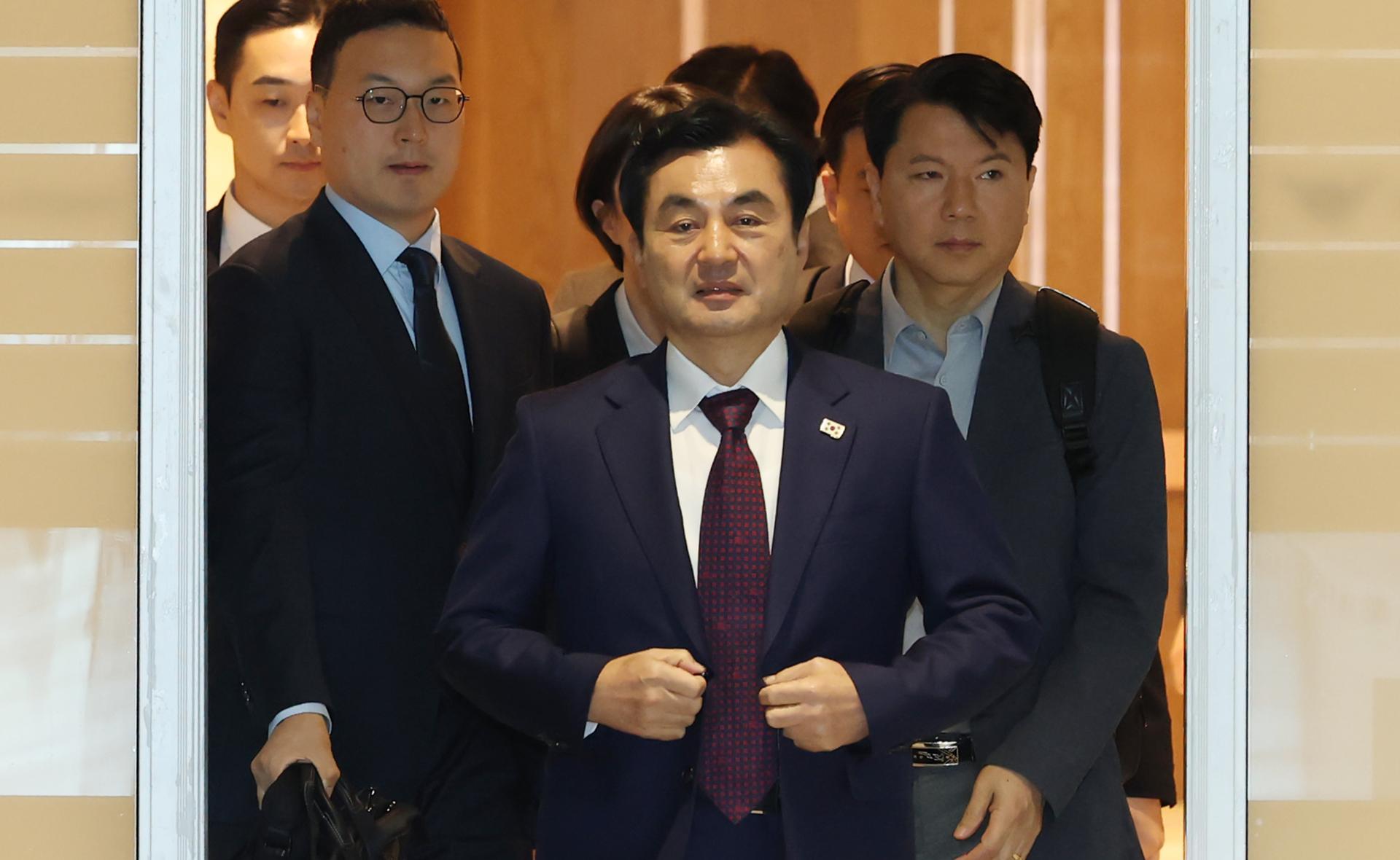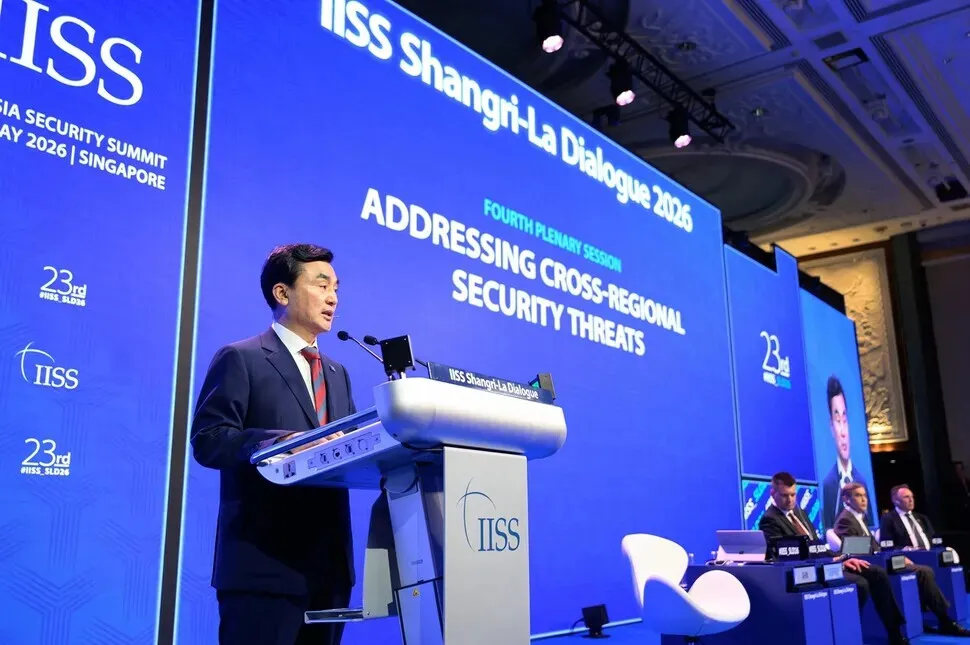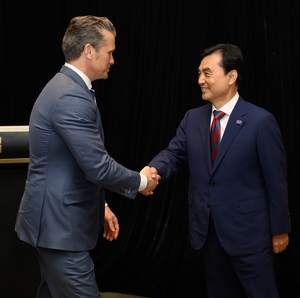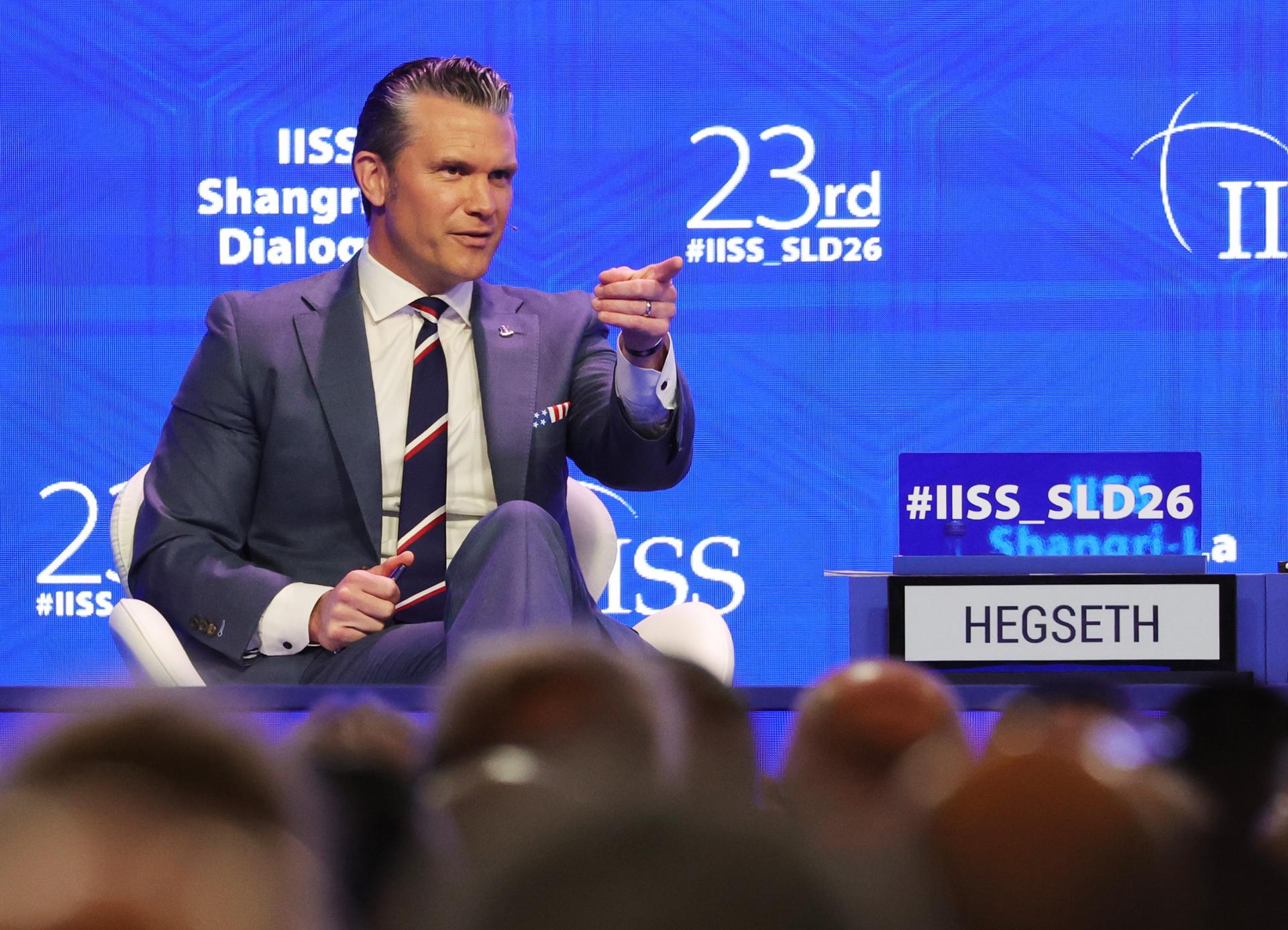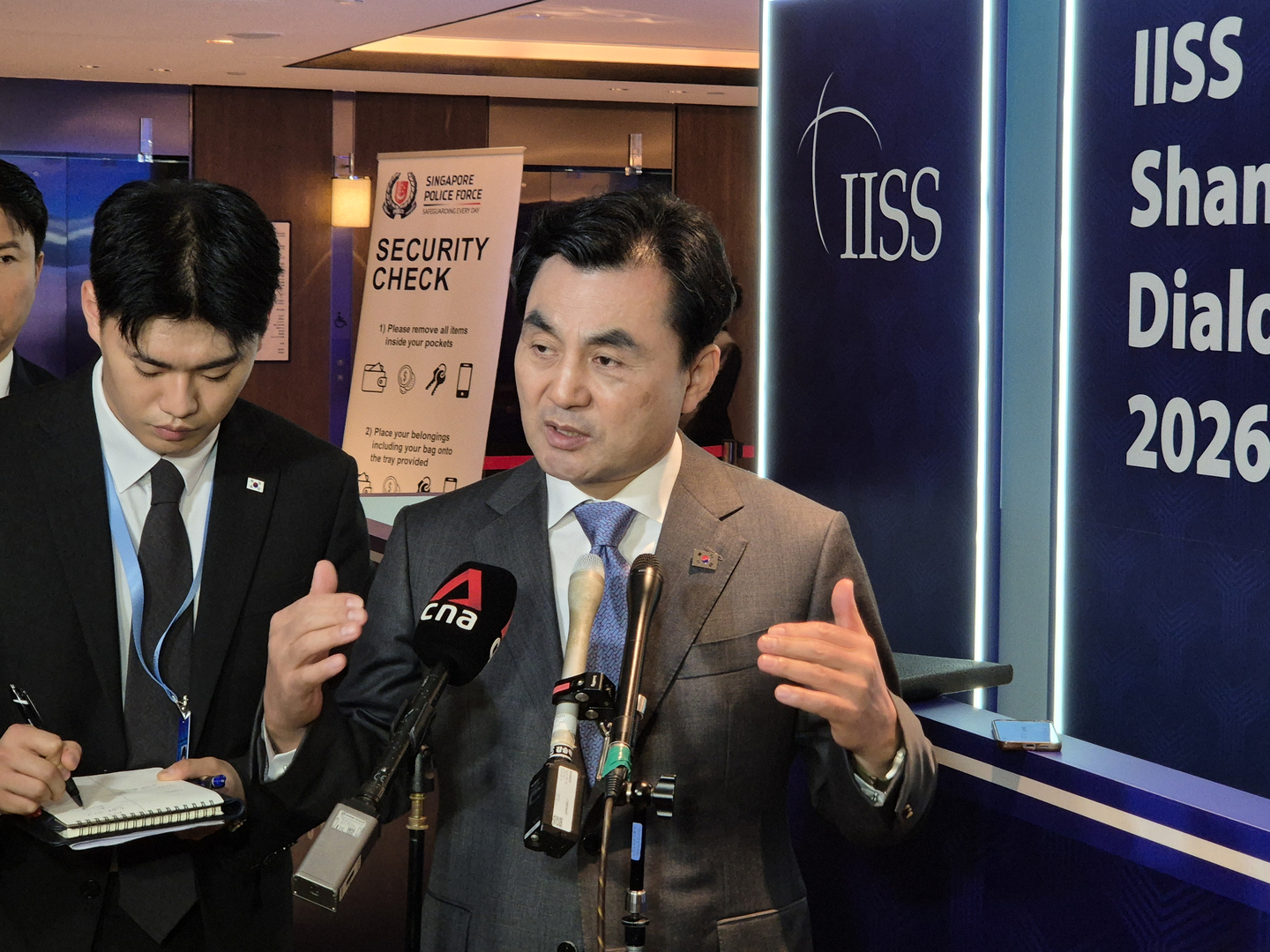
Defense Minister Ahn Gyu-back speaks with reporters at the Shangri-La Hotel in Singapore, where the 23rd Asian Security Summit, also known as the Shangri-La Dialogue, was held on May 31. [YONHAP]
Defense Minister Ahn Gyu-back has become embroiled in controversy after disclosing the level of progress in joint South Korea-U.S. evaluations related to the transfer of wartime operational control (Opcon). Critics argue that his remarks raised concerns about the handling of information long treated as sensitive by both militaries.
During a visit to Singapore on Sunday, Ahn said South Korea and the United States had agreed as early as 2020 that 94 percent of the conditions required for Opcon transfer had been met. He added that he had explained the South Korean military’s capabilities to U.S. lawmakers attending the Shangri-La Dialogue and sought their cooperation.
South Korea and the United States have agreed that wartime operational control will be transferred to the South Korean military once specified conditions are satisfied. To that end, the allies have established detailed procedures and have been conducting evaluations of military readiness and capabilities.
The specific criteria and assessment results, however, have generally been regarded as classified alliance information. The rationale is straightforward: disclosure could reveal details about the allies’ military capabilities and defense posture to adversaries such as North Korea.