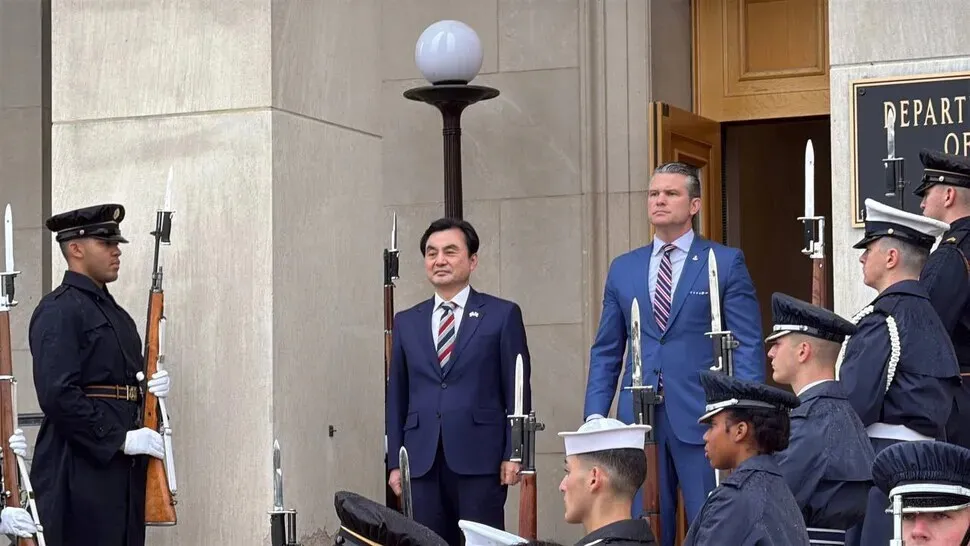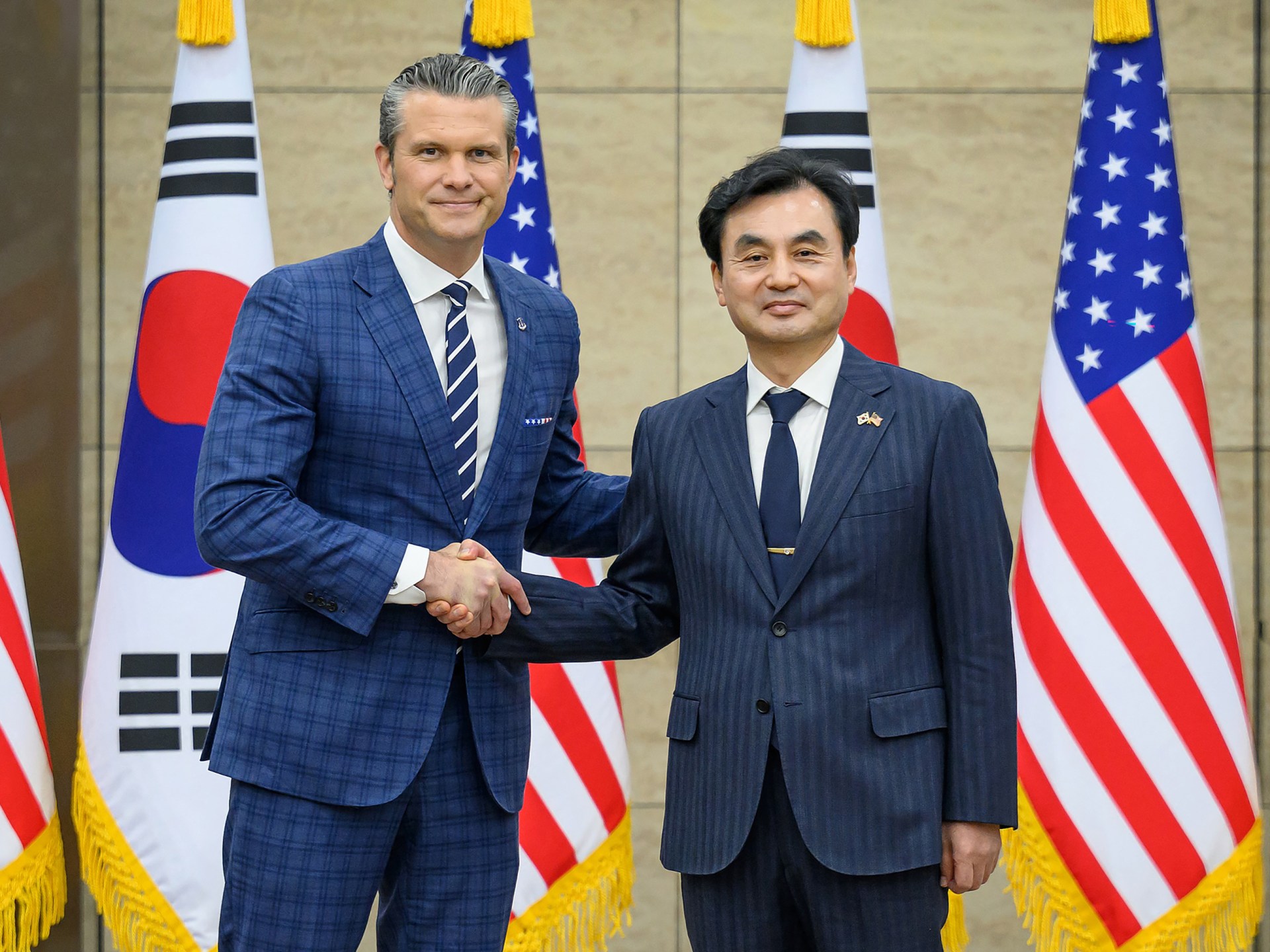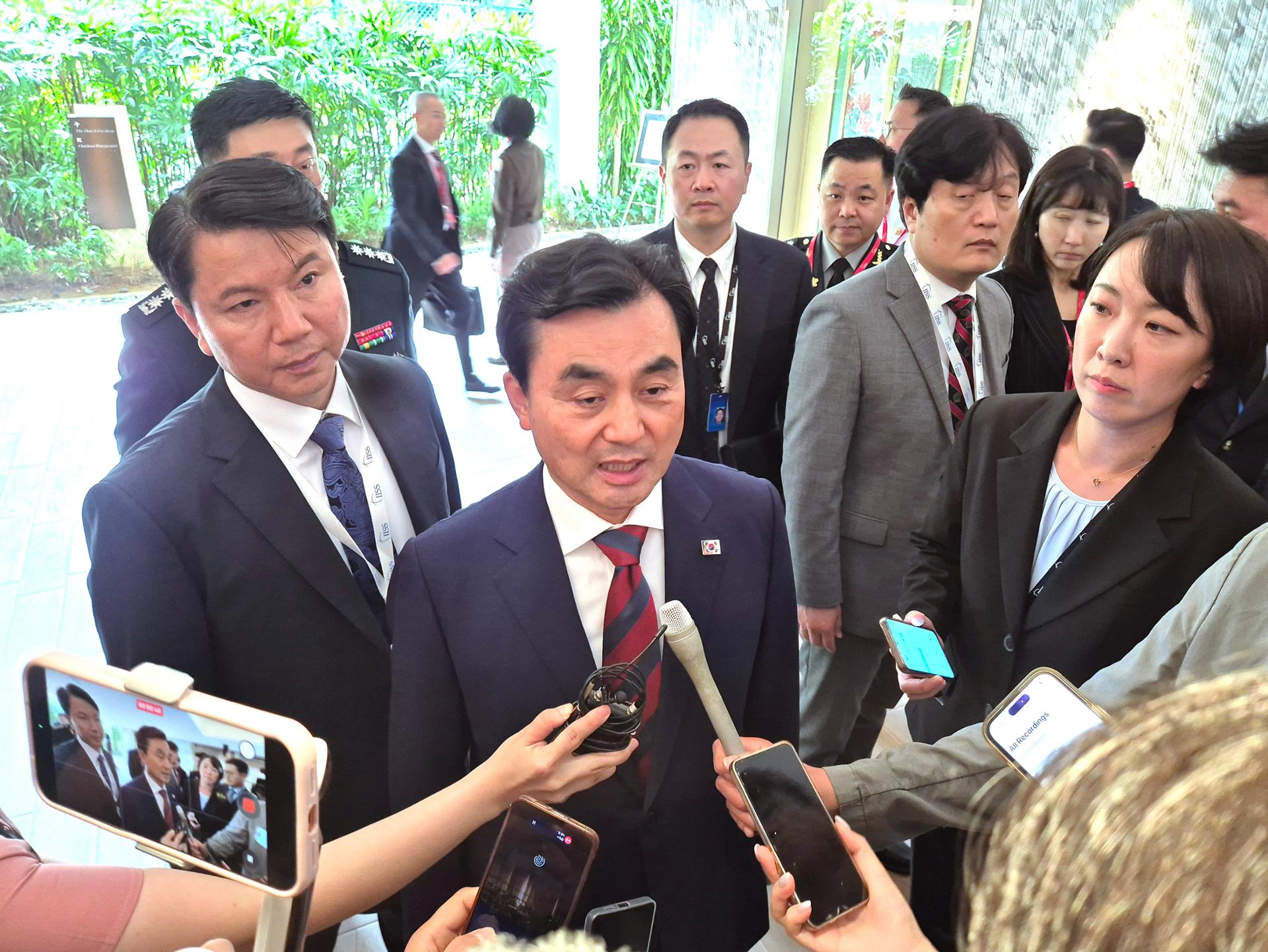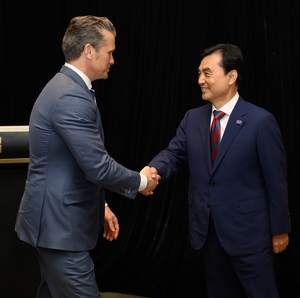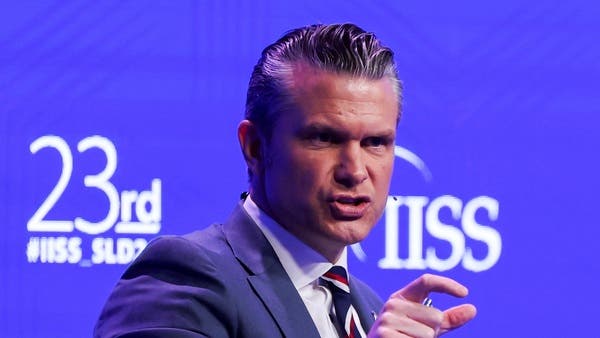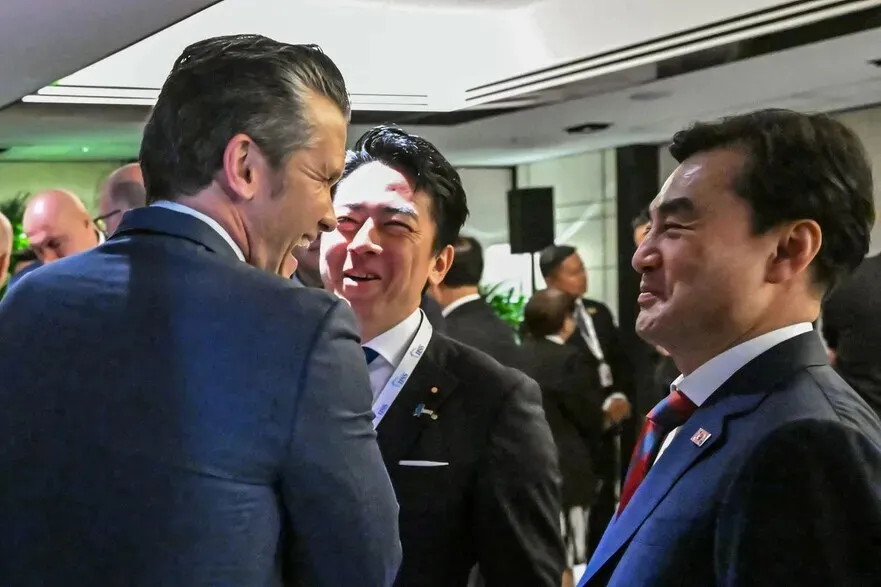
US Defense Secretary Pete Hegseth speaks with Japanese Defense Minister Shinjiro Koizumi and South Korean Defense Minister Ahn Gyu-back on the sidelines of the Shangri-La Dialogue in Singapore on May 30, 2026. (AFP/Yonhap)
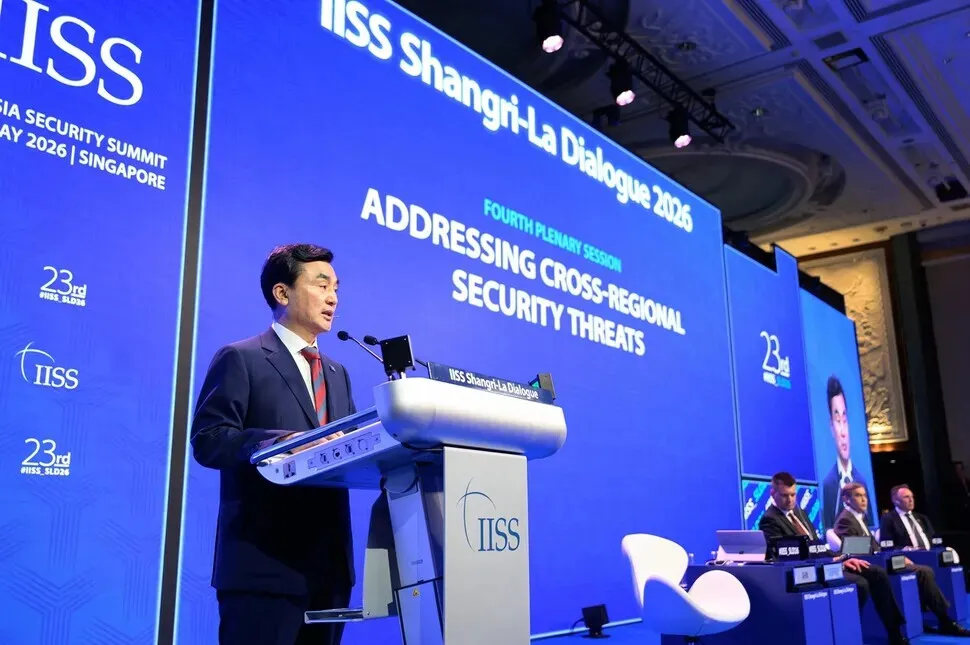
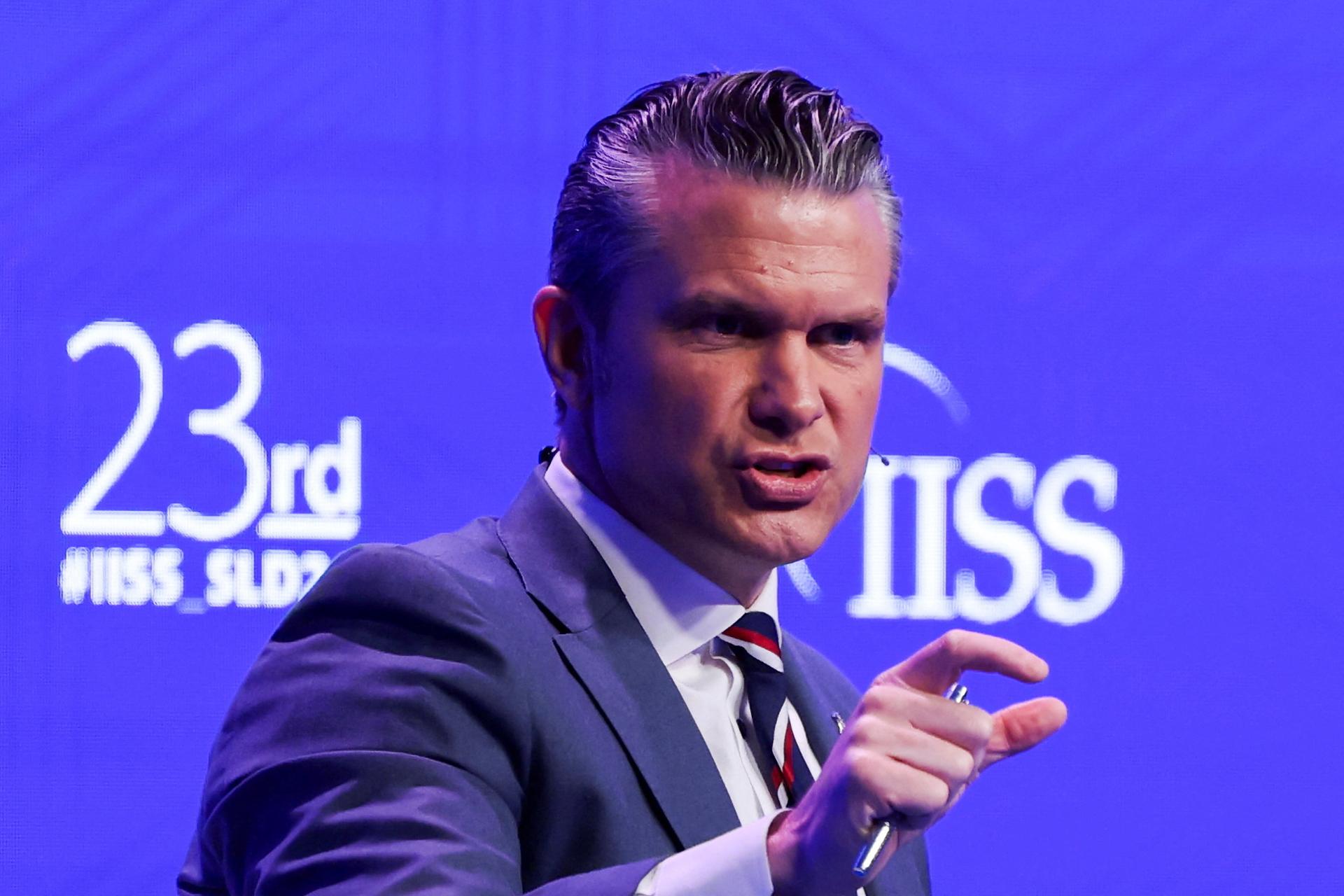
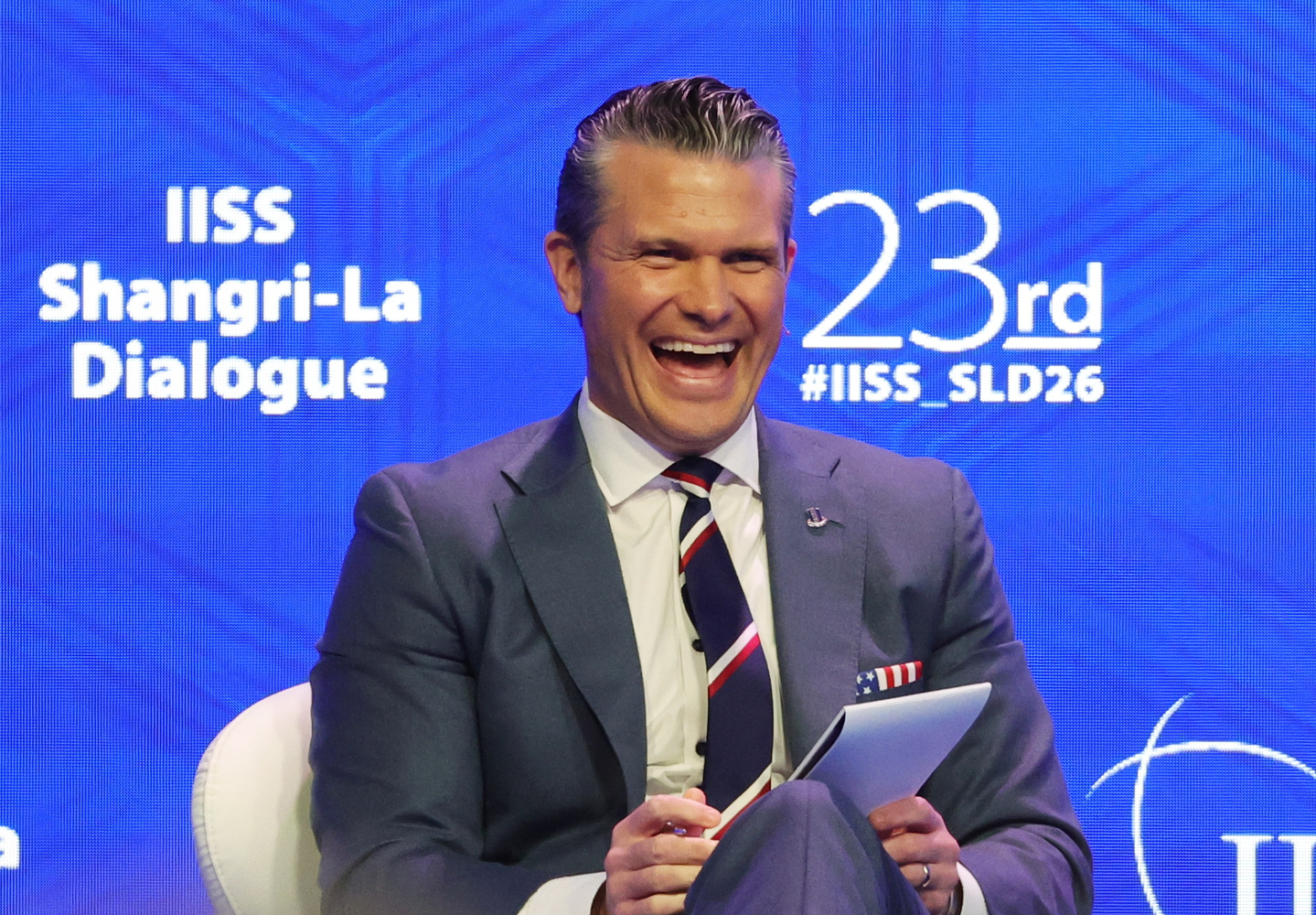
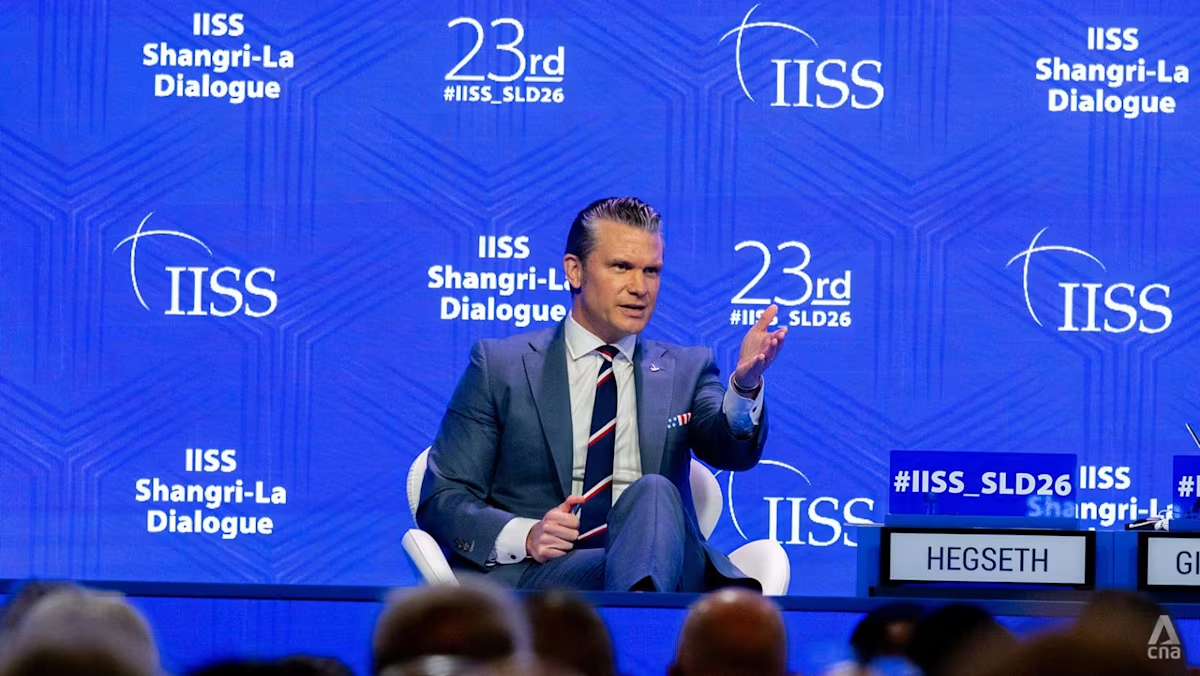
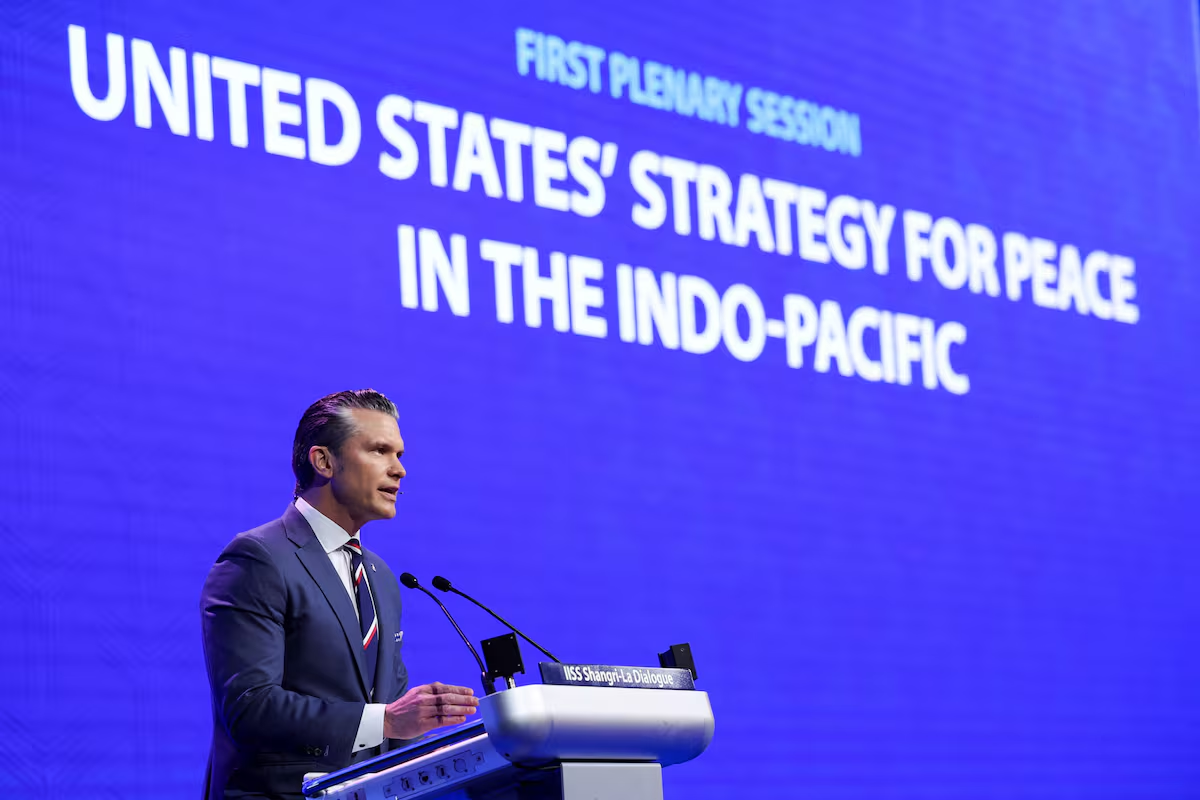
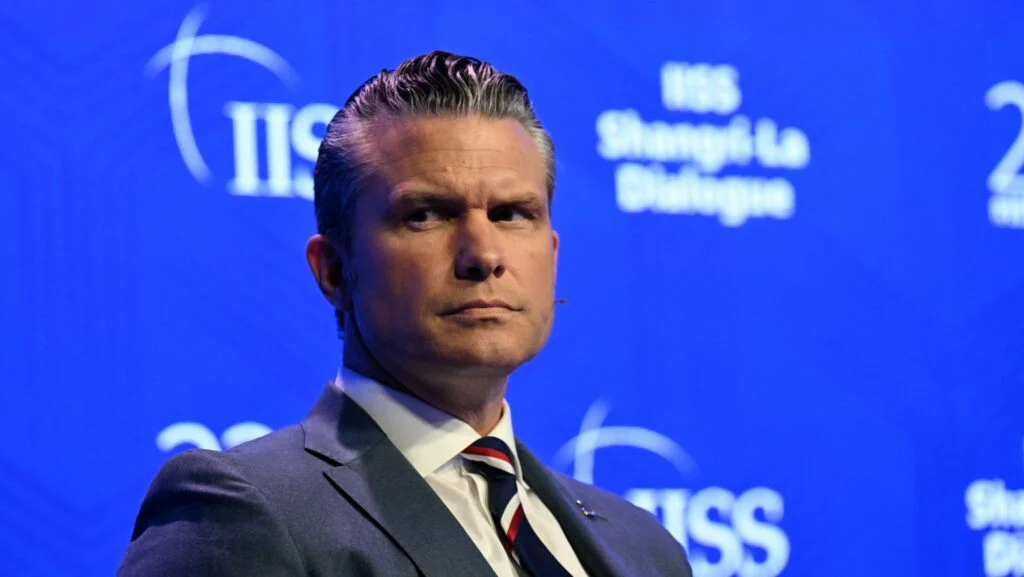
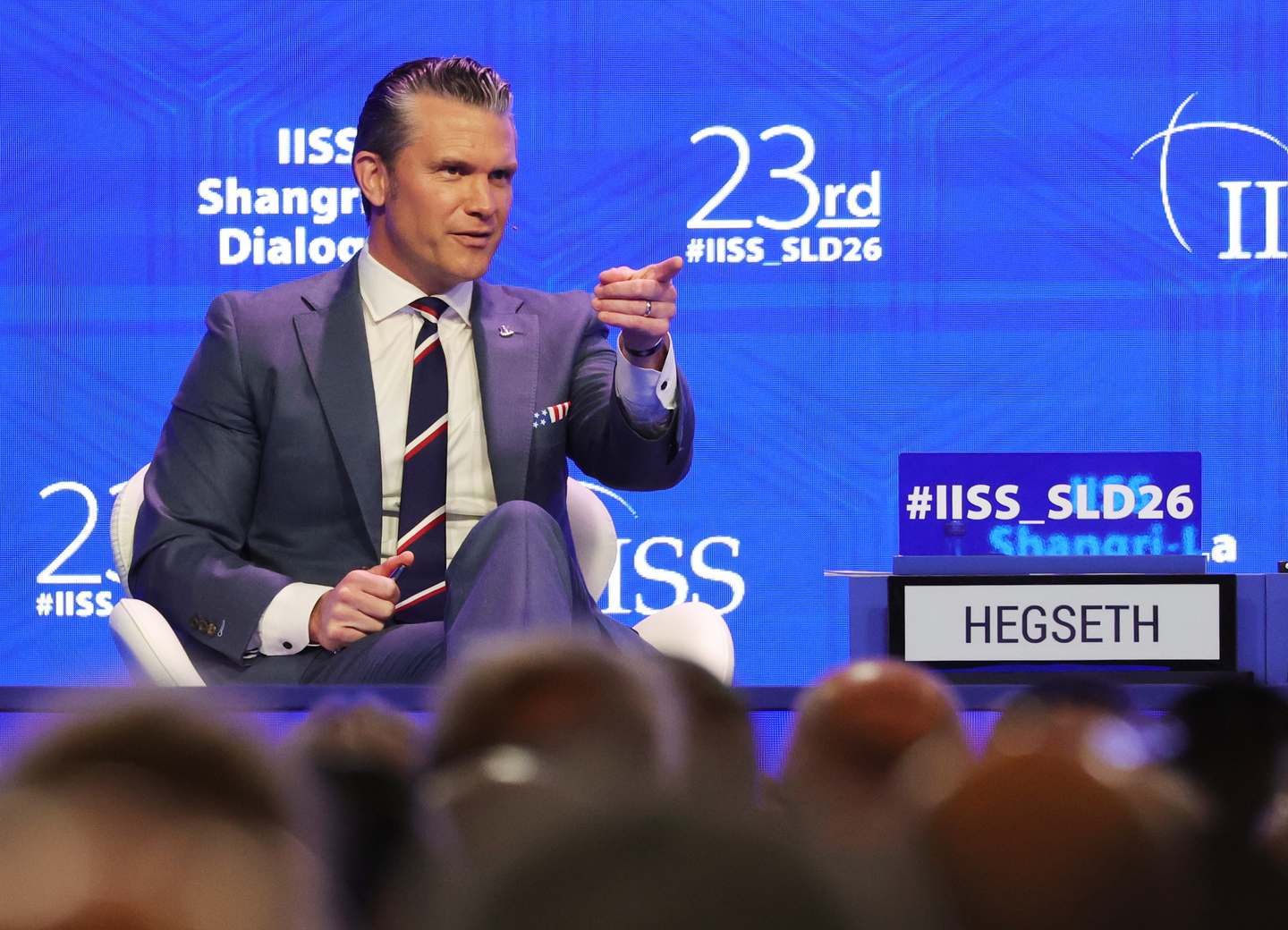
US Secretary of Defense Pete Hegseth praised Korea for pledging to raise its defense spending to 3.5% of gross domestic product during his speech at the Shangri-La defense conference in Singapore on Saturday. “It’s a breath of fresh air for an ally to want to take more control more quickly,” he said, reconfirming that the two countries remain broadly aligned on the transfer of wartime operational control (OPCON), the most pressing issue in the bilateral alliance. Seoul must make every effort during follow-up talks to ensure that remaining differences of opinion, such as the specific timing of the OPCON transfer, are fully resolved by the time of the bilateral Security Consultative Meeting later this year.In a speech at the security conference, Hegseth said that to safeguard peace and prosperity in the Indo-Pacific region, US allies must resist the temptation to take advantage of the “free ride on the generosity of the American taxpayer” and share the security costs that each country must bear. He hailed Korea as a model for pledging to greatly boost its military spending, saying, “If you want to see what burden sharing looks like, consider the Republic of Korea.” Hegseth also stressed that America remains fully committed to engagement in the Indo-Pacific region, even after the leaders of the US and China agreed during a summit in May to build a “constructive relationship of strategic stability.”The secretary showered the Lee administration with unusual praise for its “pragmatism and leadership,” but a closer look shows that major differences of opinion remain on specific bilateral issues. Washington has proposed the first quarter of 2029 — after the Trump administration’s term ends — as the target date for the transfer of OPCON, but Seoul wants to conclude the matter as soon as possible.Even President Lee Jae Myung personally expressed strong support for an early transfer on May 26, saying there would be “no problems” even if wartime OPCON were restored as soon as tomorrow.Minister of National Defense Ahn Gyu-back said that he had “fully conveyed” to US lawmakers in a detailed and substantive manner that there would be difficulties whatsoever “even if wartime OPCON were to be transferred tomorrow.”Seoul’s drive to regain OPCON as soon as possible stems from Washington’s intent to shift the primary role of US troops stationed in Korea from defending Korea to containing China, as indicated by recent comments likening Korea to a “dagger in the heart of Asia” by the commander of US Forces Korea. If this happens, American military bases in Korea will end up serving as launchpads for strikes against China.So long as Korea maintains its alliance with the US, Seoul incurs the risk of being drawn into a conflict between the US and China. But if an American commander keeps exercising OPCON over the Korean military as he does now, this raises the threat of Korea being dragged into an unwanted war.For that reason, it is crucial that Korea set up a system in which it makes its own decisions and takes full responsibility for them as soon as possible.Please direct questions or comments to [english@hani.co.kr]