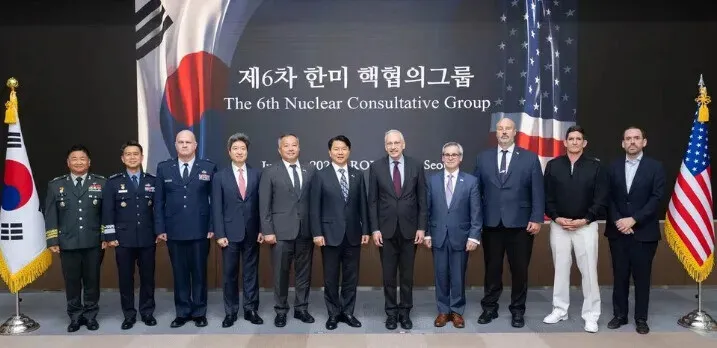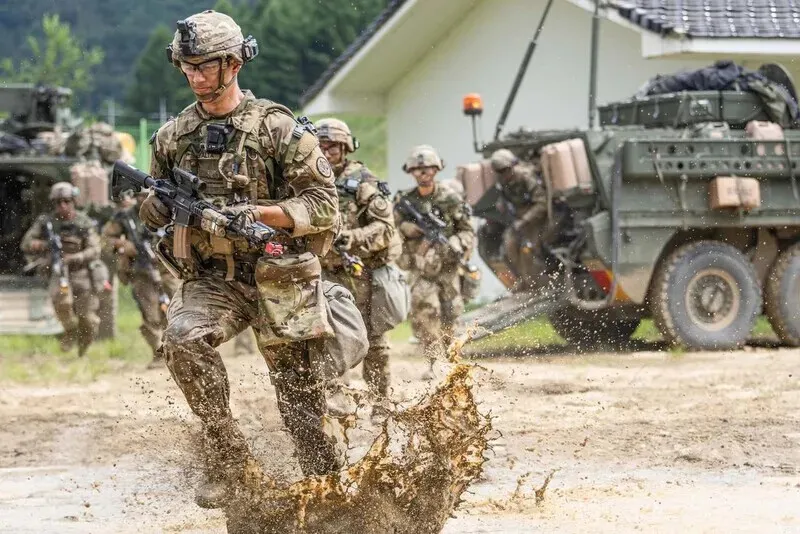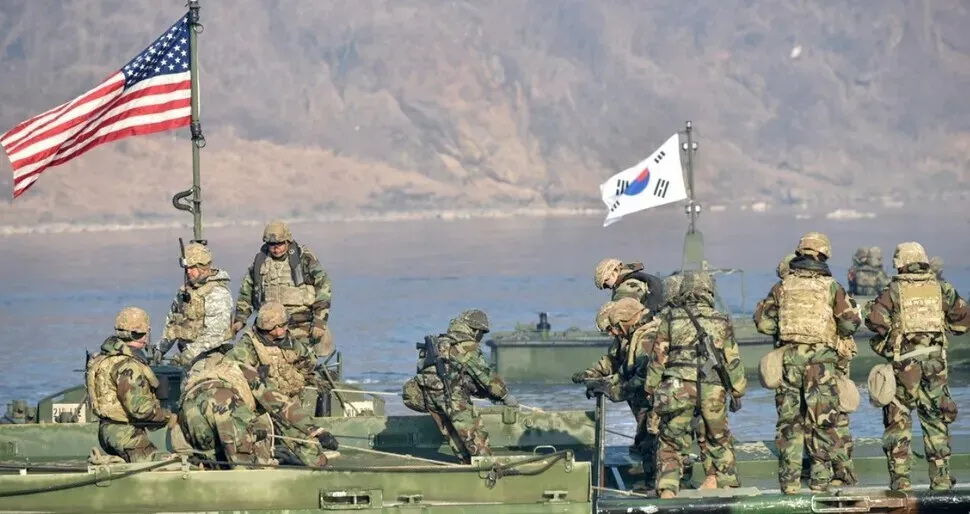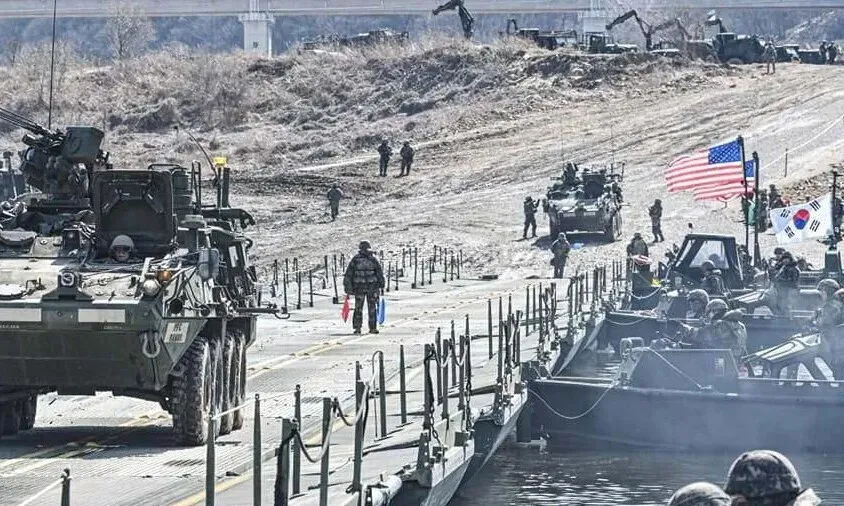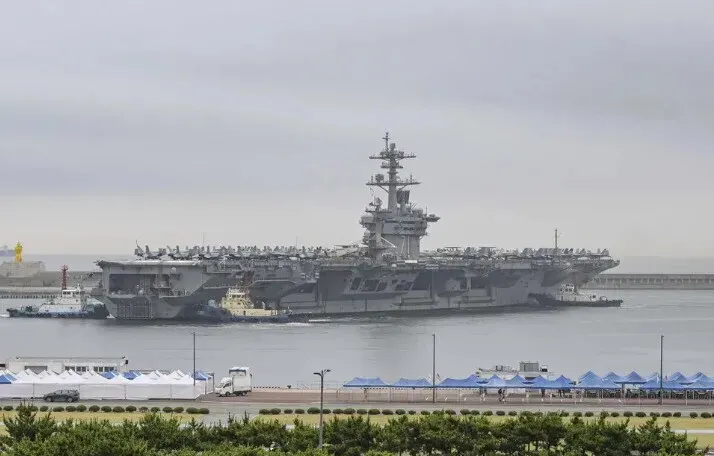
Opponents of South Korea’s push to regain wartime operational control (OPCON) of its military argue that recovering command authority would undermine US commitment, claiming American forces would no longer come to South Korea’s aid if war were to break out. These concerns are being raised as many still recall how, during the Korean War, South Korea narrowly avoided being wiped off the map thanks to the intervention of the US military and others.In the event of a contingency on the Korean Peninsula, the ROK/US Combined Forces Command has a strategy to conduct missions after grouping the Korean military’s fighting units, the US Forces Korea (USFK), and additional troops from the US into one body. Opponents of Korea regaining OPCON heavily rely on the argument that once the current ROK/US Combined Forces Command disbands after South Korea regains OPCON, this military strategy will vanish, thus leaving South Korea all on its own with no hope of any wartime reinforcements. Wartime reinforcements refer to all troops and weapons systems that, in the event of war, would be deployed to the Korean Peninsula on top of the 28,000 USFK troops already stationed here. Some maintain that, according to the Time-Phased Force Deployment Data, the scale of wartime reinforcements provided by the US military is limited to 690,000 troops (Army, Navy, Air Force, and Marines), 160 vessels, including five carrier strike groups and naval vessels, and 1,600 aircraft, including fighter jets. However, even military authorities do not know for certain how much US military support Korea would receive in the event of a conflict. “The US does not reveal the specifics of wartime reinforcements to us,” one well-versed authority in military affairs told the Hankyoreh. At a time when the US has about 1.3 million active-duty service members, it is unrealistic to expect that more than half of them could be allocated as wartime reinforcements. Five carrier strike groups are close to half of the total 11 groups that the US possesses. Korean military insiders have long called the “690,000 troops” number and the idea of massive US wartime reinforcements unrealistic. The US’ strategy is also different from that of the past. The 690,000 troop reinforcement number was based on a win-win strategy that aims to contain and repel North Korea before it achieves its war objectives in the event of simultaneous conflicts in the Middle East and on the Korean Peninsula. This strategy was formulated by the US administration in the early 1990s and scrapped in 2012. Currently, the US is emphasizing its strategic flexibility, saying that, if need be, the US troops stationed in South Korea could be deployed to areas outside of the Korean Peninsula. US President Donald Trump and his administration have made it clear their stance that South Korea has primary responsibility for deterring North Korea, stating that US support will be “critical but more limited.” The defense posture on the Korean Peninsula is being restructured toward a South Korea-led framework supported by the United States, meaning that, even aside from the issue of OPCON transfer, large-scale US wartime reinforcements are not assured.
OPCON alarmism ignores how uncertain US wartime support for Korea already is
Debunking OPCON doubts | Those fearing the US will abandon Korea if Seoul regains OPCON forget that even today, it’s unclear how many wartime reinforcements the US would send
514 words~2 min read