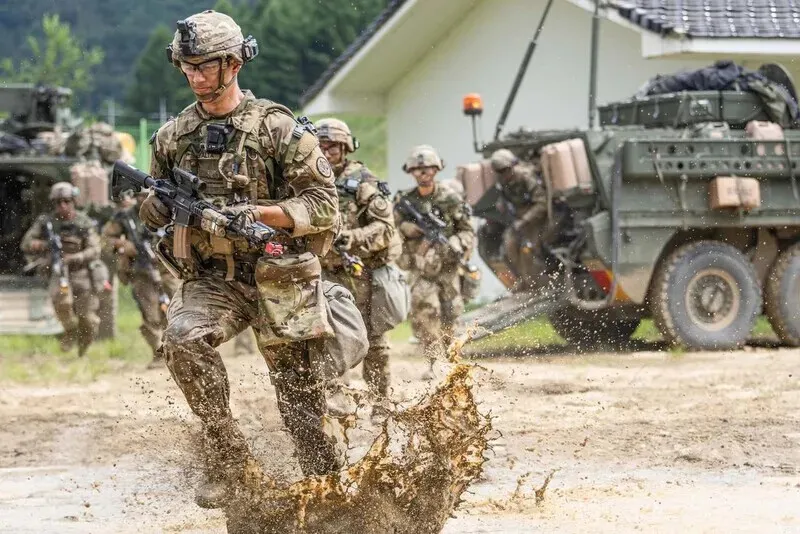
Soldiers in the 3rd Cavalry Regiment conduct operations at the Korea Combat Training Center in July 2024. (via ROK Ministry of Defense on Facebook)
Last month, Jang Dong-hyuk, the leader of Korea’s top opposition People Power Party, was invited to speak at the Seoul Foreign Correspondents Club. “President Lee Jae Myung refers to the US Forces Korea as a foreign military and is hastily pushing for the transfer of wartime operational control (OPCON). Many Koreans are concerned that he may be considering the withdrawal of the USFK,” Jang told the correspondents. But Jang’s argument is neither logically sound nor very convincing, for a number of reasons. Regaining OPCON and troop drawdowns are separate issues Military and strategic reasoning does not suggest that the transfer of OPCON and the reduction or withdrawal of USFK are inherently linked. Even if Korea regains OPCON, it remains highly unlikely in practical terms that USFK would withdraw from the Korean Peninsula. The transfer of OPCON from the US to Korea constitutes a change in the command structure of the ROK-US Combined Forces, not the dissolution of the alliance. The legal basis for the US military presence in South Korea stems from the mutual defense treaty between the US and Korea, signed in October 1953, and the agreed minutes between the US and Korea, signed in November 1954. The transfer of OPCON signifies a shift in command leadership, whereby following the return of such operational control, a South Korean Army general will serve as commander of the reconfigured joint command that will replace the current ROK-US Combined Forces Command, and a US Army general will serve as deputy commander. This does not imply a change in the status of USFK or the termination of the two countries’ mutual defense treaty.