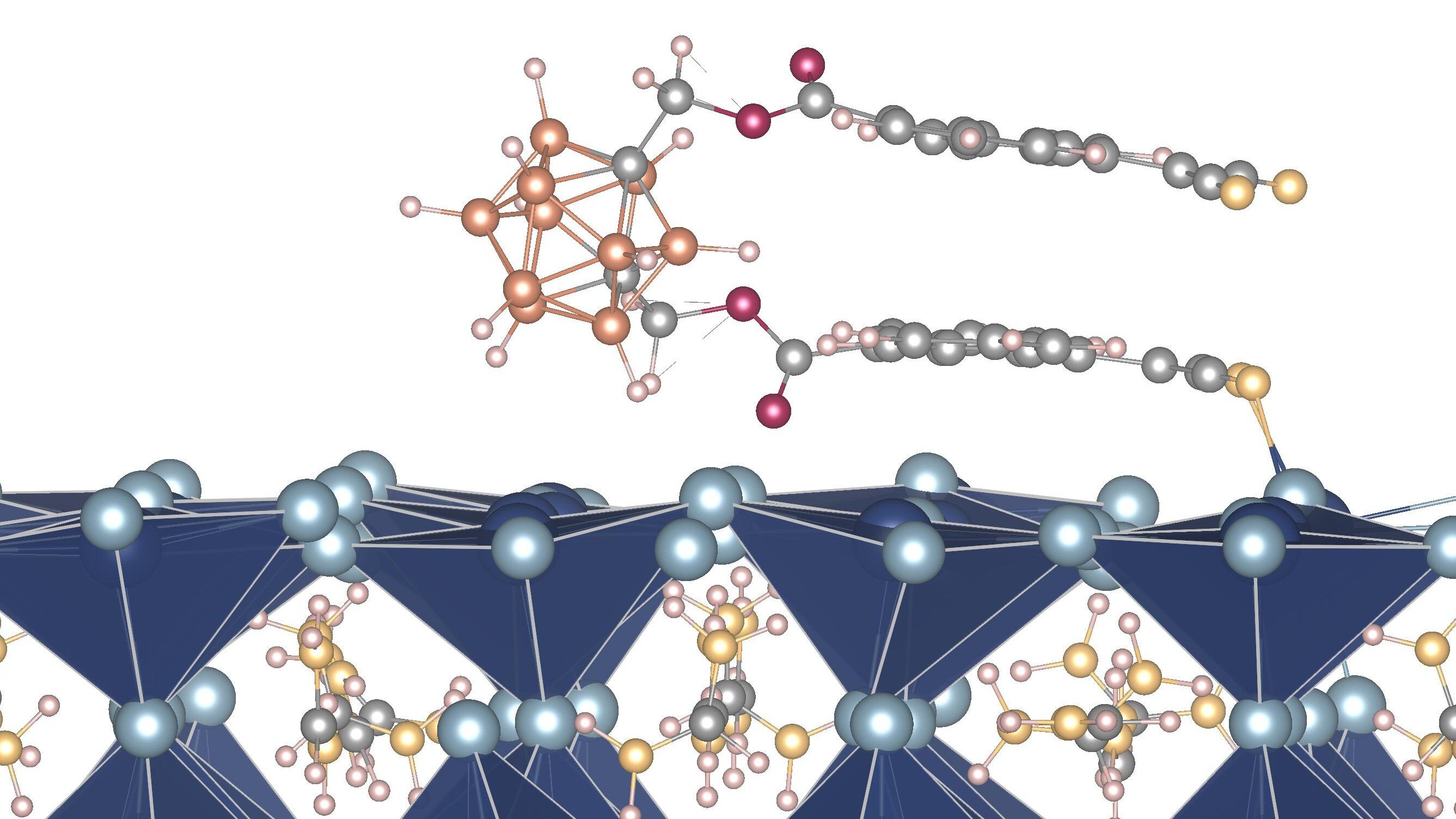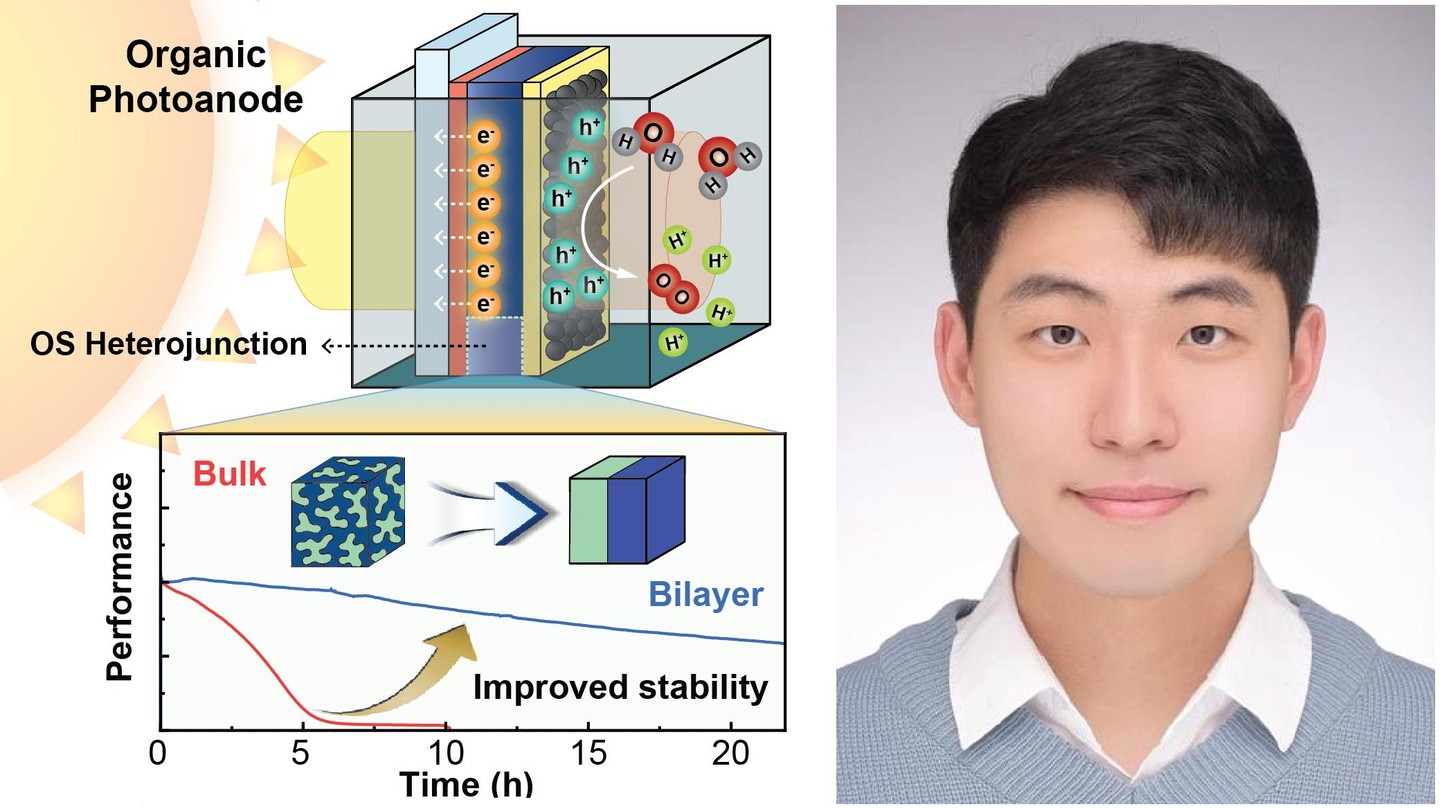
The LIMNO lab has developed a new bilayer organic semiconductor architecture that dramatically improves the stability of photoanodes for solar-driven water splitting. The work, led by Dr. Jin Su Park, brings durable organic photoelectrochemical devices a significant step closer to practical solar hydrogen production.Organic semiconductors are attractive materials for solar fuel technologies because they are lightweight, solution-processable, and can be manufactured at low cost. However, their use in photoelectrochemical water splitting has been limited by the poor stability of organic photoanodes, which degrade rapidly during the oxygen evolution reaction. In this work (published in Advanced Energy Materials), the LIMNO lab developed a new bilayer heterojunction architecture that overcomes this challenge by replacing the conventional intermixed active layer with two sequentially deposited semiconductor layers. Led by Dr. Jin Su Park, the team showed that this simple change in device design greatly improves charge extraction while making the photoanode much more resistant to oxygen- and water-induced degradation. The new devices retained 62% of their initial performance after 22 hours under test conditions, whereas conventional devices failed after only 6 hours. By demonstrating a practical strategy for building more durable organic photoanodes, this work advances the development of efficient, low-cost systems for producing renewable hydrogen directly from sunlight and water.
More Stable Organic Photoanodes for Solar Water Splitting
The LIMNO lab has developed a new bilayer organic semiconductor architecture that dramatically improves the stability of photoanodes for solar-driven water splitting. The work, led by Dr. Jin Su Park, brings durable organic photoelectrochemical devices a significant step closer to practical solar hydrogen production.
207 words~1 min read