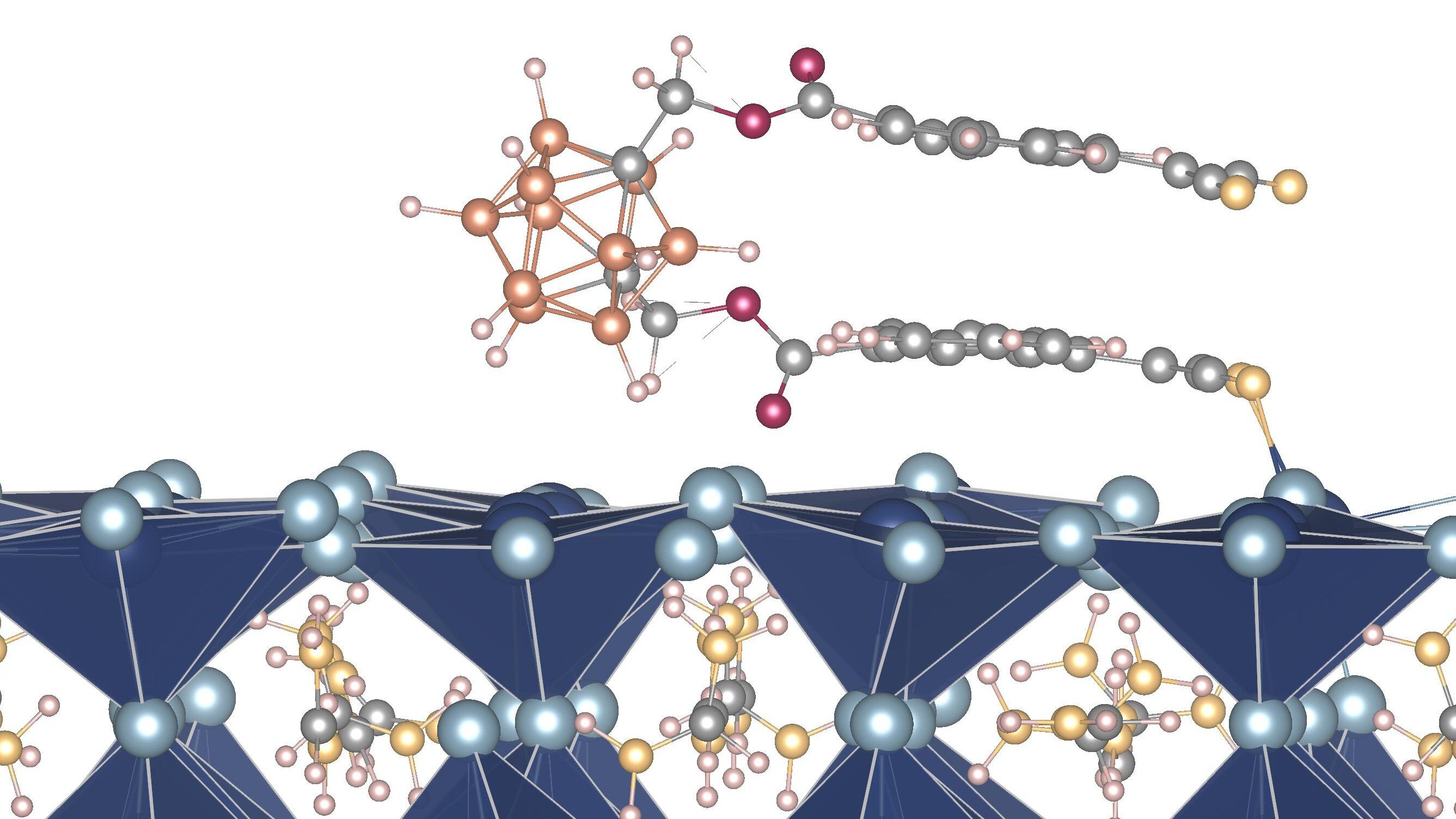
The illustration shows a mCB-FMN on a PbI2-terminated FAPbI3 perovskite surface. Credit: Lea Zimmermann / HZB
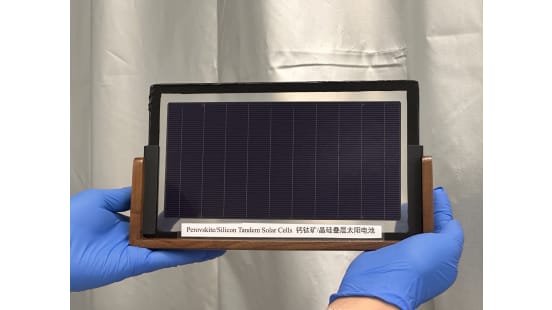
A newly developed material for the electron contact improves the efficiency of single perovskite solar cells and perovskite/silicon tandem solar cells. The new material is based on a carborane molecule. It offers several advantages over the standard material C60, as shown by the study led by Steve Albrecht's team. The new material has since been patented and is already commercially available.
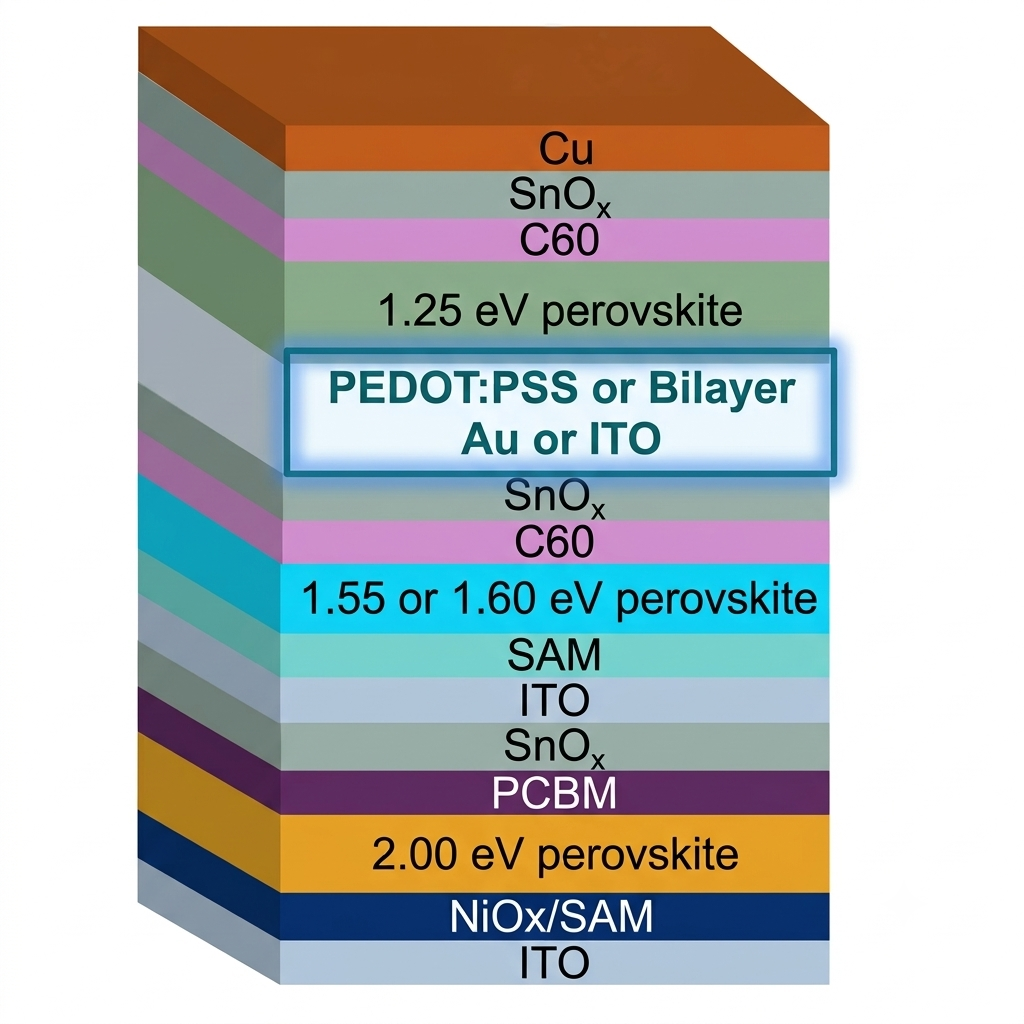
Perovskite solar cells are not only exceptionally inexpensive to manufacture but also achieve high efficiency levels. Single-junction perovskite devices can already convert more than 27% of sunlight into electrical energy, while perovskite-silicon tandem cells have achieved efficiencies of more than 35%. Until now, a layer of so-called "football molecules" (C60) has been used to transport electrons away. However, a significant proportion of the charge carriers are lost at the interface between the C60 layer and the perovskite absorber. Furthermore, C60 materials are relatively expensive and tend to delaminate over time, compromising the cell's stability.
Novel material developed
In collaboration with a group from Kaunas University of Technology (KTU) in Lithuania and other partners, the team led by Albrecht at HZB developed a novel carborane-based material. Not only can it replace C60 electron-transport materials, but it is also superior in many respects. The material can be produced from commercially available reagents. The molecules consist of a meta-carborane core with two 9-fluorenylidene malononitrile functional groups (mCB-FMN).