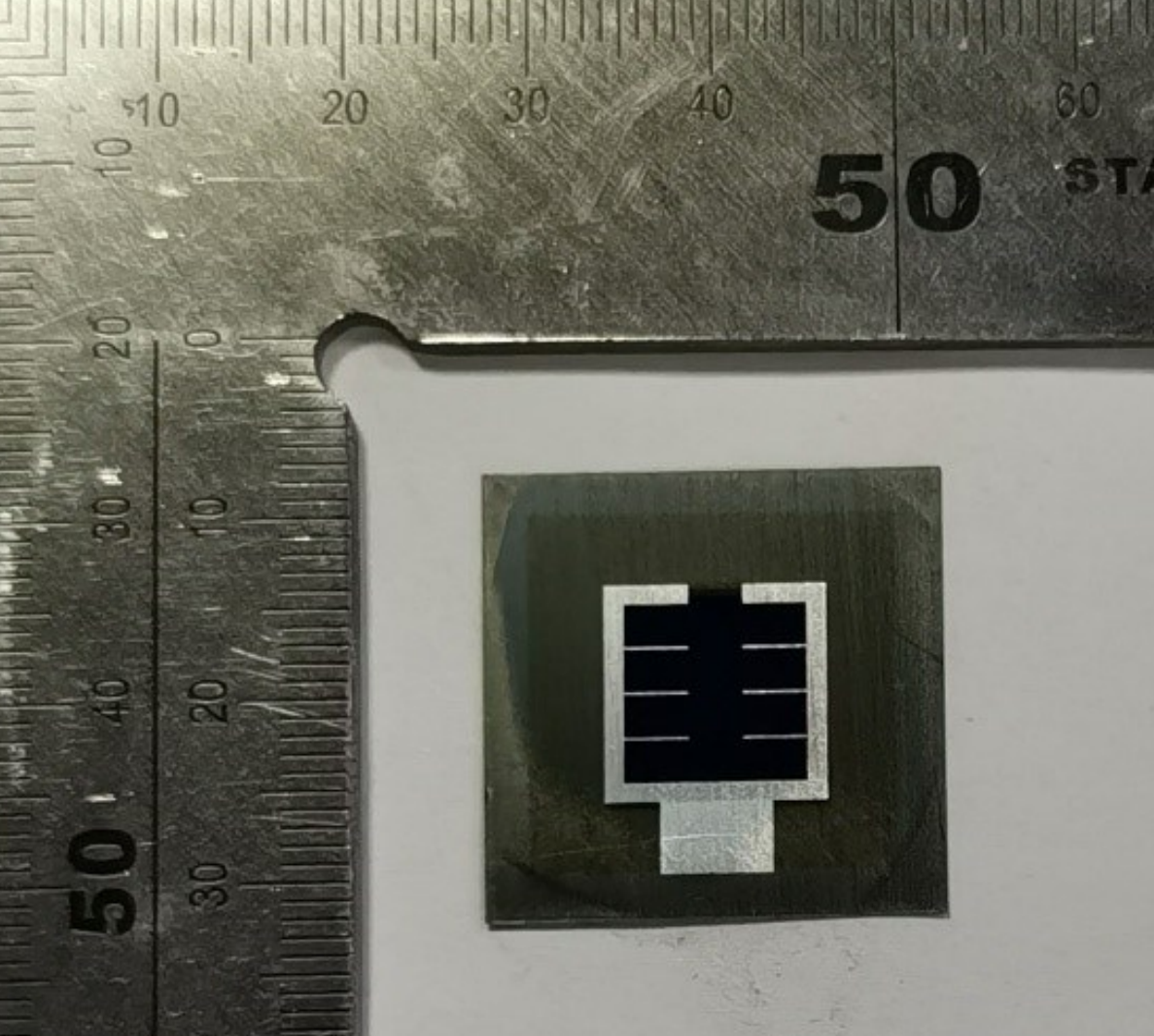
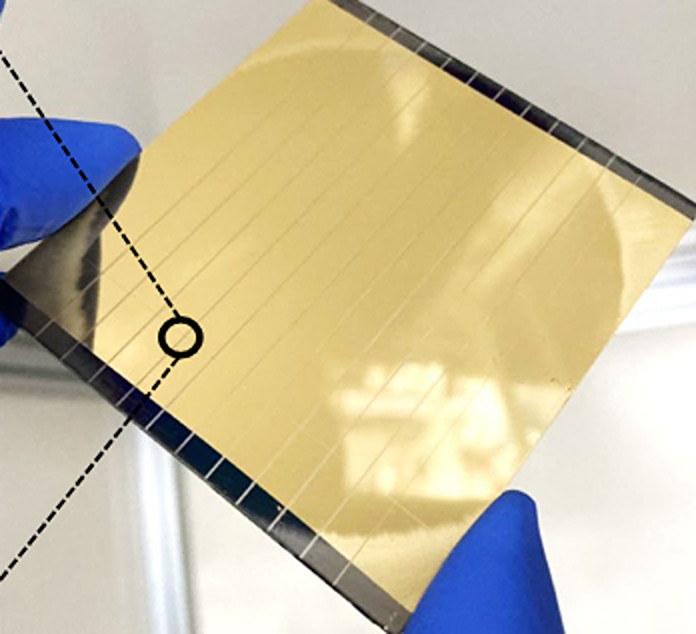
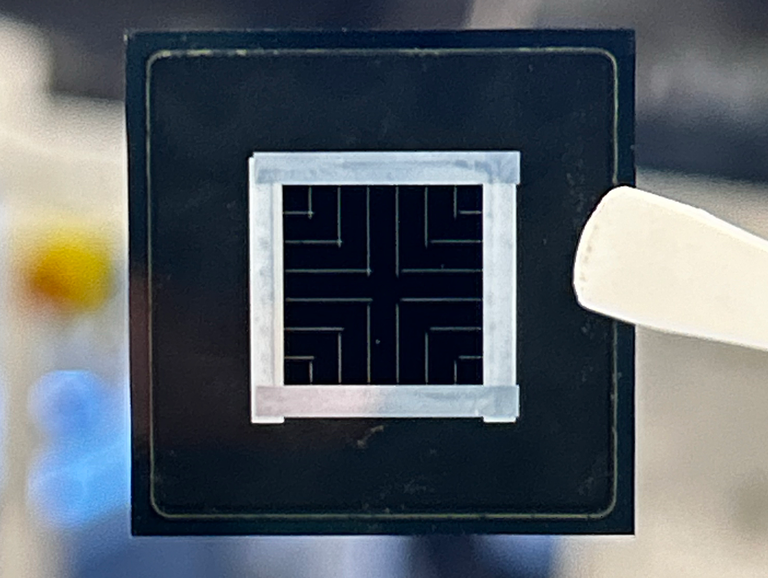
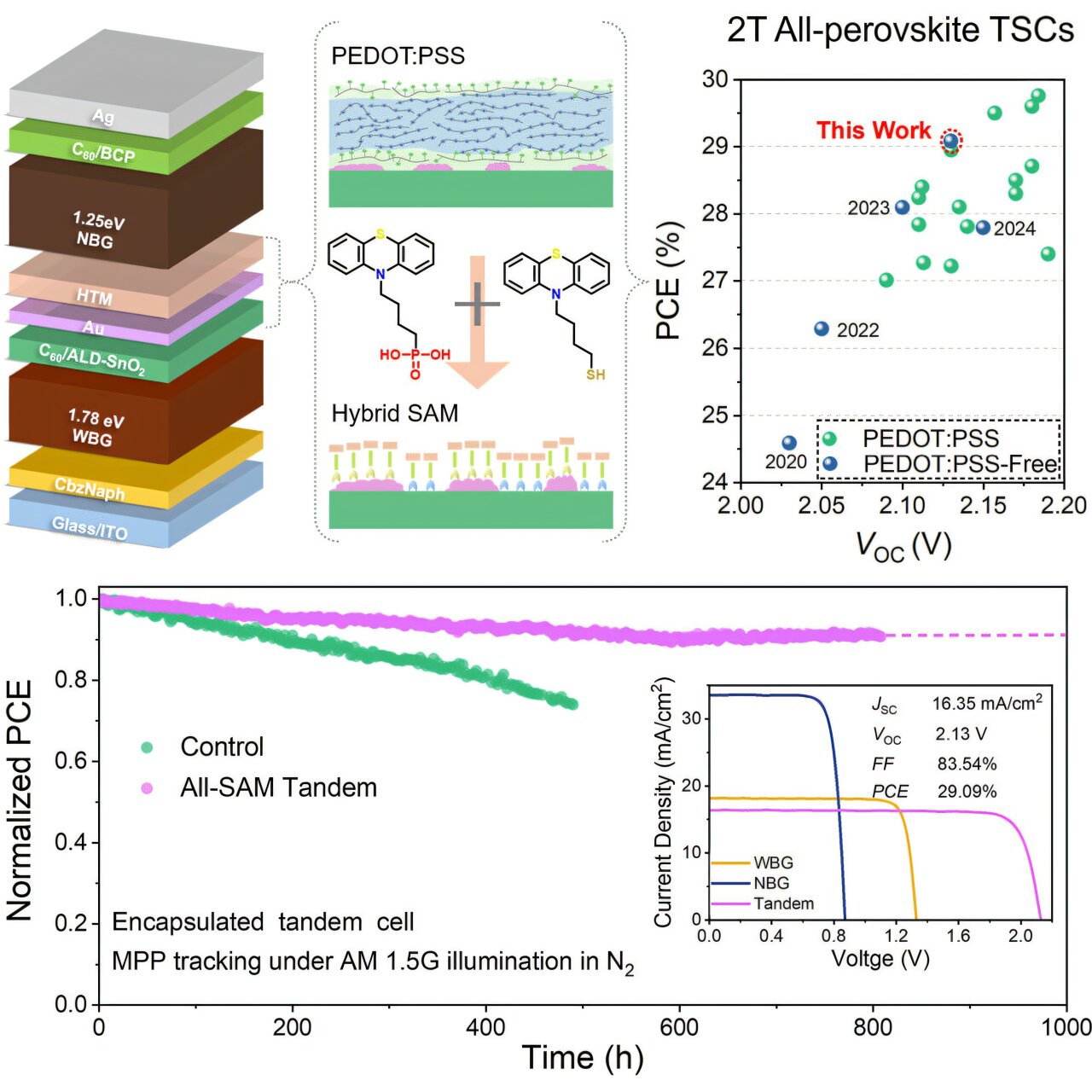
GDL strategy eliminates halide ion accumulation and abnormal energy band bending. Credit: Nature Energy (2026). DOI: 10.1038/s41560-026-02067-w
Solar cells, devices that can convert sunlight into electricity, are now widely used in many countries and are contributing to the reduction of greenhouse gas emissions on Earth. While most of the solar cells on the market today are based on silicon, energy engineers have been exploring the potential of other photovoltaic materials, including a class of materials known as perovskites.
Perovskites are materials with a characteristic crystal structure; the same structure of the mineral calcium titanium oxide CaTiO3. A promising solar cell design introduced over the past decades entails the stacking of silicon and perovskite layers to produce so-called tandem cells, a type of photovoltaics that can capture a broader range of the solar spectrum than single-layer solar cells.
Perovskite/silicon solar cells have been found to exhibit remarkable power conversion efficiencies, which essentially means that they convert a higher percentage of sunlight into electricity. Nevertheless, under some conditions (e.g., when they are situated in partly shaded areas) their performance tends to rapidly degrade over time.