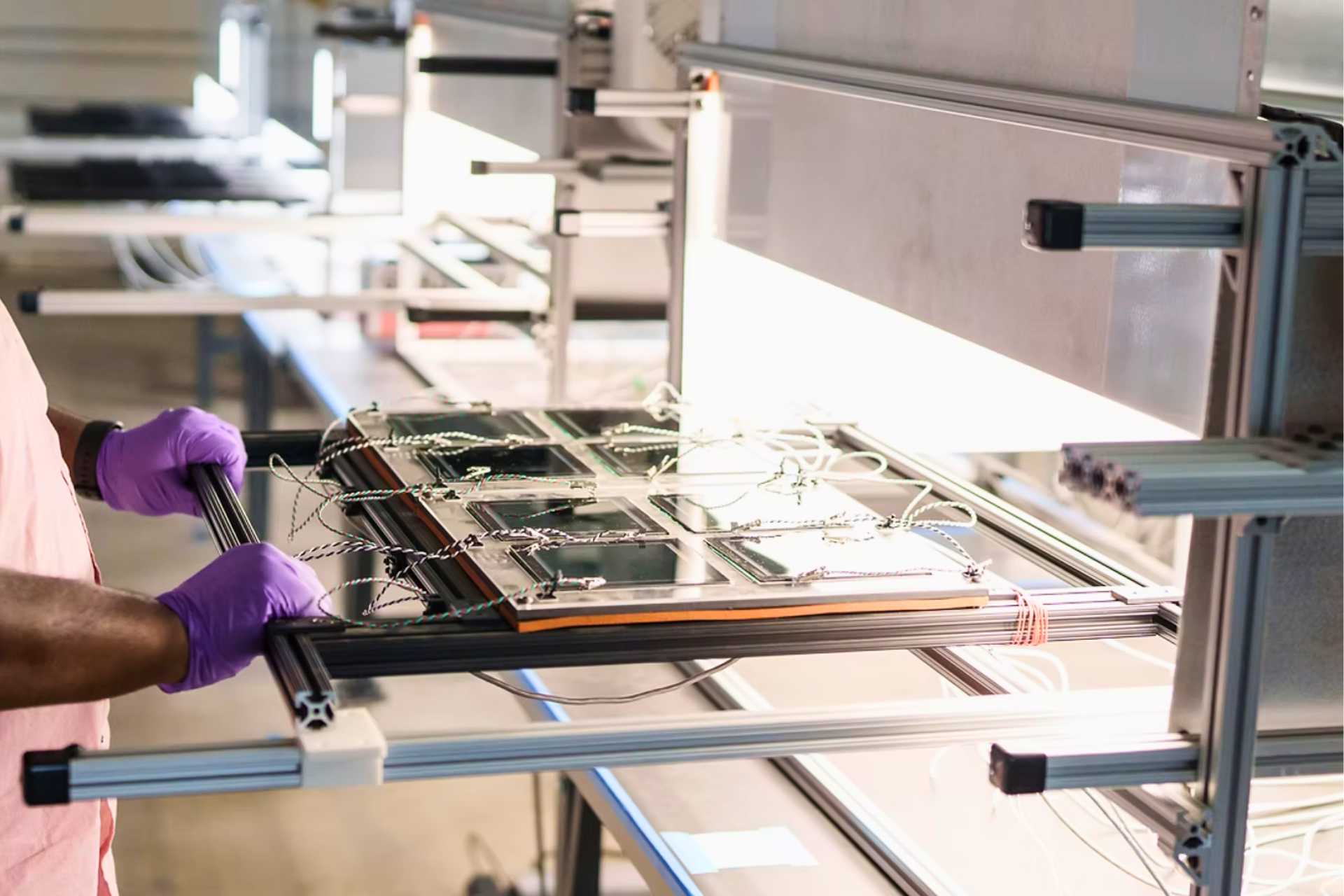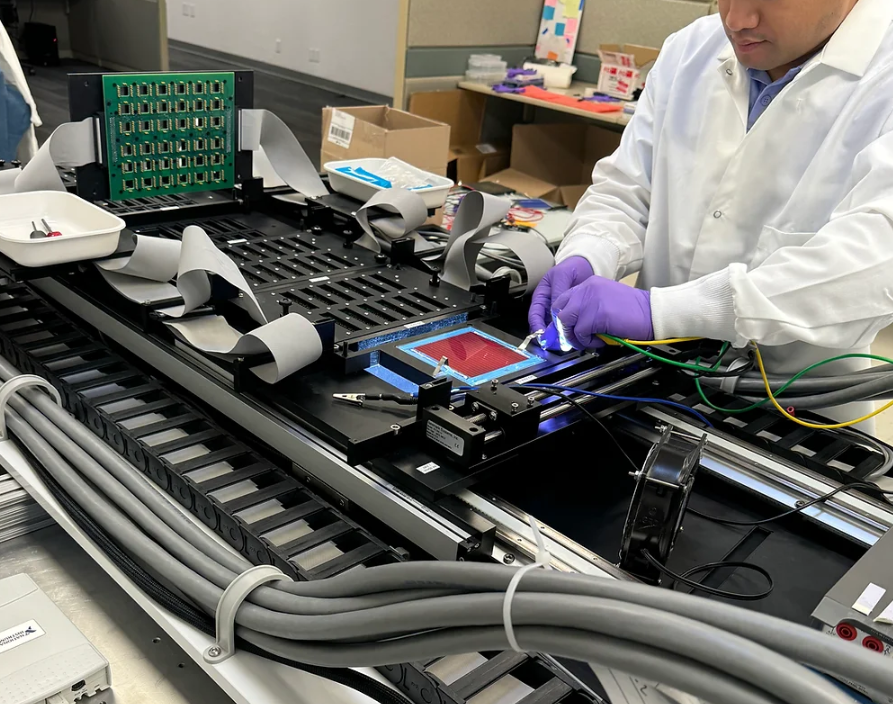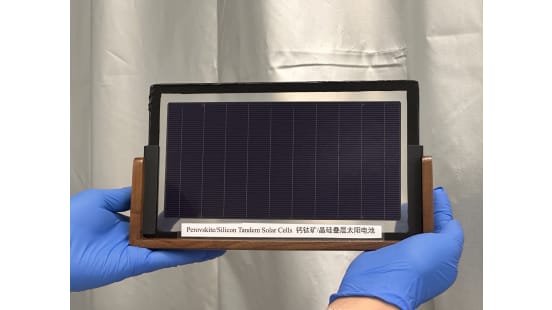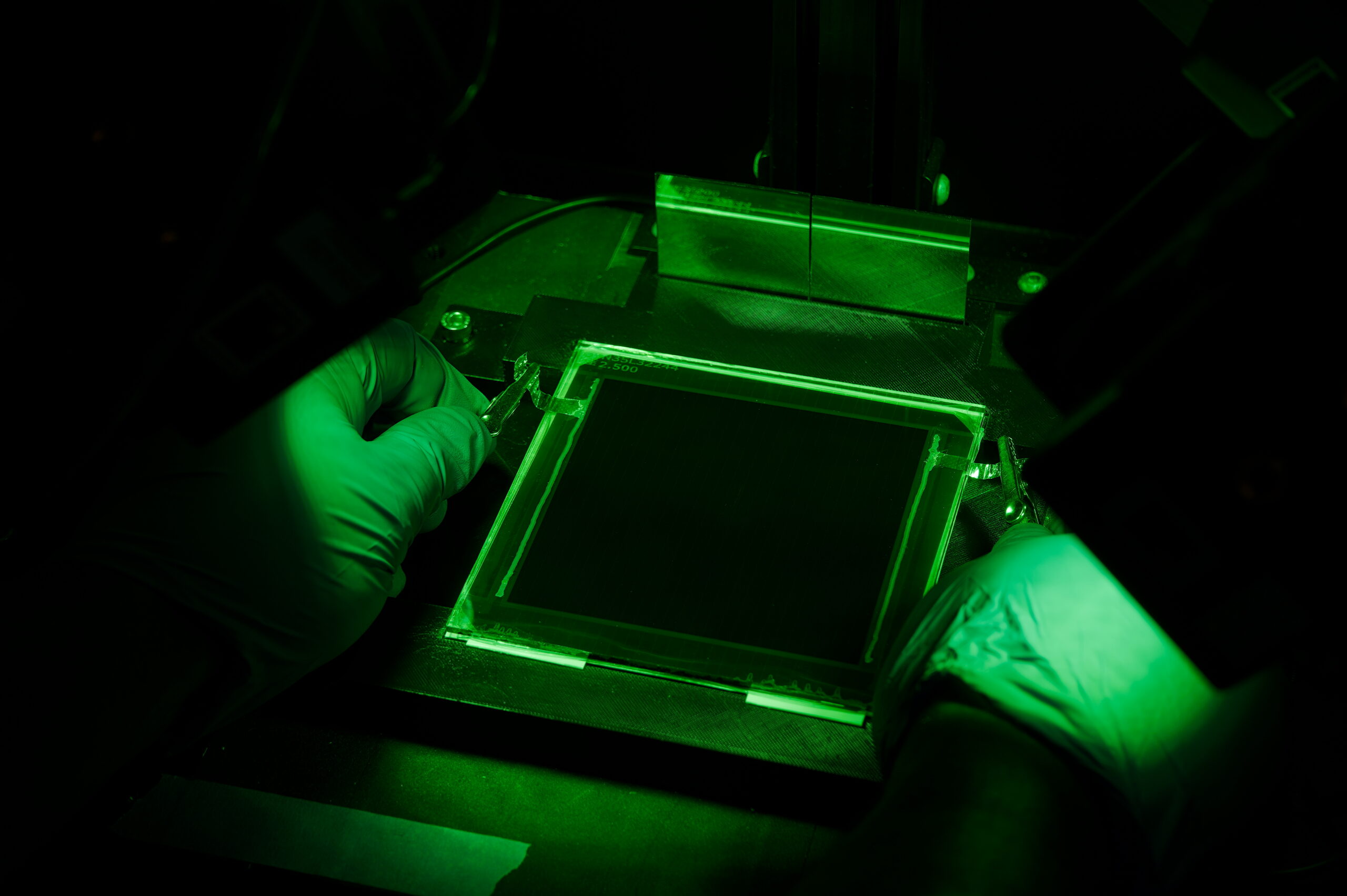
The 100 cm² mini-module, featuring the company’s proprietary 4-terminal perovskite glass layer atop a high-efficiency Maxeon IBC silicon solar cell, is now in third-party certification. Company CEO Scott Wharton says the breakthrough paves the way for full-size modules that hit 28% efficiency later this year, aimed at the utility-scale market.
U.S.-based perovskite/silicon solar module maker Tandem PV has achieved a conversion efficiency of 30.4% from a 100 cm² demonstration module in internal testing. The module features the company’s proprietary 4-terminal perovskite glass in a tandem configuration on top of an interdigitated back contact (IBC) cell produced by Maxeon.
According to Tandem PV CEO Scott Wharton, who spoke with pv magazine USA about the achievement, breaking the 30% barrier has been a company goal for some time.
In a social media post announcing the achievement, Wharton called the 30% threshold “a level of performance beyond where conventional silicon solar panels can realistically go,” adding that the demonstration module is “a sign that perovskite-silicon tandem solar is moving onto a new performance curve.”
Notably, unlike some other perovskite efficiency records — such as the recent 1 cm² perovskite test cell produced by a Chinese Academy of Sciences research team that achieved 32.89% efficiency in certified testing — the Tandem PV module is built using a process designed to scale quickly to production modules.